If you arrive in Manali on the third week of January, the first thing you’ll notice is that the town is louder than the snow has any right to allow. That’s the Winter Carnival, and it’s the opening note of a festival year that runs through every month and barely pauses to breathe.
Himachal Pradesh holds, by the state government’s own count, more than two thousand fairs and festivals a year. Every village has a devta, every devta has a festival, and on top of all that sit the larger pan-Himachali events: Manali Winter Carnival in January, Mandi Shivratri in February, Holi in Sujanpur, Minjar in Chamba, Manimahesh in August, Kullu Dussehra in October, Lavi at Rampur in November, and a long Buddhist calendar layered through the year in Lahaul, Spiti and Kinnaur.
This guide walks the year. Pick a month, see what’s running, and book your trip around it. Where a festival has its own deeper guide on this site, you’ll find it linked.
Lunar dates shift each year. Cross-check the official festival site or the local district administration page before you book.
In This Article
- How Himachal’s Festival Year Is Structured
- January: Winter Carnival, Lohri, and Halda
- February and Early March: Losar, Mandi Shivratri, and Basant Panchami
- March: Holi at Sujanpur, Nalwari at Bilaspur, and the Shivratri Tail
- April: Baisakhi, Sui Mela, and the First Hill Fairs
- May: Pipal Jatra in Kullu, Sipi Fair, and Doongri at Manali
- June: Shoolini at Solan, Ghantal in Lahaul, and the Markandeya Cycle
- July: Minjar at Chamba, Sissu Round, and the Pori Festival
- August: Manimahesh Yatra, Phulech, and the Spiti Festivals
- September: Sair, the Buddhist Round, and the Tara Devi Fair
- October: Kullu Dussehra (and Why You Plan a Year Around It)
- November: Lavi at Rampur, Renuka at Sirmaur, and the Trade Fairs
- December: International Himalayan Festival, Christmas, and the Music Crowd
- The Recurring Pan-Year Festivals
- What You’ll Eat at the Fairs
- What You’ll Buy at the Fairs
- Practical Planning for the Festival Year
- What’s Changed and What’s Lost
- If You Want to Go Deeper
How Himachal’s Festival Year Is Structured
To make sense of the calendar, three things help.
One: the year follows agriculture more than religion. Most state-recognised fairs sit at the seasonal hinges of the farming year. Lohri and Halda close the deep winter; Baisakhi on 13 April is the traditional summer threshold; Sair in mid-September closes the harvest. The religious overlay is everywhere, but the underlying clock is agricultural.
Two: there are two religious worlds operating side by side. The middle and lower hills are predominantly Hindu, with the calendar built around the Devi shrines, the Shaktipeeth temples, and the village devta system. The high-altitude tribal districts of Lahaul, Spiti and Kinnaur are predominantly Buddhist, with their own calendar of Losar, Halda, Sazo, Ladarcha, and the masked Chham dances at the gompas. Many festivals straddle both worlds, and the cultural exchange is genuine, not nominal.
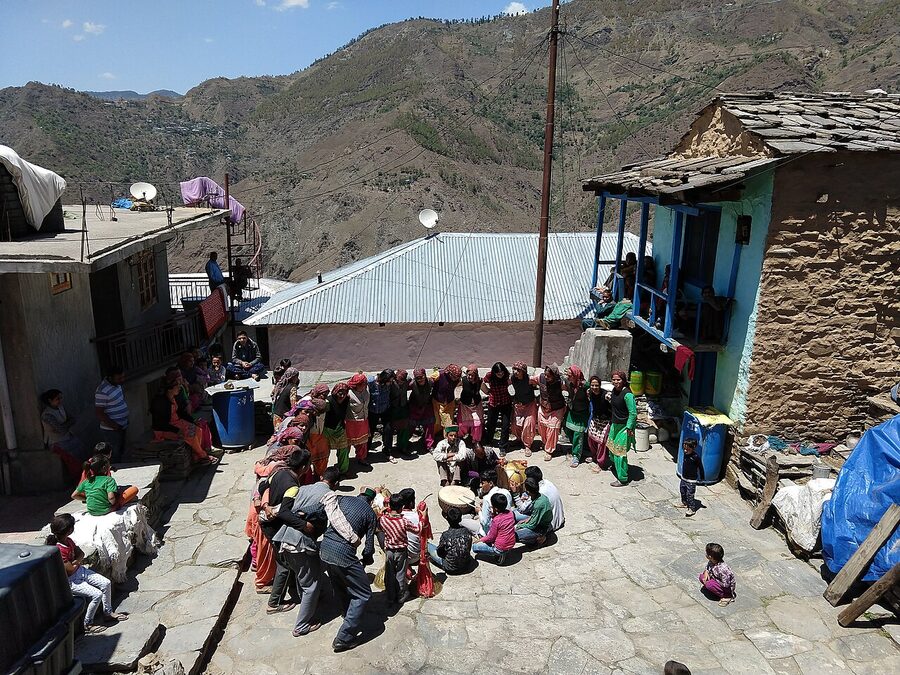
Three: the village devta is the basic unit. Roughly two hundred deities are formally recognised as village or clan devtas in Himachal. Each has a kardar, a goor, a pujari, a palanquin, and a calendar of fairs at which it travels. The big district fairs you’ll travel for are essentially the moments when many devtas converge in one place.
What follows is the year, month by month. Use it to plan around what you actually want to see.
January: Winter Carnival, Lohri, and Halda
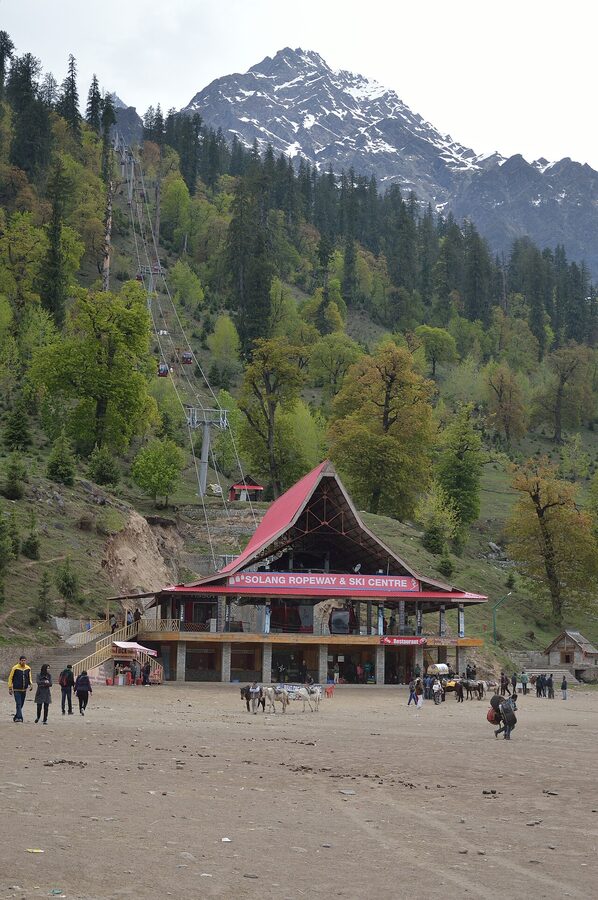
January is the deepest part of winter in the lower hills and a near-shutdown in the high country, but the festival calendar is busy. The big anchor is the Manali Winter Carnival, held every year in the first or second week, built around the Mall Road and the slopes at Solang Valley about 14 kilometres up the road.
The carnival was first held in 1977 and runs five to seven days with cultural teams from across India, a Mall Road parade, folk dance competitions, food stalls, and a skiing competition at Solang. If you have any interest in seeing the upper Beas Valley under snow, this is when the town is set up to host you. For where to stay, see the Manali hotels guide.
If you’d rather ski than parade, head to Solang Valley directly. Carnival week tends to bring the best snow conditions and the most operators on the ground. Snow gear is rentable on Mall Road and at Solang itself.
Lift queues will be longer than usual that week. If you’re going for the skiing rather than the carnival, come a few days before or after.
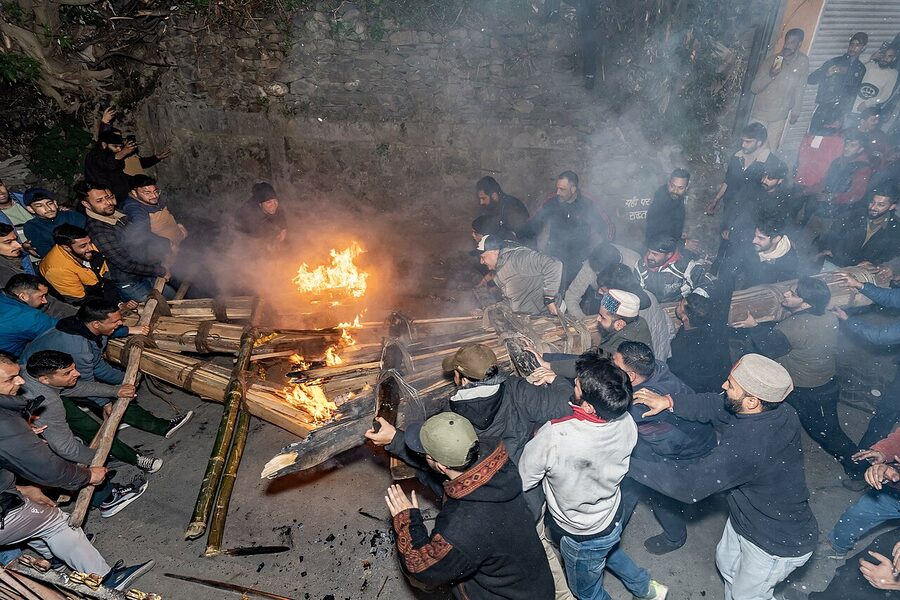
Lohri, on the night of 13 January, is the second January marker. It’s a winter-solstice agricultural festival that closes the rabi sowing season. Across most of Himachal it’s celebrated quietly with bonfires, singing, and rewri-and-jaggery sweets. The grandest public Lohri in the state is at Pragpur, the heritage village in Kangra district, where a fair is held the same evening.
Makar Sankranti, the day after Lohri, is observed with a mass bath at Tattapani, the natural hot springs on the Sutlej about 50 kilometres from Shimla. The site has been worked over by the Kol Dam reservoir and the riverbank has changed, but the springs still draw a crowd at sunrise on Sankranti morning.
In the high country, January is when Halda is celebrated, mostly in the second or third week. It’s the Lahauli new-year festival, held in the Chandra and Bhaga valleys on Magha Purnima, the full-moon night. Villagers light cedar-wood torches and walk out into the cold to drive away evil spirits, after which the torches are flung onto a common bonfire. The deity invoked is Shiskar Apa, the Lamaistic goddess of wealth.
If you want to see Halda you’ll need to be in Keylong or one of the surrounding villages. The Atal Tunnel keeps Lahaul accessible through winter, but the upper passes beyond Keylong are closed. Sazo, the Kinnauri new-year festival, falls around the same week. Phagli, the Pattan Valley spring-welcoming festival of Lahaul, also begins from mid-January and runs in pulses through late February.
February and Early March: Losar, Mandi Shivratri, and Basant Panchami
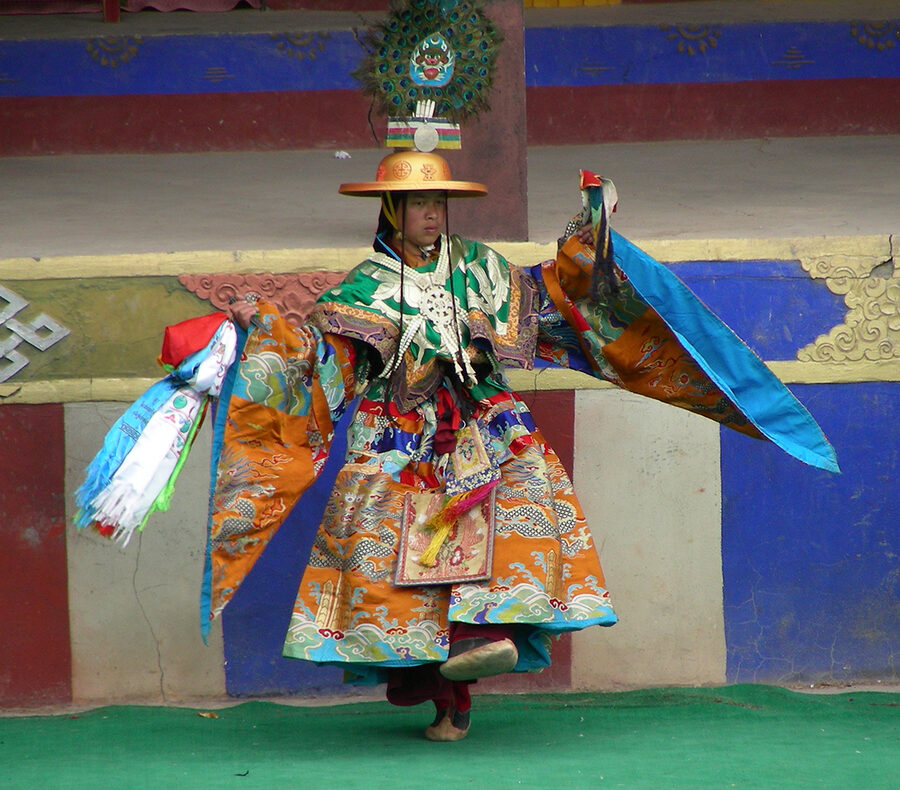
The Tibetan calendar puts Losar, the Buddhist new year, in late February or early March. In Himachal it’s celebrated most visibly in the gompas of Spiti (Ki, Tabo, Dhankar, Komik, Lhalung), in Lahaul, in Kinnaur, and in Dharamshala / McLeod Ganj where the Tibetan exile community marks it on the Norbulingka and Tsuglagkhang grounds.
The visible centre of Losar at the gompas is the masked Chham dance, a stylised dance-drama performed in elaborate costume. The dance is often called the “devil dance” in tourist material, but it is more accurately a re-enactment of the triumph of dharma over the forces of ignorance. If you want to see Chham well, the gompas of Spiti are where to go. The road to Spiti via Kinnaur is the only winter-accessible route, and the Kunzum Pass approach is closed.
In Dharamshala the Losar mood is more public, with prayers at the main temple and street celebrations on Jogiwara Road and Bhagsu Road. It’s a good week to be in McLeod Ganj if you’re interested in Tibetan culture and you don’t insist on the gompa setting.
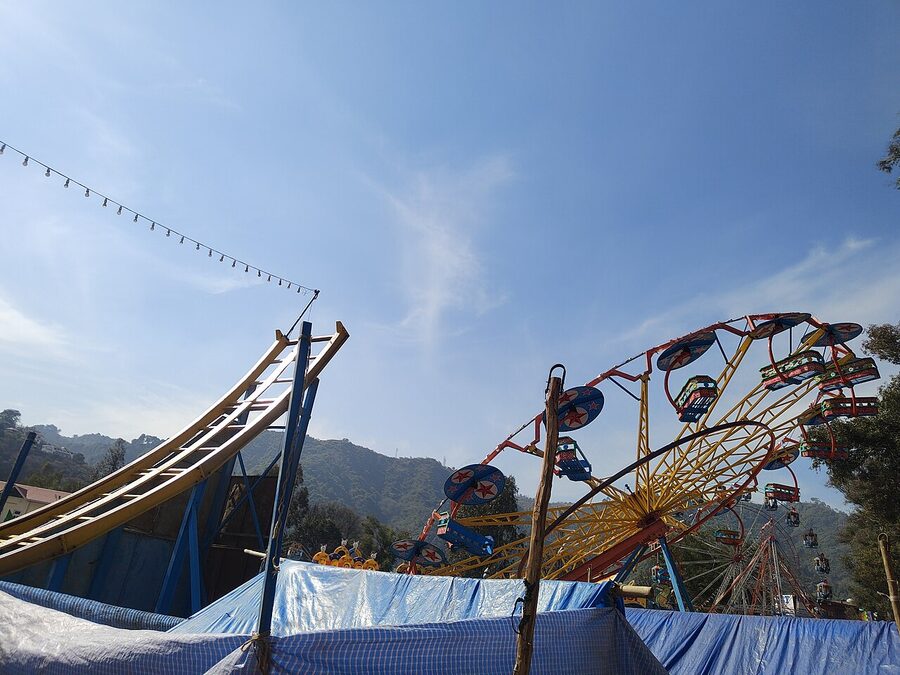
Mandi Shivratri is the second February-March anchor, and for many readers it will be the most rewarding fair of the year to plan around. Falling on Maha Shivratri, the fair runs for seven days at Paddal Maidan and Seri Manch in Mandi town. Mandi is sometimes called the “Choti Kashi” because of the density of Shiva temples, and Shivratri is the moment that density is visible.
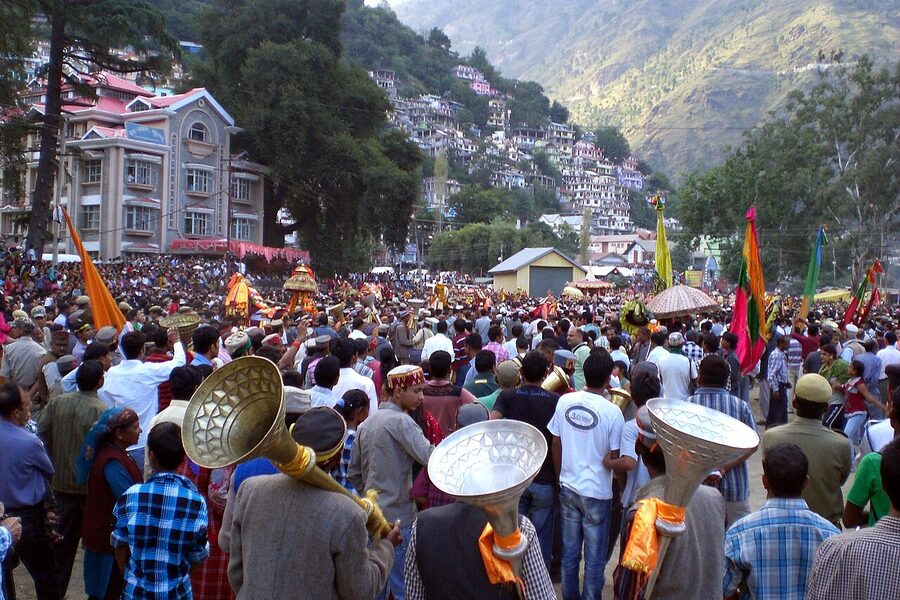
More than two hundred village deities from across the Mandi district arrive in palanquins. Each makes a first-stop visit to the Madho Rai temple (the deity is a form of Vishnu and is treated as the protector of Mandi town), then proceeds to pay respects at the historic Bhootnath temple on the riverbank. The fair has had its present form since the reign of Raja Ishwari Sen in the late 18th century, and the state government accords it international fair status.
Practical advice: book accommodation at least two months in advance. Mandi town empties of free hotel rooms in the run-up to the fair. The bus stand is walkable to Paddal Maidan; if you arrive by car, parking near the maidan is impossible and the smarter move is to leave the car at your hotel and walk in.
Two notes for first-time visitors. One, Madho Rai is the protocol stop. Watching the queue of palanquins there is the festival’s quiet centre. Two, the closing-day procession is the one most photographers come for, but the middle days are when the festival is most fully alive in the town.
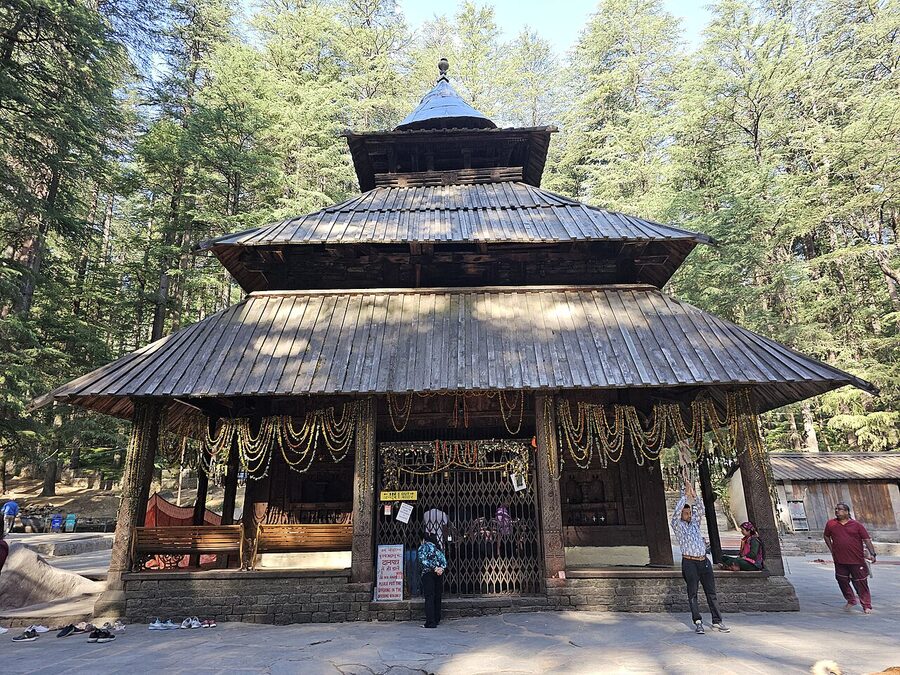
Basant Panchami, the spring festival, falls in late January or early February. It’s celebrated quietly across the lower hills with kite-flying competitions and yellow-themed dress. It’s also the day of the Doongri Fair at the Hidimba Devi Temple in Manali, where a small mela is held in honour of the deity treated as the maternal figure of the Kullu Valley royal house. If you’re in Manali for Basant Panchami, walking up to the Hidimba temple in the deodar grove is the right thing to do that morning.
March: Holi at Sujanpur, Nalwari at Bilaspur, and the Shivratri Tail
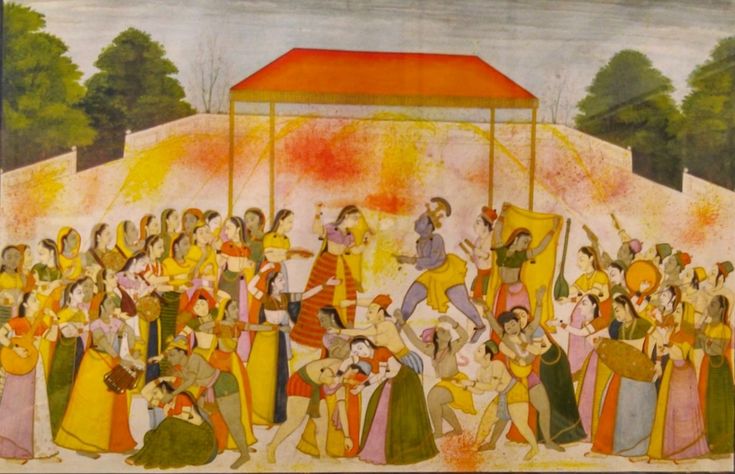
The Mandi Shivratri fair often spills into early March. Once it closes, the calendar moves to Holi, observed across the country in the first or second week of the month. In Himachal the most public Holi is at Sujanpur Tira in Hamirpur district, where a five-to-seven-day mela runs on the Chaugan ground at the foot of the old Katoch palace.
The fair has a documented history going back to the late 18th century when Raja Sansar Chand of Kangra, who shifted his capital here in 1775, codified the festival as a public event. The contemporary Sujanpur Holi keeps the layered programme: cultural performances, a wrestling pit, food stalls, and a long programme of folk music and dance.
Palampur in Kangra holds a smaller Holi fair the same week. At Paonta Sahib on the bank of the Yamuna in Sirmaur, the Holi celebrations at the Paonta Sahib Gurudwara, associated with the tenth Sikh Guru Gobind Singh, bring in pilgrims from Punjab, Haryana, and across Himachal. The mood at Paonta Sahib is more religious and less rowdy than Sujanpur. Pick depending on what you’re after.
Nalwari Fair at Bilaspur is a March cattle fair with an unusual origin story. It was instituted in 1889 by W. Goldstein, the Superintendent of the Shimla Hill States, in response to a shortage of breeding bullocks in the region. The fair still trades cattle, but its main attraction now is the wrestling.
The pit at the Luhnu ground draws bouts from across the lower hills and the audience is large and partisan. The fair runs for seven days. Bilaspur sits on the Chandigarh-Manali highway, three hours by road from Chandigarh, so it’s easy to factor into a trip.
Navratri falls in March and April (the spring or Chaitra Navratri). The nine-day cycle is observed across the state, and the religious centre of gravity is the Shaktipeeth circuit: the five major Devi temples of Jwalamukhi in Kangra, Naina Devi in Bilaspur, Chintpurni in Una, Bajreshwari Devi in Kangra town, and Chamunda Devi at Chamunda.
All five host fairs through Navratri, and the road circuit between them is one of the busiest pilgrimage routes in north India during these nine days. The Jwalamukhi temple, with its perpetually burning natural-gas flame, is the most theatrically distinctive of the five. Also in March-April, the cave-shrine Deotsidh Fair at the Baba Balak Nath temple in Hamirpur runs for the better part of a month.
April: Baisakhi, Sui Mela, and the First Hill Fairs
Baisakhi on 13 April is observed across the state. It marks the beginning of the solar year, the threshold of summer, and the start of the harvest. The largest public Baisakhi is at the Sikh sites and at Hindu pilgrimage sites where dawn baths are taken in any nearby river or lake.
Markandeya Fair at the Markandeya Temple about 20 kilometres from Bilaspur is a Baisakhi-night pilgrimage; a similar fair runs at Tattapani the same night. In the upper hills, village melas spring up across Kullu, Mandi, and Shimla districts on Baisakhi day, often with archery, wrestling, and circular hand-joined dance patterns common across the Himalayan belt.
Rali Festival in Kangra runs through April. It’s a women’s festival commemorating the legend of Rali, a young woman who drowned herself rather than be married against her will, and whose brothers and would-be groom drowned attempting to save her. Clay figures of the three are made by unmarried women who pray for good husbands and by newly-married women who pray for happiness. It’s a quiet domestic festival rather than a public fair, but the pottery you’ll see at Kangra markets in the run-up is part of the same cycle.
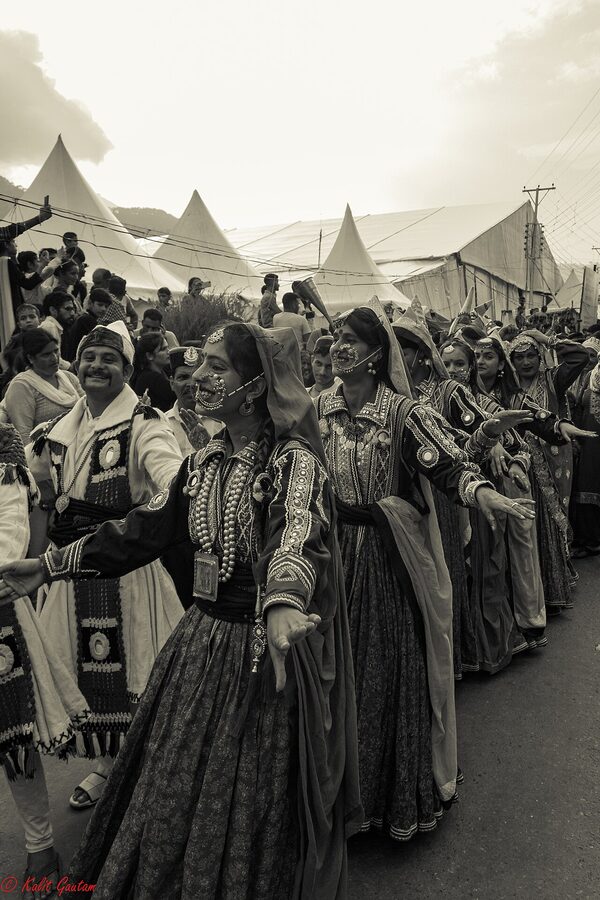
Sui Mela at Chamba is one of the more striking small fairs in Himachal. It’s celebrated almost exclusively by women and children, and it commemorates a 10th-century queen who is said to have ended Chamba’s water shortage by sacrificing her own life.
The fair runs over three days at the Sui Mata temple on the slope above Chamba town, with women in traditional Chamba dress walking up in the morning to offer prayers. Local handloom and food stalls fill the route. It’s one of the few major fairs in north India where women set the public tone.
Other April fairs: the Mahu Nag Fair at Taraur in Karsog (Mandi district) brings out the local naga deity in palanquin procession; the Sissu Fair at Sissu Gompa in Lahaul opens the gompa-circuit summer with masked dance.
May: Pipal Jatra in Kullu, Sipi Fair, and Doongri at Manali
May is when the upper Kullu Valley begins to come back to life and the festival calendar follows. The most distinctive May event is the Pipal Jatra or Vasantotsava, the official spring festival of Himachal Pradesh, held at Kullu town’s Dhalpur Maidan from late April or early May.
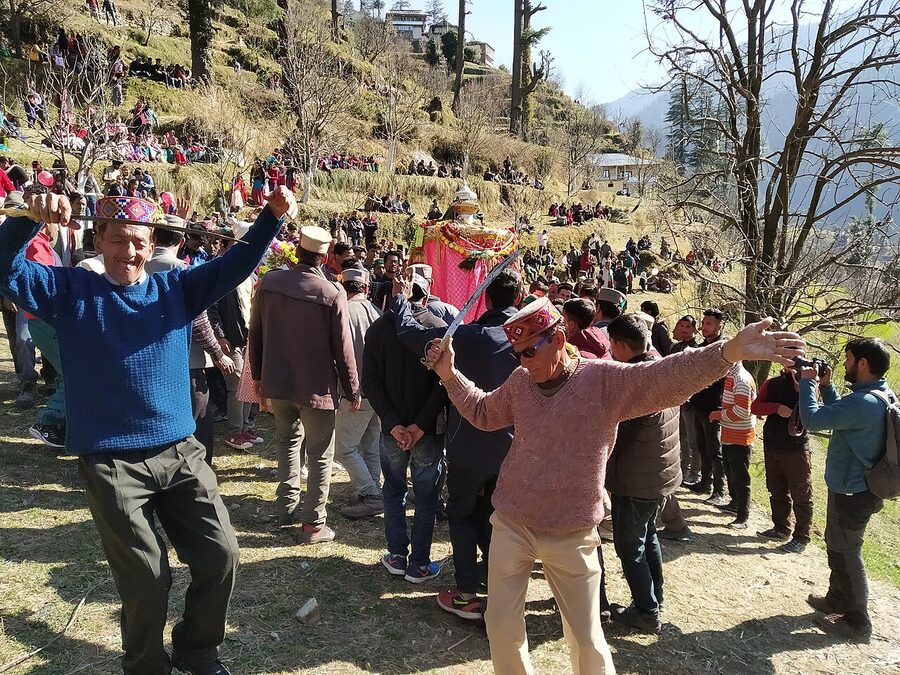
The festival functions partly as a cultural showcase and partly as a soft Kullu-Dussehra warm-up: many of the devtas that travel to the autumn Dussehra also visit Pipal Jatra in May, in shorter form, for a three-to-five-day programme. If you’ve heard about Kullu Dussehra and you’re curious about the devta system but you can’t be in Kullu in October, May at Dhalpur is a smaller but real version of it.
Doongri Fair (also written Dhungri) at Hidimba Devi Temple on the wooded slope above Manali falls in May. Despite the name, the fair is now held on the temple’s annual Doongri festival day rather than only on Basant Panchami. The temple is the most-visited site in Manali and the May fair is a good time to see it in its proper public role rather than as a tourist photo stop.
Local Pahari food stalls, handloom from the Kullu hills, and a short cultural programme run alongside the religious observance. Hidimba is also the deity whose arrival officially starts the Kullu Dussehra rath yatra in October; see the deeper guide on Kullu Dussehra for that side of the story.
Sipi Fair at Sipur glade below Mashobra, about 13 kilometres from Shimla, is held in mid-May. It’s a genuinely old fair (the village histories put it at several centuries) and it has the structure of an old market mela: traders set up wool, dairy, and grain stalls, the local devta is brought out, and there’s a strong wrestling presence. Sipi is one of the few Shimla-area fairs that has not been entirely flattened by tourism and it rewards a half-day visit. The walk down from Mashobra to Sipur is itself worth doing.
Other May fairs: Banjar Fair at Baggi village (dedicated to Shringa Rishi, the chief deity of Banjar) and Sainj Fair in the Parvati-Tirthan valley of Kullu, the Sarshi Jatra at Naggar, and the Shimla Summer Festival at the Ridge from the last week of May for five days. The Shimla Summer Festival is the more touristy of the lot (a flower show, fashion show, food stalls along the Mall), and it’s pleasant but not deep.
June: Shoolini at Solan, Ghantal in Lahaul, and the Markandeya Cycle
The signature June fair is the Shoolini Fair at Solan, held annually on the third Sunday and Monday of June. The fair is dedicated to Shoolini Devi, the presiding goddess of Solan town, and it runs for three days at the Solan ground. The opening procession brings the deity from her temple at the village of Solan Gaon down to the fair ground, the only day in the year the idol leaves the temple.
Cultural programmes, the archery sport called Thoda, wrestling bouts, and food and trade stalls fill the maidan. Thoda is worth coming for: it’s a Khash hill-tribe sport involving teams shooting blunt-headed arrows at each other’s lower legs in a structured, refereed format, and it survives now in a small handful of fairs in Solan, Sirmaur, and the Shimla hills.
In the high country, June is the month the gompas come out of their winter hibernation. Ghantal Festival at the Guru Ghantal monastery, the oldest gompa in Lahaul, is held on the full moon of mid-June. It’s a small festival by the standards of Mandi or Kullu but it’s one of the few times the monastery is open to visitors with full ritual under way, and it’s the festival anyone trekking the Tinan side will try to time their visit for.
June is also when the International Rafting Championship on the Sutlej is sometimes held (the dates shift with water levels). The event runs from Pandoh down to Tattapani, about 70 kilometres downstream from the Shimla road, and it draws rafting teams from across Asia.
July: Minjar at Chamba, Sissu Round, and the Pori Festival
July’s anchor is the Minjar Fair at Chamba town, held annually for seven days starting from the second Sunday of the month of Shravana (late July or early August). Minjar is one of the oldest documented fairs in Himachal. The present form of the festival is attributed to Raja Sahil Verman, who ruled Chamba in the 10th century, and the fair commemorates the king’s victory over the ruler of the neighbouring kingdom of Trigarta (modern Kangra).
On the king’s return, his subjects greeted him with sheaves of minjar, the silk-like flowers that emerge from the maize plants when the cobs begin to set, and that day became the founding day of the fair. The festival now opens with the Lord Raghuvira procession from the Akhand Chandi Palace down to the Chowgan, the long open ground in the centre of town. Visiting deities from across the district arrive in palanquins.
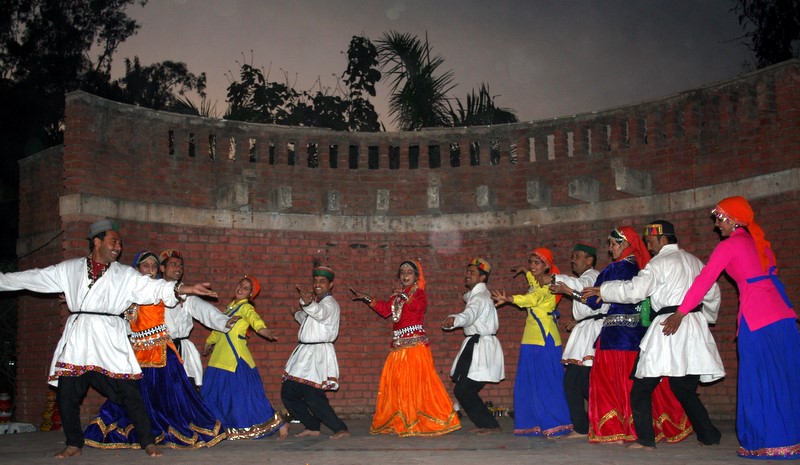
The Kunjari Malhar, a folk-music form sung by Chamba women in a call-and-response pattern traditionally during the monsoon, is performed each evening on the Chowgan stage. On the closing day, sheaves of minjar, a coconut, a coin, a fruit, and a small offering of paddy stalks are floated down the Ravi River in honour of Varuna, the rain god, in petition for a good monsoon.
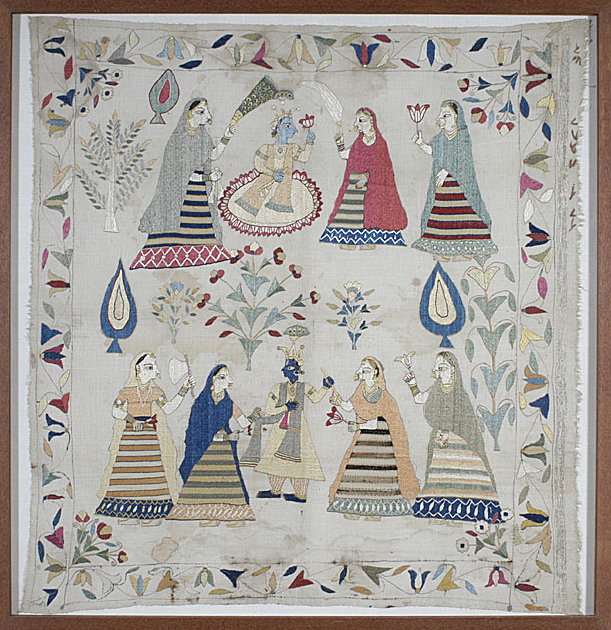
Practical: Chamba town in Minjar week is busy and accommodation is tight. Book ahead. The Chowgan is in the middle of town, walkable from any reasonable hotel.
The Chamba market, especially the Chamba Rumal stalls (the locally-distinctive double-satin embroidery that is the town’s signature craft), is at its fullest during Minjar week. A genuine Chamba Rumal is now produced by a small handful of trained artisans and is not cheap; if a stall is offering one for under three thousand rupees, it isn’t a Chamba Rumal in the traditional sense.
Late July sees the Sissu Fair round at Gemur Gompa (Lahaul) and the Sari Fair at Arki in Solan district. Sari has a small, rare attraction in the Himachal calendar: it’s one of the surviving traditional bullfights (a non-fatal village contest, very different from the Spanish version, but still controversial), and it sits in an uncertain legal position. If this matters to you, attend with your eyes open.
Pori Festival at the Triloknath Temple in Lahaul falls in August (occasionally late July depending on the lunar calendar). The temple is dedicated to Avalokiteshvara, venerated as Trilokinath by Hindus and as Arya Avalokiteshvara by Buddhists, and Pori is one of the few festivals in India where Hindu and Buddhist devotees worship the same deity at the same shrine on the same day.
The horse holds a place of unusual prominence at Pori, bathed and decorated as part of the rites; the marble idol of the deity is bathed in milk and yoghurt; and the long stalls of mountain dry fruit and Lahauli woollens make the day worth the journey. The road from Manali via the Atal Tunnel makes Triloknath much easier to reach than it once was; the festival used to require a full day from Keylong, now a half-day from Manali is enough.
August: Manimahesh Yatra, Phulech, and the Spiti Festivals
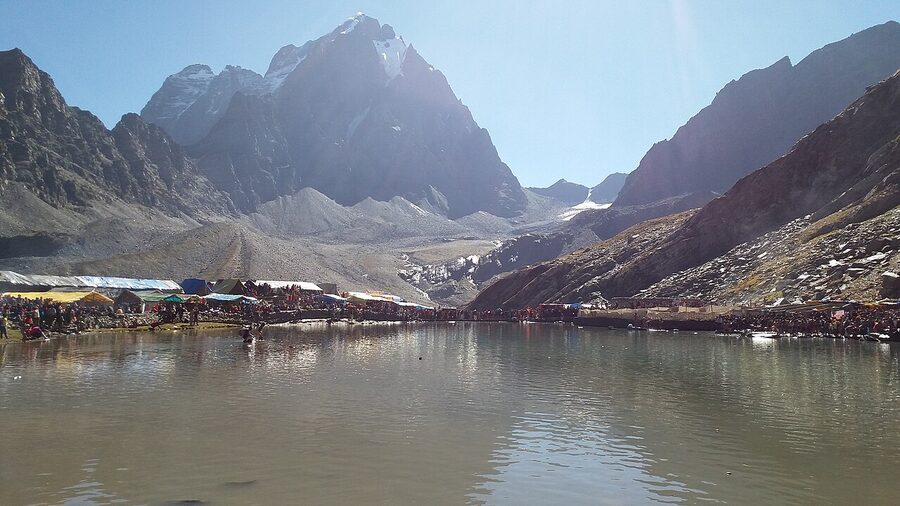
August in the Bharmaur valley above Chamba is dominated by the Manimahesh Yatra, the annual pilgrimage to Manimahesh Lake at 4,080 metres at the foot of the Manimahesh Kailash peak. The yatra runs from Janmashtami in late August to Radha Ashtami the eighth day after, with the central days on the full-moon night.
Pilgrims trek from the road-head at Hadsar (28 km up the valley from Bharmaur) to the lake, a distance of about 13 km on foot with around 1,200 metres of climb. The traditional route follows the Budhil river valley up through the Dhancho meadow camp. The Bharmaur fair below the trek-head runs for six days and is host to the Gaddi people, the high-altitude shepherding community that has been the cultural backbone of the upper Chamba valley for centuries.
Their distinctive woollen chola (a long woollen coat tied at the waist) and rounded cap are visible everywhere in Bharmaur during the yatra. The trek itself is real (the altitude is significant, the path can be wet, and the lake is freezing), and pilgrims undertake it in stages. A reasonable itinerary: drive Bharmaur to Hadsar, walk Hadsar to Dhancho on day one, Dhancho to the lake on day two with overnight camp, return on day three.
If you are not a pilgrim, August is still the right month for a Bharmaur visit. The meadows are in full flower and the Gaddi villages are at their most populated.
But weather is unpredictable. The path can wash out in heavy rain. Carry adequate cold-weather kit and budget extra days for delays.
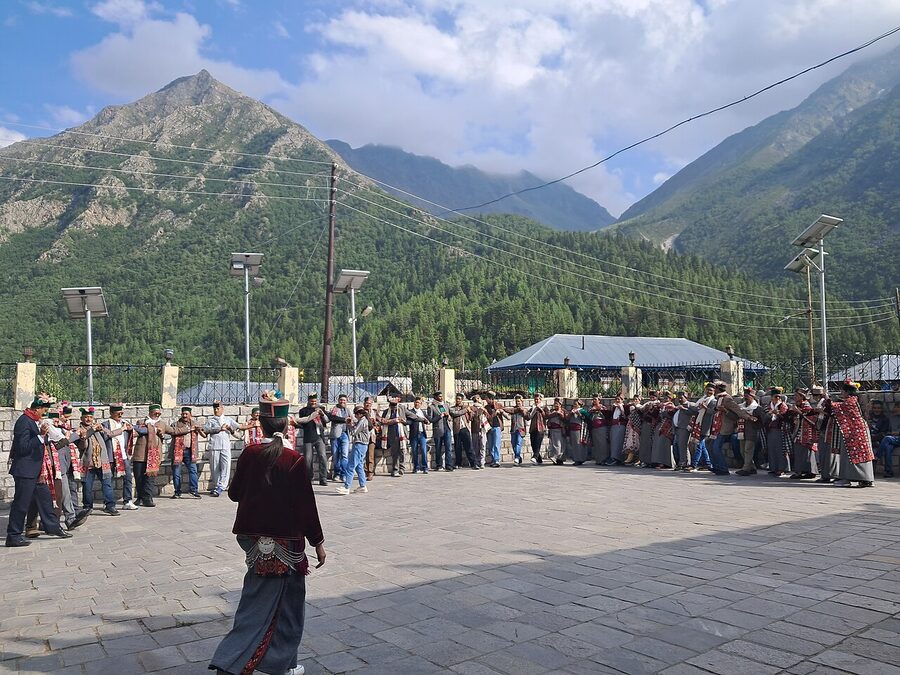
In Kinnaur, August is the month of Phulech (also written Phulaich, Ookayand, or Ukyam), the festival of flowers. It is celebrated for several days from the 16th of the Hindu month of Bhadrapada in villages including Kalpa, Sangla, and Ribba. On the opening day, ten Rajputs of each village climb the slopes above the village to gather Ladra flowers, returning in procession with drums and the Kinnauri reed-pipes called biguls.
The flowers are placed at the village square. Later in the cycle, idols of local deities are carried through the village in grand procession, flowers are offered to the dead, food is left for the ancestors, and Kinnauri dance and music continue under the deodars through the night. The combination of flower-gathering, ancestor worship, and Kinnauri dance, with the deodar slopes as the backdrop, is hard to find elsewhere in the Himalayan belt.
Ladarcha Fair at Kaza in Spiti is the August Spiti anchor. Originally a trade fair where merchants from Spiti, Ladakh, Kinnaur, and (until 1962) Tibet exchanged grain, salt, wool, and dry fruits, Ladarcha shifted from its original site at Kibbar Maidan to the more central headquarters of Kaza after the Tibet trade was closed. The contemporary fair runs for three days.
The Buddhist Chham dance and the regional Buchen performance (a Spitian narrative tradition involving costumed actors, painted scrolls, and improvised religious plays in the lineage of Thangtong Gyalpo) are the cultural centrepieces. Stalls sell Spiti-and-Ladakh handicrafts, Kinnauri Pashmina, dry apricots and chilgoza nuts. Kaza is a long drive from any side (eight hours from Manali via Kunzum Pass when the pass is open, or about ten hours via the long Kinnaur route from Shimla), and accommodation in Kaza books out for fair week.
Other August festivals: the Naina Devi Shravan Fair at the hilltop temple in Bilaspur (a major pilgrimage with a famous tragedy in 2008 when a stampede killed over 145 people; the temple administration has redesigned the access route since), the Bharmaur Jatra at Chamba, the Dal Fair at Dal Lake above Dharamshala, and the Mani Gompa Fair at Gondhla in Lahaul.
September: Sair, the Buddhist Round, and the Tara Devi Fair
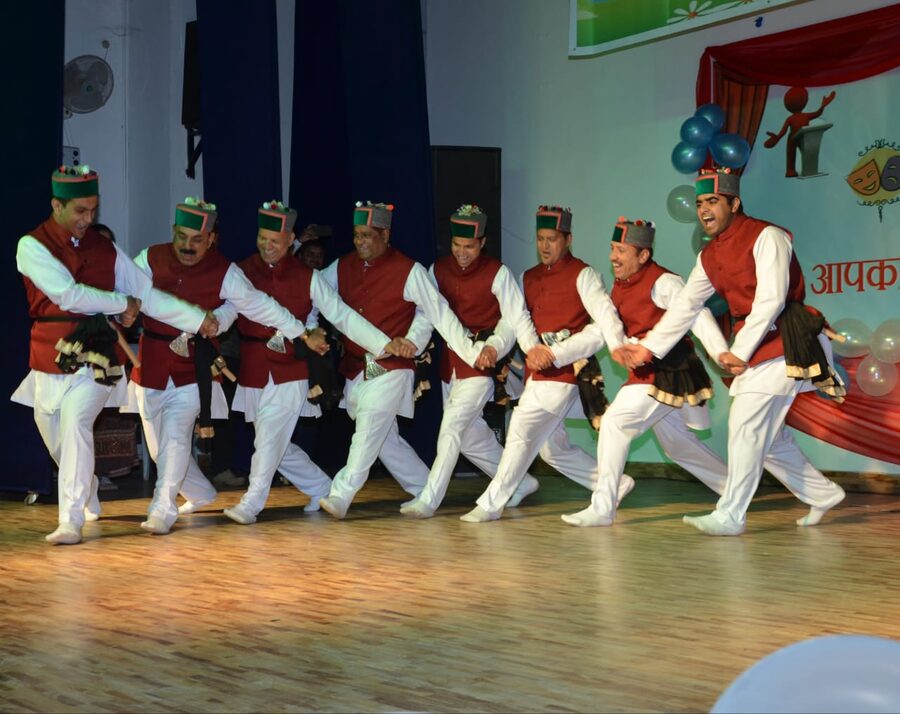
September is harvest-end month in the lower hills. The defining festival is Sair (also written Sayer), celebrated on the first day of Ashvin (mid-September) across Kullu, Mandi, Shimla, and Solan districts. Sair marks the end of the kharif harvest.
The household form has the head of the family receive an elder’s blessing with a coin and walnut on Sair morning. The public form, in some districts, is a mela. In Arki (Solan) the Sair fair includes a bullfight that has come under legal scrutiny in recent years.
Tara Devi Fair at the Tara Devi temple about 11 kilometres south-west of Shimla town is held on the eighth day of the Ashvin Navratri (mid-to-late September), called Durga Ashtami. Tara Devi is one of the older Devi shrines in the Shimla hills, sitting at the top of a steep wooded ridge with views across to the Sutlej valley. The fair is a one-day affair but the temple is busy for several days either side.
Bhadrapada Sankrant, falling on the first of the Hindu month of Bhadon in mid-August (sometimes overlapping into September), is observed as Pathroru in Chamba and as Badranjo in Kullu. It’s a flower festival in Chamba and a more Earth-worship-focused festival in Kullu (Prithvi Pooja). Few outsiders see it; if you’re staying in a village in either district during August or September you’ll see the small evening rituals.
September also sees the Buffalo Fair at Kufri near Shimla, the Chhatradi Jatra at the Shakti Devi temple in Chamba district (one day only, a famous fair drawing crowds from across the region), and several gompa fairs in Lahaul-Spiti as the high country gets the last of its accessible weather.
October: Kullu Dussehra (and Why You Plan a Year Around It)
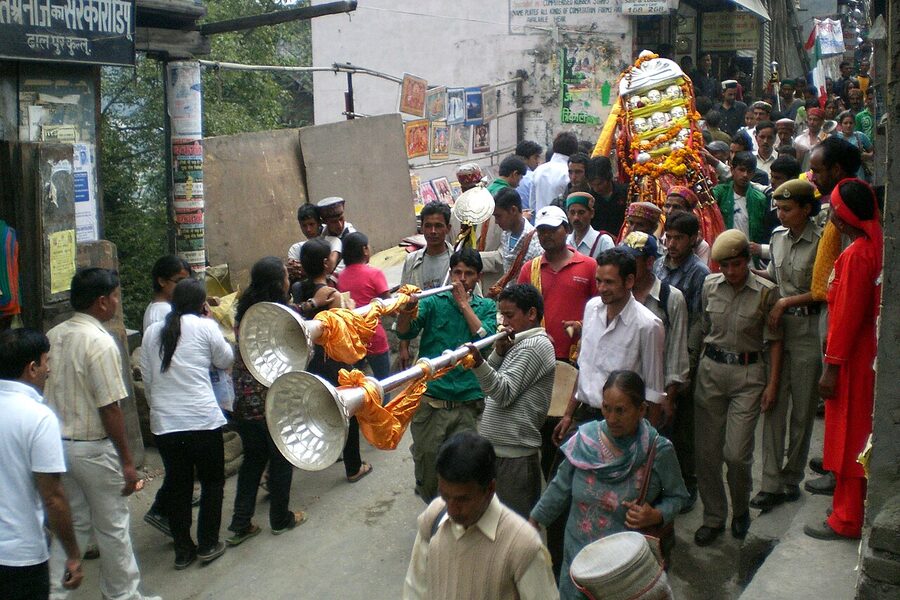
October is dominated by one festival, and it dominates not just the month but the entire Himachal festival year. Kullu Dussehra begins on Vijayadashami, the day most of India ends its Dussehra by burning the Ravana effigy. There is no Ravana effigy in Kullu.
The festival is built around the homecoming of Lord Raghunathji, whose idol was brought to the valley from Ayodhya in 1651 by a disciple of King Jagat Singh as part of the king’s atonement for the death of the Brahmin Durga Dutt. From that year on, the king ruled the Kullu Valley as Raghunathji’s chharibardar (staff bearer), and every year on Vijayadashami the village deities of the valley assemble at Dhalpur Maidan in Kullu town to pay homage to the head deity.
The week is structured around the rath yatra (the Day One chariot-pull from Sultanpur to Dhalpur), the five days of Dev Milan (the assembly of village deities), and the closing Lankadahan on the Beas River bank. More than two hundred devtas attend in palanquins; attendance is between four and six lakh visitors in a typical year. The festival was accorded International Festival status by the state government in 1972.
The full guide to Kullu Dussehra walks the seven days, the origin story, the role of Hidimba Devi (whose palanquin must arrive before the chariot can move on Day One), and the practical mechanics of attending. If you only attend one festival in Himachal, this is the one. Book accommodation in Kullu town two to three months ahead.
November: Lavi at Rampur, Renuka at Sirmaur, and the Trade Fairs
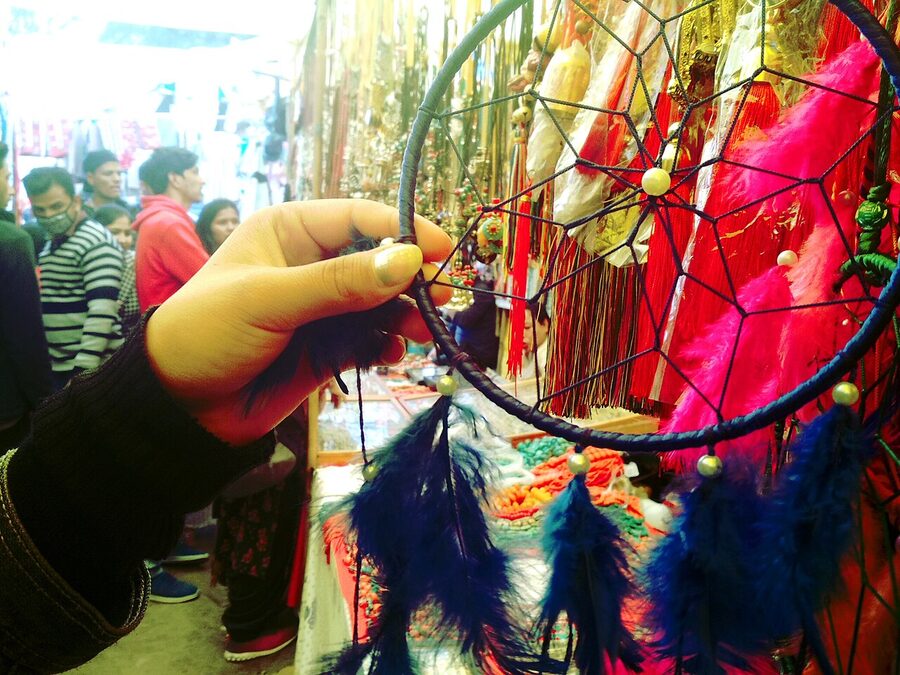
November is trade-fair month in the upper hills, when the high-altitude harvests are in and the trans-Himalayan goods can reach the lower towns. The signature fair is Lavi Mela at Rampur Bushahr, the gateway town to Kinnaur on the Hindustan-Tibet Road.
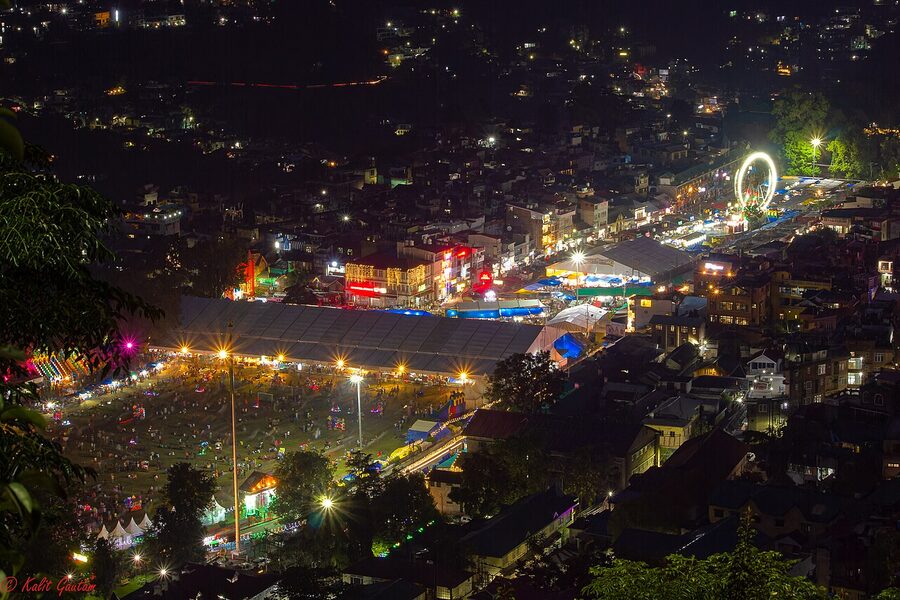
Lavi has been held every year on and around 11 November since 1681, when Raja Kehari Singh of the Rampur Bushahr state signed a trade treaty with Tibet. The treaty is gone (the Indo-Sino border closed in 1962), but the fair has not. It runs for three to four days at multiple open-ground venues across town.
What you can buy at Lavi is the index of what the high country produces: Kinnauri Pashmina shawls and the heavier woollen Pattus, hand-woven Kinnauri tweed, the cylindrical thepang woollen caps, namdas (Kashmiri-style felted rugs), goat and sheep wool by weight, hand-knit jumpers, dried apricots and chilgoza pine nuts, almonds and walnuts from Kinnaur and Lahaul, and (this is the Lavi specialty) Kinnauri horses, mules, yaks, and live colts. The horse-and-mule market is the most theatrical part of the fair. Buyers come from across north India.
By night, Lavi shifts to cultural mode. Open-ground stages are set up across town for folk music and dance, and the bonfires last until late.
Rampur is on the Shimla-Kinnaur road, about 130 kilometres from Shimla (a four-to-five-hour drive depending on highway conditions). The HRTC bus service from Shimla to Rampur runs frequently. Hotel rooms in fair week book three to four weeks ahead.
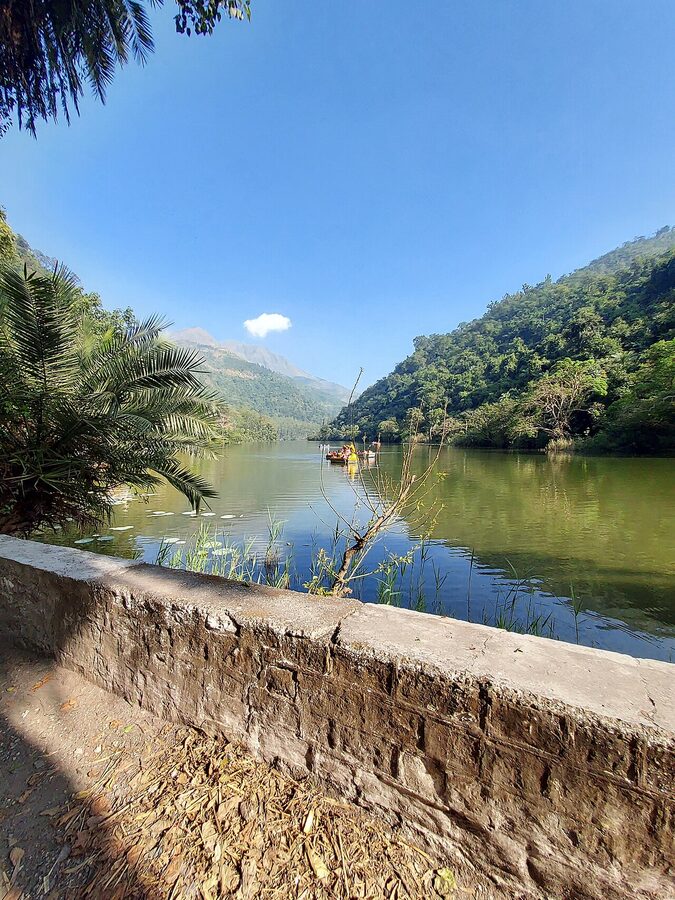
Renuka Fair at Renuka Lake near Nahan in Sirmaur district is the second November anchor. The fair runs for six days starting around ten days after Diwali, in the first or second week of November. It commemorates the annual reunion of Lord Parshurama with his mother Mata Renuka at the lake.
The festival opens with a procession bringing the Parshurama palanquin from the temple at Jamu Koti village down to the lake, where the deity takes a ritual dip and is greeted by other village deities who have already arrived. Folk dance, the magic-and-drama form called Kariyala (a Sirmauri folk-theatre tradition), Thoda archery, wrestling, and a long string of food and craft stalls run for the full six days.
Renuka Lake is shaped like a reclining woman, and the lake itself is treated as the goddess Renuka in physical form. The setting in the wooded Sirmaur hills, with the lake reflecting the deodars on the surrounding ridges, is one of the prettier festival sites in Himachal. Nahan is the nearest town; the lake is 38 kilometres away.
Other November fairs: the Mani Mahesh Mata fair at the Lakshmi Narayan temple in Chamba on the closing day of Karthik Purnima, several smaller harvest melas across Solan and Sirmaur, and the start of the Ice Skating Carnival at the Shimla Ice Skating Rink, which runs every season from early December to late February with a peak weekend in late December.
December: International Himalayan Festival, Christmas, and the Music Crowd
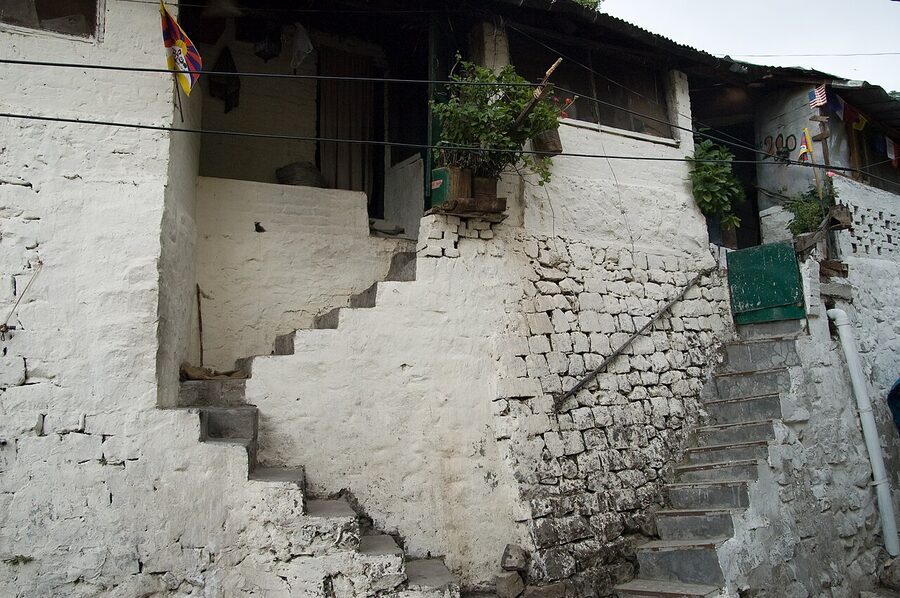
December is the festival month for Tibetan Dharamshala. The International Himalayan Festival in McLeod Ganj, instituted to commemorate the 1989 Nobel Peace Prize awarded to His Holiness the Dalai Lama, runs for three days in the second or third week of December.
The programme draws Tibetan, Ladakhi, Sikkimese, Bhutanese, and Nepali cultural troupes alongside Himachali groups. Stalls along Bhagsu Road and Jogiwara Road sell Tibetan handicrafts, traditional medicines, and food. The public mood is genuinely celebratory rather than ceremonial.
McLeod Ganj’s small streets are tight in festival week. Book your hotel and walk everywhere.
The Dharamshala International Film Festival (DIFF) is the other significant December event in Dharamshala. Founded in 2012 by filmmakers Ritu Sarin and Tenzing Sonam, DIFF is a four-day independent-film festival held at multiple venues across the town, with a focus on Asian cinema and documentary work that doesn’t get screened elsewhere in India. Tickets are required and book out fast. If your interest in Dharamshala is more cultural than spiritual, DIFF is the moment to be there.
Christmas is observed across the state but most fully at the Anglican churches of Christ Church on the Shimla Ridge (the second-oldest church in north India, consecrated 1857) and at St John in the Wilderness at Forsyth Ganj near McLeod Ganj. The Shimla New Year on the Ridge is the Mall’s busiest night of the year. Book accommodation by November or settle for staying two-to-three kilometres out and walking in.
The Kasol Music Festival on 30-31 December has become an annual fixture in the Parvati Valley, and a similar Himachal Hills new-year music event runs the same week elsewhere in the state. Both are music-and-camping events, both draw a young crowd, both have stricter rules than they once did (no outside drinks, photo IDs required), and both can be wet, cold, and chaotic in equal measure.
If you go, dress for the weather and book accommodation in advance. Tent camps fill out quickly and the small permanent guesthouses in Kasol and Bir-Billing take bookings six to eight weeks ahead for end-December.
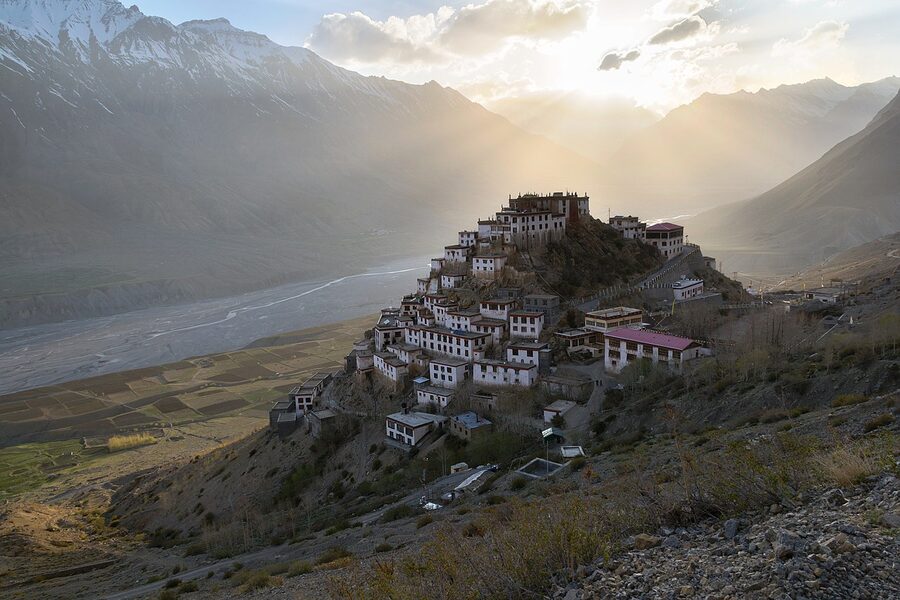
The Buddhist gompas of Spiti and Lahaul observe their own December calendar, with prayer programmes at Ki and Tabo through the month. Spiti is technically accessible in December via the Kinnaur road (the Atal Tunnel side closes once heavy snowfall starts), and a small but growing winter circuit goes up to spot the snow leopard at Kibber-Hikkim. This is a different kind of trip and one for travellers comfortable with sub-zero nights and basic homestays.
The Recurring Pan-Year Festivals
Some of Himachal’s most important religious events do not anchor to a single month and are worth knowing as a separate category.
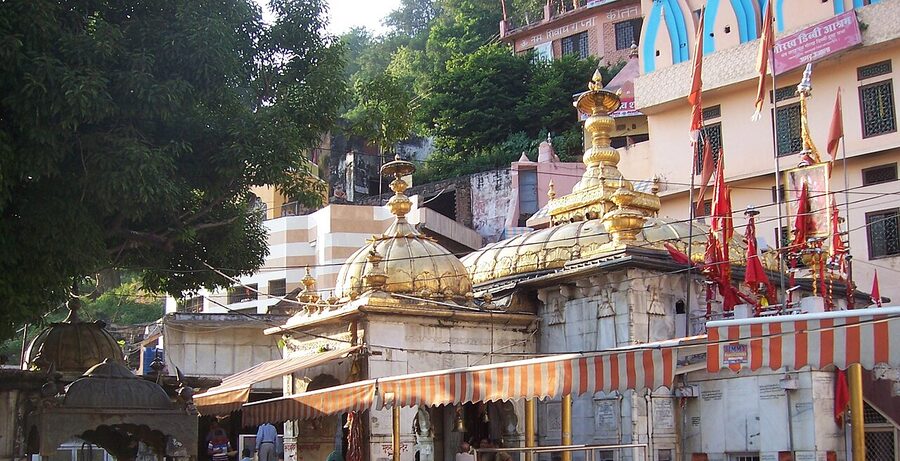
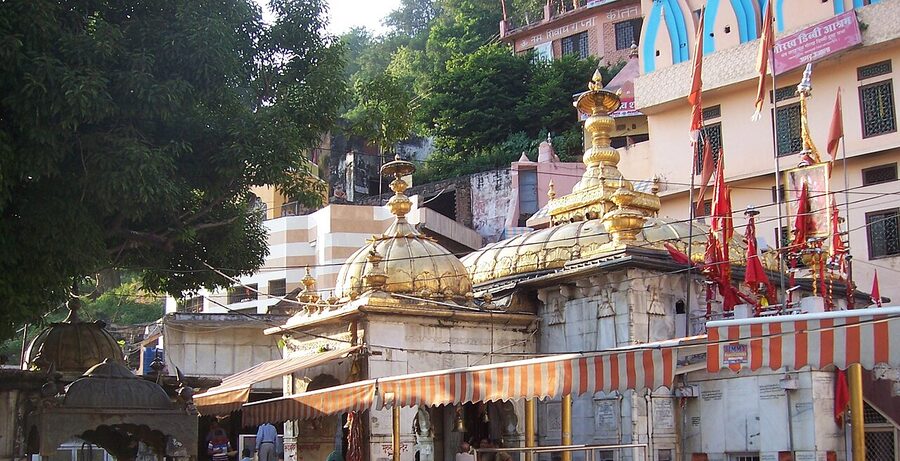
Jwalamukhi Fair at the perpetual-flame temple in Kangra runs twice a year during the spring (Chaitra) and autumn (Ashvin) Navratri cycles. The temple, dedicated to the goddess of the flame that has burned spontaneously from a fissure in the rock for as long as the temple has existed, is the most distinctive of the Devi temples in north India.
Devotees arrive carrying red silken flags. Arriving before sunrise on the central day is the only way to get into the inner sanctum without a long wait. The deeper guide on the Jwalamukhi temple covers visit logistics and the legends.
Chintpurni in Una district holds Mata-Da-Mela four times a year through the four Navratri cycles, with the spring Chaitra fair the largest. Pilgrims walk the 8-kilometre stretch from the bus stand at Bharwain to the temple at Chintpurni village. The eighth day of each Navratri is when the offering of karahi sweet halwa prasad is made.
Bajreshwari Devi at Kangra town and Chamunda Devi at the temple between Dharamshala and Palampur are the two other major Shaktipeeth temples that draw large fairs through both Navratri cycles. Bajreshwari sits in central Kangra town (the temple was rebuilt after the 1905 Kangra earthquake destroyed the original); Chamunda is on a steep wooded slope over the Banganga river.
The Sissu Fair in Lahaul moves through the gompa circuit each summer: Sissur Gompa in June, Gemur Gompa in July, Mani Gompa at Gondhla in August. Each is built around the masked Chham dance staged inside the gompa courtyard. If you are travelling Lahaul over the summer trekking season, knowing the gompa-fair calendar lets you time visits to see ritual life rather than just architecture.
What You’ll Eat at the Fairs
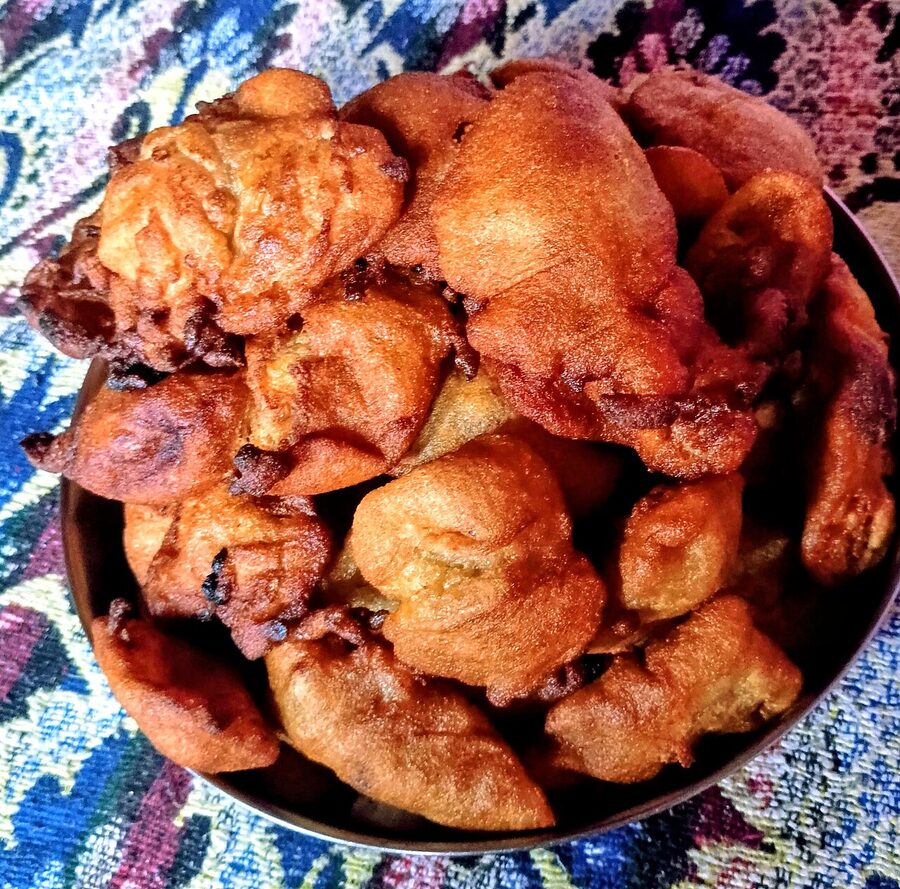
Himachali fair food is its own subject and a useful planning angle. The standard Pahari dishes you’ll find at the larger fairs include:
- Sidu: A wheat-flour dumpling stuffed with poppy seed paste, ground walnut, or jaggery, steamed and served with desi ghee. The Kullu and Mandi fairs are the best places for sidu.
- Babru: A black-gram-stuffed flatbread, deep-fried and served with tamarind chutney. Common at the lower-hills fairs.
- Madra: A yoghurt-and-chickpea curry from Chamba and Mandi, often eaten on the dham (the traditional Himachali festive meal served on a banana leaf).
- Chha Gosht: Lamb cooked in a yoghurt-and-besan gravy. A wedding and festival staple in Mandi and Chamba.
- Tudkiya Bhath: A rice and lentil pilaf with potato, common in the Mandi and Kullu hills.
- Kulthi ki Dal: Horse-gram lentil, traditionally eaten on cold-weather festival mornings across the lower hills.
- Bhey: A Kashmiri-influenced dish of lotus stem from the lower-hills temple-feast tradition.
- Bobaru: A traditional sweet from Kullu district eaten especially around Lohri and the autumn fairs.
The full dham, a multi-course Himachali festive meal cooked by a dedicated community of cooks called botis and served seated on the floor on banana leaves, is what you’ll be served if you’re invited to a wedding or a major village festival in the lower hills. Some fairs (Mandi Shivratri, Minjar at Chamba) run a public dham service on one or two of the festival days; ask at the local tourist information cell. Eating dham at one of the bigger fairs is one of the best food experiences you can have in north India.
What You’ll Buy at the Fairs
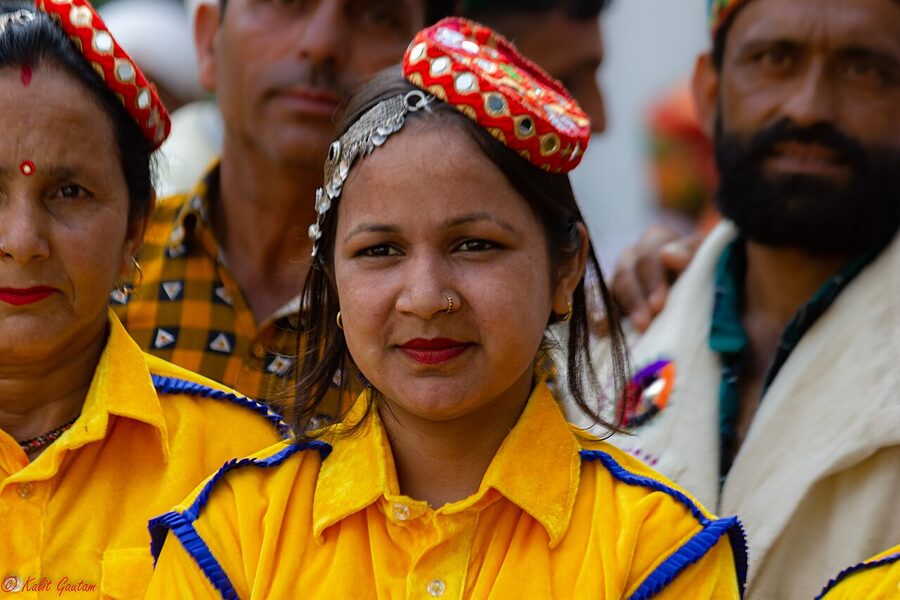
The Lavi Mela at Rampur and the Minjar Mela at Chamba are the two best handicraft fairs of the Himachal year, but every state-level fair has its own craft shoulder.
Kullu shawls: woollen, with the geometric patterns at the borders that are the signature of Kullu weaving. The cooperative to buy from is Bhuttico (the Bhutti Weavers Cooperative Society) in Kullu town, or at any of their branch outlets. A real Kullu shawl from Bhuttico carries a guarantee of weave provenance and pricing that the wayside stalls don’t. Mass-produced versions of the patterns sold elsewhere may use synthetic blends, and the Kullu Geographical Indication certification is the practical protection.
Kinnauri Pashmina and Pattu: heavier than the Kashmiri Pashmina, the Kinnauri Pattu is a thick winter shawl woven on home looms in the Kinnaur villages. Lavi at Rampur is the best fair to buy; Kinnauri stalls run all three days and the prices at the source are noticeably better than at Shimla or Manali tourist outlets.
Chamba Rumal: the double-satin embroidery from Chamba, where the same image appears identically on both sides of the silk-on-cotton cloth. A genuine Chamba Rumal is a slow-craft object; the Chamba Crafts Society and a small handful of NGO-run cooperatives in Chamba town are the reliable sources. Minjar fair week is the best time to find them.
Lahauli woollens: the heavy woollen Chola coats and the rough wool socks worn by Gaddi shepherds. Bharmaur in Manimahesh week or Keylong during the summer fairs are the source. Don’t expect refined finishing. These are working clothes designed for high-altitude winters.
For real dry fruit (chilgoza from the high-altitude Chilgoza pine of Kinnaur, walnuts, almonds, and the deep-red dried apricots from the Spiti villages), Lavi at Rampur is again the source. Buying chilgoza at Shimla or Delhi gets you the same nut at three times the price.
Practical Planning for the Festival Year
How to get there. The state’s three airports are Bhuntar (the Kullu-Manali airport, 10 km south of Kullu town), Gaggal (the Kangra airport, 14 km from Dharamshala), and Shimla (Jubbarhatti, 20 km from Shimla town). Flight schedules are weather-sensitive, particularly at Shimla and Bhuntar; fog and crosswinds cancel flights regularly between November and February.
The fallback is the Chandigarh-to-everywhere road network. From Chandigarh, buses run to Shimla (4 hours), Manali (8-9 hours), Dharamshala (7 hours), Mandi (5 hours), Bilaspur (3 hours), and Rampur (8 hours). HRTC, the state-run bus service, is reliable, and the Volvo overnight buses from Delhi to Manali are the standard backpacker route.
If you’re attending a specific fair, the safest plan is: fly or train to the nearest hub the week before, take the local bus or hire a car for the festival town, and budget an extra day each side for weather. The Delhi-Manali road is the most-used corridor and the most-disrupted in monsoon and winter; for the northern fairs (Manimahesh, Minjar at Chamba), the Pathankot-Chamba road via Dalhousie is often easier than the Shimla side.
When to book accommodation. For the major fairs (Mandi Shivratri, Kullu Dussehra, Minjar, Lavi, Manimahesh) book at least two months ahead. For the smaller fairs (Sui Mela, Sipi, Sair, Tara Devi) you can usually find a room a few days before.
The HPTDC hotels in the festival towns are reliable but conservative; the smaller homestays around Kullu, Spiti, and Sirmaur are best booked direct by phone or through the HPTDC tourist office. The Himachal hotels overview on this site has the recommended properties by region.
What to wear. Layered. Even at the summer fairs (Minjar in July, Manimahesh in August) the high country is cold at night and the temperature swings are large. Rain protection through the monsoon.
Sturdy shoes for the ground at Dhalpur Maidan, the Chowgan, and Paddal. Fair-ground earth is uneven and the crowd is real. For temple visits at the Devi shrines and the gompas, modest dress is expected; at the tribal fairs in Lahaul and Spiti, you’ll see more variety and you can dress for warmth without worrying about it.
Photography. The major fairs are camera-friendly outside the inner-sanctum spaces of the temples. At the Devi temples (Jwalamukhi, Chintpurni, Naina Devi, Bajreshwari, Chamunda) and inside the Kullu Dussehra Sultanpur temple, photography of the idol is forbidden. At the gompas, ask before photographing inside.
The palanquin processions and the public-ground rituals are open to photography. Arrive early, find a spot near the route, stay there.
One reasonable festival-anchored Himachal trip. If you’re planning a single visit, the highest-density festival week is the second week of October. Kullu Dussehra is on, the autumn weather is at its best, and you can string together Manali (Hidimba Devi), Naggar (the Roerich estate and the Sarshi Jatra cycle), Kullu town (Dussehra), and a side trip to Manikaran (the Sikh-Hindu hot-spring shrine) in eight to ten days.
The second-best window is March, when Mandi Shivratri overlaps with Holi at Sujanpur. The third-best is November, with Lavi at Rampur followed by a Kinnaur or Spiti loop if the road is open. For longer or honeymoon-style itineraries, see Himachal tour packages and Honeymoon in Himachal.
What’s Changed and What’s Lost
Three things are worth saying plainly.
One: the trade fairs are no longer trade fairs in any real economic sense. Lavi at Rampur was once the trans-Himalayan trade hub of the Himachal hills, with merchants travelling weeks from Tibet, Yarkand, and the Tarim Basin. The Indo-Sino border closed in 1962 and the Tibet trade went with it.
Lavi now is a domestic craft fair sustained on the regional Kinnauri-Lahauli production base alongside a parallel cultural-tourism economy. This is not a complaint, but it is worth knowing that the fair you’ll see is a different economic creature from what 19th-century gazetteers describe.
Two: animal sacrifice has been substantially curtailed. The 2014 ruling of the Himachal Pradesh High Court banning animal sacrifice at religious places has changed the public character of several fairs, most prominently the Lankadahan day at Kullu Dussehra. Some sacrifices continue privately at remote village-level fairs. If you have strong feelings on this question, attend with awareness; the public-facing festivals you’ll see no longer include the open sacrifices that older accounts describe.
Three: the cultural programmes are increasingly state-organised. The Kala Kendra programme at Kullu Dussehra, the Seri Manch programme at Mandi Shivratri, the Chowgan programme at Chamba Minjar, and the public-ground events at Lavi are now organised through the HP Department of Language, Art and Culture and the district administration. Performers are selected, paid, and brought in.
The older spontaneous form of the Kullu Nati or the Sirmauri Nati, danced by villagers themselves at the festival ground at moonrise, is now rare. The staged version is still good. But it is not the older form.
If You Want to Go Deeper
Some of these festivals deserve their own visit and their own deeper read.
- Kullu Dussehra: full guide to the seven days, the devta system, and how to attend.
- Jwalamukhi temple: the perpetual-flame Devi shrine, the Navratri fair, and visit logistics.
- Tourist attractions of Himachal: the broader site coverage of temples, hill stations, and pilgrimage sites that anchor the festival year.
- Lahaul and Spiti: the high country where the Buddhist festival calendar runs.
- Manali: the Hidimba Devi temple, the Doongri fair, and the Winter Carnival base.
- Honeymoon in Himachal: festival-anchored honeymoon planning, especially around Manali and Dharamshala.
- Himachal tour packages: how to combine multiple fairs into a single trip.
- Hotels in Himachal: where to stay in each fair town.
- Festivals and Culture: more on the temples, monasteries and living culture of the hills.
- Things to Do in Himachal: trekking, skiing, and other activity-anchored visits.
For official festival programmes and dates, the authoritative sources are HPTDC’s official fairs and festivals listing, the HP Tourism Development Corporation events page, the Kullu Dussehra official site, and the Incredible India festivals listing. Cross-check the dates the year you’re travelling; most of these festivals shift by a week or two with the Hindu lunar calendar.
The festival year in Himachal does not really stop. There’s always a village mela somewhere, a devta on the move, a gompa lighting butter lamps.
What this calendar does is point you at the moments when the year is most legible. Pick a month. Book the train.