
Most travellers come to Dalhousie expecting a quieter Shimla and leave thinking it’s a smaller, less interesting Shimla. Both reactions miss the point. The town is tiny: population about 7,000, three small malls strung along a ridge, and in May the central GPO is just as packed as Mall Road in Shimla, only with less to do. The reason to come isn’t Dalhousie itself.
It’s the Chamba district around it. The Khajjiar meadow, the Kalatop forest, the 10th-century stone temples in Chamba town 45 km down the road, and the long, mostly empty walks above Bakrota that almost no day-tripper bothers with. Get the framing right and Dalhousie earns three nights. Get it wrong and you’ll write a review online complaining the place is overrated.
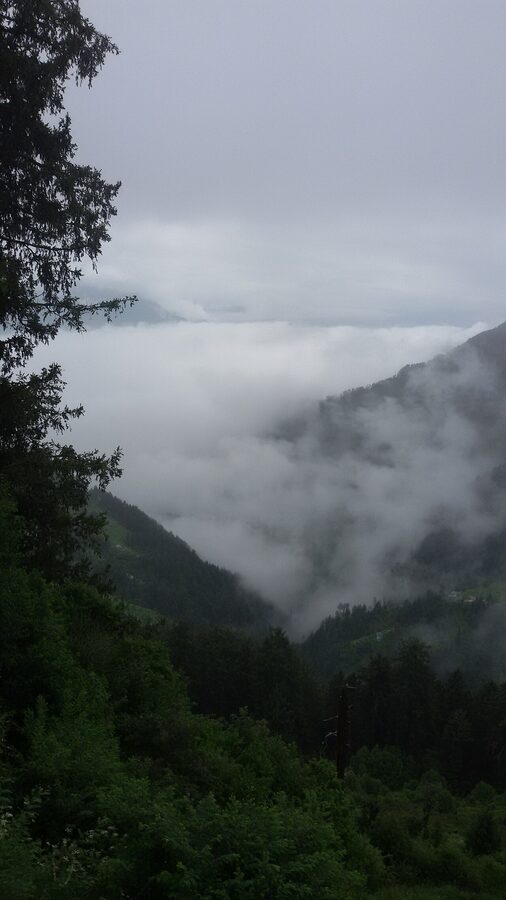
Dalhousie sits in the western corner of Himachal Pradesh, in Chamba district, at around 1,970 metres on five hills the British acquired from the Raja of Chamba in 1851 in exchange for a tax reduction. The Earl of Dalhousie, then Governor-General of India, signed off on it as a sanatorium for British troops. The town that grew up over the next thirty years was always a smaller, quieter cousin to Shimla and Mussoorie.
It still is. Where Shimla had viceroys and partition conferences, Dalhousie had retired colonels and TB convalescents. Subhash Chandra Bose came here in 1937 to recover from tuberculosis, and the chowk at the bottom of the bus stand carries his name because of it.

This guide is for travellers thinking about whether Dalhousie is worth a stop on a longer Himachal trip. I’ll be straight: I don’t think Dalhousie’s town centre is the highlight. The Mall around Gandhi Chowk is fine for an evening, the two old churches are pretty, and that’s the full inventory of central-town sights. The good stuff is in a 50 km ring around it.
What Most Visitors Get Wrong About Dalhousie
Three things first-time visitors get wrong, in roughly the order they ruin the trip.
One: assuming Dalhousie is a “quieter Shimla.” It is quieter, in the sense that the population is a fortieth of Shimla’s. But it’s also a fortieth of the town. There are no museums of any size, no theatres, no major heritage hotels in the central area, no real bazaar beyond a single string of shawl shops along the Mall.
If your model for Dalhousie is “Shimla but with less hassle,” you’ll spend three days walking circles around the same kilometre of road. The right model is “small base from which you do the Chamba day-trip ring.” Plan that way and the trip works.
Two: timing the visit for May or June. Dalhousie’s high season is the Indian summer-holiday window, the same as Shimla and Manali. Hotels triple, the Pathankot–Banikhet road backs up, and the GPO area in the evening is crowded.
The smart months are October to mid-November and late March to mid-April. October has the cleanest air of the year. April brings the rhododendron above Bakrota. Both are at half the rate of June and roughly a tenth of the foot traffic.
If you want snow, late December through February gives you it reliably. The higher reaches of the Bakrota Walk are usually under thirty centimetres in January.
Three: basing in central Dalhousie. The hotels around the GPO and Subhash Chowk are mid-range business stock with the same problems as central Shimla: noise from the bus stand, no parking, generators in the alley.
There are better choices. Bakrota Hills above the town for views, Banikhet five kilometres down the road for a working-village base at lower rates, or Khajjiar 23 km away for a meadow-front stay that puts you next to the best day-trip area in the district. We’ll cover the trade-offs in the basing section.
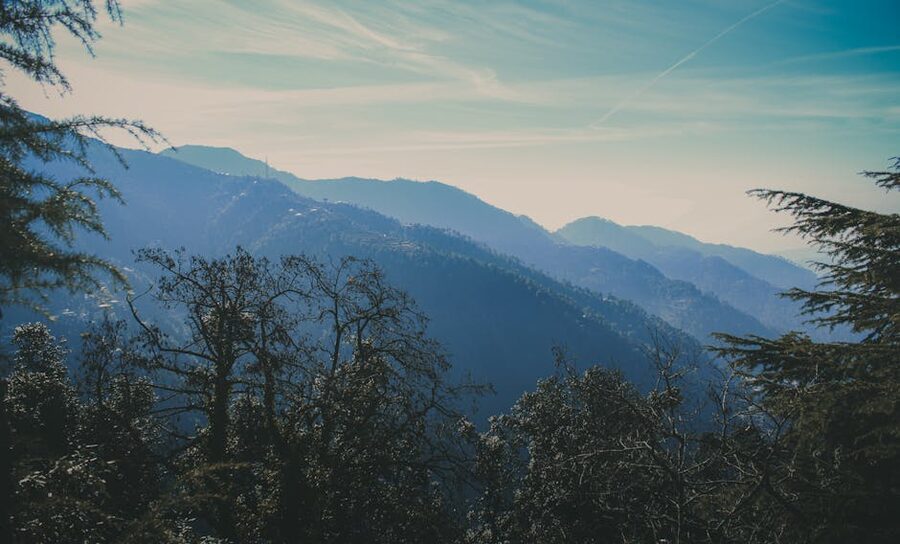
When to Visit Dalhousie
Dalhousie has four distinct seasons and most of the year is genuinely pleasant if you avoid the two pinch points. Here’s the month-by-month breakdown.
Late September to Mid-November: The Best Window
If you have flexibility on dates, this is the window. The monsoon clears by the third week of September, the air over the Pir Panjal and Dhauladhar is at its cleanest, daytime temperatures sit between 14 and 22 degrees and evenings around 8 to 12.
Apple harvest is on across the valleys towards Tissa and Bharmour, and crowd levels drop sharply once Indian school holidays end in early September. Hotel rates fall to roughly half of summer-peak. October mornings from the Dainkund ridge give you the snow line of the Greater Himalaya 75 km north on most clear days, which is the single best mountain view in the area and not on offer in summer because of the haze.
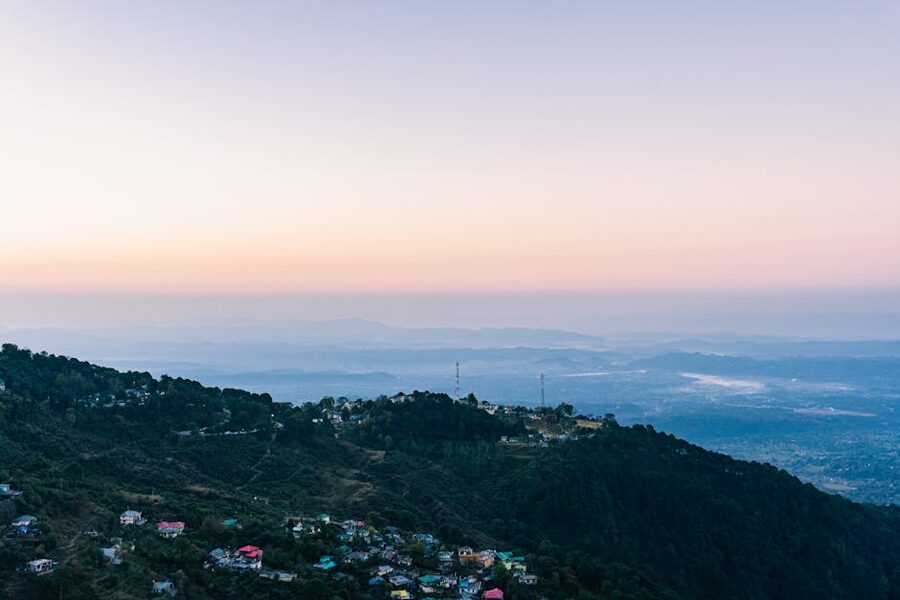
Late December to February: For the Snow
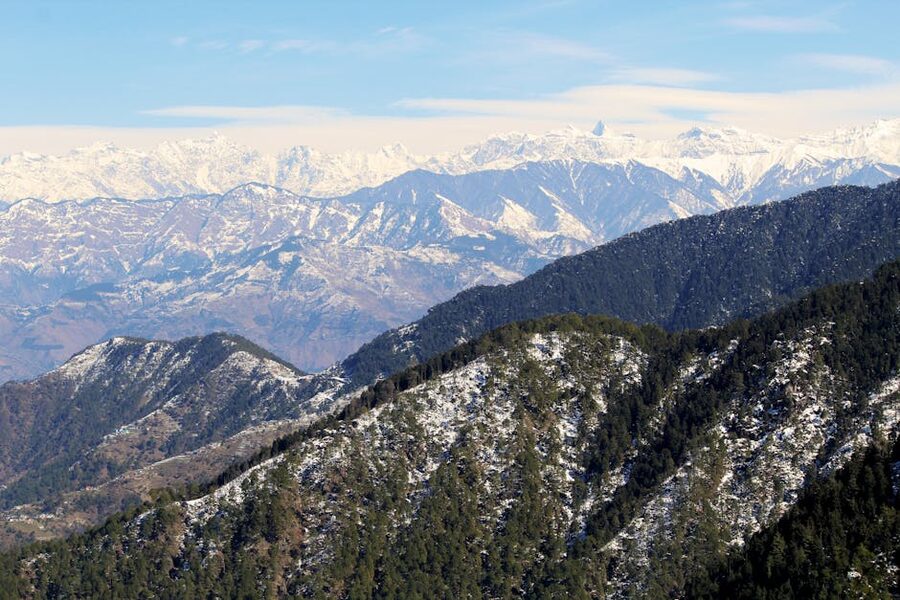
Heavy snow tends to land in late December and again in late January. December and January average daytime highs of 6 to 11 degrees and night lows of 2 to 4, dropping below freezing on cold nights.
The Bakrota Walk in January is genuinely beautiful. Pine and deodar under thirty centimetres of fresh powder, almost no foot traffic, the dome of Dainkund visible across to the south. Rates spike about 50 per cent over Christmas and New Year, then drop back hard for the first three weeks of January. Bring proper layers; the heating in mid-range hotels is patchy and a thermal base layer makes a real difference.
Practical detail. The Pathankot–Dalhousie road can close briefly during heavy snow, usually for half a day at a time while the highway department clears it. If you’re arriving in early January, don’t book a flight that leaves Pathankot the same evening you check out. Give yourself a Banikhet overnight buffer in case of road closure.
Mid-March to Mid-April: The Rhododendron Window
Spring in Dalhousie is the rhododendron season. The slopes above Bakrota and the road towards Khajjiar have stands of red and pink Himalayan rhododendron in flower from about the third week of March through the second week of April. Daytime temperatures are mild, 12 to 20, and the snow has thinned but not vanished from the higher walks.
This is also when the small community of resident Bengali tourists comes through. Dalhousie has had a Bengali following since the early 1900s, partly because of the Bose connection and partly because the Calcutta-to-Pathankot rail link made it accessible. The cafés around Gandhi Chowk fill with Bengali families in March in a way that, if you’re not from north India, will surprise you.
Mid-April to End of June: Indian Summer Holidays
This is the stretch that gives Dalhousie its overcrowded reputation. From around 15 April through 30 June the town is full of summer-holiday families from Punjab, Haryana, Delhi, and increasingly Gujarat. Hotel rates roughly triple.
The Pathankot–Banikhet road backs up on Friday afternoons and Sunday evenings. Khajjiar in late May has rented horses queueing for photos with tourists in rented Pahari dress. If you must come in this window, travel mid-week, book at least three months ahead, and base in Khajjiar or Banikhet rather than central Dalhousie so you have a quieter retreat at night.
July to Early September: Monsoon
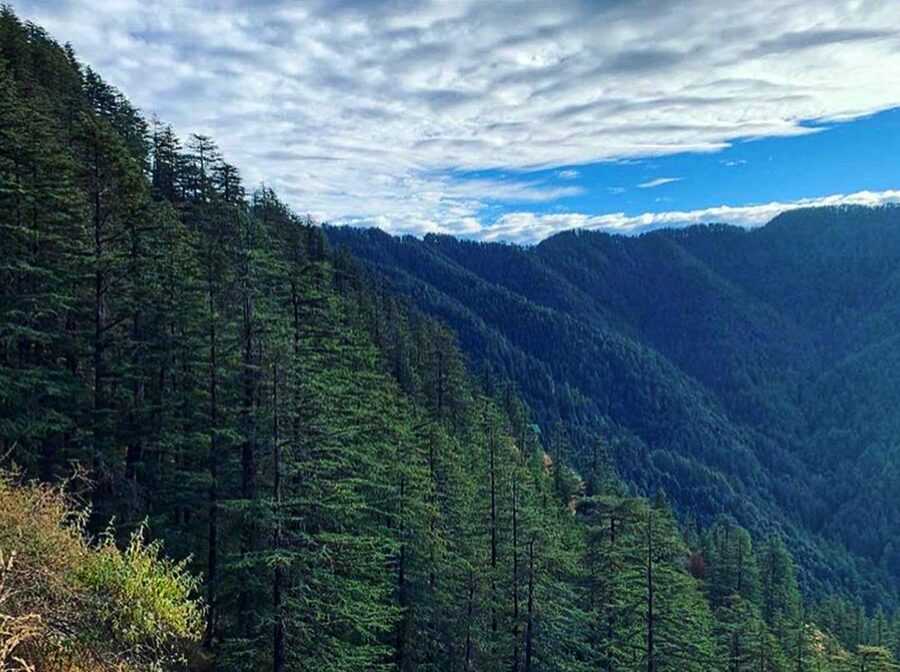
The Dalhousie monsoon is heavy. Rainfall in July and August averages around 580 millimetres a month, which is more than double Shimla in the same period. The road from Pathankot is usually fine but the Salooni and Tissa routes north of Chamba close periodically with landslides, and visibility for the long Pir Panjal views is poor for most of the season.
The flip side: the deodar forest is at its greenest, hotel rates are the lowest of the year, and the Satdhara Falls and Panchpula streams are at their fullest. If you don’t mind walking in light rain and you came for atmosphere rather than panoramas, July is fair value. August is usually the wettest month of the year and harder to recommend.
Getting to Dalhousie
Dalhousie has no airport and no railway station. The realistic options are road from Pathankot, road from Chandigarh, or a combination of overnight train to Pathankot plus a road transfer. Total travel time from Delhi is roughly 12 hours by overnight train and taxi, or 12 to 14 hours by direct road, and there’s no way to compress that meaningfully.
By Train (the Practical Route)
Pathankot is the nearest railhead, 75 to 90 km from Dalhousie depending on whether you mean the cantonment station (Pathankot Junction) or the broad-gauge terminus (Chakki Bank, 4 km west). Both are well connected to Delhi and the rest of north India.
The pattern most travellers use is an overnight train from Delhi (the Jammu Mail at 21:10 New Delhi, arriving Pathankot around 06:45; the Dhauladhar Express; or the Jammu Rajdhani), and then a 2.5 to 3 hour road transfer up the hill. A morning arrival means you’re in Banikhet by mid-morning and Dalhousie by lunch with daylight to spare. Fares range from around ₹350 (~$4) in sleeper class to ₹2,800 (~$33) in first-class AC.
By Road From Pathankot
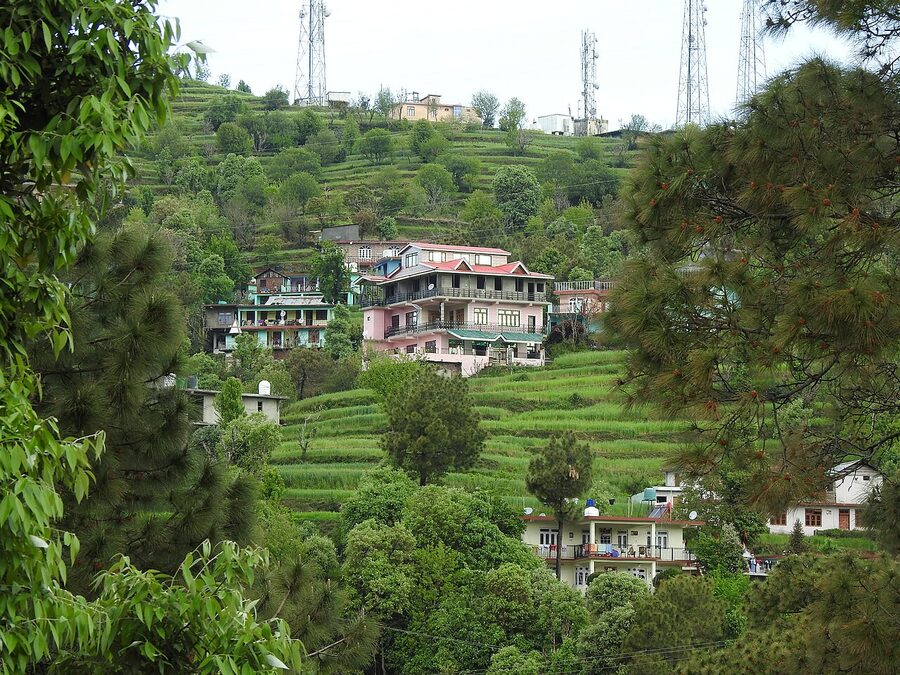
From Pathankot Junction or Chakki Bank, a private taxi to Dalhousie runs ₹2,500 to ₹3,500 (~$30 to 42), takes 2.5 to 3 hours, and covers about 90 km via the National Highway and the climb through Dunera and Banikhet.
The Himachal Road Transport Corporation (HRTC) runs frequent buses on the same route from Pathankot ISBT, fares around ₹150 to ₹250 (~$1.80 to 3) for an ordinary or semi-deluxe coach, taking 3.5 hours. For groups of three or four, the taxi is fair value; solo, the bus is fine. Buses run roughly every 90 minutes from 06:30 to about 17:30; the last one leaves Pathankot too late for a comfortable arrival in winter, so don’t bank on after-dark buses in December or January.
By Road From Delhi or Chandigarh
Direct road from Delhi covers around 555 kilometres via NH44 and the Pathankot road, and takes 11 to 13 hours under good conditions, longer in heavy traffic. Most travellers split it: overnight train to Pathankot, then road as above. From Chandigarh, road is about 360 km and 9 to 10 hours via Una, Hoshiarpur, and Pathankot.
Government-run Volvo coaches from Delhi’s Kashmiri Gate ISBT to Dalhousie run overnight, depart around 19:30, arrive Banikhet around 05:30 and Dalhousie around 06:45, fares ₹1,000 to ₹1,800 (~$12 to 21). HRTC takes online bookings at hrtchp.com; book 24 to 48 hours ahead in season.
By Air
The closest airport with regular commercial flights is Gaggal (Kangra Airport) about 140 km away, with daily Delhi connections. Pathankot Airport has one daily Delhi flight that’s prone to fog cancellation in winter. Sri Guru Ram Dass Jee International Airport at Amritsar, 213 km away, is a more reliable option in winter and adds about three hours of road transfer.
None of these is faster than the overnight train when you account for road transfer and flight delay buffers. Air to Dalhousie is only worth the extra cost if you’re connecting from somewhere outside north India and your time is genuinely tight.
Where to Base
Dalhousie is small enough that “where to base” matters more than it does in Shimla or Manali; there are essentially four choices and they read very differently in practice. For a fuller round-up of accommodation across the state, see our overview at hotels in Himachal; the section below is the Dalhousie-specific call.
Central Dalhousie (Gandhi Chowk and Subhash Chowk)
The two lower malls converge at the GPO at Gandhi Chowk and at Subhash Chowk a few hundred metres down the road. This is the busy core of town, where the Tibetan market is, where most of the cafés are, and where the bus stand discharges new arrivals.
Hotels run from around ₹1,200 (~$14) for a basic guesthouse up to ₹6,000 (~$71) for the older mid-range stock. The Grand View Hotel above the GPO is the most “Raj-era” stay in the central area, around ₹6,500 (~$77) for a heritage room. The downside is steady traffic and bus-stand noise during the day, with quiet only really arriving after 9 PM. Stay here if you want everything walkable and don’t mind the small-town bustle.
Bakrota Hills (the Quieter Choice Above Town)
About 2 to 3 km above Gandhi Chowk on the steep climb up Upper Bakrota, a cluster of resorts and a handful of homestays sits among deodar forest at around 2,250 metres. That’s about 250 metres higher and a couple of degrees cooler than central Dalhousie.
The Alps Resort is the larger option here, around ₹4,500 to ₹8,000 (~$53 to 95) a night depending on season, with a few smaller properties on the same road. A taxi to Gandhi Chowk runs about ₹200 (~$2.40) one way, or it’s a 35 to 45-minute walk down (and a real walk back up, which is half the point). Stay here if you’re after the deodar-forest atmosphere and don’t mind the occasional ride to town for dinner.
Khajjiar (Best for the Day-Trip Ring)
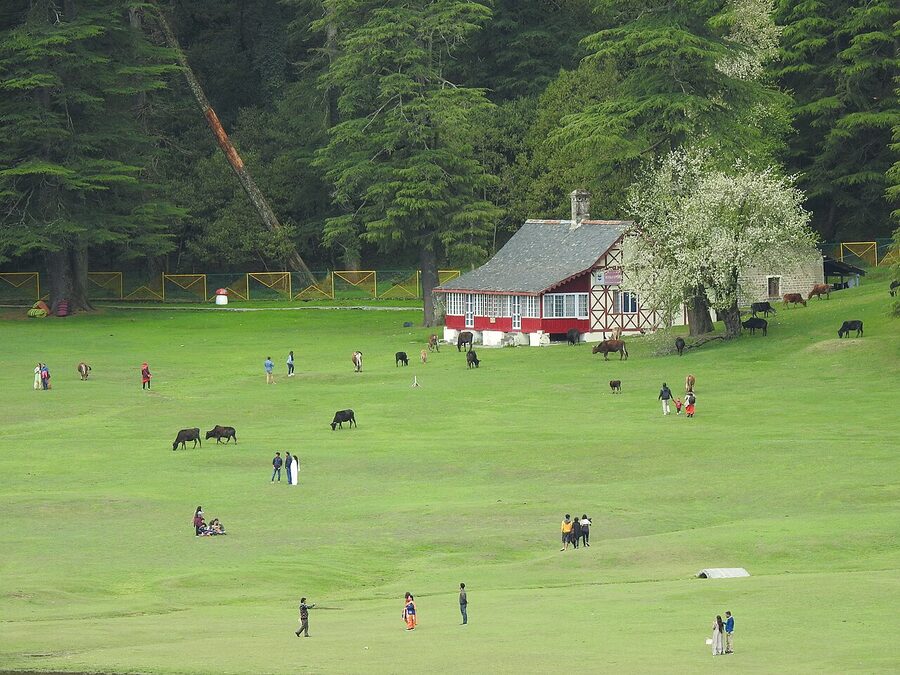
Khajjiar is 23 km from Dalhousie on a winding road through the Kalatop Wildlife Sanctuary and is the single most photographed place in the district. The HPTDC Hotel Devdar (rooms from around ₹3,500/~$42 a night) sits at one corner of the meadow, with a handful of private resorts and homestays clustered on the road in.
Basing here makes sense if your priorities are nature and photography and you don’t need much from a Mall-Road shopping street. The drawback is that all the food options shut around 9 PM and there’s no street-life of any kind. For many readers this is the right base for two of three nights.
Banikhet (the Working Village)
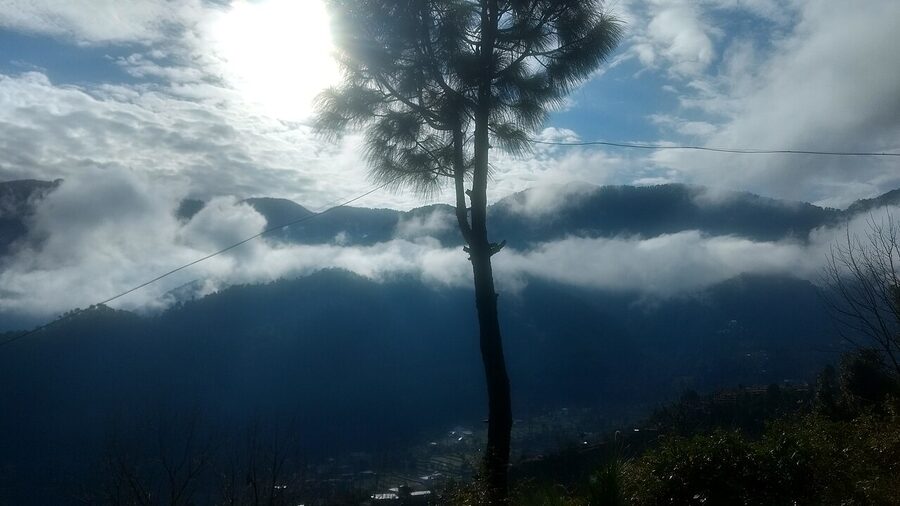
Banikhet is a working village 12 km below Dalhousie at around 1,400 metres, on the Pathankot road. Smaller than Dalhousie, less photogenic, with a strip of small hotels and ₹600 to ₹1,500 (~$7 to 18) a night guesthouses.
Most travellers don’t bother with it. But it’s the smart base for travellers who want a 4 to 6-night Chamba District trip on a budget: quiet at night, half the rates, and an easy drive up to Dalhousie or out to Khajjiar in a hired car. The travel writer behind FootLoose Dev makes the same case for nearby Bakloh, 35 km from Dalhousie, which is even quieter; if you’re driving your own vehicle, that’s worth a look as a writers’-base alternative.
The Three Malls
Dalhousie is laid out on three parallel ridge-walks at progressively higher elevations, all connected by short steep cross-streets. Most first-time visitors only walk the lowest two. The highest, Upper Bakrota, is the better walk by a wide margin and almost no day-tripper makes it up there.
The Lower Malls (Moti Tibba and Potreyn)
The two lower malls are level walks of about 1.5 km each, ringing Moti Tibba and Potreyn hills respectively. They meet at Subhash Chowk on one side and at the GPO at Gandhi Chowk on the other, forming a rough figure-of-eight. Walk both of them in opposite directions and you’ve covered the central core of Dalhousie in about 90 minutes.
The southern (Potreyn) loop has the bus stand at one end. The northern (Moti Tibba) loop has the Convent of the Sacred Heart and Sacred Heart School, founded by Belgian nuns in 1897 and still operating. Auto-rickshaws aren’t allowed on either; everything walks.
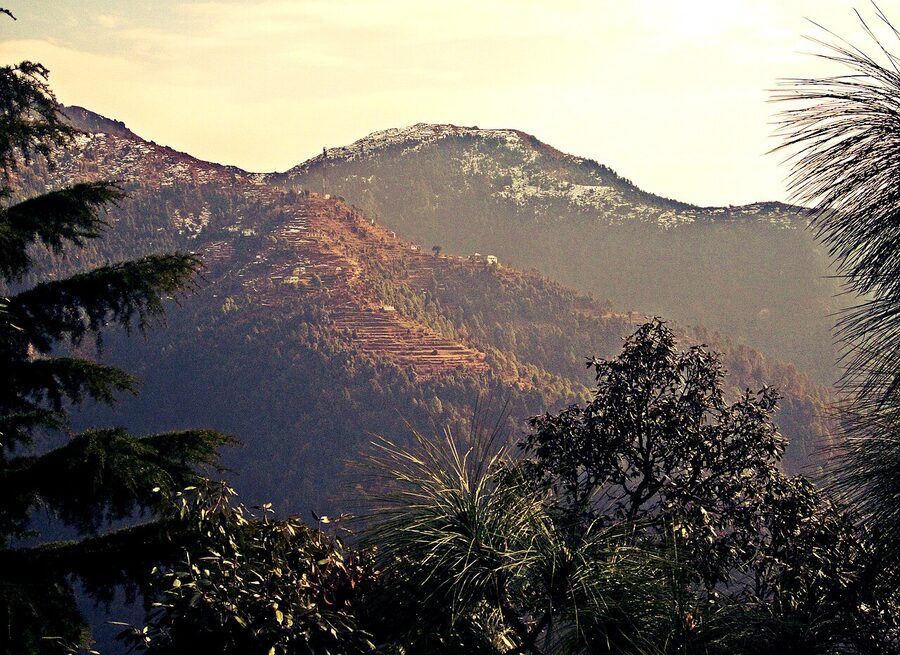
Subhash Chowk is named for Subhash Chandra Bose, who came to Dalhousie in 1937 to recover from tuberculosis and stayed for about seven months at a cottage on Moti Tibba. The detail is local-history rather than dramatic, but it’s the reason the chowk has the name and it’s quietly important in the regional Bengali memory of the town. There’s a small bust of Bose in the park at the chowk and a pair of plaques worth reading if you can.
Gandhi Chowk and the GPO
Gandhi Chowk at the head of the GPO is the social magnet of evening Dalhousie. The post office building dates to the late 19th century, the Tibetan market spills out from one corner, and from about 5 PM through 9 PM in season this is where the town gathers. Most of the better cafés are within 200 metres of this point: Cafe Dalhousie for a slow coffee and a window seat over the GPO, Kwality Restaurant for old-school Indian standards, and the smaller dhabas tucked behind the post office for ₹120 (~$1.45) thalis. First-quoted prices on shawls and pashminas in the Tibetan market come down by a third or more if you push, and that’s normal.
Upper Bakrota Mall (the Walk Worth Doing)
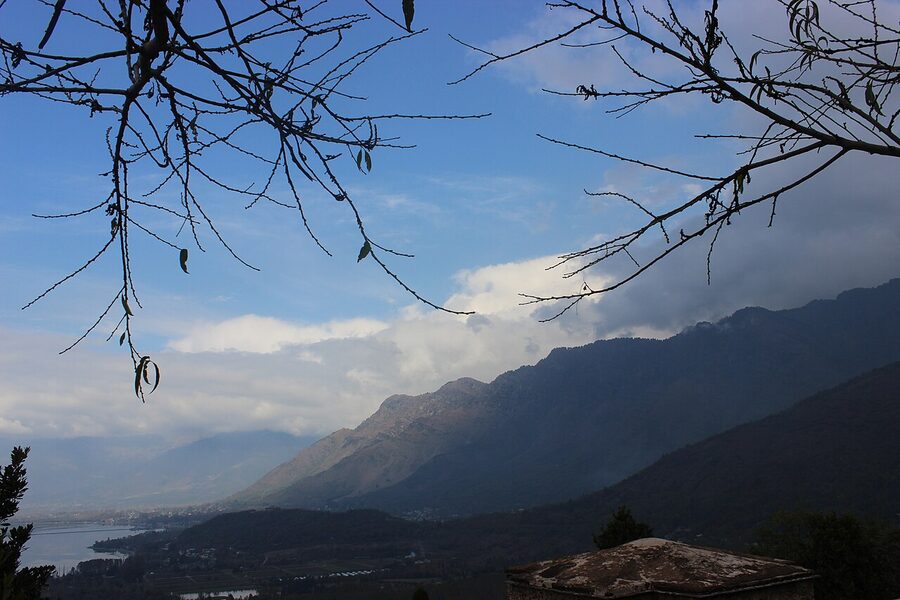
The Upper Bakrota Mall is the third and highest of Dalhousie’s three malls, laid out around the top of Bakrota Hill at roughly 2,400 metres, about 300 metres above Gandhi Chowk. The full circuit, called Bakrota Walk, is a 5-kilometre loop on level (or near-level) road, almost entirely in deodar and pine forest, with views across to the Pir Panjal Range and down to the Ravi Valley.
This is the quietest of the three malls; on a typical autumn morning you’ll meet four or five other walkers in the full hour-and-a-half it takes to complete the loop. The walk passes a number of large private estates that were the holiday homes of Punjabi landed gentry during the Raj and now belong to a similar mix of new-Punjabi families. Most are gated; a few are visible from the road.
The standard route is to start at Subhash Chowk, climb up via Upper Bakrota Road past the small Pholani Devi Temple (about 25 minutes’ steady climb), then take the loop clockwise back to the start. Allow 2.5 hours for the round trip with stops; a small tea stall at the start of the loop is a fair turnaround point. This is genuinely the best two-hour walk in the Dalhousie area and the single thing I’d push hardest on a first-time visitor.
The Two Churches
Dalhousie has two stone churches from the late 19th century. They’re in walking distance of each other and worth combining into a single 45-minute stop.
St Francis Catholic Church (Subhash Chowk)
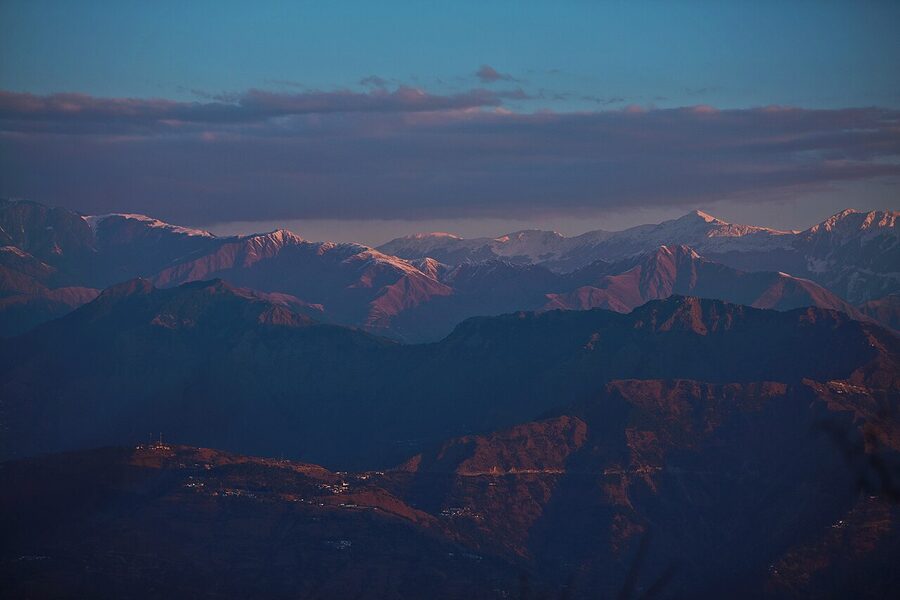
St Francis was built in 1894 on a small bluff above Subhash Chowk by the British military, originally as a chapel for soldiers convalescing at the Dalhousie sanatorium. The walls are local grey stone with a slate roof, and the church is small (maybe 80 seats) and quietly striking inside. It’s still the active Catholic parish for the Dalhousie area and runs a 9 AM Sunday service.
Entry is free, donations welcome. The garden behind the church has a working flowerbed and a few benches with a clean view down the valley; locals come here to read in the afternoon. Come around 4 to 5 PM in autumn for the cleanest light through the stained glass.
St John’s Church (the Civilian Church)
St John’s, between the GPO and Gandhi Chowk, was built in 1863 for the British civilian population and is the older of the two by three decades. It’s Anglican, plainer than St Francis, with a small attached library and a tiny photo gallery of late-Raj Dalhousie that’s worth ten minutes if it’s open.
There’s no fixed opening time (the custodian comes up around 10 AM most days) and the chapel is sometimes locked. Persist; it’s the better of the two interiors when you can get inside, and the hand-bound volumes in the library are quietly a local treasure.
Dainkund Peak and the Singing Hill
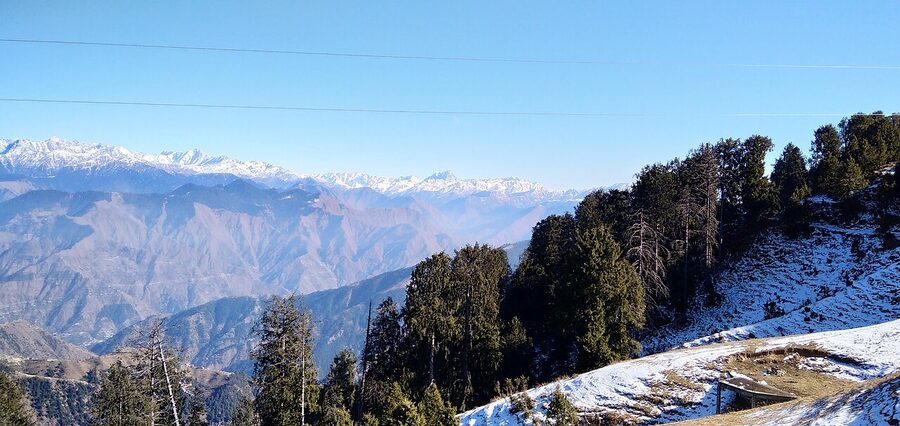
Dainkund is the highest point in the Dalhousie area at 2,755 metres, on a ridge about 9 km west of central town near the Indian Air Force base at Sanawal. The walk up from Lakkar Mandi parking is about 30 to 40 minutes on a paved road that rises through deodar and oak. Locals call the peak Singing Hill because of the wind whistling through the conifers near the summit, an effect that is real and not promotional copy. At the top is the small Pholani Devi temple, a 19th-century shrine to the local form of the goddess.
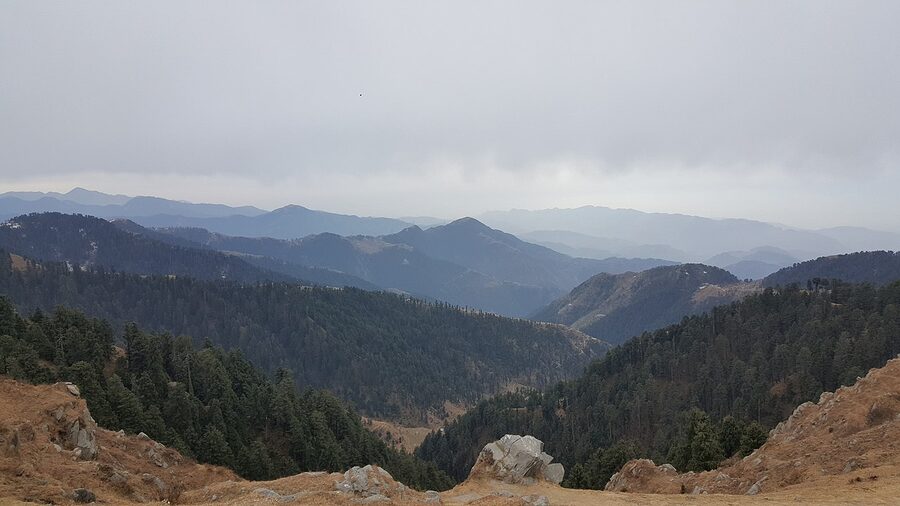
The view is the reason to go. From the temple courtyard the Pir Panjal Range spreads across the entire northern horizon (Sach Pass and the higher Bharmour peaks at 5,000 metres-plus) and the Dhauladhar to the south-east, with Khajjiar’s meadow visible directly below. On a clear October morning the snow line of the Greater Himalaya is sometimes visible 75 km to the north.
Sunset at Dainkund is the standard tourist shot, but I’d come at sunrise instead. The morning light on the Pir Panjal is markedly cleaner and the parking is empty before 7 AM.

Practical detail. The road past Lakkar Mandi is on Air Force land for part of the climb; you’ll see a couple of “no photography” signs near the base, which apply to military installations and not to the peak itself. There’s a small entry fee at Lakkar Mandi for the wildlife sanctuary access (about ₹50/~$0.60 per person for Indian nationals, ₹200/~$2.40 for foreigners) which also covers the Kalatop side; keep the receipt. No food at the summit; bring water.
Kalatop Wildlife Sanctuary
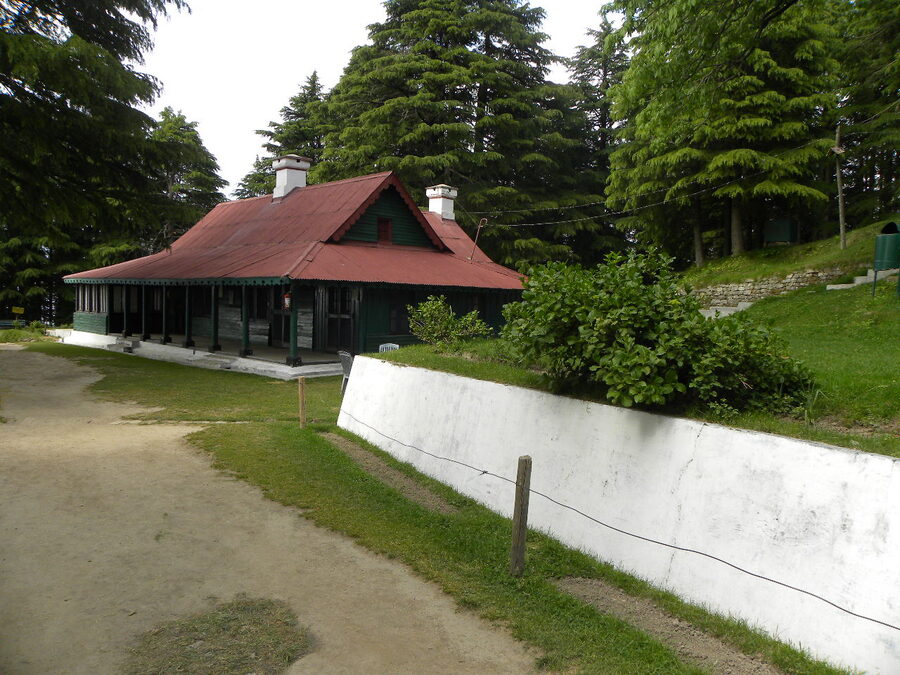
The Kalatop-Khajjiar Wildlife Sanctuary, declared in 1949, covers about 30 square kilometres of deodar, oak, and rhododendron forest across the ridge between Dalhousie and Khajjiar. It’s the best forest walk in the Chamba area and holds genuine, if elusive, wildlife: Himalayan black bear (rarely seen, mostly in the upper rhododendron belt), barking deer, langur, leopard tracks reported every winter, and a strong list of birds including the Himalayan monal pheasant if you’re patient and quiet. The Forest Rest House at Kalatop, an 1880s wooden structure that featured as a film location for Vikramaditya Motwane’s Lootera (2013), is the standard turnaround point.
The standard walk is the 3-kilometre forest path from Lakkar Mandi to the Forest Rest House. It’s flat, shaded, and closed to private vehicles, which is the entire reason it stays beautiful. Allow 90 minutes round trip with a tea stop at the Rest House.
Entry fee at Lakkar Mandi is the same as for Dainkund (₹50/~$0.60 Indians, ₹200/~$2.40 foreigners) and covers both. The path is wide enough to walk three abreast and well-marked; the only reasonable hazard is the occasional aggressive pi-dog at the Lakkar Mandi end, who can be discouraged with a confident voice and a stick if you carry one.
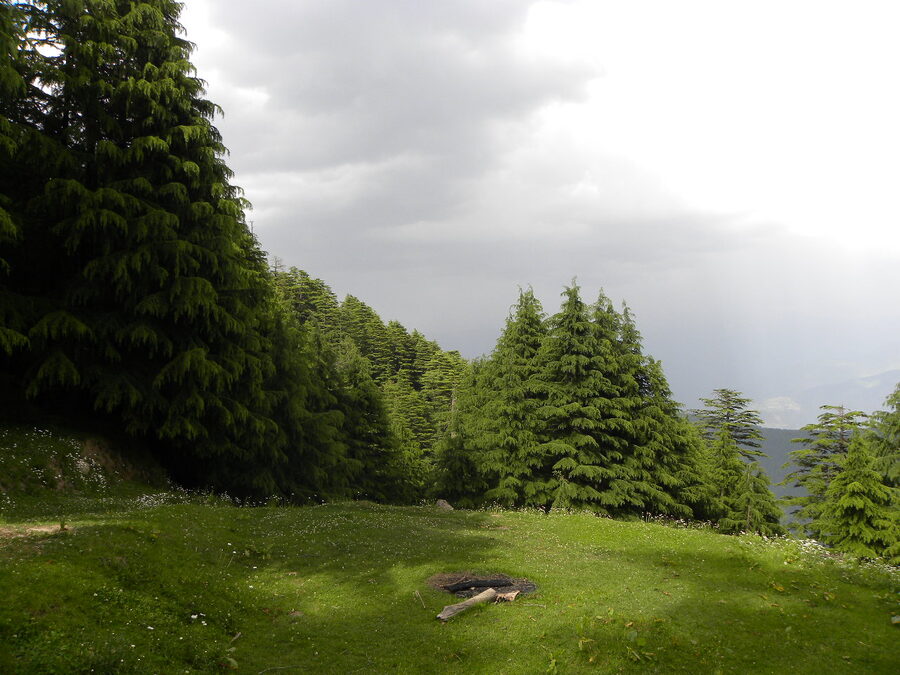
Best time of day is early morning, especially in autumn. The light through the deodar at 7 AM is the best photography you’ll get in the Dalhousie area, and bird activity drops off sharply after about 9:30 AM. If you want a serious chance of seeing a pheasant, hire a local guide at the entrance for around ₹500 (~$6) and walk slowly; without a guide you’ll see the forest, not the wildlife. The same guides know the route up to the small Bara Pathar shrine deeper in the sanctuary, which is worth the additional 90 minutes if you’re up to it.
Khajjiar and the Mini Switzerland Question
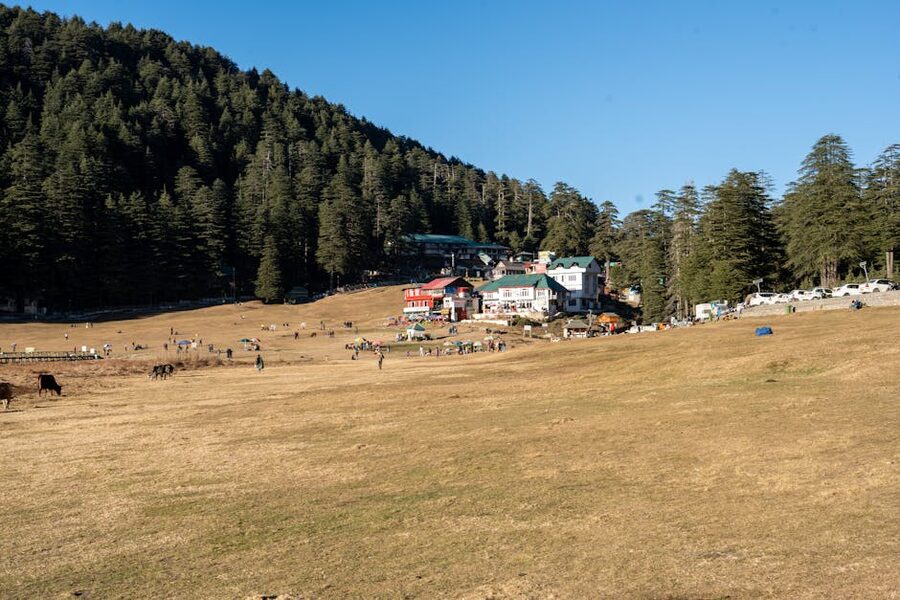
Khajjiar, 23 km from Dalhousie on the Chamba road, is a 1.5 km long natural saucer of grass at 1,950 metres, ringed by deodar and cedar forest, with a small pond in the centre that fills from underground springs. It is genuinely beautiful. It is also, in May, June, and the last week of December, an open-air carnival of horse rides, paragliding tandems, ice-cream wallahs, and rented Pahari costumes for selfies.
If you go in October on a Tuesday morning, you’ll see why people make the trip. If you go on a Saturday in May, you’ll wonder what the fuss is about.
The “Mini Switzerland of India” tag came from a 1992 visit by a Swiss diplomatic delegation. They left a marker stone with the Bern coordinates and the Khajjiar coordinates carved on opposite faces near the pond. The story is real; the resemblance is fair on a clear day in autumn and a stretch otherwise.
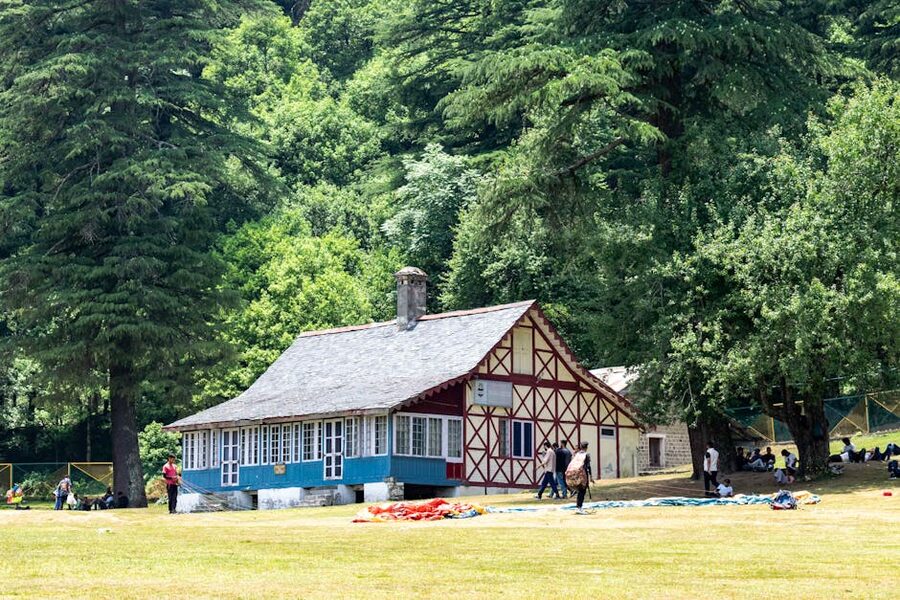
The 12th-century Khajji Nag temple sits on the lower edge of the meadow, dedicated to a serpent deity (Khajji Naag) who is the local form of a wider Pahari naag tradition. The wooden architecture is original (the carved pillars and the slate roof are from the 12th century), and the inner sanctum is small and dark and one of the older intact wooden temples in north India. Photography inside the sanctum is not allowed; in the mandapa it’s fine. Allow 30 minutes; entry free.
Practical detail. The road from Dalhousie to Khajjiar through the Kalatop Sanctuary is paved but slow; figure 50 minutes one way in a car. There’s a single direct HRTC bus a day at 11:30 AM from the Dalhousie bus stand, returning at 16:30, fare around ₹40 (~$0.50). If you miss the bus, a shared taxi from the GPO is about ₹150 (~$1.80) per seat, and a return private taxi for the day from Dalhousie runs ₹2,000 to ₹2,500 (~$24 to 30).
Panchpula and the Smaller Walks
Panchpula is the standard easy walk from central Dalhousie, around 3 km from the GPO, downhill on the way out and back uphill on the way home, total time about 90 minutes. The site is a confluence of five small streams (panch = five, pul = bridges) where a memorial to Sardar Ajit Singh, the uncle of Bhagat Singh and a freedom fighter in his own right, was placed in 1961.
He died here on the morning of 15 August 1947, having held on to hear the news of Indian independence, and the spot is the samadhi marking that moment. The memorial is a stone cenotaph and a small plaque; the streams converge into a series of small pools, with a hanging rope bridge over the largest. Tea shops at the bottom and a small parking area.
Subhash Baoli is a small natural spring 1 km uphill from Panchpula on the Bakrota road. The local belief is that Subhash Chandra Bose used to meditate at the spring during his 1937 convalescence; whether he did or not is hard to verify, but the spring is genuinely cold (4 to 6 degrees year-round) and the small marble plaque honouring him is a plausible memorial spot. Combine it with Panchpula on a single 2-hour loop; the climb back to the GPO is steady but not brutal.
Satdhara Falls is a smaller fall about 2 km past Panchpula on the Khajjiar road, named for its seven channels (sat-dhara = seven streams). It’s underwhelming most of the year and worth a visit only after heavy monsoon rain in late August or September, when the volume actually does seven discrete streams. Skip otherwise.
Ganji Pahadi (literally “bald hill”) is a 90-minute walk west of central Dalhousie through deodar, ending at a treeless summit at around 2,500 metres. The bald top has a clear 270-degree view, with Khajjiar visible below, the Pir Panjal to the north, and the Ravi Valley running west. There’s a small chai stall at the top in season. The walk in is well-marked; if you’re not sure of the route, ask at any tea shop on Bakrota Road.
Chamba, the Real Reason to Come This Far
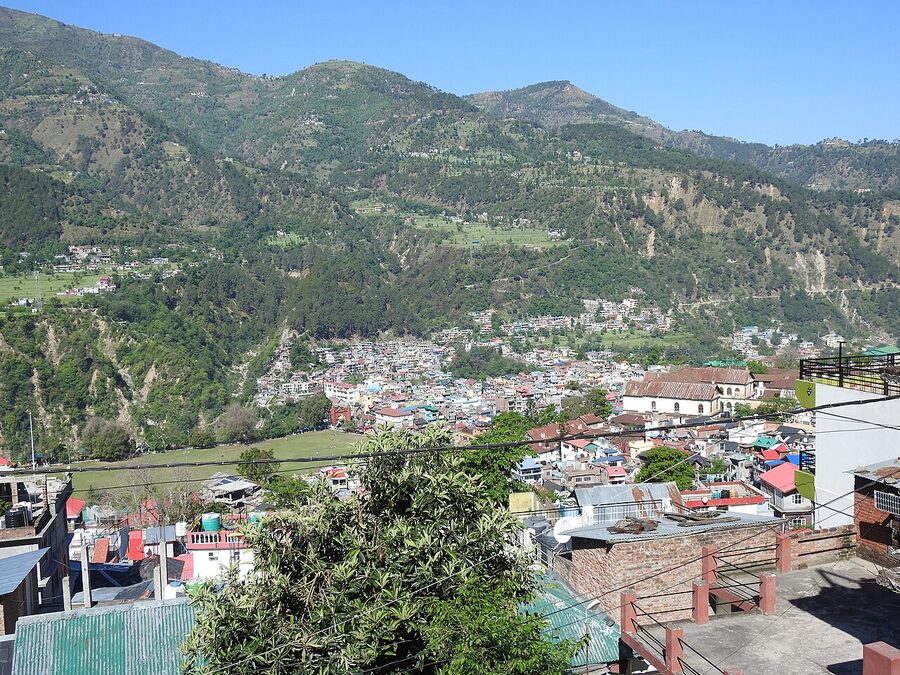
Chamba town is 45 km from Dalhousie down the Ravi River, a serpentine drive of about 90 minutes that passes through Khajjiar on the way. It’s the seat of the former princely state of Chamba, founded in 920 AD by Raja Sahil Varman, who shifted his capital here from Bharmour because his daughter Champavati liked the spot. (The town is named after her.)
For most of the next thousand years Chamba was an independent Hindu kingdom that survived more or less intact through the Mughal expansion, the Sikh empire, and the British Raj. That makes its art and architecture a continuous local tradition rather than a Mughal-derived one. The Pahari miniature paintings of the Chamba and Kangra schools, the wooden temples of the Bharmour valley, and the Chamba rumal (a double-sided embroidered scarf) are all distinct regional traditions worth a day of attention.
If you only have one day-trip slot from Dalhousie, this is the one. Three things to fit in.
Lakshmi Narayan Temple Complex
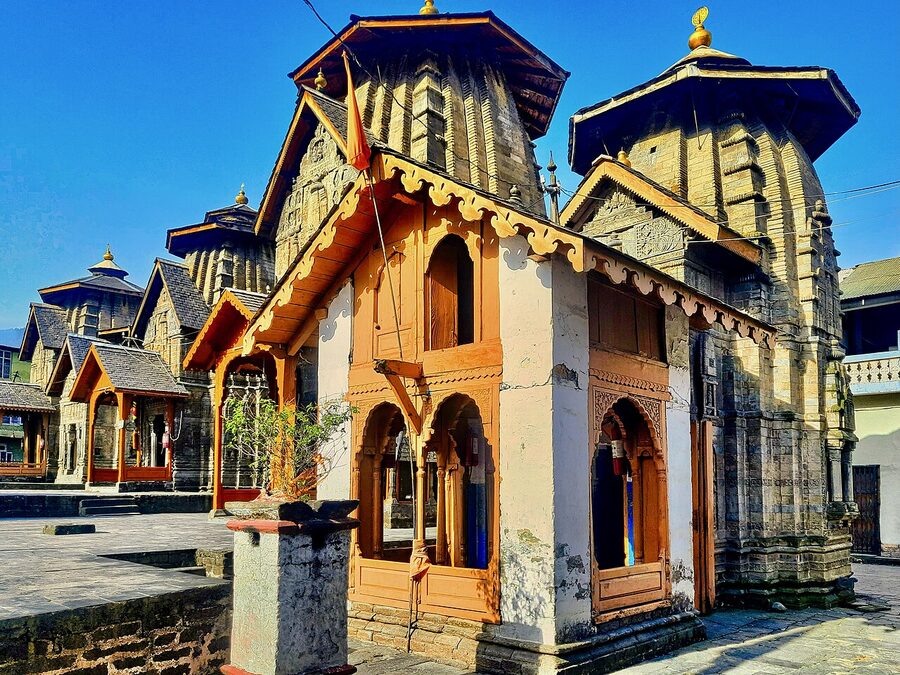
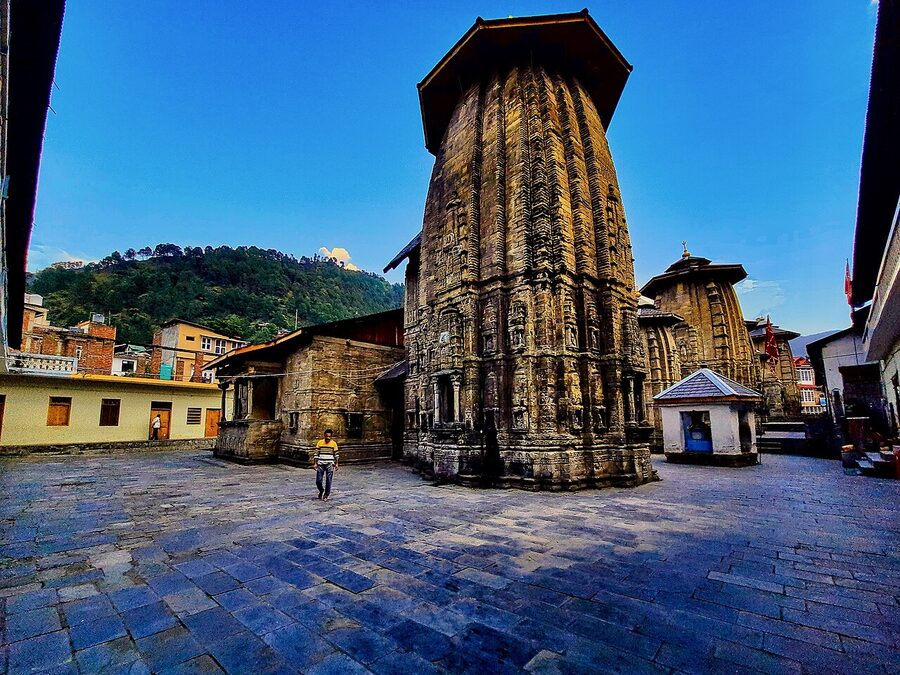
The Lakshmi Narayan complex is a group of six stone temples in central Chamba, the oldest of which dates to 920 AD. The temples are built in the Shikhara style of north Indian Nagara architecture, with tall stone spires over a square sanctum, and are the most important surviving Hindu temple group in Himachal Pradesh.
The largest, the Lakshmi Narayan itself, was the founder Raja Sahil Varman’s temple to Vishnu; the others were added by his successors over the next four centuries. The complex is still active (daily aarti at 5 AM and 8 PM) and entry is free for the courtyard. Photography is allowed in the courtyard, not inside the sanctums. Allow 60 to 90 minutes.
Bhuri Singh Museum
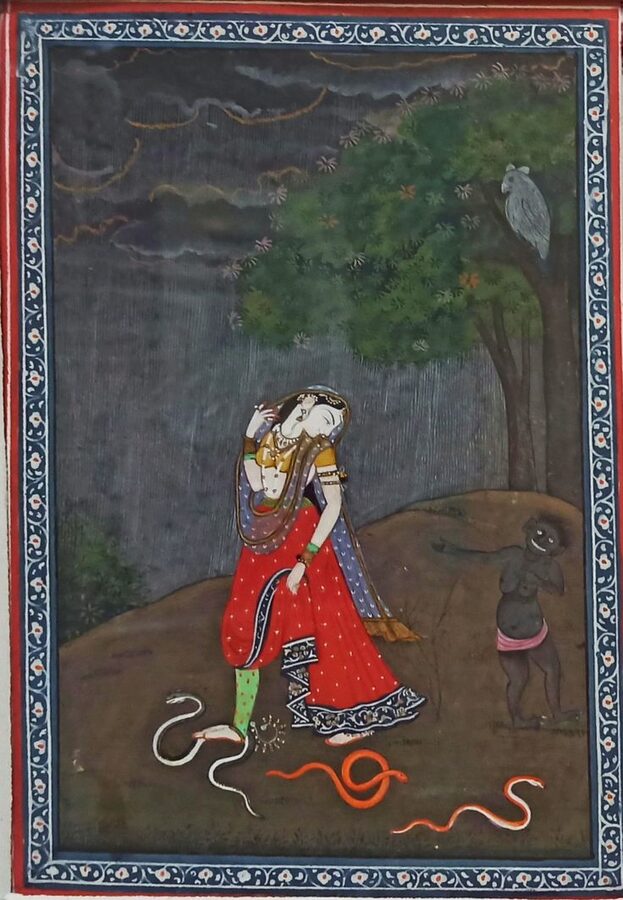
The Bhuri Singh Museum, founded in 1908 by Raja Bhuri Singh of Chamba, holds one of the finest collections of Pahari miniature painting in north India: small-scale Hindu devotional and courtly paintings from the Chamba, Kangra, Basohli, and Guler schools, mostly 17th to 19th century. The Pahari miniature is the regional art form Himachal is most famous for and this is the single best place to see it; even the smaller miniatures pay back an hour of attention if you slow down and read the labels.
The museum also has a strong stone-sculpture gallery (6th to 11th century, mostly from the Chamba and Bharmour temples), Chamba rumal embroidery, and a quietly excellent room of Rang Mahal frescoes that were rescued from the old palace during the 1970s. Open 10 AM to 5 PM, closed Mondays. Entry ₹50 (~$0.60) for Indians, ₹200 (~$2.40) for foreigners. Allow 90 minutes.
Rang Mahal and the Chowgan
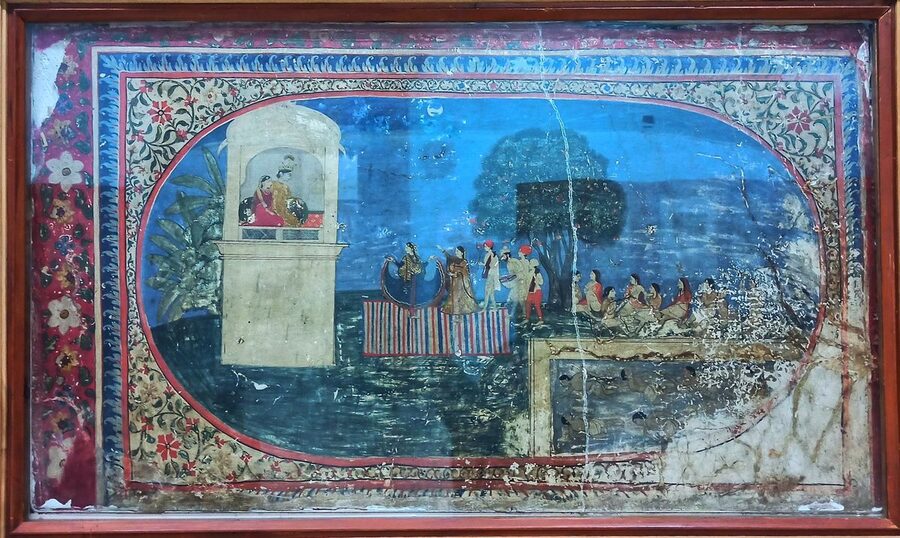
The Rang Mahal (“Painted Palace”) is a 1748 royal palace in central Chamba, built by Raja Umed Singh and famous for its 18th-century interior frescoes. The frescoes have largely been moved to the Bhuri Singh Museum and the State Museum in Shimla for conservation, leaving the building itself as a working handicraft showroom (Himachal Emporium) and a cluster of bank offices. Worth 20 minutes to walk through, mostly to see the architecture from the outside.
Then walk down to the Chowgan, the central grass maidan that is the social heart of Chamba town, where the annual Minjar Mela festival is held in late July or early August. Locals come here at dusk and the cricket pitches in the centre fill from about 4 PM. Stop for a chai at one of the corner stalls; the views down to the Ravi from the western edge are the best in town.
The Drive Through the Forest: Khajjiar, Kalatop, Lakkar Mandi
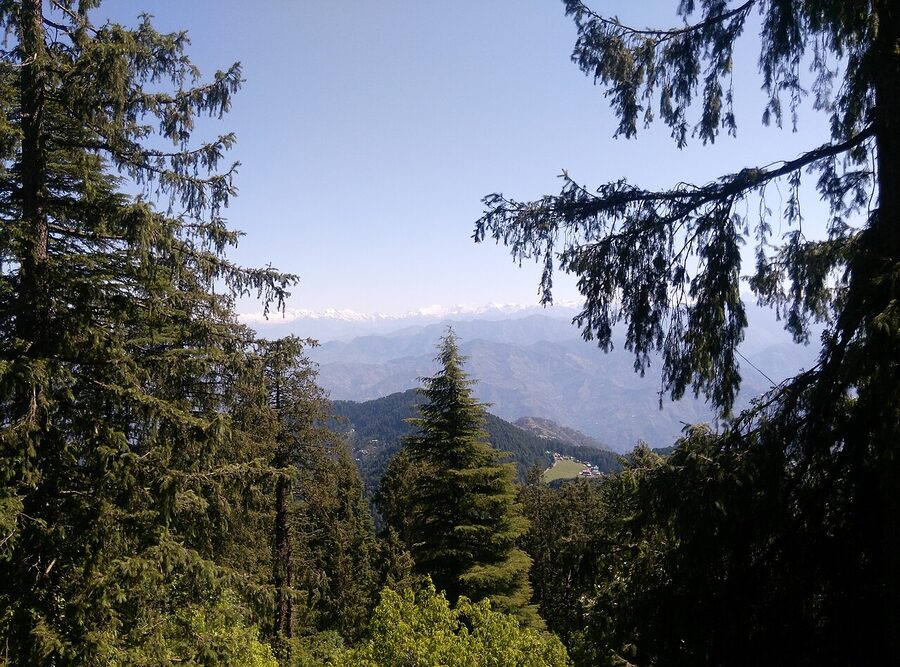
The single best half-day from Dalhousie, if you have a hire car or a willing taxi driver, is the loop drive through Khajjiar, Kalatop, and Lakkar Mandi. The loop is about 60 km, takes 4 to 5 hours with stops, and covers the three signature sights of the district in one self-contained trip.
Order matters. Do Khajjiar first thing in the morning (8 AM) when it’s empty, walk Kalatop at mid-morning when the bird activity is still strong, drive up to Dainkund for lunch and the panorama, and be back in Dalhousie by 4 PM. A taxi from the GPO for the full loop runs ₹3,000 to ₹3,500 (~$36 to 42) including waiting time. If you can only justify one drive in the Dalhousie area, this is the one.
Sach Pass and the Pangi Valley
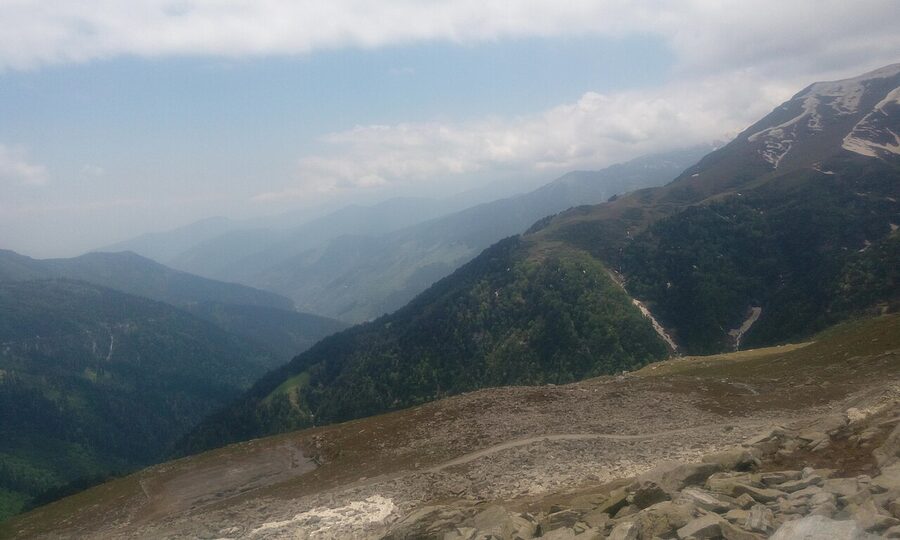
For travellers with an extra two or three days and a 4WD or a hardy bike, Sach Pass is the serious adventure option from the Dalhousie area. The pass at 4,420 metres is the only road link between the lower Chamba district and the remote Pangi Valley to the north, and it’s one of the more difficult drives in the Western Himalayas: narrow, unpaved in the upper sections, with no settlements between Killar and Tisa for about 75 km. The pass opens for vehicles only between mid-June and the end of October. Outside that window the road is buried under several metres of snow.
The standard run is Dalhousie → Tissa → Sach Pass → Killar → Pangi Valley as a 3-day loop, returning via Udaipur and the Rohtang Pass on the Manali road. This is a serious undertaking, not a casual day trip. Hire a local driver who knows the route; foreign travellers occasionally do it self-drive in rented Mahindra Thar SUVs out of Manali but should not attempt it without high-altitude experience. The FootLoose Dev Sach Pass write-up is the best free English-language description of the route I’ve found and worth reading before you commit.
For most travellers, looking at Sach Pass from Dainkund or from the upper Bakrota Walk and saving the actual drive for a future trip is the right call. Note it for next time.
Practical Notes and Money
Costs and Cash
Dalhousie is mid-priced by Himachal standards; cheaper than Manali, more expensive than Bharmour. A reasonable daily budget for two travellers staying in mid-range central hotels, eating at local restaurants, and using shared taxis is around ₹6,500 to ₹9,000 (~$77 to 107) per day in shoulder season, doubling in peak summer.
Solo backpackers in Banikhet guesthouses and HRTC buses can run a working budget of ₹2,500 to ₹3,500 (~$30 to 42) per day. A return Pathankot-Dalhousie taxi adds ₹4,000 to ₹6,000 (~$48 to 71) on top of in-town costs.
ATMs at Gandhi Chowk (SBI, PNB) and at Banikhet generally work but the smaller ones run out of cash on weekends in season. Withdraw at Pathankot before climbing if you’re arriving on a Friday or Saturday morning. Most hotels above ₹2,500 (~$30) take cards; smaller guesthouses, dhabas, and the Tibetan market are cash-only. UPI works for travellers with Indian bank accounts; foreign-card UPI does not.
Food
The local food in Dalhousie is more or less Punjabi-Pahari hybrid, heavier on dal and roti than the Tibetan-influenced cooking you get over towards Lahaul, less spice-forward than Hyderabadi or Tamil. The Himachali-specific dishes worth trying are siddu (steamed wheat bread, often with a poppy-seed or walnut filling, served with ghee and a chutney; ₹80/~$1 a piece at most dhabas), babru (a stuffed black-gram-flour pancake), chha gosht (mutton in a yoghurt-based curry, distinctively Pahari), and kale chane khatte (sour black chickpeas).
Kwality at Gandhi Chowk and Cafe Dalhousie are the central-town picks for sit-down meals. The two best meals in the area are usually outside Dalhousie itself, at the small dhabas in Banikhet and at the Hotel Devdar dining room in Khajjiar.
Internet, SIMs, and Power
Mobile coverage in central Dalhousie is fine on Jio and Airtel; weaker in Bakrota Hills, patchy in Khajjiar, and unreliable past Tissa. Wi-Fi at hotels works in the central area; less so in the higher resorts.
Tourist SIMs from Pathankot are easy to pick up but require a passport and a valid Indian address (your hotel works). Power cuts of 30 minutes or so are normal once or twice a day in winter; most hotels above ₹1,500 (~$18) have generators, the cheaper ones don’t. Bring a power bank.
What to Pack
Layered clothing is the single thing to get right. Even in May, evenings drop into single digits at Dalhousie’s elevation; in October you’ll want a fleece and a wind layer for the morning walks; in January you need proper winter kit including thermals and waterproof boots.
Walking shoes with grip; most paths have loose gravel and the Bakrota Walk has stretches of ice in winter. A small daypack for day-trips, plus lipsalve and sunscreen at altitude.
Putting It Together: How Many Days, In What Order
The straight answer on length is: 2 nights if you’re passing through, 3 to 4 nights if you want to do the Chamba district properly, 6 nights if you also want Sach Pass.
2 nights / 3 days. Day 1: arrive midday from Pathankot, walk the lower mall and the two churches in the afternoon, dinner at Cafe Dalhousie. Day 2: morning Dainkund and Kalatop, afternoon Khajjiar. Day 3: morning Bakrota Walk, afternoon depart for Pathankot.
3 nights / 4 days. Add a full Chamba town day. Leave Dalhousie at 8 AM, do Lakshmi Narayan, Bhuri Singh, Rang Mahal, and the Chowgan, drive back via Khajjiar (skipping it the previous day). This is the right length for most first-time visitors.
5 nights or more. Now you have time for slow walks, an overnight at the Forest Rest House at Kalatop (advance booking through the HP Forest Department, ₹1,500/~$18), a morning at Satdhara after monsoon, and a serious half-day at the Bhuri Singh. This is the version that gets you what Dalhousie has to give. Anything longer is for second-time visitors who want the Pangi Valley.
If you’re combining Dalhousie with the rest of Himachal, the natural pairings are: south to Dharamshala (about 130 km, 4 hours) for a Tibetan-Buddhist contrast and the Dhauladhar from the McLeod Ganj side; or south-east via Kangra to Manali (a longer day’s drive) for the Beas Valley. Shimla is too far east to combine well unless you have ten days. For broader trip planning across the state, our Himachal tourist attractions overview covers the routings.
Dalhousie isn’t the highlight of Himachal. It’s the small, slow base from which you do the under-explored Chamba district. Treat it as that and it earns the trip. The town has known what it is since 1854 and hasn’t tried to be anything more.