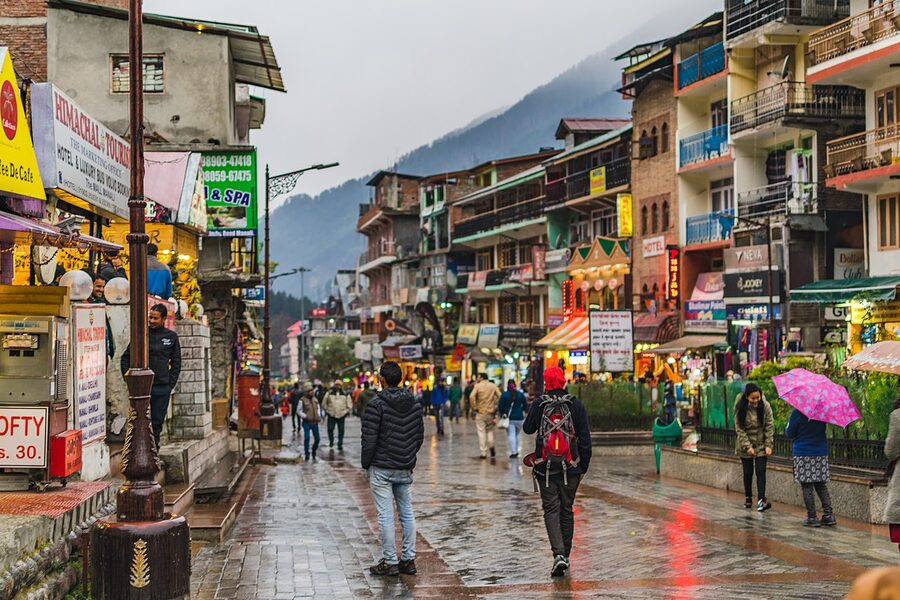
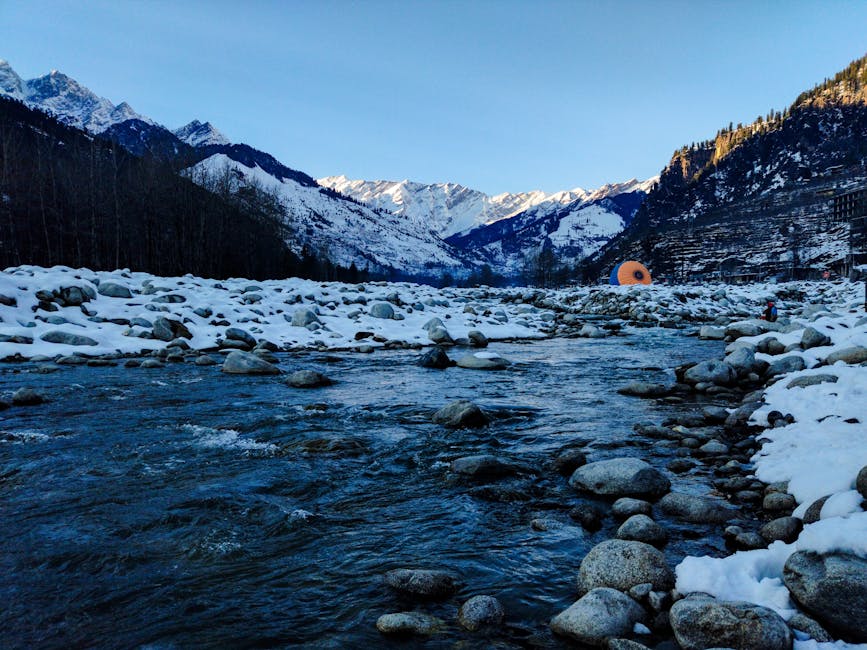
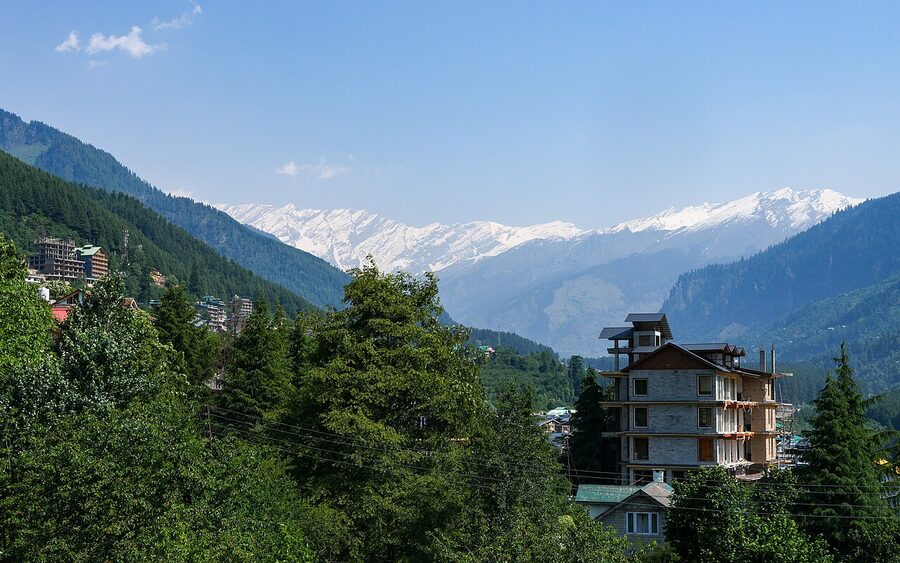
Himachal Pradesh’s hotel market does something unusual: a ₹1,500 cottage in Old Manali and a ₹50,000 suite at Wildflower Hall both look at the same Pir Panjal range. The difference between them is everything else.
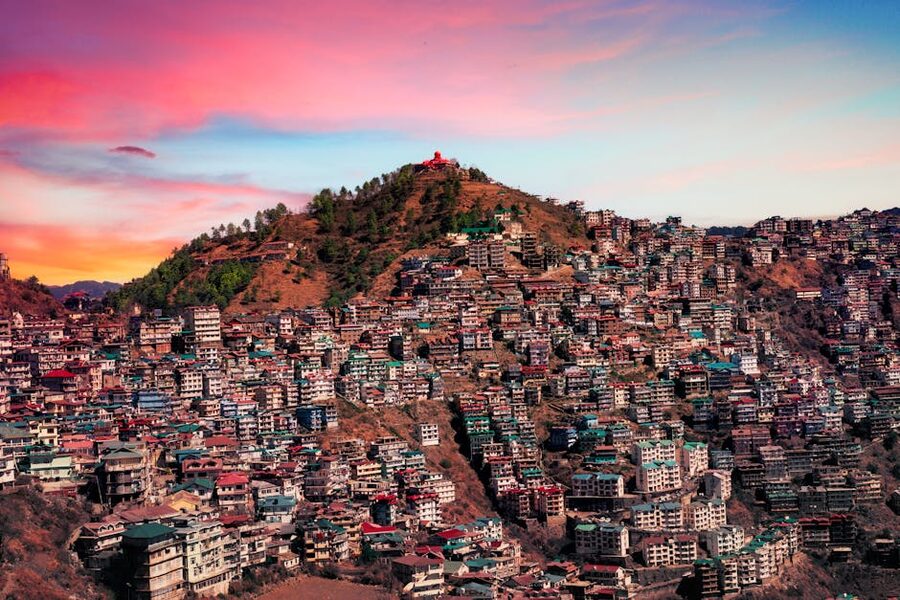
Pick any week of the year and the Booking.com map of Himachal Pradesh shows somewhere between three and four thousand hotels, homestays, and cottages live for sale. The state has been the busiest hill-station market in India since the British built Shimla in the 1820s, and ninety-odd years after independence it has expanded into a layered inventory that runs from ₹600 dorm beds in Kasol to suites in Mashobra that cost more per night than most domestic flights. The job of this guide is to tell you which town to base in and what your money buys you in each.
The price arithmetic is simpler than it looks. In Shimla and Manali, the two largest markets, a clean budget room costs ₹1,500 to ₹2,500 in the off season and ₹3,500 to ₹5,000 in May or December. A mid-tier hotel with a balcony view runs ₹4,000 to ₹8,000 most of the year and double that on long weekends. Heritage and luxury properties begin around ₹15,000 and have no real ceiling. Below ₹1,500 you’re looking at hostels, basic guesthouses, or homestays away from the bus stand. Above ₹25,000 you’re buying view, isolation, or a name on the door.
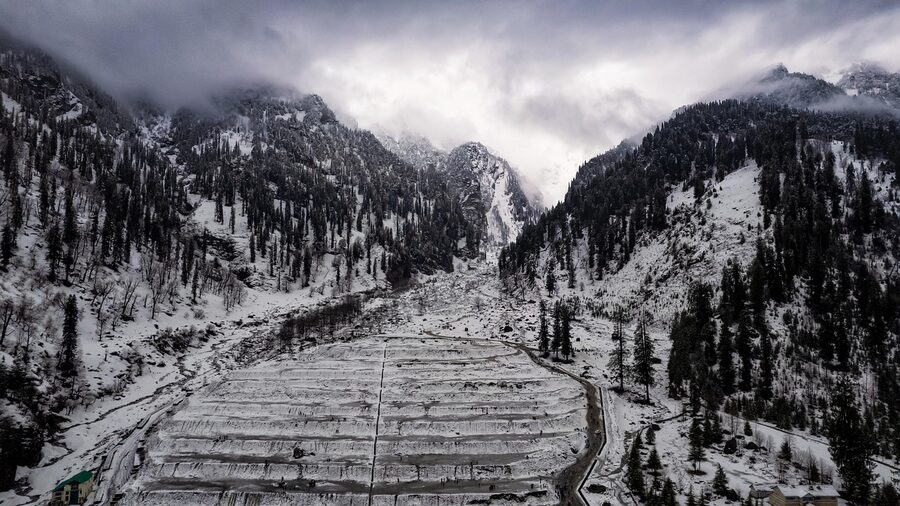
What you actually choose between, when you book a Himachal trip, is location more than category. A ₹4,000 room with the right view in Old Manali beats a ₹15,000 room in central Shimla if Manali is what you came for. The state spans seven main hill stations plus Spiti, Kinnaur, and the Tirthan Valley further up; this guide focuses on the seven that hold ninety per cent of the inventory and the bulk of the bookings: Shimla, Manali, Dharamshala and McLeod Ganj, Kullu, Kasol, Dalhousie, and Chail. The state tourism reference page covers the wider geography for trip planning.
In This Article
- How Himachal’s Hotel Market Actually Works
- Shimla: The Most Hotels, the Most Compromises
- Shimla price tiers, what you actually get
- Manali: Old Town vs New Town vs Up-Valley
- What ₹4,000 actually buys in Manali
- Dharamshala and McLeod Ganj: Two Towns, One Booking
- Kullu and the Tirthan-Banjar Strip
- Kasol and the Parvati Valley
- Dalhousie: The Quietest of the Hill Stations
- Chail: The State’s Best-Kept Heritage Address
- What to Pay, What to Skip
- When to Book, When to Walk In
- A Last Practical Note
How Himachal’s Hotel Market Actually Works
Three things shape what you’ll find on the booking sites and what they actually cost.
The first is altitude. Most of these towns sit between 1,800 and 2,400 metres. Shimla is at 2,200, Manali at 2,050, Dharamshala-McLeod at 1,750-2,100, Dalhousie at 1,970, Chail at 2,250. Properties cling to whichever slope had buildable ground, and Himalayan slopes do not flatten out for hotel forecourts. Half the listings on Booking.com say “5-minute walk to Mall Road” and mean five minutes downhill. The walk back up is twenty. Knowing this before you book saves you from booking with luggage on the highest road in town.
The second is seasonality. The state has four trading periods that the rate sheets respect almost universally. Peak summer (mid-April to mid-July) is the busiest stretch, with rates 60-100% above their winter base. Monsoon (mid-July to mid-September) drops everything by 30-50%; flights are cheap, the hills are green, the roads in are dicey. Autumn shoulder (October to early November) is the connoisseur’s window: the cheapest of the cheap rates with September’s clarity but the apple harvest still on the trees. Winter (late November to March) is the second peak, especially for snow weekends in Shimla, Manali, and Dalhousie; Christmas and New Year weeks get marked up the hardest of any nights in the calendar.
The third is the HPTDC factor. The Himachal Pradesh Tourism Development Corporation runs a public-sector chain of about sixty hotels across the state. Some are tired, a few are sublime. Their pricing is consistent year-round and noticeably below private comparables. They will almost never come up first on the OTAs. They are worth knowing about because some of the most desirable buildings in the state (Chail Palace, the Holiday Home in Shimla, the Apple Blossom in Fagu) are HPTDC properties and only directly bookable through hptdc.in. The state tour packages page bundles many of these into longer itineraries.
One sentence of practical orientation: the easiest way to plan is to pick the town that matches what you came for, then sort the listings by price and read the location, not the photos. Photos in Himachal are reliable; addresses are everything.
Shimla: The Most Hotels, the Most Compromises
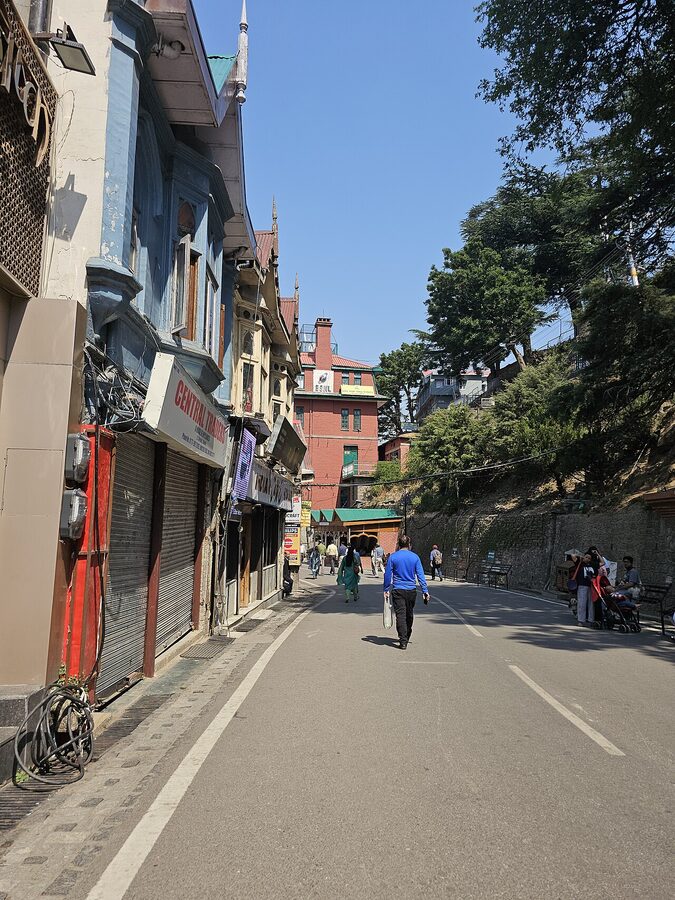
Shimla has more hotel rooms than any town in the state and the widest spread between best and worst. Twelve hundred properties show up on Booking.com on any given week. About a hundred of those are worth knowing about, the rest are interchangeable two-star places that fill up only when the good ones are sold out.
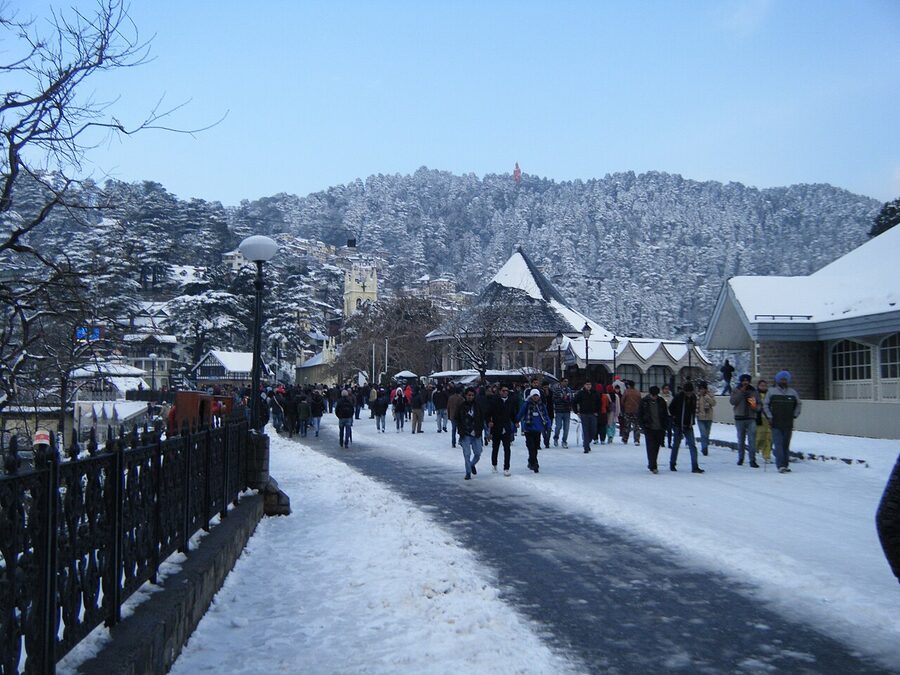
The geography to understand: Shimla wraps around a ridge, with The Mall and the Ridge at the top, and hotels spilling down both sides of the spine. The Mall is car-free, which is the single fact that makes the town pleasant. If your hotel is on the Mall or within ten minutes of it, you can walk to dinner, the bookshop, the church, the cinema. If it’s on Cart Road below or out beyond Sanjauli, you’ll be in a taxi every evening. The premium for “Mall Road walking distance” on the listings runs about ₹1,500 per night and is worth every rupee.
Shimla price tiers, what you actually get
Budget (₹1,500-3,000): Two-star hotels on Cart Road and the lower lanes off Mall. Basic ensuite rooms, hot water in the morning only, in-house dining limited to a thali at lunch. The Hotel Combermere falls at the upper end of this tier with location and reasonable rooms; verify rates before you click here.
Mid-range (₹3,500-7,000): The bulk of the bookable inventory. The HPTDC Hotel Holiday Home and several three-star private hotels around the Ridge. Properties at this level should have heating in December, working hot water all day, and a restaurant that runs breakfast through dinner. Toshali Royal View, on a separate ridge with full Shimla skyline views, sits at the upper end of this band, bookable on Booking.com.
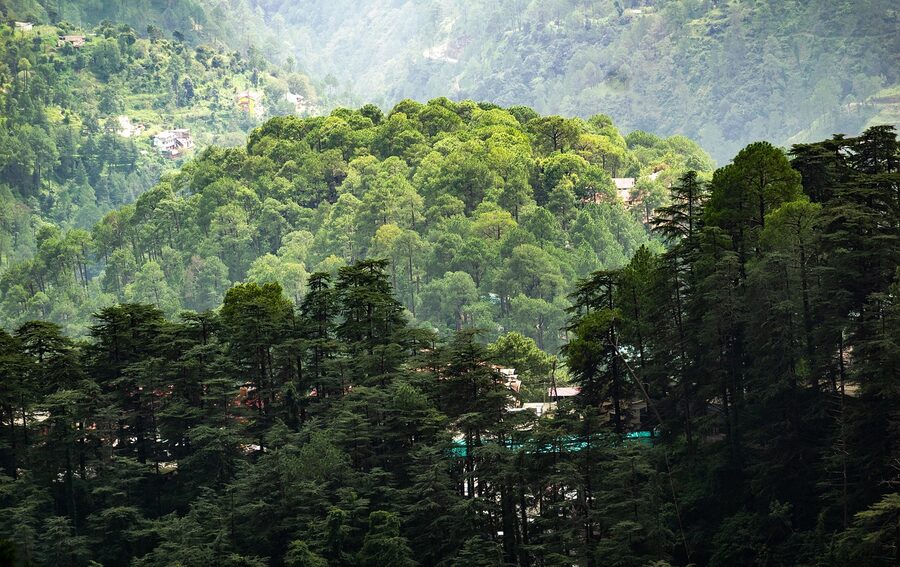
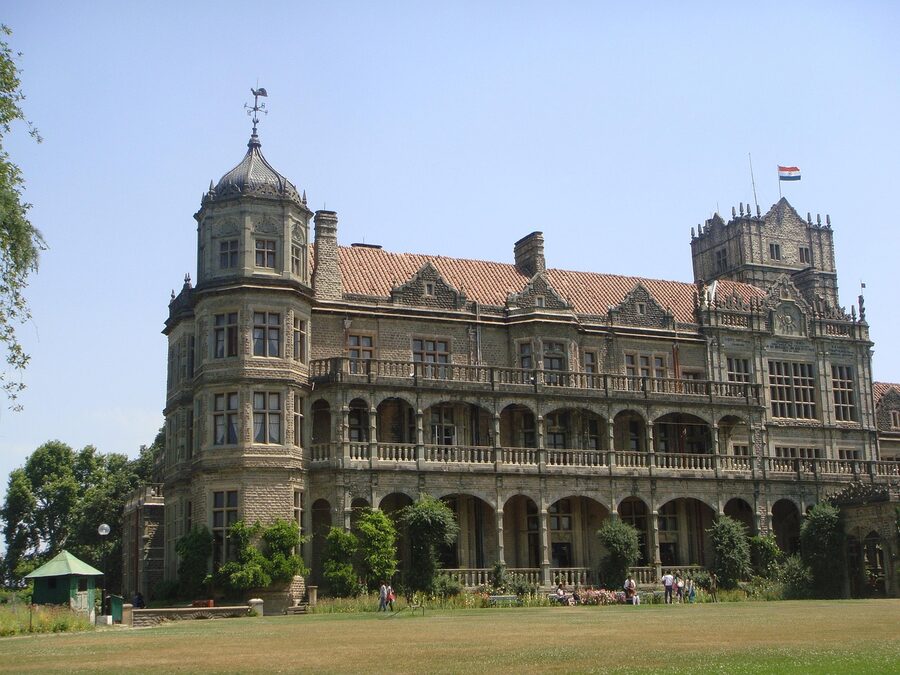
Heritage and upper mid (₹8,000-20,000): Where Shimla’s identity lives. The 1830s buildings around Chaura Maidan and Chhota Shimla (Clarkes, the East Bourne, and the Cecil itself at the lower end of the luxury tier) were the originals from the Raj era. The architecture is mock-Tudor and timber, the lawns are clipped lawns, and the staff has often been at the property longer than you’ve been alive. Older heritage hotels lean towards quirky over slick; if you want consistent international-chain service, book the next category up.
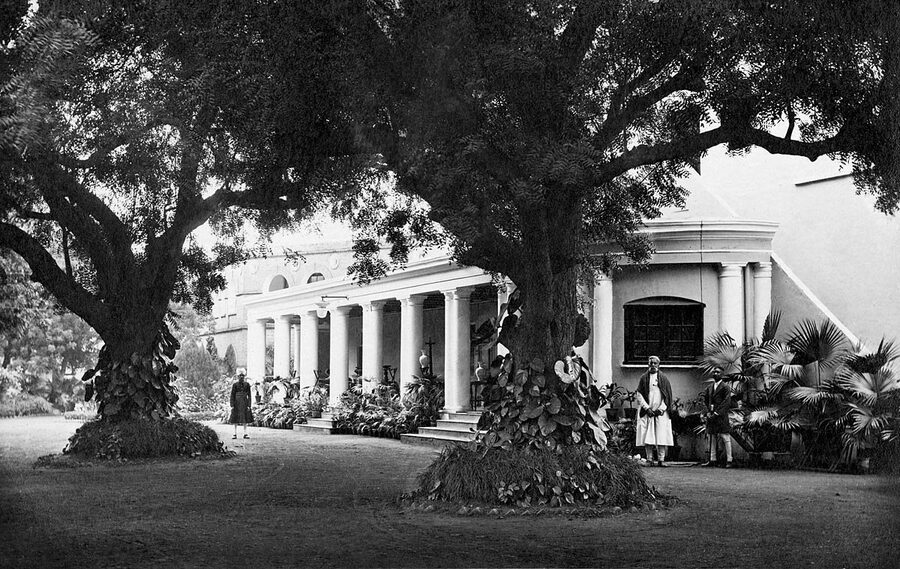
Luxury (₹20,000+): Two properties anchor this tier. The Oberoi Cecil at the lower end of Mall Road, in the original 1884 building (Booking.com listing), and Wildflower Hall at Mashobra, 13 km out at 2,500 m, on the site of Lord Kitchener’s old residence (listing here). Wildflower is run by Oberoi as well; it costs roughly twice the Cecil and is the only luxury property in this part of the Himalaya that consistently delivers on the brochure. If your trip is structured around the hotel, book Wildflower; if your trip is structured around Shimla, book the Cecil and walk to the Mall.
One Shimla-specific quirk: a meaningful number of mid-range and budget hotels here are run by the same family that built them in the 1980s. Service is warm and idiosyncratic, the rooms are clean but dated, and the breakfast spread will often include puri-aloo from a recipe that hasn’t changed in three decades. Skip these only if you need predictable. The honeymoon guide lists which of these still earn their fans.
Manali: Old Town vs New Town vs Up-Valley
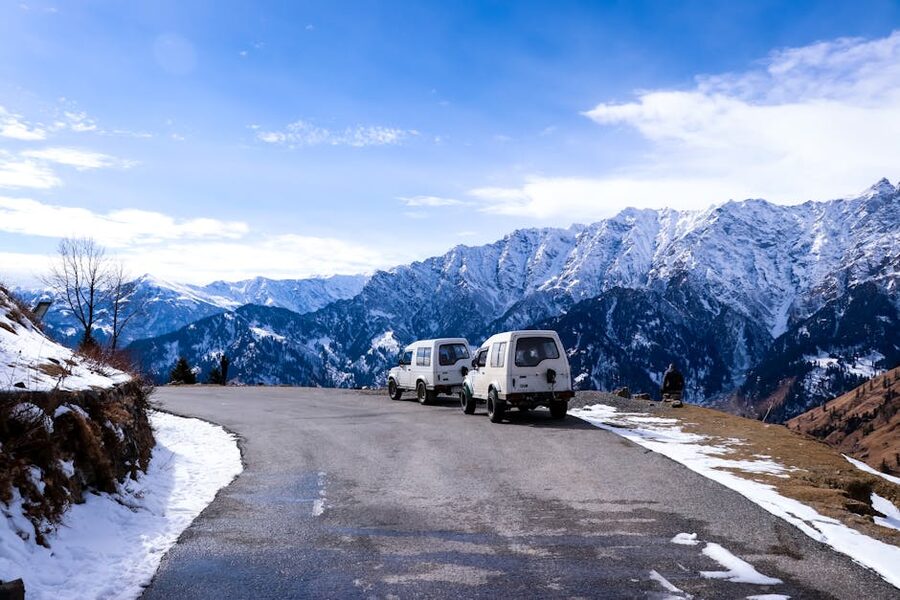
Manali is the busier of the state’s two big markets. Around 850 properties on the booking sites, and four distinct sub-areas to choose between, each with a different personality. The dedicated Manali hotels page goes deeper on each; this is the orientation.
Old Manali sits across the Manalsu stream from the bus stand, twenty minutes uphill on foot. It’s the one with the cafés, the wholefood breakfast spots, and the long-stay foreign crowd. Hotels here are small, mostly under twenty rooms, often family-run, and the rates run ₹1,500 to ₹6,000 mid-tier. If you came for the views, the apple orchards, and the deodars, this is where to book. The trade-off: you can’t drive a car here in season; the lane is tight, parking is impossible, and your taxi will drop you at the bridge.
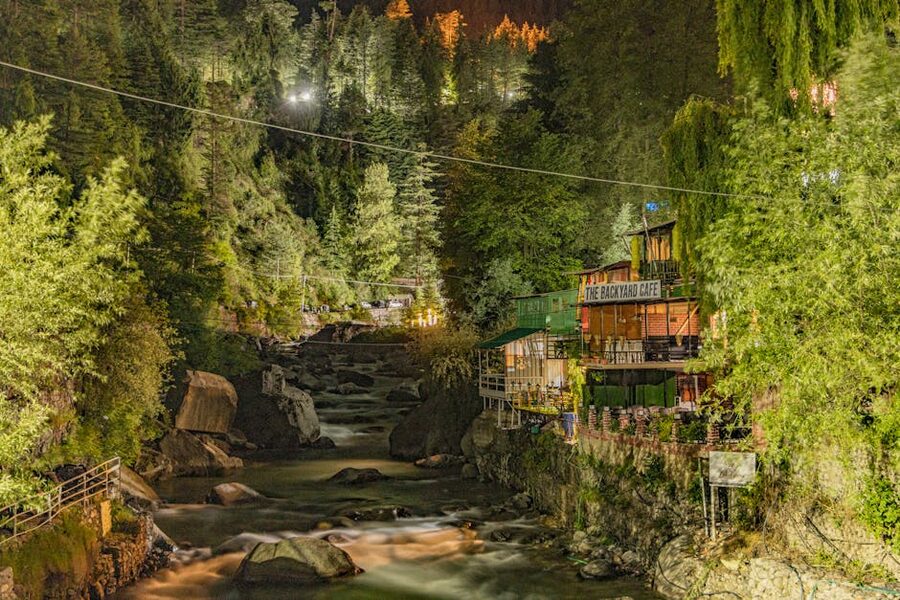
New Manali, around the bus stand and Mall Road, is the noisier sibling. Hotels here are larger, more business-like, and most have parking. Honeymoon Inn Manali is the standard mid-tier here (verified at Booking.com); rooms ₹3,500-6,500 in shoulder, double in peak. The neighbourhood is convenient if you’ve come to drive on to Spiti or Lahaul, less appealing if you came for atmosphere.
Up-valley (Naggar to Solang) is the wider strip running 30 km along the Beas. Properties out here, including The Himalayan in a converted castle (Booking.com) and Span Resort & Spa at Katrain (Booking.com), trade walkable convenience for grounds, river frontage, and quiet. Worth it for stays of three or more nights, less so if you only have two.
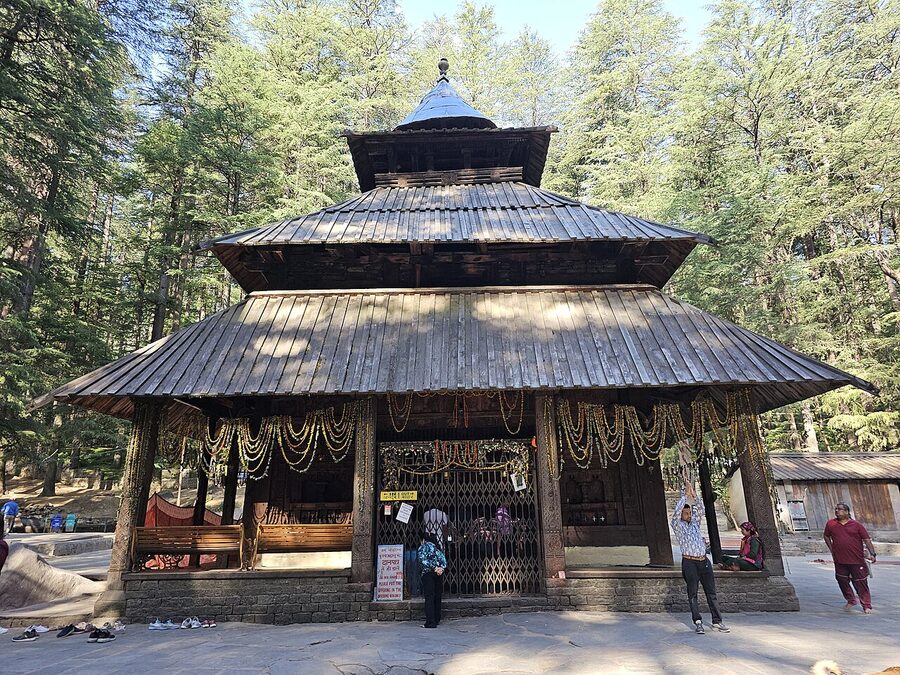
Solang Valley, 14 km past Manali, is the snow-and-paragliding strip. A handful of resorts sit out here for the winter season. Beautiful in January, dead in October, and a drive away from anywhere to eat that isn’t the hotel restaurant. Manuallaya at Burwa, a few kilometres before Solang, is the better of the spa-resort options (listing).
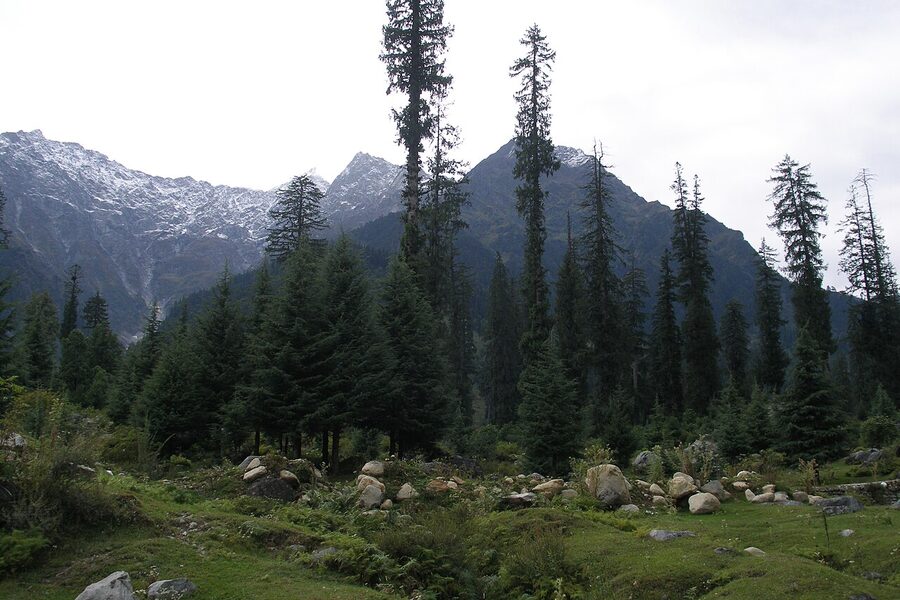
What ₹4,000 actually buys in Manali
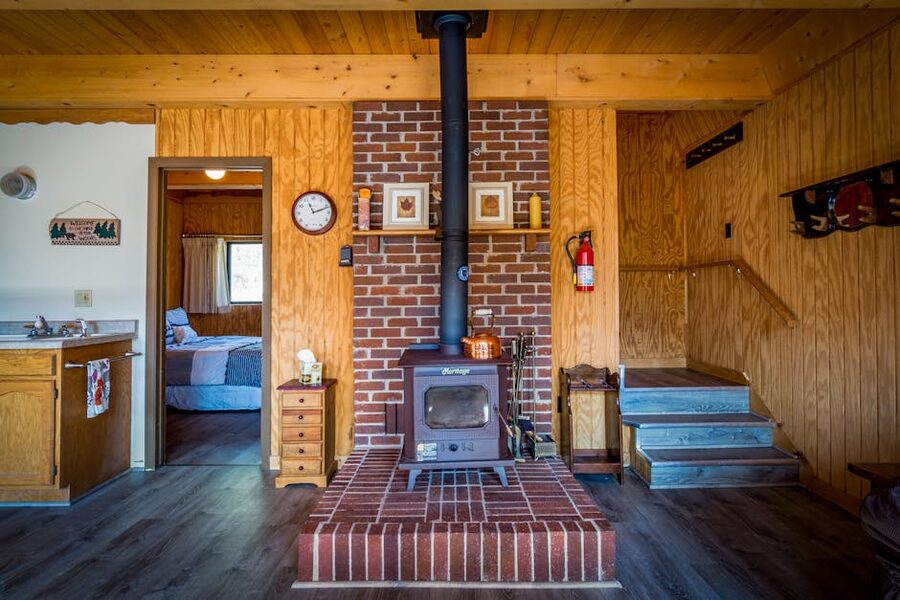
At this rate in shoulder season (say October), you should expect a clean room with a heater, a working geyser, an attached bathroom, and a balcony with at least an angle on the Beas or the orchards. Breakfast is usually included; what’s served is usually puri-bhaji, parathas, and instant Nescafé. The room won’t be insulated to Western standards. The duvet will be heavy. Light sleepers should ask which floor; the upper floors get less honking from the road.
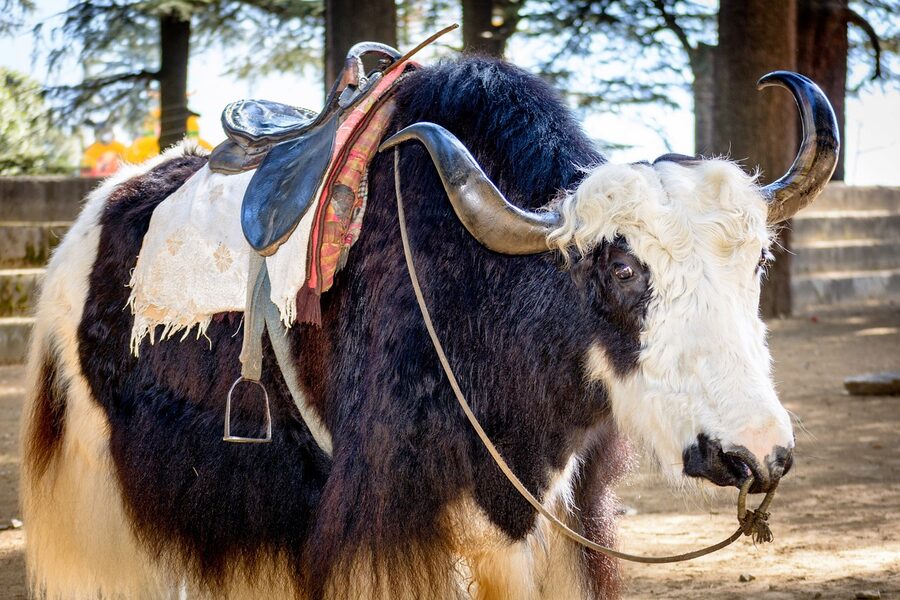
One Manali-specific issue worth flagging: the road in jams badly during the May 1-15 and December 24-January 5 windows. The standard four-hour Volvo from Chandigarh has been known to take eleven. If your travel dates fall in either window, book a hotel that has parking and a restaurant; you may need to live there for a day longer than planned.
Dharamshala and McLeod Ganj: Two Towns, One Booking
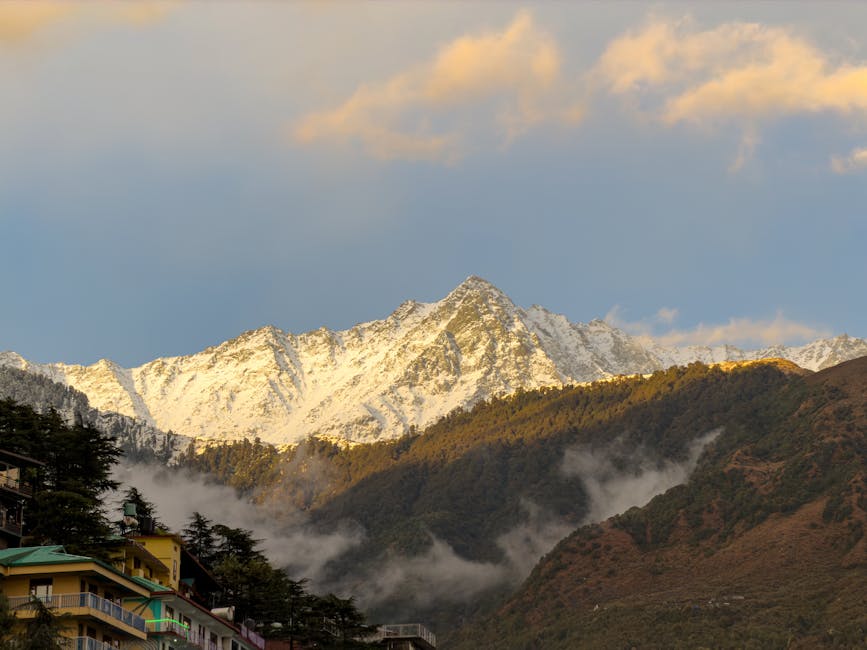
The booking sites treat Dharamshala and McLeod Ganj as one destination. They’re not. Dharamshala is the lower town at 1,750 m, busier, more commercial, and where the buses arrive. McLeod Ganj is 9 km uphill at 2,100 m, where the Dalai Lama’s residence-in-exile sits, and where most foreign and most South Asian visitors actually want to stay. The two are connected by a single ribbon of road that takes 20-40 minutes by taxi depending on traffic. Filter your search by Upper Dharamshala or McLeod Ganj specifically; otherwise you may end up booking a perfectly good hotel that is nine kilometres of switchbacks from where you wanted to be.
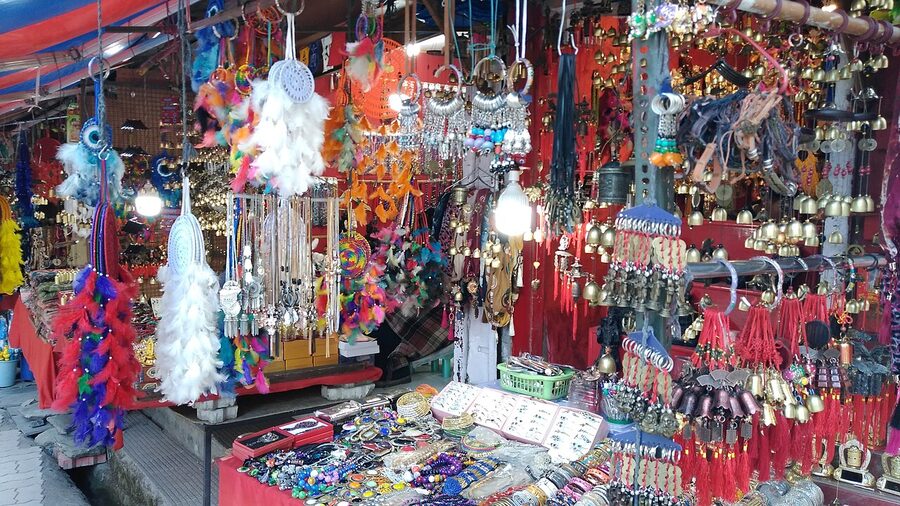
McLeod is the smaller, denser town and where the inventory is most distinctive. About 300 properties on the OTAs, half of them small Tibetan-run guesthouses with five to fifteen rooms each. Rates run ₹1,200 to ₹4,000 for these; they don’t have spas or pools, the Wi-Fi is reliable, the rooftops have full Dhauladhar views, and the staff often speaks more English than you’d expect because the household has been hosting foreign volunteers for thirty years. If you’re here for the dharma scene (courses at the library, teachings at the temple, volunteering at LIT or one of the NGOs), these are the right places. Norbu House is the most consistently recommended of this tier (Booking.com), as is Chonor House just below it (Booking.com). Both are owned and run by the Norbulingka Institute, with proceeds funding their craft preservation programme.
Mid-tier in McLeod runs ₹4,000-9,000 and includes Surya McLeod (Booking.com) and a string of three-star hotels along the upper Bhagsu road. Most of these are perfectly comfortable, none of them are remarkable; you’re paying for predictable.
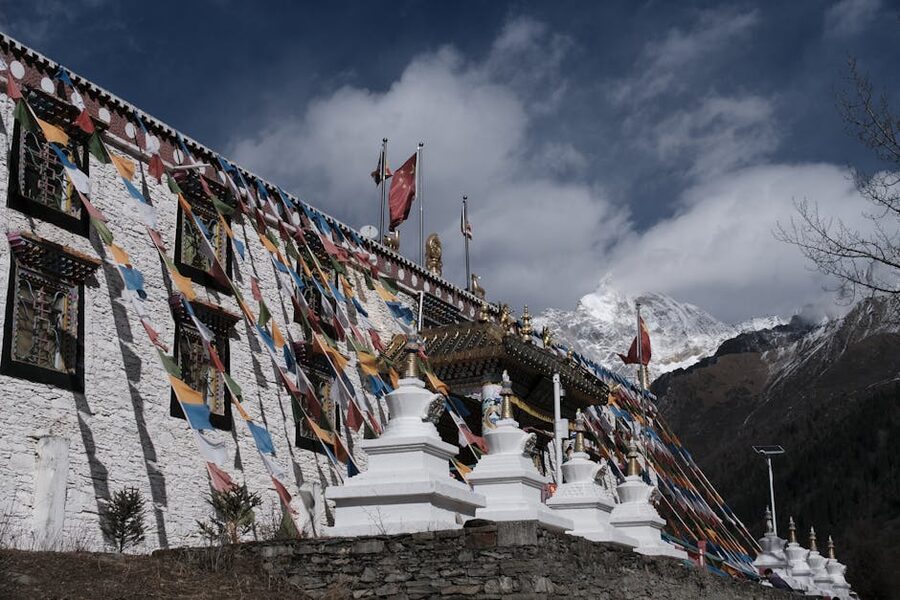
The serious money goes to one address: the Hyatt Regency Dharamshala (listing), at Mid-Town between Dharamshala and McLeod, ₹14,000-22,000 a night. The Hyatt is the only international-grade hotel for two hours in any direction and is reliably good. The trade-off is location; you’re 20 minutes by taxi from anything in McLeod and 25 minutes from Dharamshala lower town. If you want a base camp with a pool and spa rather than a McLeod guesthouse experience, this is the choice.
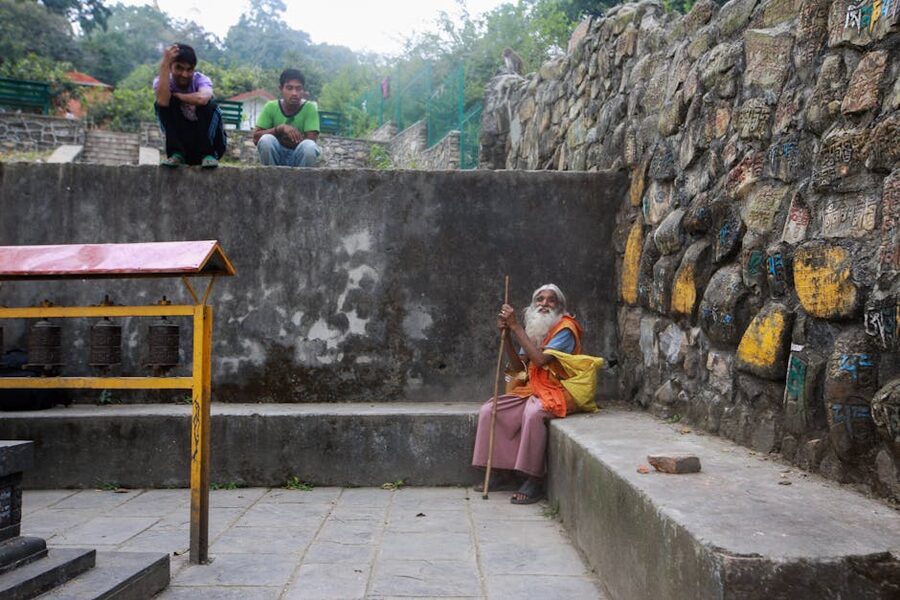
One thing worth knowing: most McLeod guesthouses do not heat their rooms beyond a single oil radiator, and night temperatures run 2-5 °C in December and January. Bring layers, or pay the surcharge for a heated room and check the radiator works before you accept the key.
Kullu and the Tirthan-Banjar Strip
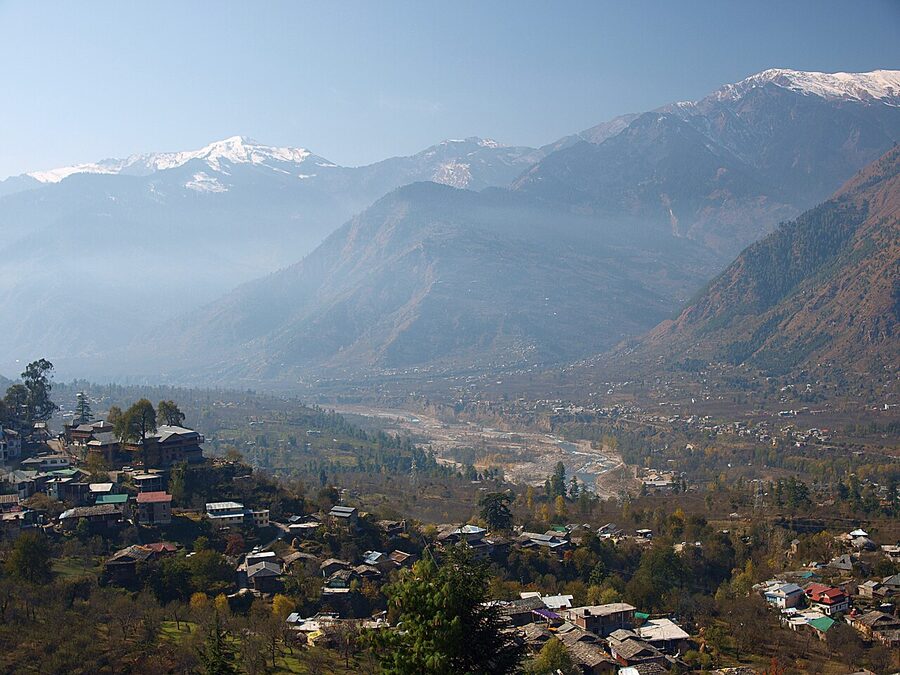
Kullu is a working town. Most foreign travellers and most middle-class Indian travellers do not stop here for the hotel scene; they stop for the Dussehra festival, then move up-valley to Manali. The week-long Kullu Dussehra in October is the one time hotel demand spikes here, and the town’s modest 70-odd properties sell out months in advance. For the rest of the year, Kullu is a transit night.
The genuinely interesting accommodation in this part of the state is up the Tirthan and Banjar tributary valleys, an hour east of the main road. This is the country immediately around the Great Himalayan National Park. Inventory here is small but specific: river-side cottages, family homestays, and a handful of eco-lodges. Sunshine Himalayan Cottage at Banjar and Offbeat Footprints at Jibhi are widely cited; both run roughly ₹3,000-5,500 with breakfast and dinner included. Booking is mostly direct rather than through Booking.com because the OTAs charge a commission these properties can’t absorb. Search the property name plus “Tirthan Valley” or “Banjar” and email the owner. The Lahaul-Spiti page covers the wider trans-Himalayan extension if you’re heading further.
Kasol and the Parvati Valley
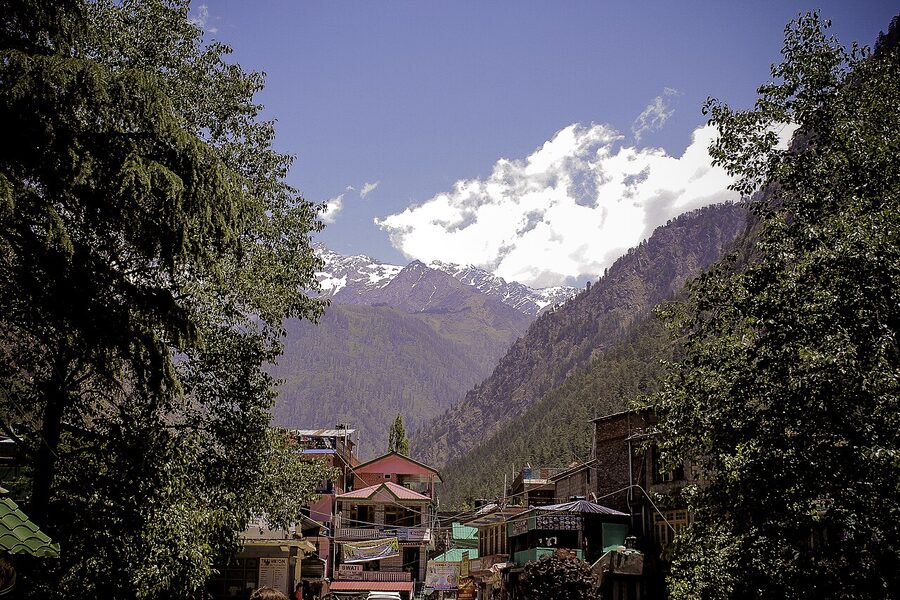
Kasol is the smallest of the towns here and the most singular. It sits on the Parvati River at 1,580 m, an hour east of the Bhuntar airport, and over the past twenty years has built a hospitality identity around long-stay backpackers, Israeli post-army travellers, and the Indian college crowd. The result is a hotel inventory that runs heavily towards hostels, riverside cottages, and small guesthouses. There are almost no big hotels at all. The biggest property in town has 30 rooms.
The strip is a single road, fifteen minutes end to end on foot, with the Parvati on your right walking up-valley. Riverside cottages are the most-booked category and run ₹2,000-4,500 in shoulder, ₹4,500-7,000 in May-June. Hostel beds (The Hosteller, Zostel, and the Nirvanam are the chains worth knowing) run ₹600-1,200 a bed. The Hosteller Kasol is the standard mid-budget option, with private rooms in addition to dorms.
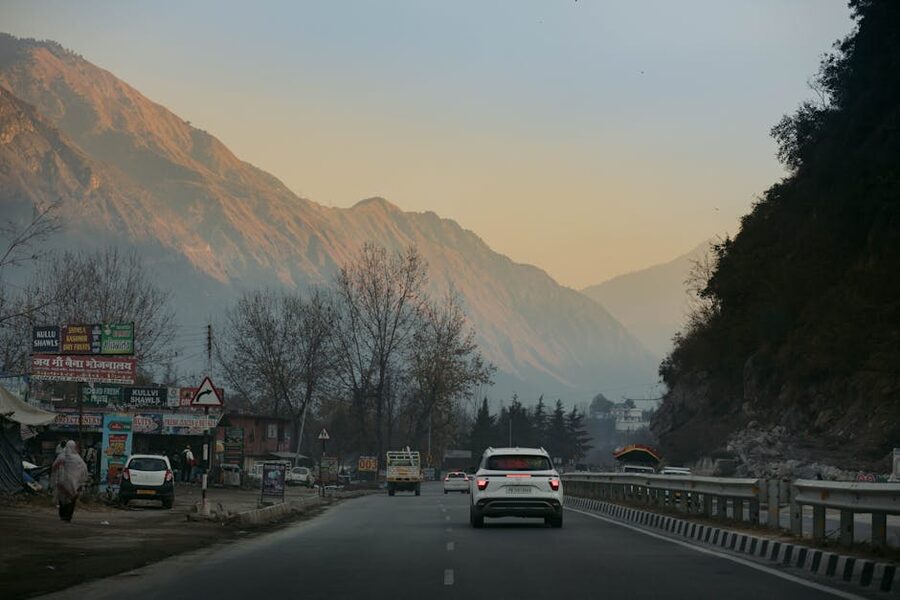
Above Kasol, the Parvati continues up-valley to Tosh, Pulga, Kalga, and the Kheerganga trailhead. Accommodation here is properly basic (wooden cottages, share bathrooms, kerosene heaters in winter) and the rates are properly low (₹500-1,500). It’s worth knowing that almost none of these places appear on Booking.com or Agoda; they take walk-ins and call-aheads. Pulga and Kalga, the two villages reached only on foot from Barshaini, are the prettiest and the toughest with luggage.
One thing that nobody puts on the listings: the Parvati Valley is, fairly or not, associated with the cannabis trade. This shapes the police presence and the reputation of certain village clusters. The hotels along the main road in Kasol itself are unremarkable on this front; the homestays in some of the upper villages are not. If this matters either way, it’s worth knowing before you book.
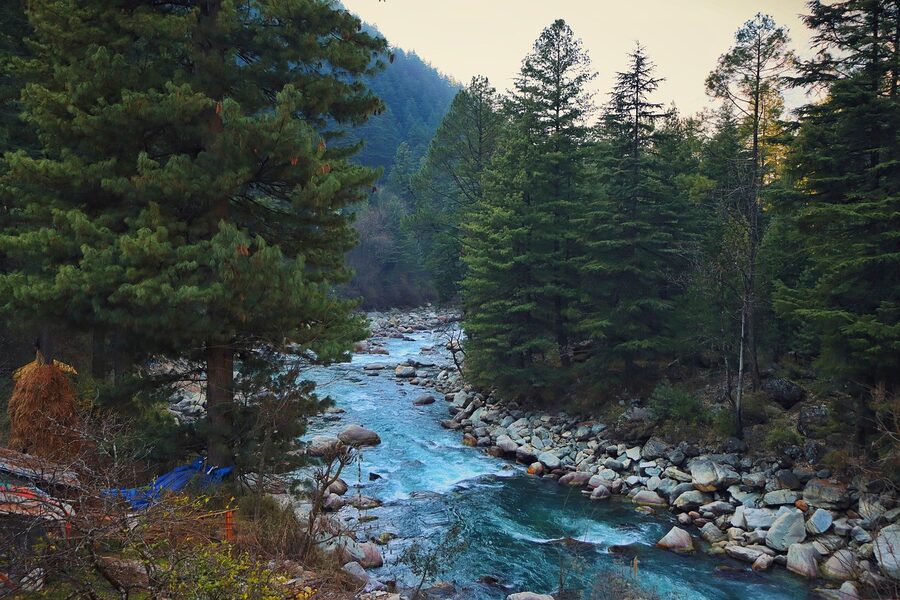
Dalhousie: The Quietest of the Hill Stations
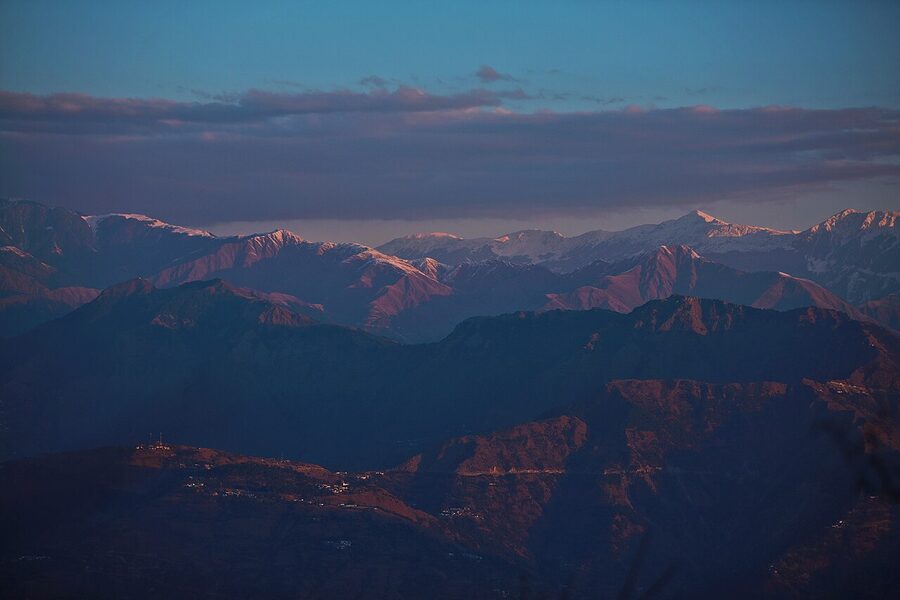
Dalhousie is the quietest of the major hill stations, and a Booking.com search reflects it: about 220 properties, most of them family-run guesthouses, and a handful of three-star hotels along Mall Road and Subhash Chowk. The town never had the colonial weight of Shimla or the trekker traffic of Manali. Lord Dalhousie founded it as a hot-weather retreat in 1854 and his successors used it for that purpose; nothing has happened since to turn it into anything more. The Chail page shares its quiet-hill-station character.
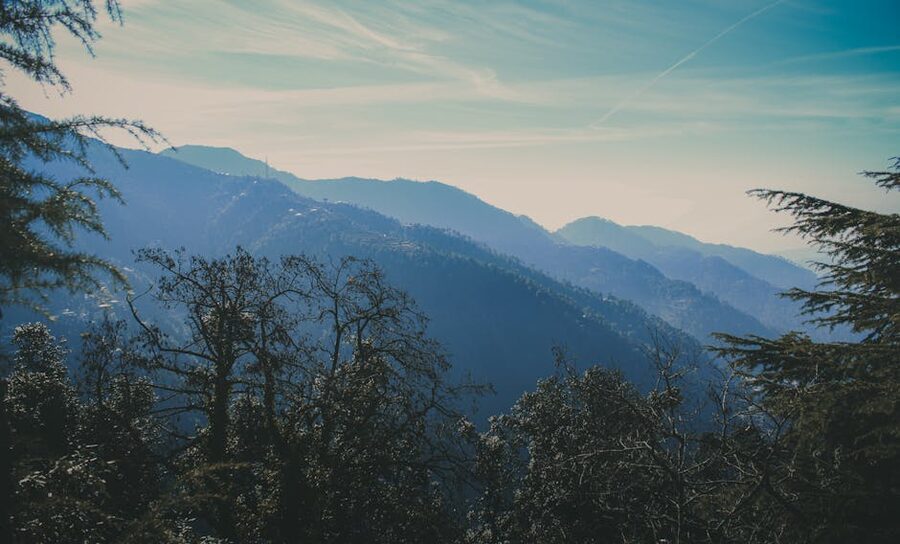
Geography to know: the town spreads across five wooded hills (Bakrota, Tehra, Bhangora, Khalatop, Potreyn) with a road ribbon between them. Mall Road is at the lower end, the GPO and Subhash Chowk in the middle, and the upper hills behind. Most of the older heritage hotels sit on Bakrota or Tehra; the views from these are the deepest. Mid-tier hotels sit lower down, closer to the Mall.
Snow Valley Resorts on the Bakrota loop is the workhorse three-star here (Booking.com), ₹3,500-6,500 mid-tier. Alps Resort closer to the Mall is similar (listing). For heritage feel, the older hotels around Subhash Chowk run ₹4,500-9,000; rooms are dated, breakfast is filling, and the lawns where you take morning tea are usually wet with dew.
Dalhousie is also the practical base for Khajjiar (the so-called “Mini Switzerland”) and Chamba town. Khajjiar has a few hotels around its meadow, almost all of them disappointing for the rates they charge in season. Drive the 20 km from a Dalhousie base and skip booking in Khajjiar itself.
Chail: The State’s Best-Kept Heritage Address
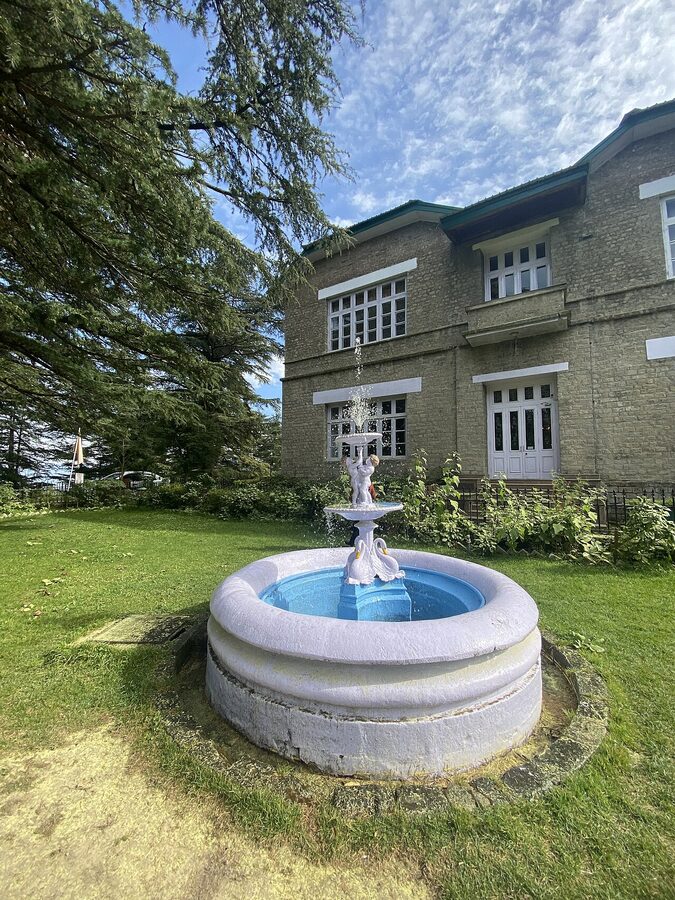
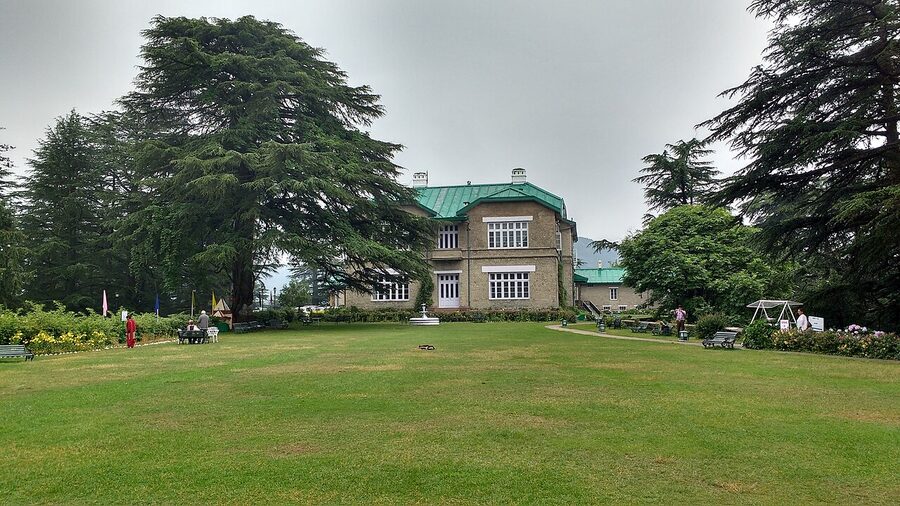
Chail sits at 2,250 m, 45 km south-east of Shimla, and has perhaps 30 hotels across the town and outskirts. Most travellers haven’t heard of it. The reason it’s worth a paragraph is one specific building: Chail Palace, built by the Maharaja of Patiala in 1891 as his summer residence, run today by HPTDC as a heritage hotel.
The story is worth two sentences. Bhupinder Singh of Patiala was barred from Shimla after an incident with a British Resident’s daughter; rather than apologise, he built his own hill station 50 km away on a higher ridge than Shimla’s, and engineered a cricket pitch out of a flattened mountaintop that remains the highest in the world. The palace today rents at ₹6,000-12,000 for cottage rooms and ₹14,000-22,000 for the suites in the main house. The cottages dotted around the lawn are the value pick; the main palace rooms are larger and more characterful but the cottages get more sun and better views.
Beyond Chail Palace, the town’s other accommodation is mostly two- and three-star hotels along the road in. Service is local, prices are flat, and the broader Chail-to-Kandaghat country is among the quietest you’ll find within an hour of Shimla.
What to Pay, What to Skip
A short list of judgements after several years of watching this market.
Pay for location, not photography. A ₹4,000 mid-tier room three minutes from Mall Road in Shimla beats a ₹7,000 “luxury cottage” on the Sanjauli outskirts. Photographs lie about distance; the room across from the Mall is uglier and worth more. The same logic holds in McLeod (book within four streets of the main bazaar) and in Dalhousie (book on Bakrota or Tehra, not lower down on the bypass).
Skip the snow trips bundled into hotel packages. Most peak-season Manali and Shimla hotels offer a “snow point” or Rohtang day trip as part of the room rate. The transport is a shared SUV, the destination is whichever pass is open that morning, and the experience is uniformly compromised. If snow matters to you, book a hotel near Solang in winter and walk to the snow yourself.
Pay for HPTDC at named heritage properties. Most public-sector hotels are tired and best avoided. The exceptions (Chail Palace, the Holiday Home in Shimla, the Apple Blossom in Fagu, the Vishranti Niwas in Manali) are real heritage buildings that HPTDC kept rather than commissioned. The rooms inside have not been done up in twenty years; the buildings and the lawns are excellent. If you can live with dated bathrooms, these are the best-value heritage stays in the state.
Skip the OTAs for homestays. Independent homestays in the Tirthan and Parvati Valleys, around Naggar, and in some Dharamshala suburbs charge 12-18% more on Booking.com or MakeMyTrip than they do direct. Email the owner; the small ones reply within a day.
Pay for parking if you’re driving. Dedicated parking on the property in Old Manali, central McLeod, or upper Mall Road in Shimla is rare and worth ₹500-1,000 a night. Without it, your driver will find a flat patch of road downhill and you’ll walk it twice a day. The OTAs are inconsistent about flagging parking; if it matters, message the property directly.
Skip the “AC” search filter in winter. Most properties above 1,800 m don’t bother with AC because they don’t need it. Filtering by AC removes most of the heritage stock without adding any real comfort gain.
When to Book, When to Walk In
For peak summer (mid-April to mid-July) and the New Year week, book six to eight weeks ahead. Demand massively exceeds supply in Manali and Shimla on these dates and the good rooms move first. For autumn shoulder, three to four weeks is enough except the Diwali fortnight. Monsoon and winter shoulder are walk-in-friendly almost everywhere; you’ll save 15-30% by negotiating at the front desk.
The OTA prices are usually negotiable down by 10-15% on the phone if you call the property directly with the booking already on screen. Most independent hotels in Himachal would rather have your rupees direct than pay the platform commission, and they will match or beat the OTA quote in 80% of attempts.
One very specific trap to avoid: festival-week bookings. The week of Kullu Dussehra in October, Holi in March, and Diwali week, every hotel within two hours of the festival site marks rates up by 50-100%. The festivals are worth seeing, the rooms are not worth what they’re charging. Book three months ahead and confirm the locked-in rate in writing.
A Last Practical Note
The short summary, for anyone still debating where to base for a 5-10 day Himachal trip: pick two towns, not one. Five days in Shimla is too many; three is just right. Three days in McLeod plus two in Dharamshala lower town gives you the dharma scene plus the cricket and the cantonment. Four days in Manali plus two in the Tirthan Valley splits the busy and the quiet halves of the trip. The Delhi-Manali itineraries and the honeymoon planner have multi-base routings worked out.
If your Himachal trip has to be one base, it’s Manali in summer and Shimla in winter. The contrary view is to base in Mashobra at Wildflower Hall and never leave the property; that’s a different trip and a different budget, and on its own terms the only place in this state that delivers fully on the brochure. Most travellers won’t book it. The ones who do tend to come back.
Whichever direction you pick, the rest of the where-to-stay archive goes deeper on the towns above. The state’s tourism department also keeps an updated accommodations directory useful for last-minute research, and Incredible India’s Himachal page covers the wider context.