
The first time I drove the Kullu Valley in October, I stopped twice in the same hour for the same reason. The orchards on the Bhuntar to Naggar stretch had crates of red Royal Delicious stacked head-high by the roadside, and every few kilometres a family was loading a tractor or arguing the price with a buyer who had driven up from Mandi. The Beas was running low and clear after the monsoon. The deodar slopes above Naggar already had the first dry-cold snap that tells you October is over and Dussehra is coming. I made it to my homestay in Old Manali at dusk and immediately understood the geography I had only read about: this is one valley, knotted along one river, and almost every piece of Himachal travel writing breaks it into smaller fragments than it deserves.
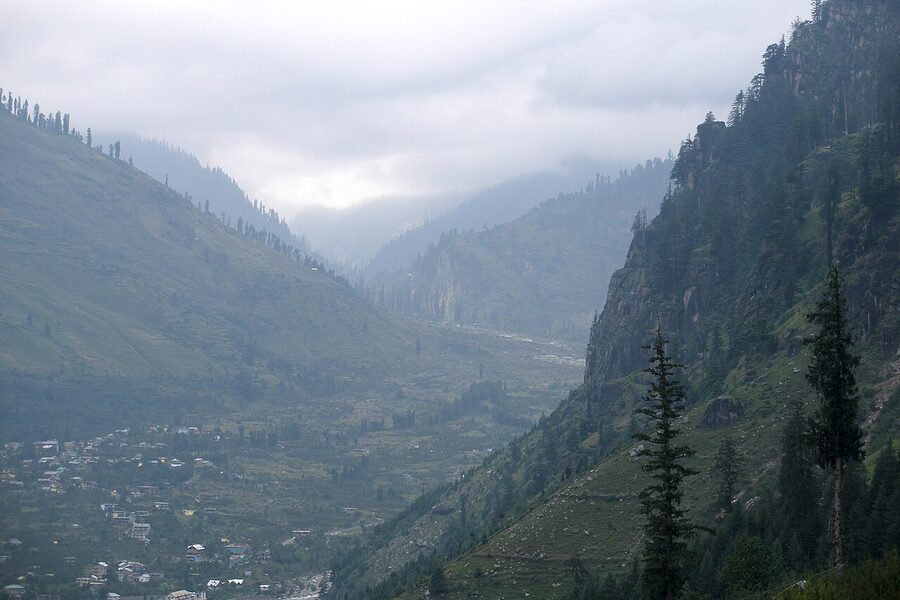

If you only know two names from this region, they are probably Manali and Kullu Dussehra. Both are in this article, but neither covers the place properly. The Kullu Valley is a 75-kilometre corridor of the Beas River between Larji and Manali, sandwiched between the Pir Panjal, Lower Himalayan and Great Himalayan ranges. Within that corridor sit several distinct sub-valleys, an old royal capital that pre-dates Sultanpur (the modern Kullu town), one of India’s most concentrated festival traditions, a UNESCO-listed national park, and the orchards that produced something like a quarter of the country’s apple crop in a good year. This page is the cultural and geographic backbone for the whole region. If you’re trying to figure out where to base, what to skip, and how the festival fits into the rest of the year, start here.
Quick reference: where in the valley to base
The valley has six places that work as a base. Picking the right one matters more than picking the right “things to do” list. The towns sit far enough apart that you can’t fix a wrong choice cheaply mid-trip.
| Base | Best for | Altitude | What it gives you |
|---|---|---|---|
| Manali | First-timers, snow, big-ticket sights | ~2,050 m | Hidimba temple, Solang, Old Manali cafés, Rohtang day trips. Touristed and built-up. |
| Naggar | Culture, slow travel, Roerich | ~1,800 m | 800-year-old Gauri Shankar temple, the castle, Roerich Estate, hill-village walks. |
| Kullu town | Dussehra week, festival immersion | 1,200 m | Raghunathji temple, Dhalpur grounds, Akhara Bazaar shawls, real working town. |
| Kasol / Manikaran (Parvati Valley) | Cafés, hot springs, Parvati hikes | 1,580 m / 1,829 m | Israeli food, Manikaran Sahib gurdwara, trailheads for Kheerganga and Tosh. |
| Banjar / Jibhi / Tirthan | Forest quiet, no crowds, no Wi-Fi | ~1,600 m | Trout streams, Jalori Pass, edge of Great Himalayan National Park. |
| Bhuntar / Raison | Just landed, just leaving, riverside camps | 1,090 m | Airport handy, working orchard belt, simple Beas-side guesthouses. |
If you have three nights, pick one. If you have five, pick two: typically Manali plus one of the quieter sub-valleys. Trying to “do” all six in a week is the most common rookie mistake and produces the trip everyone complains about: too much road time, not enough sitting still.
The lay of the land
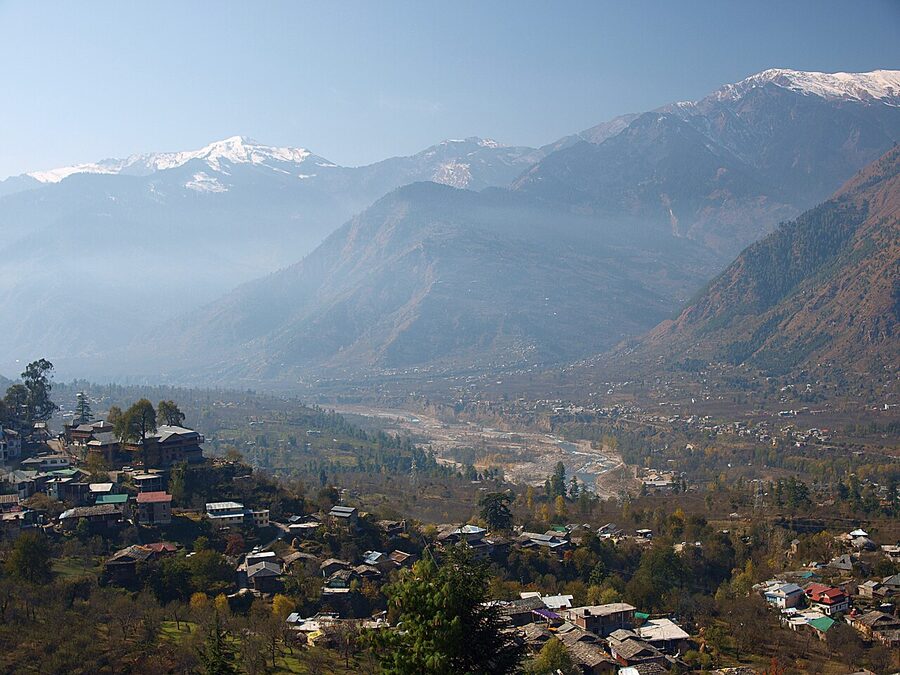

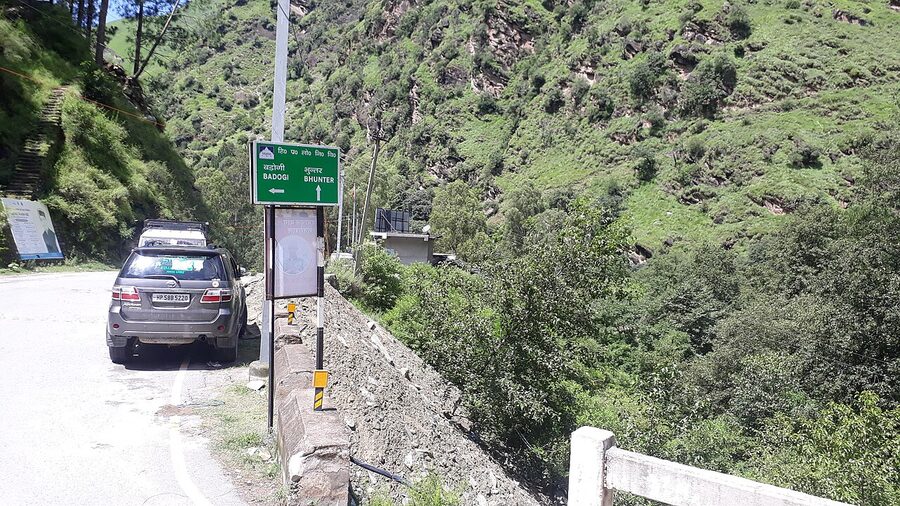
Geographically, this is one long valley with several smaller ones folding in from the east and west. The Beas River drains the south face of Rohtang Pass, runs through Manali, swings past Naggar on the left bank, hits Kullu town at its confluence with the smaller Sarvari rivulet, and continues south past Bhuntar, where the Parvati joins from the east. From Bhuntar the road follows the river through Bajaura and Aut to Larji, where the Tirthan and Sainj rivers come in from the south. That is the spine of the trip. Everything else is a sub-valley off it.
Three big sub-valleys do most of the work for visitors. The Parvati Valley turns east at Bhuntar and runs up via Jari, Kasol, Manikaran and Barshaini towards Kheerganga. The Tirthan Valley turns south-east from Aut and is the main gateway to the Great Himalayan National Park. The Sainj Valley runs parallel to Tirthan and is even quieter: almost no tourist infrastructure, which is exactly its appeal for some travellers. Two smaller ones (Lug Valley above Kullu town and the Banjar belt around Jalori Pass) repay the people who actually drive into them, but neither is on the standard tourist itinerary.
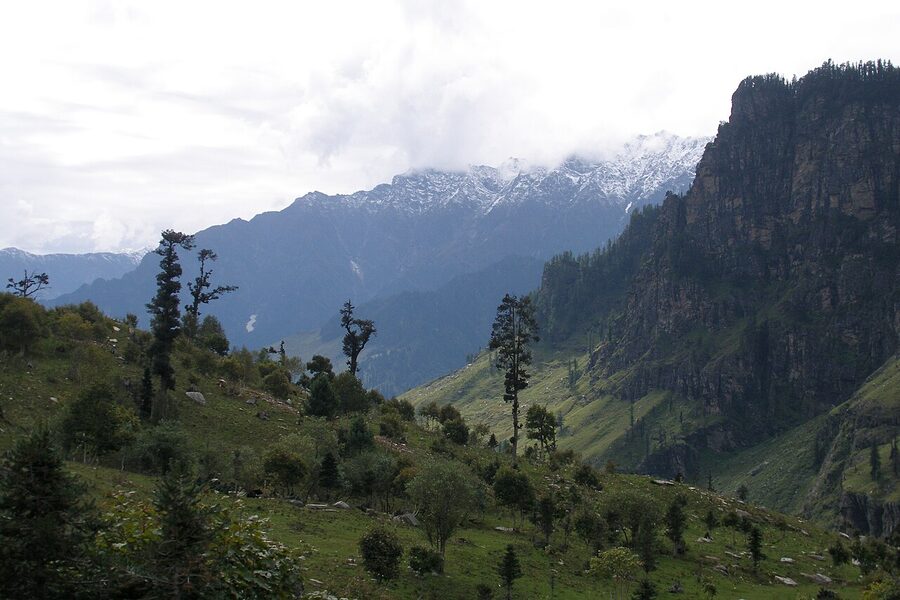

The valley sits between roughly 1,090 metres at Bhuntar and 2,050 metres at Manali, with the Rohtang crest at 3,978 metres marking the head. That’s a real altitude range packed into a 75-kilometre drive, which is why the climate stratifies so visibly. Apples grow up to about 2,400 metres on the slopes; deodar forests dominate from 1,800 to 2,800; alpine pasture takes over above the tree line. You can drive from a riverside that feels like Punjab in the morning to a snowfield that feels like Ladakh by lunch. That altitude gradient is what makes the valley fascinating and also what makes basing in one place at a time the only sensible plan.
Kullu town itself: the underrated centre
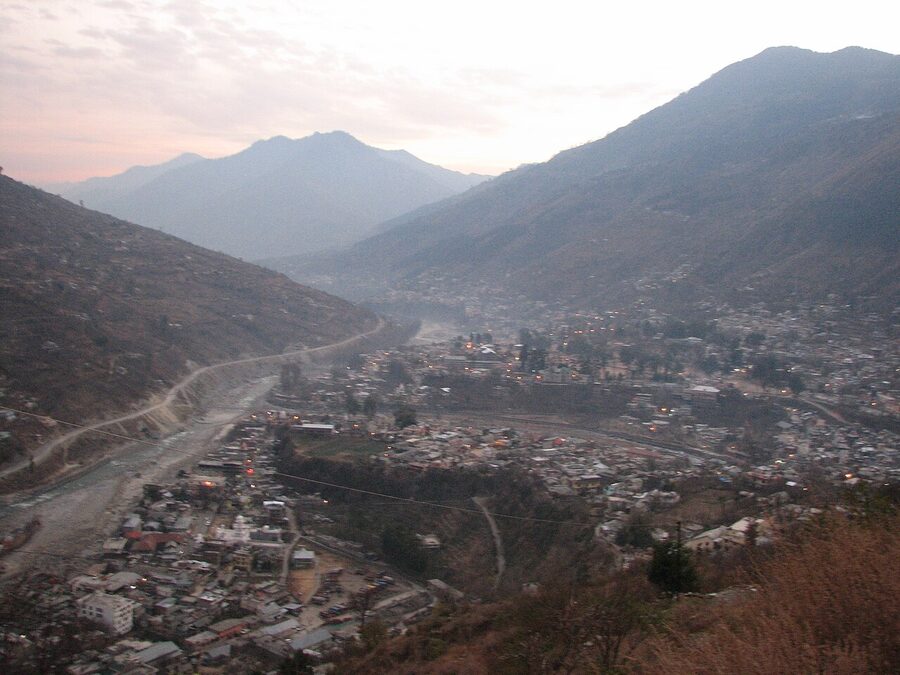

Most travel writing skips straight from Bhuntar airport to Manali, treating Kullu town as a road sign. That’s a mistake outside of Dussehra week. The town isn’t pretty in the way Naggar is pretty. It’s a working district headquarters at 1,200 metres, with proper bus stands, government offices, the only real bazaar between Mandi and Manali, and the historical seat of the chief deity of the valley, Lord Raghunathji. The town’s older quarter is technically Sultanpur. Raja Jagat Singh moved the Kullu capital here from Naggar in the 17th century, after the famous episode in which he sent for the Raghunathji idol from Ayodhya as penance for a wrong he believed had cursed the royal family.
The Raghunath Temple inside the palace complex is the religious heart of the entire valley. During Dussehra, every village deity in the district visits this idol on the Dhalpur Maidan to begin the festival. Outside Dussehra week the temple is quiet: open early morning, soft bells, a handful of locals, no tour-bus crowd. Go before 8am if you want the place to yourself.
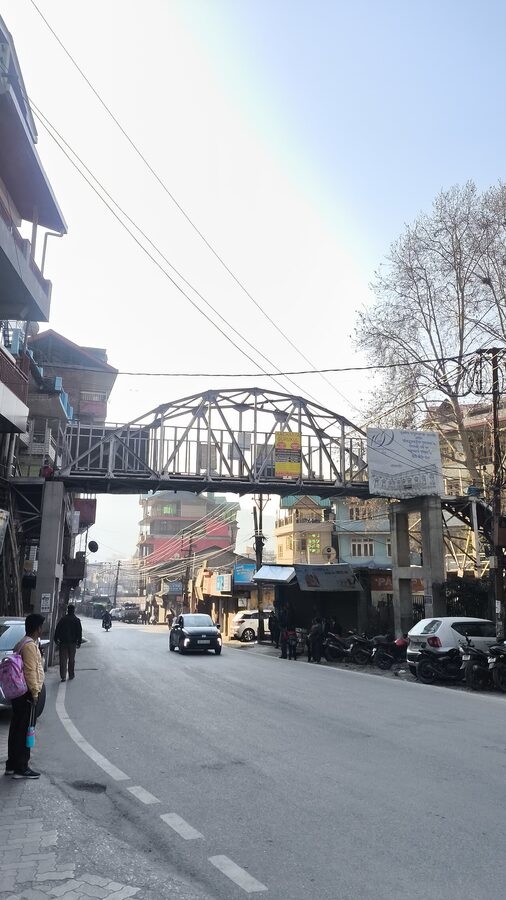

Akhara Bazaar runs north from the Dhalpur ground and is where you buy a Kullu shawl that isn’t a Manali tourist-stall fake. Look for the Bhuttico cooperative outlets and the Kullu Shawl Industries showroom, they sell at fixed prices, you pay more than at the bus stand, and you actually get the geometric Kullu border weave on real merino. A good plain shawl runs from about ₹1,500 to 3,500 (roughly $18 to 42); a heavier one with full pattern from ₹4,000 to 10,000+. Bargain at small shops if you must, but accept that shawls under ₹800 in this town are usually acrylic.
Kullu’s other practical role is logistical. It’s the closest town with a real ATM grid (the Manali ATMs run dry on busy weekends), a working hospital, and the tehsil offices that issue the inner-line and Rohtang permits. If you’re heading deeper into Lahaul or up Spiti via Sainj, sort the paperwork in Kullu rather than waiting for Manali.
Where to base yourself in detail
The valley’s accommodation map mirrors its geography. From south to north along the Beas:
Bhuntar and the orchard belt (Raison, Katrain, Patlikuhl)
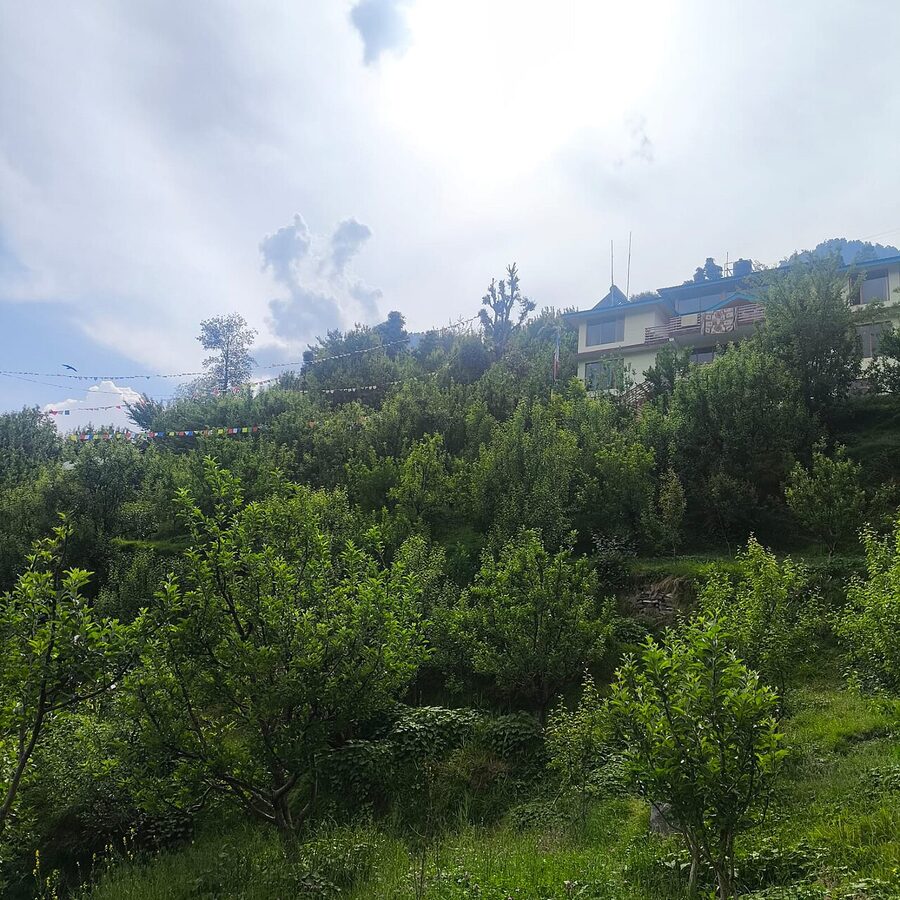

Bhuntar is the airport town and a working bus junction, not somewhere to sit for a week, but a sensible night if you’re flying in late or out early. Past Bhuntar, the Beas-side villages of Raison, Katrain, and Patlikuhl have a string of orchard guesthouses and HPTDC riverside camps. Raison is where the state tourism corporation’s tents have stood for decades. Patlikuhl is the bridge across to Naggar. This belt is the right call if you want apple-belt scenery, no nightlife, and a base for daytrips both up to Manali and down to the Parvati turn-off. Budget is reasonable, ₹1,500 to 4,000 (~$18 to 48) covers most family-run options.
Naggar: slow Kullu Valley
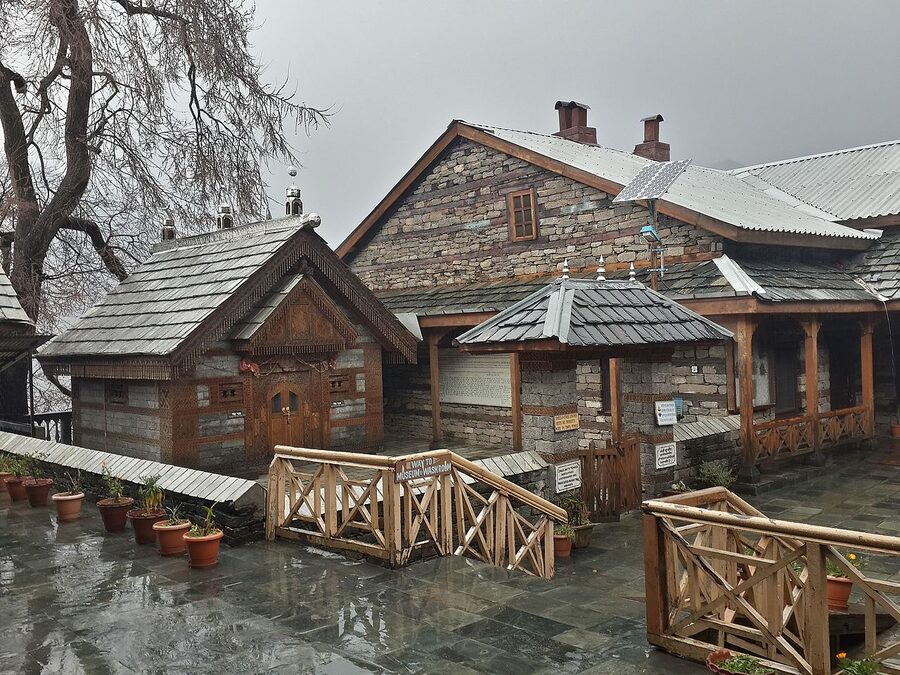

Naggar is on the left bank of the Beas, 27 km north of Kullu town and about 21 km south of Manali. It’s the old capital, Naggar succeeded Jagatsukh and ran the kingdom until Raja Jagat Singh moved everything to Sultanpur. The castle is still standing, and it’s now a heritage hotel run by HPTDC. You can walk through the courtyard whether or not you’re staying there, and the views from the small Jagti Patt temple inside are quietly extraordinary.
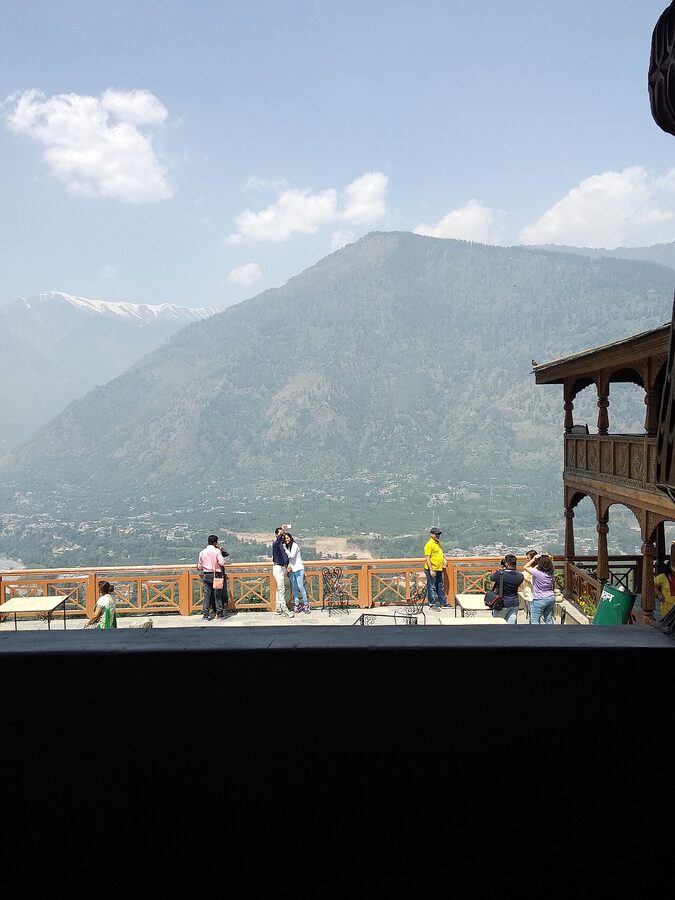

What I rate Naggar for, though, isn’t the castle. It’s the cluster of small temples below it, the 800-year-old stone Gauri Shankar at the foot of the bazaar, the four-armed Vishnu of Chatturbhuj, the pagoda-style Tripura Sundri, and highest of all on a small ridge above the village, the Krishna temple of Murli Dhar, and the Roerich Estate, twenty minutes’ walk further up.
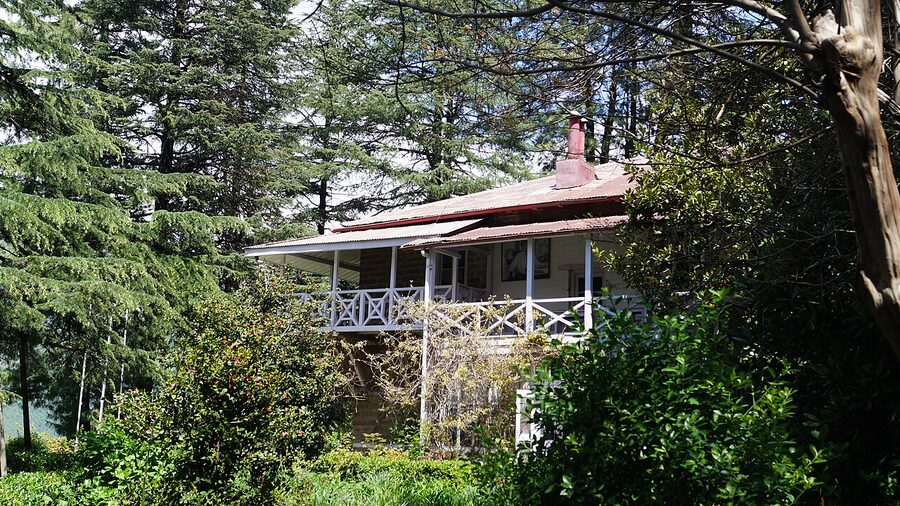

Nicholas Roerich, the Russian-born painter, mystic and stage designer who is genuinely a major 20th-century figure if you’ve not run into him, made his last home here. The estate is now a museum and art gallery. The galleries are open 10:00 to 13:00 and 14:30 to 18:30 (closed Mondays in winter), and they’re a rare thing in a hill station: properly hung, properly lit, with originals rather than prints. Entry is ₹50 for Indian visitors, ₹200 for foreigners. If you have any interest at all in Himalayan landscape painting it is worth the detour from Manali.
Naggar is where I’d send anyone who wants the cultural Kullu Valley without the Manali commercialism. Heritage stays in old kath-kuni houses run from ₹3,000 to ₹8,000 (~$36 to 95).
Manali
Manali is the most-visited single town in the valley by a significant margin. It works hard to deserve that, and it also has the predictable downsides of any place that pulls the bulk of north Indian honeymooners and weekenders. Old Manali on the left bank has the cafés, the deodar quiet, the foreign backpacker scene; New Manali (the Mall area) has the noise, the buses, the souvenir-stall congestion. Choose your side carefully. Even half a kilometre changes the experience.

For the full breakdown of what to see in Manali itself (the Hidimba and Manu temples, Solang Valley, the Atal Tunnel run to Sissu), see our standalone Manali tourist attractions guide. For the accommodation breakdown by neighbourhood, see Manali Hotels by Neighbourhood. The short version: stay in Old Manali or further up around Vashisht for atmosphere, in the Mall area only if you specifically want the bazaar on your doorstep.
Kasol and Manikaran (Parvati Valley)
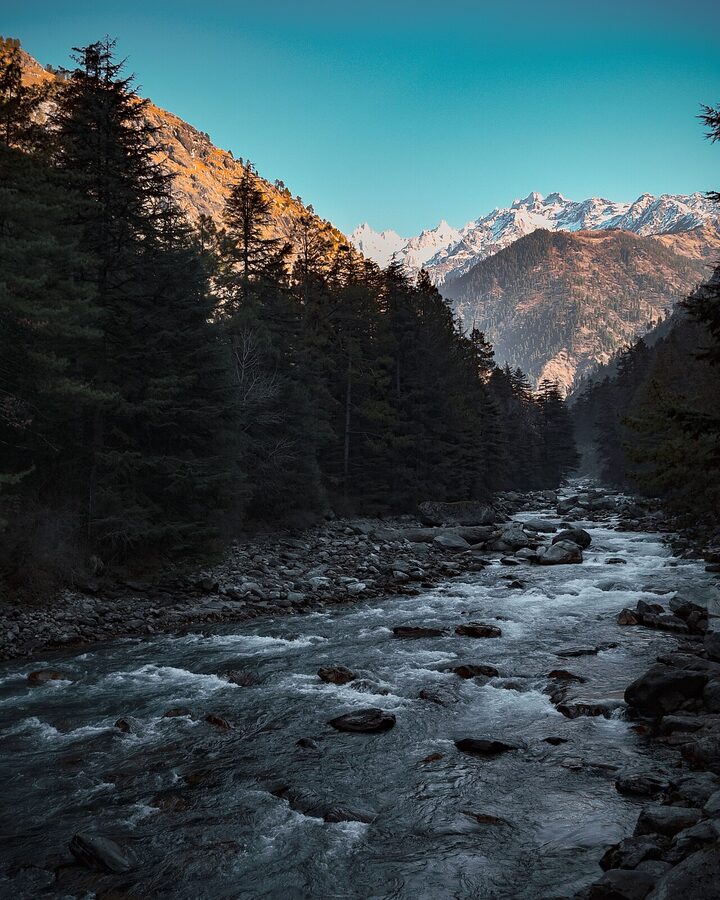

The Parvati Valley turns east off the main spine at Bhuntar. Kasol, 39 km from Kullu, has been the foreign-traveller stronghold for two decades and now caters to a much bigger Indian backpacker crowd as well. The Israeli-cafe count is high enough that Hebrew menus are routine. The vibe is studenty, river-side, somewhat scruffy in a way that suits some travellers and irritates others. Don’t expect untouched mountain quiet.
.jpg)
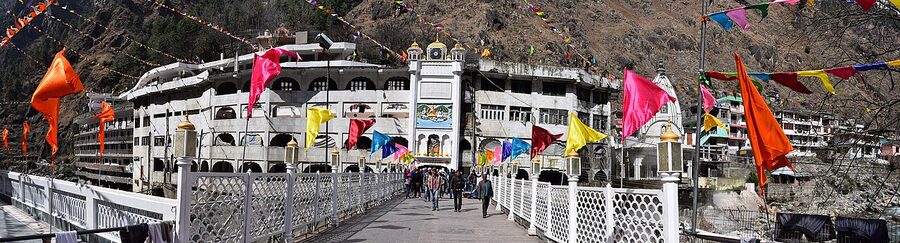
Four kilometres beyond Kasol is Manikaran, which is something else entirely. This is one of the most sacred sites in the Kullu Valley for both Hindus and Sikhs, and the geology is extraordinary: natural hot springs at boiling point bubbling up directly beside the freezing Parvati River. The Manikaran Sahib gurdwara feeds thousands of pilgrims daily from a langar where the rice is genuinely cooked in muslin bags lowered into the spring water. Walking across the footbridge to the gurdwara at dawn, when steam is rising off the rocks and the morning prayers are starting, is one of the more memorable arrivals in the entire state.
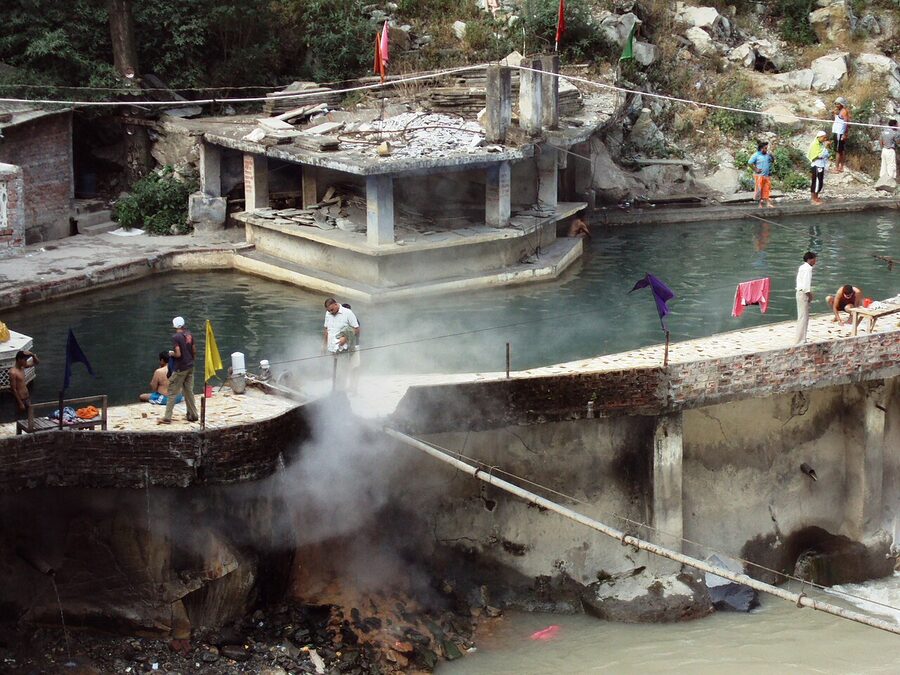

Practical note: the gurdwara provides simple dorm rooms (langar hall donation only, no fixed price) and a free meal to anyone who turns up. Cover your head, remove shoes, sit on the floor, eat what you’re given. It’s the right way to spend a night at Manikaran if you’re open to it. If you want privacy, plenty of small hotels at ₹1,200 to 3,500 (~$15 to 42) line the road in. Beyond Manikaran the road continues to Barshaini where the Kheerganga trek begins, and across the bridge to Tosh, the most-photographed of the upper Parvati villages.
Banjar, Jibhi, Tirthan: the quiet valley
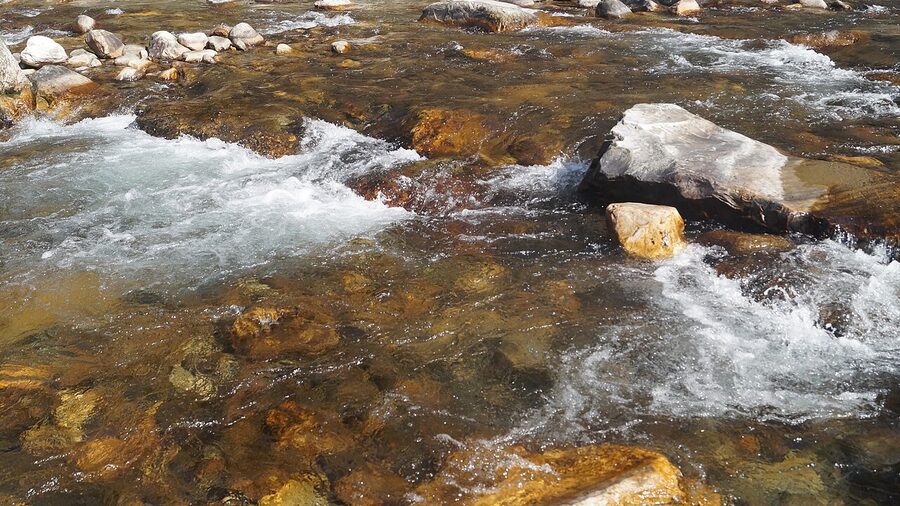

If Manali is what most people picture, Tirthan and the Banjar belt are what they actually want once they’ve had it. Turn south from the main spine at Aut and within an hour you’re in a side-valley with no Wi-Fi at half the homestays, river-side cottages on the Tirthan, no honeymoon buses, and the eastern entrance to Great Himalayan National Park forty minutes further up the road at Gushaini.
Jibhi is fifteen kilometres further on and slightly higher, around the village of Banjar. It’s the place where the Bollywood-influencer crowd has discovered “the new Manali” – which means it’s busier than it was five years ago, but still nothing like the Mall Road. The Jibhi waterfall, the Serolsar Lake walk above Jalori, and the wooden chalets along the Tirthan tributaries are what people come for.
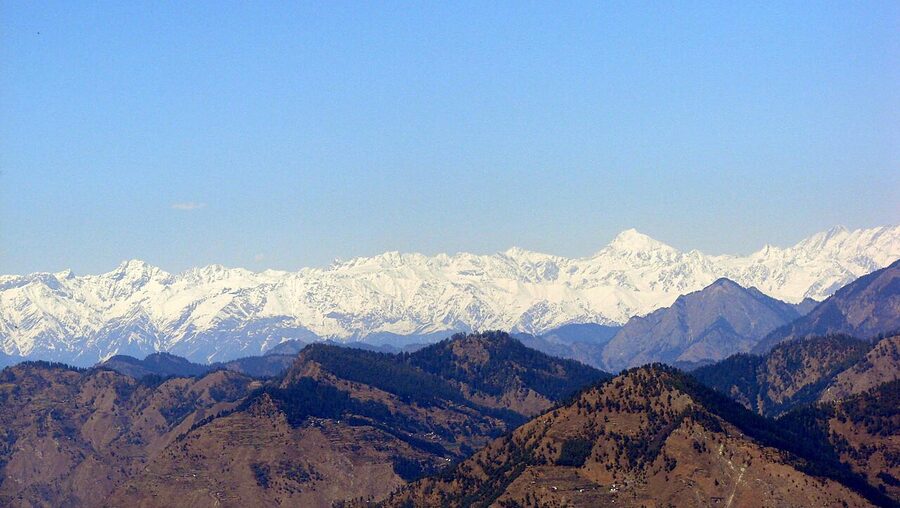

Jalori Pass at 3,120 metres is the watershed between the Beas catchment and the Sutlej. The drive up from Banjar is rough and slow but the pass itself has a small dhaba, a temple, and a five-kilometre forest walk along the ridge to the Serolsar Lake (sacred to the local goddess Budhi Nagin). The pass is closed from roughly mid-December to mid-March and the road washes out in monsoon. Late September to early November is the best window.
Stays in Tirthan and Jibhi run from basic homestays at ₹1,200 a night to riverside lodges at ₹6,000 to 10,000. The trout-fishing lodges at Gushaini are a category of their own. Book ahead – October weekends fill up.
The festival backbone
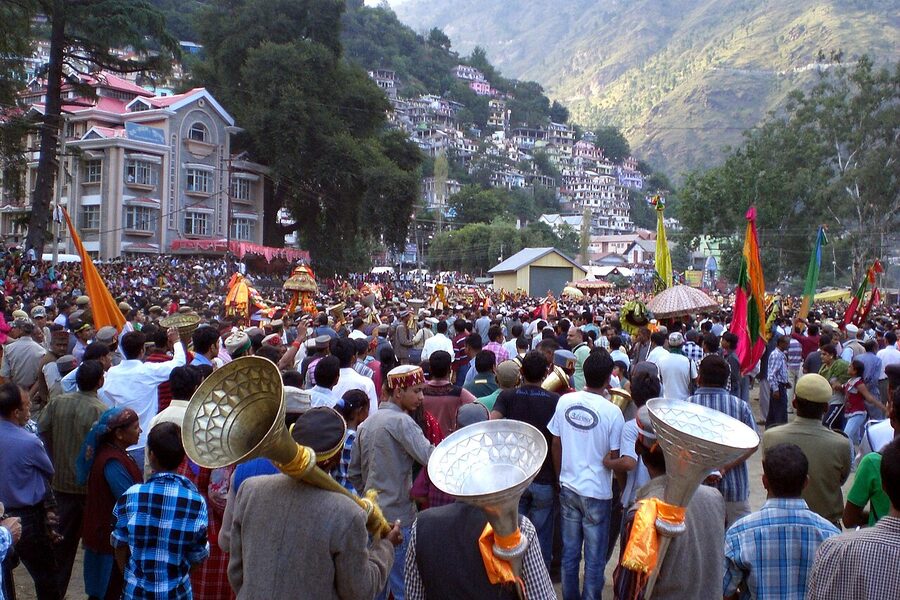

This valley has festivals the way other parts of Himachal have temples; they’re the cultural skeleton everything else hangs off. The biggest is Kullu Dussehra in October, which begins exactly on Vijaya Dashami (the day other parts of India end their Dussehra) and runs for seven days at the Dhalpur Maidan. More than two hundred village deities are carried in palanquins from across the district to pay respects to Lord Raghunath, whose rath leads the opening procession.
That’s not a tourist line. Each deity arrives with its own pujari, drummers, and village delegation. You can stand at the edge of the maidan during a procession and see twenty or thirty palanquins coming down separate paths from the surrounding ridges – a logistic feat that has been repeated annually since the 17th century. The full deep-dive on the festival’s structure, the Raghunathji legend, the daily programme through the week, and the practical advice on getting accommodation during festival week is in our Kullu Dussehra at Kullu guide. If you can plan a trip around it, do.
Beyond Dussehra, the valley calendar has at least a dozen smaller fairs worth knowing about. The Phagli festival at the end of February in the Outer Seraj villages above Banjar is a masked-dance celebration tied to the local Devta tradition. Pipal Jatra at Naggar in mid-May. The Saaz festival at Manikaran in late June. The Pathar Mela at Halan-2 (above Manali) in early August, when villagers throw stones at each other in a ritual battle that ends only when first blood is drawn. Strange to a visitor; central to local belief. For the full state-wide festival calendar see our Himachal Pradesh festival calendar month by month.
Temples and the Dev Sanskriti
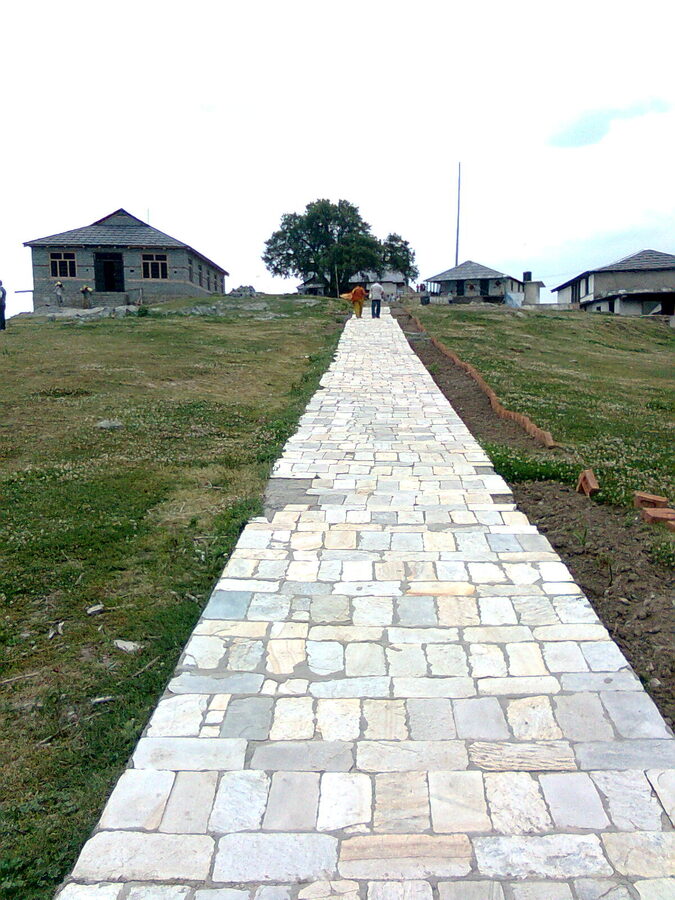

Locals call this region Dev Bhoomi (land of the gods) and they mean it specifically. Almost every village has its own Devta, a local deity who lives in a temple, holds opinions, settles disputes through a gur (oracle), and travels in a palanquin to visit other deities at festivals. This is not vague tourist-brochure spirituality. It’s a working religious system that intersects with civil life: village court cases still go to the Devta when the panchayat can’t agree.
The temple landmarks worth time, in rough valley order from south to north:
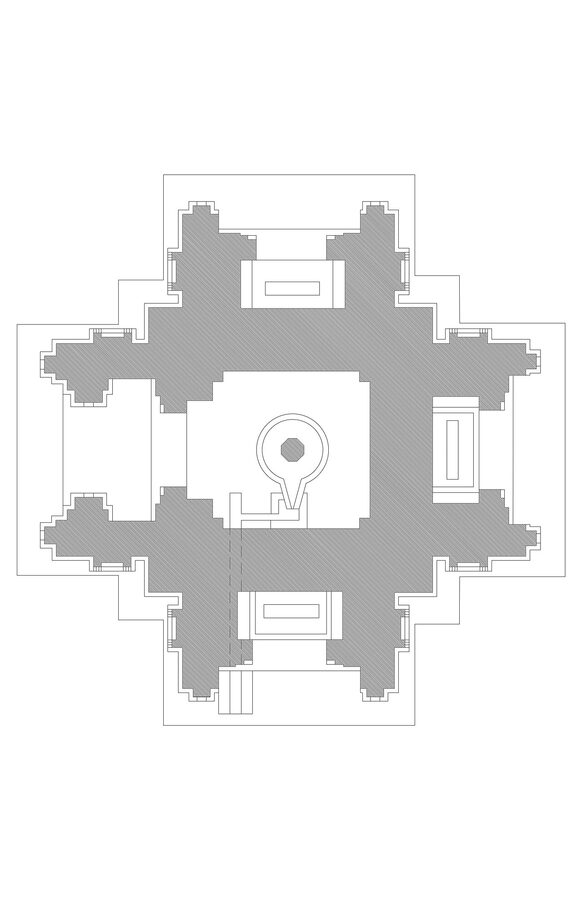

Basheshwar Mahadev (Bajaura). Pyramidal-style stone temple from the 9th to 12th century AD, dedicated to Shiva, set right against the Beas riverbank fifteen kilometres south of Kullu town. The bas-reliefs are the real reason to stop. The four faces around the sanctum are exceptional examples of Pratihara-period stonework. Free entry, open dawn to dusk.
Raghunathji Temple (Sultanpur, Kullu). The chief deity of the entire valley. Modest from outside, central from a religious-history standpoint. Active throughout the year; impossible to enter without queuing during Dussehra week.
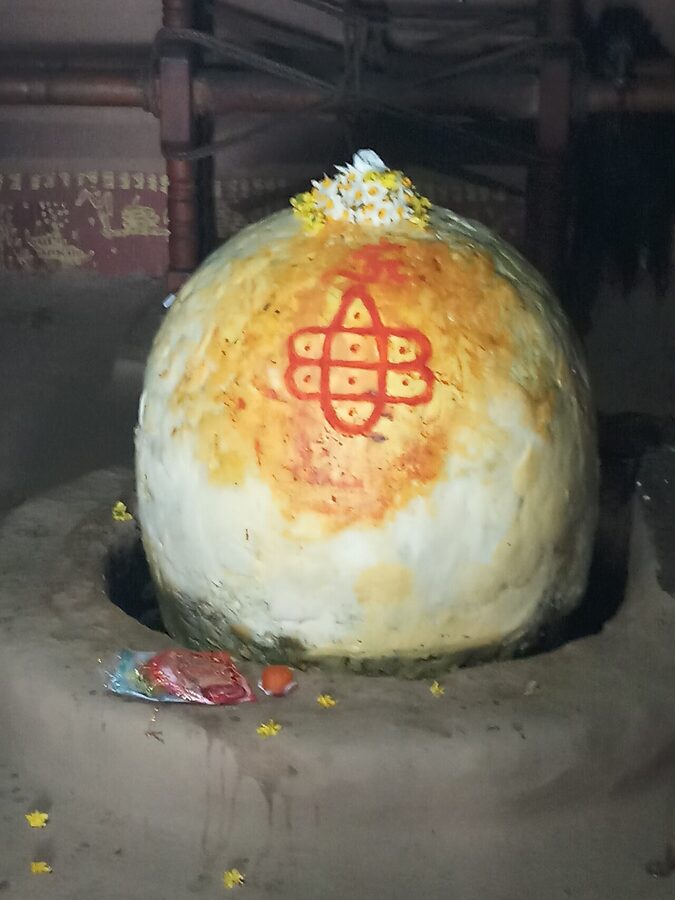

Bijli Mahadev. A Shiva temple at 2,460 metres above the Kullu-Manali road, accessed by a 3-km uphill trek from the Chansari road head. The story is plain and fairly extraordinary: the central pillar (the shivling) is genuinely struck by lightning roughly once a year and shatters; the priests then patch it back together with butter and barley flour. The walk takes about 90 minutes up if you’re fit. Carry water and warm layers. Even in summer the temple ridge gets cold.
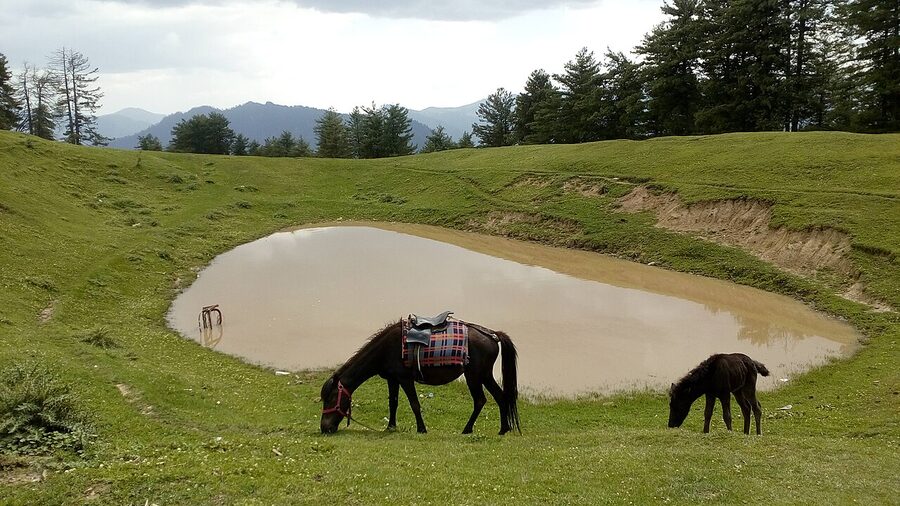

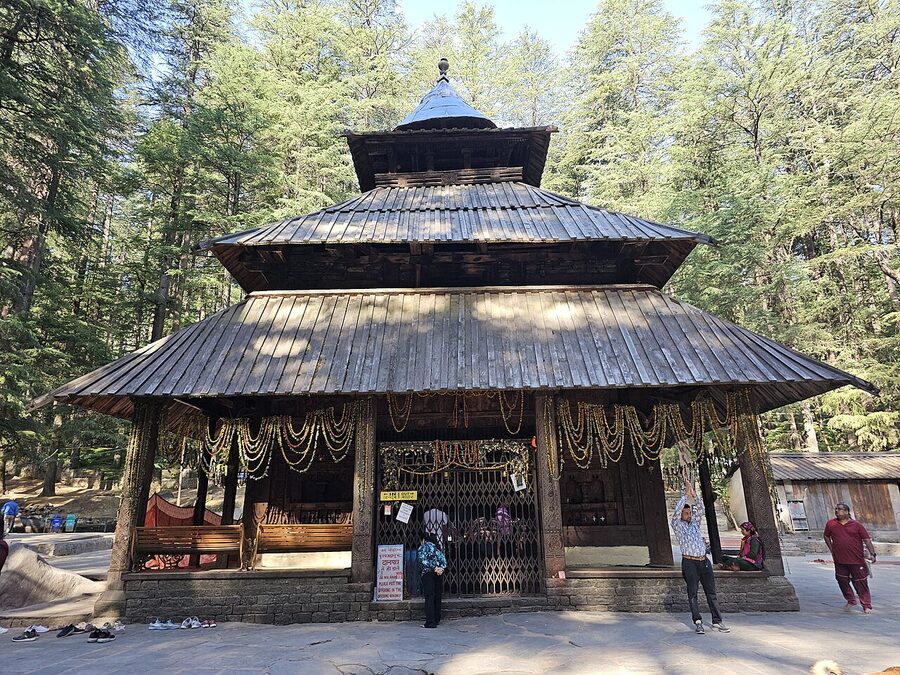
Hidimba Devi Temple (Dhungri, Manali). Built 1553 by Maharaja Bahadur Singh, dedicated to Hidimba, the rakshasi from the Mahabharata who married Bhima. It’s the wooden pagoda set in the deodar grove ten minutes uphill from Old Manali. Go before 9am or after 5pm to avoid the queue.
Manu Temple (Old Manali). A short walk above Old Manali, dedicated to the sage Manu, author of the Manu Smriti. By tradition the only temple in India dedicated to him. Quieter than Hidimba, smaller crowds, set among orchards.
Manikaran Sahib gurdwara and the Manikaran Shiva temple. Both at the same spot, both fed by the same set of springs, jointly held sacred by Sikhs and Hindus. The story has Shiva and Parvati meditating here for eleven thousand years; Parvati losing an earring (mani) into a pool, the earth-serpent Shesha sneezing it back up along with the boiling springs.
Beyond these named landmarks, almost every village in the valley has at least one wooden kath-kuni temple: interlocked deodar beams, no nails, slate roof, shaded by old cedars. The ones at Naggar (Jagti Patt and Tripura Sundri), Jagatsukh (the Shikhara-style Shiva temple, very old), and the Gauri Shankar at Naggar are the architecturally important ones. The unimportant ones in unmapped villages are often the ones with the deepest local atmosphere.
The sub-valleys to detour to
Parvati Valley: Kasol, Kheerganga, Tosh

From Kasol, the standard upper-Parvati run goes to Manikaran (4 km), Barshaini (a further 18 km, the road head), and from Barshaini either across the bridge to Tosh (2 km, drivable; full of guesthouses and the only village with a proper electricity supply that high), or up the trail to Kheerganga (10 km uphill, 4 to 5 hours, the famous hot-spring camp at 2,950 metres). Kheerganga is overrun on summer weekends; go midweek, and bring your own tent if you want any solitude.
Malana, the village famous for its claim to be the world’s oldest democracy, is reached on a separate spur off the Parvati road via Jari and a steep one-and-a-half-hour walk. The villagers speak Kanashi, a language unrelated to the surrounding Pahari, and have their own parliament with an Upper House and Lower House. They are deeply protective of their customs, most importantly: do not touch villagers, the village temple, or any village property. The fine for doing so is real and locally enforced. Photograph people only with explicit permission.
Tirthan and Sainj: the Great Himalayan National Park gateway
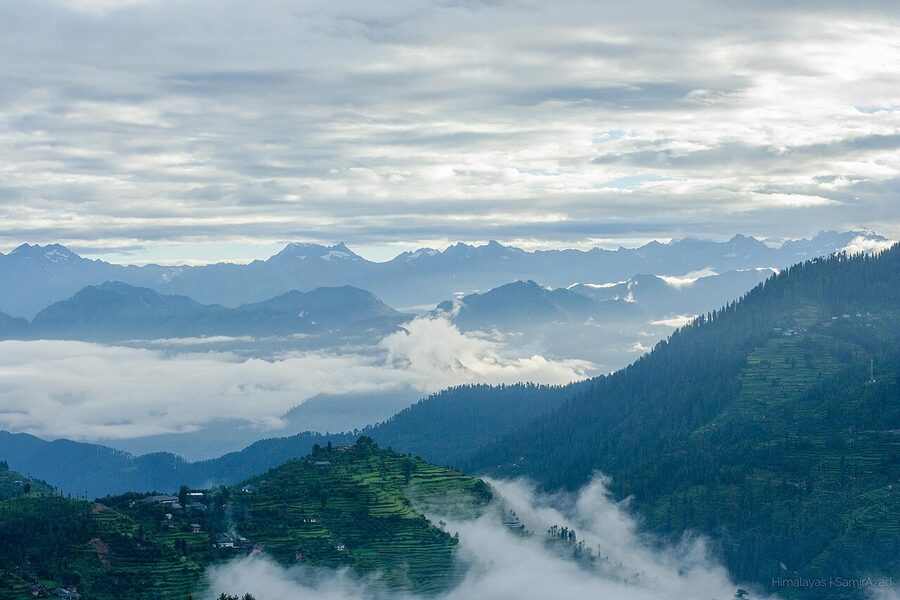

The Great Himalayan National Park is 905 square kilometres of wilderness on the eastern flank of the Kullu Valley, stretching from 1,500 metres to over 6,000 metres. It became a UNESCO World Heritage Site in 2014 and there’s no road inside the core zone. To go in you take a forest department permit (₹50 to 200 depending on your nationality) and walk – usually two to four days minimum, longer for the cross-park traverses. The eastern entry at Gushaini is up the Tirthan; the southern at Sainj village is up the Sainj. Both have local guide cooperatives with set per-day rates (around ₹1,500 to 2,000 a day for guide and porter).
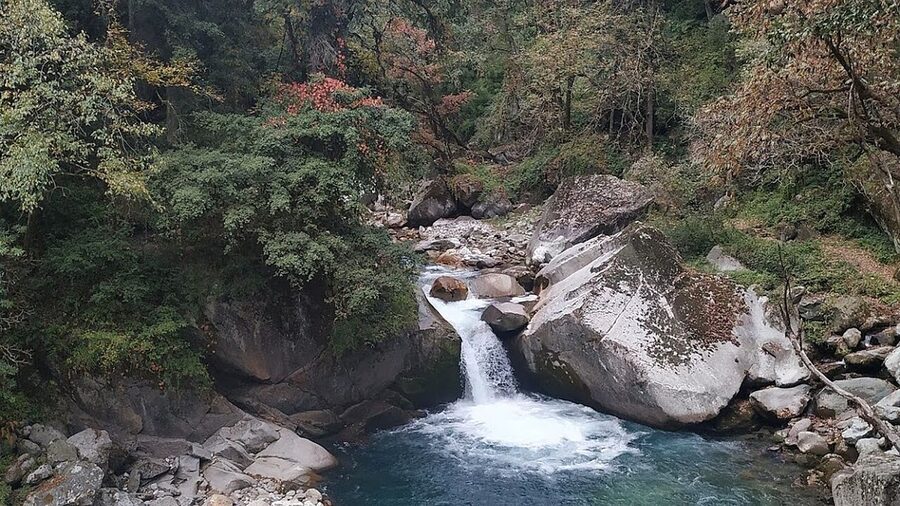

If a multi-day trek inside the park feels heavy, the Tirthan eco-zone outside the park boundary gives you the same forest, the same river, the same air, and stays you can drive to. That’s the practical day-visitor option. For the deeper natural-history detail (protected species, the GHNP buffer-zone projects, the snow leopard surveys), see our Wildlife in Himachal Pradesh hub.
Solang and Rohtang
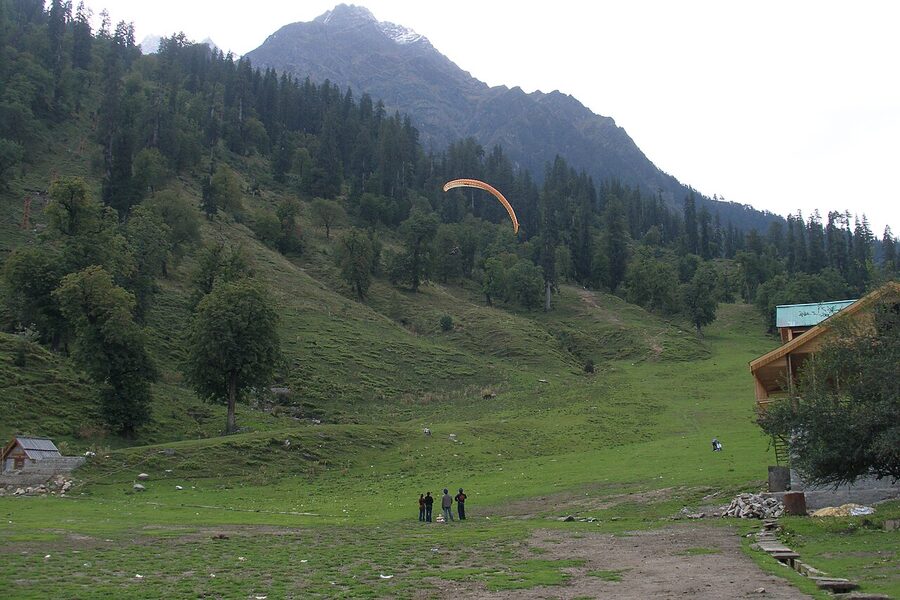

Solang Valley sits 13 km north of Manali on the road towards Rohtang, and the meadows here are the standard tourist activity zone: paragliding launches, zorbing, snow tubes in winter, summer-skiing in May. The view back down the valley from the launch ramp is genuinely good; the actual experience on a busy weekend is closer to a fairground. Go midweek, go early, and don’t pay for the cable car if you can hike.
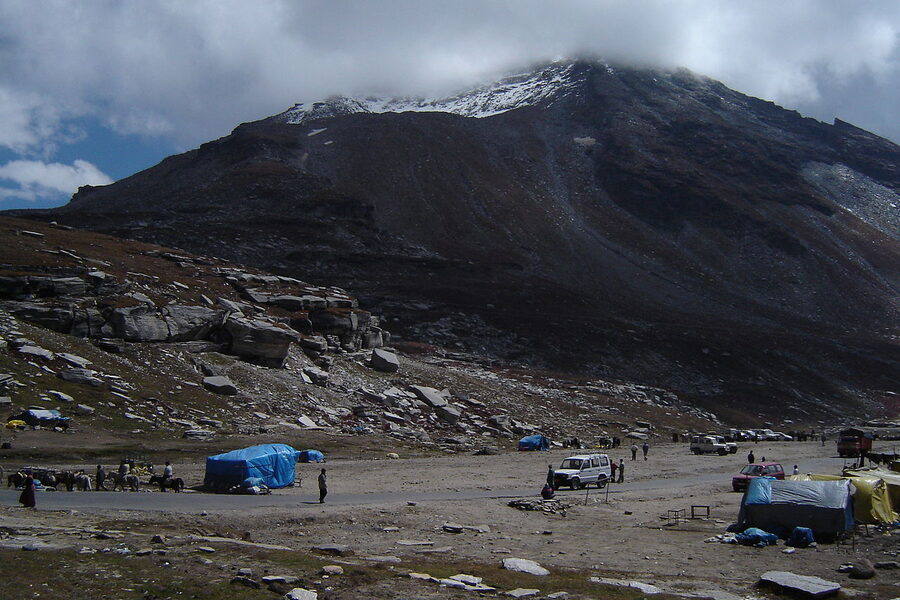

Rohtang Pass at 3,978 metres is the head of the valley and the gateway over to Lahaul. It is also the single biggest piece of summer-tourism congestion in Himachal Pradesh. The state caps daily vehicle entries at 1,200 to limit damage from black-carbon and uncontrolled tourism, and you need an online permit booked 2 to 3 days ahead via the official Rohtang permits portal. A note: the Atal Tunnel under the pass (opened 2020) makes Rohtang itself optional. If your goal is Lahaul, take the tunnel and ignore the pass; if your goal is the snow on the pass slopes, late May or early June at 6am is the only time it’s worth the effort. Avoid weekends entirely. For a fuller treatment of the over-the-top route to Lahaul and Spiti from here, see our Lahaul and Spiti guide.
Lug Valley
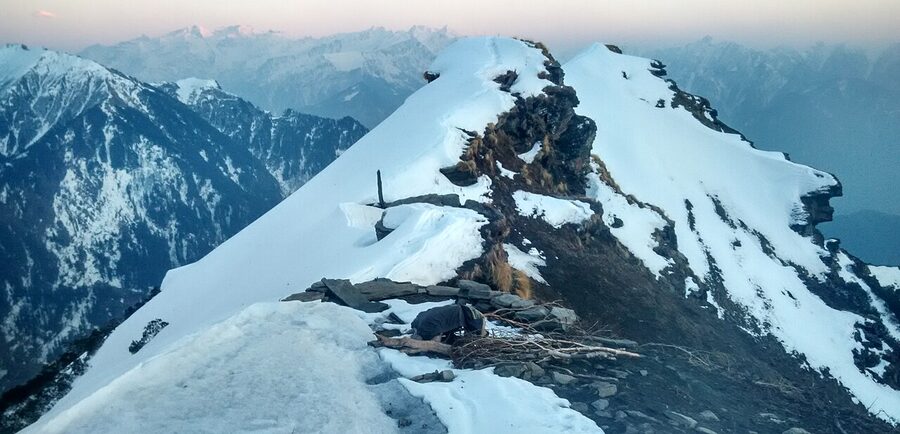

One sub-valley most articles skip: Lug Valley (or Lag Valley), tucked into the slopes immediately west of Kullu town. It’s twenty minutes off the main road via Dhalpur, and almost no tourist infrastructure – exactly why locals like it. Bus services run from Kullu bus stand to villages like Bhalyani; the road is rough; accommodation is limited to a few homestays. The hike up to the meadows of Mathasaur, where there’s a wooden hut shrine to Mata Fungni, is a half-day. Don’t carry leather (belts, wallets); the local deity codes are still strict. And carry food; there are very few shops once you leave Bhalyani.
Adventure: what’s actually worth doing
The valley is marketed hard as an adventure-sport destination. Some of that marketing is fair, some isn’t.
White-water rafting on the Beas is the standard offering. Operators run two beats: Pirdi to Jhiri (about 7 km, the popular short run) and Babeli to Pirdi (the longer one). Class III in summer, Class II in autumn. Standard rate is ₹400 to 800 per person depending on the beat, the season, and how hard you negotiate at the boat ramps near Babeli. Stick to operators registered with the Adventure Tour Operators Association of Himachal. Look for the certification on the boats. Avoid the monsoon (July-early September); the river runs brown and dangerous.
Paragliding works at Solang for short flights, and for the famous extended cross-country runs the launch is at Bir-Billing in Kangra district, three to four hours’ drive away. If you’re set on paragliding from this valley specifically, Solang is the location. ₹2,500 to 4,000 for a 5 to 8 minute tandem flight.
Trekking is where the valley genuinely earns its reputation. A non-exhaustive list of standard treks accessible from somewhere in the Kullu Valley:
- Kheerganga – 1 day return from Barshaini; hot spring at 2,950 m; the easy crowded one
- Hampta Pass – 4-5 days from Manali to Chatru in Lahaul, crossing the pass at 4,270 m; iconic Pir Panjal traverse
- Bhrigu Lake – 3 days from Gulaba to the alpine lake at 4,300 m; doable in summer
- Beas Kund – 2-3 days from Solang to the source of the Beas; relatively easy
- Chandrakhani Pass – 2 days from Naggar to Malana over the 3,660 m pass; cultural plus high-pass
- GHNP cross-park traverses – 5-9 days; only with park-licensed guides
- Pin-Parvati Pass – 8-10 days from Barshaini over the 5,319 m pass to Spiti; serious mountaineering
- Bijli Mahadev – half-day, 3 km uphill, the easy temple-trek that everyone can do
For booked tour packages that bundle trekking with rest of the valley sightseeing, see our Himachal tour packages overview, which lists verified operators on Klook, Viator and GetYourGuide.
When to go

The valley is technically a year-round destination – but each season gives you a genuinely different trip.
Mid-March to mid-June. Apple bloom (early April), pleasant temperatures (15 to 25°C in Kullu town, cooler higher up), all roads open, all treks below 3,500 m accessible by mid-May, the over-the-top road to Lahaul opens late May. This is the busiest season for honeymoon and family tourism. Book ahead, especially around long weekends. The trade-off for clear roads is heavy crowds at Solang, Rohtang and Manali Mall.
July to mid-September. Monsoon. Don’t come unless you have to. Landslides close the highway repeatedly between Mandi and Kullu, the Beas runs brown, rafting is suspended, photography is hard. The one upside is genuine green: the orchards and meadows are at their most full. Locals call this the off-season for a reason.
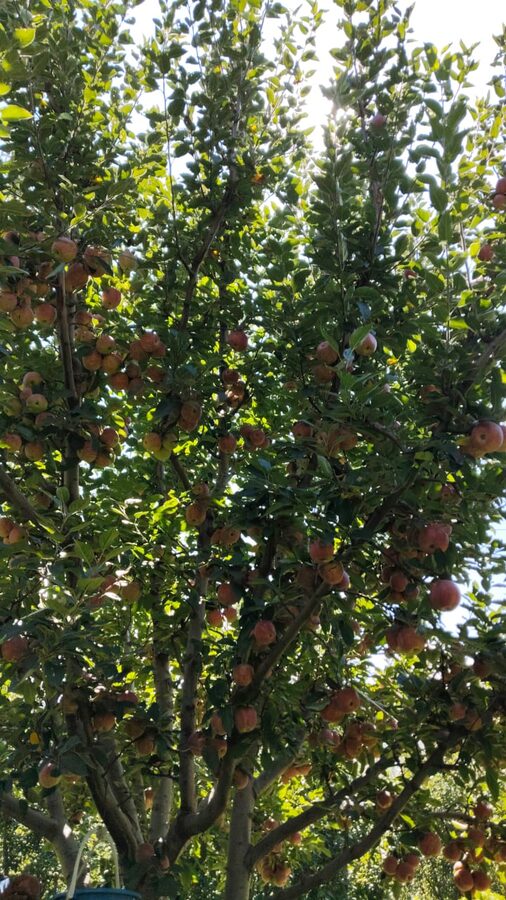
Late September to mid-November. The valley’s best window. Apple harvest peaks late September and runs through October. Skies clear after the monsoon. Dussehra falls in October. Daytime 18 to 22°C, nights cold (5 to 10°C). Roads all open until early November. Smaller crowds. If I had to pick one fortnight for a first trip it would be mid-October, around but not during Dussehra week unless you specifically want the festival.
December to early March. Winter. Snowfall on Manali and above is reliable from late December, peak in January. Rohtang and Jalori are closed. The lower valley (Kullu town, Bhuntar, Naggar) stays snow-free or gets only light dustings; the snow-tourist trade concentrates at Solang. Bring proper warm layers, expect 0°C at night in Manali, daytime 10 to 15°C in lower stretches. The atmosphere is genuinely different: quiet, slow, woodsmoke off every roof. A real winter trip is different from a snow-day trip.
Getting in and getting around
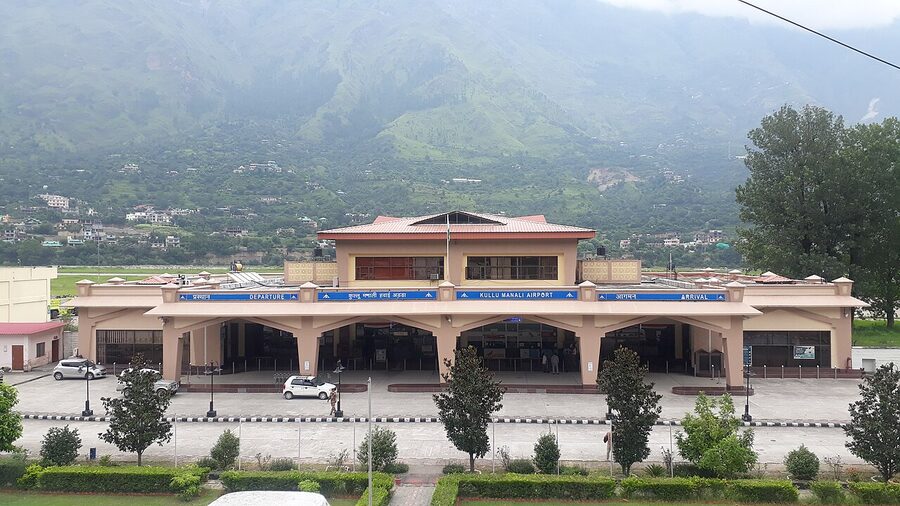

By air. Bhuntar (KUU), 10 km south of Kullu town, takes daily flights from Delhi (around ₹6,000 to 12,000 one-way; about 1h 20m) and seasonal flights from Chandigarh and Dharamshala. The airport sits on a river-bottom runway with peaks on three sides; flights are weather-cancelled regularly, especially in monsoon and winter. Build buffer days into your itinerary if you’re flying. The road option is always available as fallback.
By road. The standard route from Delhi is the NH-44/NH-3 via Chandigarh and Mandi – roughly 540 km, 12 to 14 hours by overnight bus, 10 to 11 hours by car if the road is clear. HRTC (Himachal Roadways) Volvo overnight services from ISBT Delhi to Kullu and Manali leave between 5pm and 8pm, fares ₹1,200 to 1,800. Private operators like Himachal Holidays Travels and Greenline run similar services. The state-run ordinary buses are much cheaper (₹600 to 800) but take longer and stop frequently.
From Chandigarh by car the run is about 270 km, 6 to 7 hours. From Shimla it’s 235 km via Mandi, around 8 hours. The route from Pathankot is 280 km via Mandi, about 8 hours. For the full breakdown of options between the capital and the valley, see our Delhi to Manali transport guide.
By train. No direct train. The closest broad-gauge stations are Chandigarh (270 km away) and Pathankot (280 km). The narrow-gauge Joginder Nagar railhead is 95 km away, but slow and infrequent. Usually not worth the connection time. Take a train to Chandigarh, then bus or car.
Within the valley. HRTC buses cover every settlement on the main spine and most of the sub-valley villages. The fares are absurdly cheap (₹40 to 100 for most journeys) and the timings are genuinely reliable in non-monsoon season. For door-to-door comfort, taxis from Bhuntar/Kullu/Manali stands work on rate cards posted at the rank: Kullu to Manali ₹1,500 to 2,000 one way, Kullu to Manikaran ₹2,500, Kullu to Tirthan ₹2,800. Negotiate the rate before getting in. Self-drive cars rentable from Chandigarh; not recommended for first-timers in monsoon.
What to eat
Himachali food is plain compared to Punjabi or Mughlai cooking – the local diet built around rajma, lentils, jacket potatoes, and yoghurt – but the regional specialties are worth seeking out. Dham is the festival meal: rice, three to five lentil and vegetable preparations, raita, served on a leaf plate to seated rows; you’ll see it during weddings and big temple festivals. Siddu is a steamed wheat bun stuffed with lentils or walnut paste, eaten with ghee and chutney, found in tea-stalls in Manali and Naggar. Tudkiya bhath is a one-pot rice and lentils dish from the Mandi-Kullu border. Babru is a stuffed kachori with black-gram filling, fried, eaten with tamarind. The local trout from the Tirthan and Beas is the protein highlight if you eat fish. Most riverside lodges in Tirthan grill it simply with salt and lemon.
For Tibetan food, head to the small monastery-area restaurants in Manali (Old Manali road and Aleo) and Manikaran. Momos and thukpa here are the real thing rather than the watered-down versions you get further down in the plains. Local wine is lugri, a red-rice and barley brew sold at small home-distilleries: strong, sour, an acquired taste. The apple cider from the small Bhuntar producers (look for Mandala or Wild Mountain) is more accessible and properly made.
A real word on the busy bits
Manali in May, Kasol in October, Solang on any weekend – these are the parts of the valley that have lost the plot. The Mall Road in Manali on a Saturday in peak season is closer to a Mumbai market than a hill town, with bumper-to-bumper SUVs, electronic music from rooftop bars, and a level of plastic-bag litter that the municipality is genuinely struggling with. Solang in winter has multiple operators selling the same paragliding flight at three different prices to passing tourists who don’t know to ask for the certification card.
None of this means skip the valley. It means: stay in Old Manali rather than the Mall, base in Naggar or Tirthan rather than Manali if you have flexibility, go midweek wherever possible, and accept that the famous bits of the famous places will not match the photographs from twenty years ago. The valley is still, away from those pinch-points, one of the most beautiful pieces of the Indian Himalayas, but it now requires a bit of effort to find the quiet sections that the photographs were taken from.
If you have three days, go to Naggar and do daytrips. If you have five, add Tirthan. If you have a week, add the Parvati upper villages. If you have ten and you’re here in October, reorganise the trip around Dussehra week and stay in or near Kullu town for those seven days. That’s the order of operations the valley actually rewards.
And the apples: eat them. Buy them off the orchard families at the roadside between Bhuntar and Patlikuhl from late August through October. ₹100 to 200 a kilo for the good Royal Delicious or Red Gold; less than half what you’d pay in Delhi for fruit half the quality. Fill a backpack on the way out. They keep two weeks if you’re careful.