
If you take only one thing from this guide, take this: when somebody says “Dharamshala,” they almost certainly mean McLeod Ganj, the upper town nine kilometres and roughly 500 vertical metres above the actual district headquarters. The Dalai Lama’s residence, the Tibetan cafés, the Triund trailhead, the prayer flags strung across narrow lanes, all of it sits in the upper town. The cricket stadium, the bus stand, the tea gardens, the hospital, and most of the spacious hotels with parking sit in the lower town. Pick the wrong base and you’ll spend your trip stuck in the road between them.
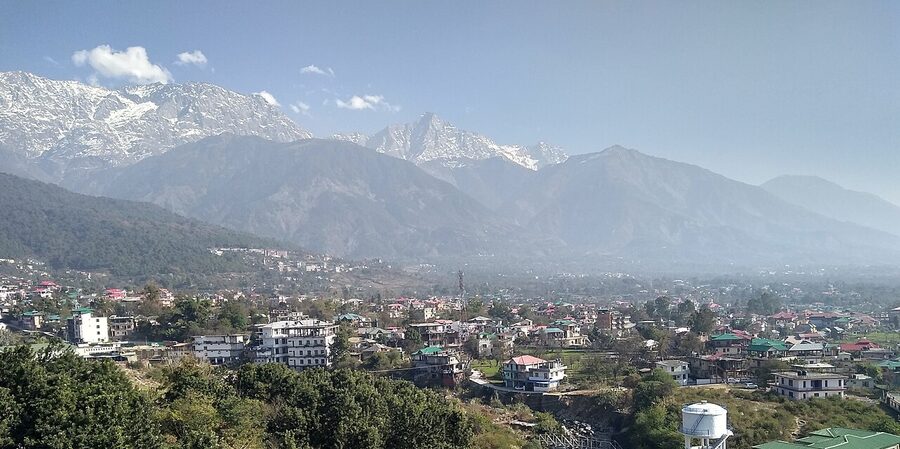
Dharamshala sits in the Kangra district of Himachal Pradesh, on the lower slopes of the Dhauladhar range. It’s the winter capital of the state and, since 1960, the seat of the Tibetan government in exile.
Lower Dharamshala is the working district headquarters: government buildings, the cricket stadium, the Kangra Art Museum, and the road junction that gets every car arriving from Pathankot or the Kangra airport. McLeod Ganj, sometimes called Dhasa (a contraction of Dharamshala and Lhasa), is the smaller, higher, denser settlement most travellers actually picture when they hear the word.
I’m writing this as a place to base for three or four nights, with day trips out to Bhagsu, Dharamkot, Naddi, Norbulingka, the tea gardens around Palampur, and the Triund trail. A week does the full circuit comfortably. Two days is enough for McLeod Ganj alone. Either way, the rest of this guide is built around practical answers: where to stay, when to come, what’s worth your time, what you can skip.
Upper vs Lower: Where to Actually Stay
This is the question that decides your trip, so I’m answering it before anything else.
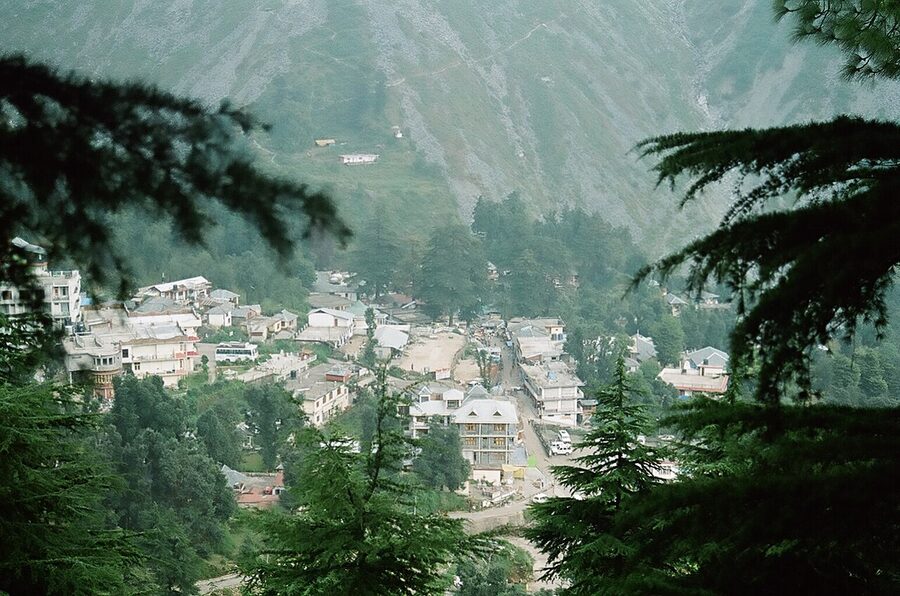
For most first-time visitors, stay in McLeod Ganj. It’s the upper town: walkable, café-dense, monastery-centred, the place that gives Dharamshala its reputation. Step out of your hotel and within fifteen minutes you have the Dalai Lama’s temple complex, half a dozen Tibetan-run restaurants, the bus stand, trailheads to Bhagsu and Dharamkot, and a hundred small shops selling thangkas, prayer wheels, and yak-wool shawls. You don’t need a car. You don’t even need an auto rickshaw most of the time.
For families with small children or older relatives, for people driving their own car, or for anyone who finds Indian hill-town congestion exhausting, lower Dharamshala is genuinely better. The roads are wider, parking actually exists, and hotel rooms are bigger. You trade walkability for breathing room.
From the Kotwali Bazaar area you’re 30 to 45 minutes’ drive from McLeod Ganj depending on traffic. The Skyway ropeway (more on that below) cuts that to under 10 minutes. If your trip is built around Triund treks and Tibetan cafés you’ll resent staying down here. If it’s built around the cricket stadium, the tea gardens, day trips to Kangra Fort and Jwalamukhi temple, and family-friendly comfort, you won’t.
The Quick Comparison
| What you care about | McLeod Ganj (upper) | Lower Dharamshala |
|---|---|---|
| Altitude | ~1,750 m at the square; Bhagsu and Dharamkot reach 2,082 m | ~1,250 m at Kotwali Bazaar |
| Atmosphere | Tibetan, dense, café-and-monastery | Indian hill-town district seat, tea gardens nearby |
| Walkability | Excellent, you’ll barely use a vehicle | Poor for sightseeing, distances are car-scale |
| Hotel sizes / parking | Compact rooms, no parking, narrow lanes | Larger rooms, parking, easier loading bays |
| Triund / hiking access | Trailhead is 25 minutes’ drive away in Dharamkot | Add 45–60 minutes to reach the trailhead |
| Cricket stadium / Norbulingka | Half-hour drive each way | Both within 10–15 minutes |
| Prices in season | Premium during Apr–Jun and Oct long weekends | Slightly lower; bigger discount on weekdays |
| Best for | First-timers, couples, solo travellers, backpackers, café people | Families with kids or elders, road-trippers, cricket-match visitors |
If you’re still torn, the rule I’d give a friend is simple: pick McLeod Ganj for two or three nights. Add a fourth night in lower Dharamshala or Naddi only if you specifically want a quieter end to the trip. Switching hotels eats half a day; one base is almost always enough.
The Smaller Villages Above McLeod Ganj
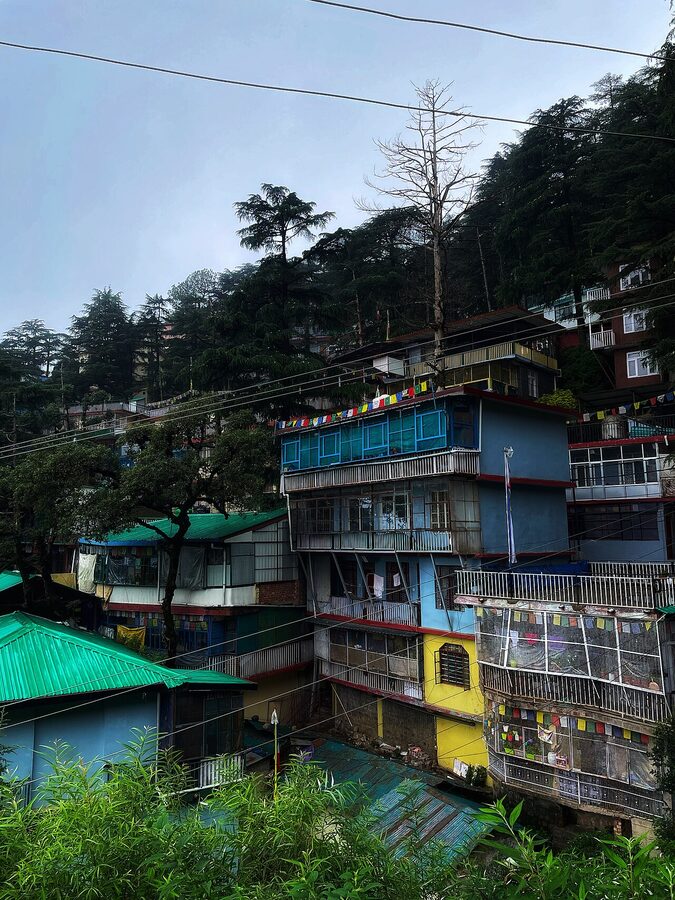
Three villages sit above the McLeod Ganj square and each does something different. Bhagsu, two kilometres up Bhagsu Road, has the famous Shiva temple, a swimmable waterfall, and a string of cafés that suit travellers who want McLeod Ganj’s energy without its main-square chaos.
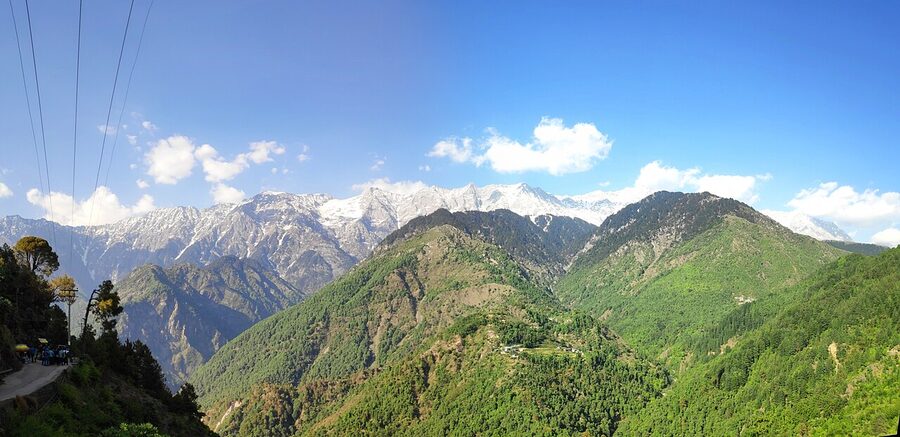
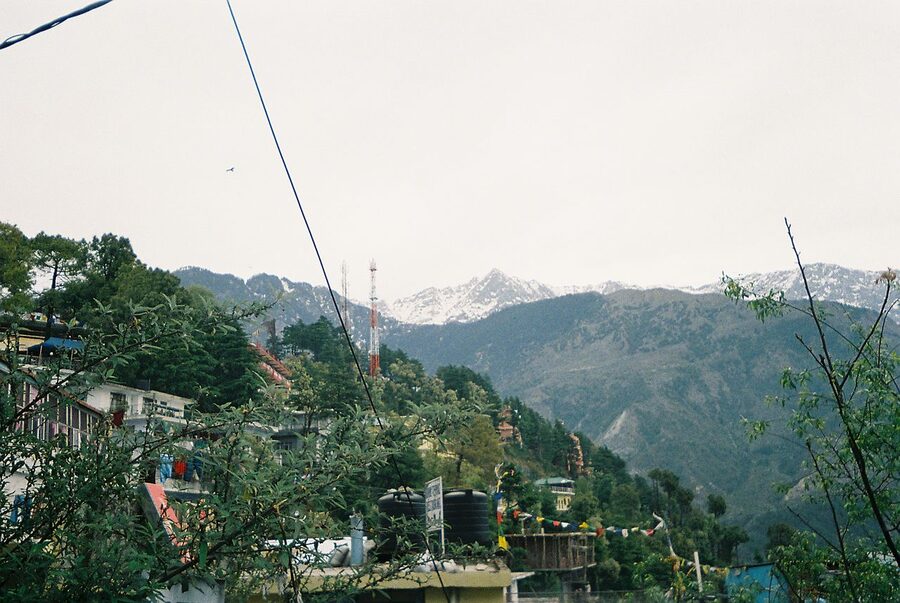
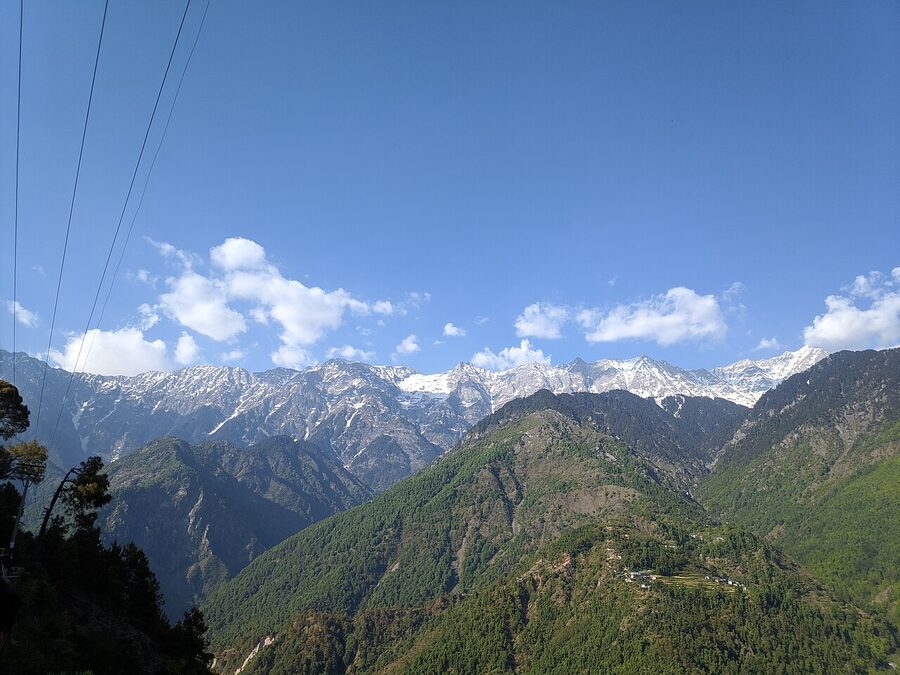
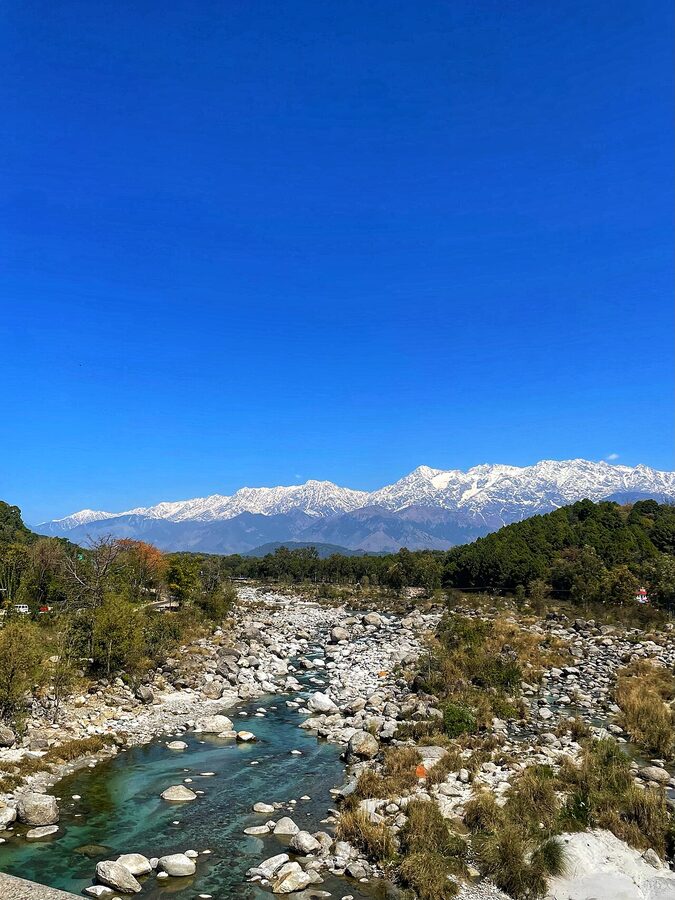
Dharamkot, the next village up at around 2,082 metres, is the yoga-and-meditation hub and the gateway to Triund. The Vipassana centre, Tushita Meditation Centre, and the cluster of long-stay backpacker guesthouses are all here. Naddi, three kilometres in the other direction at the western end of the ridge, is the village to pick for views: the Dhauladhar wall sits close enough that you can pick out individual gullies on the snow.
Naddi has a real downside if you don’t have a car. There are perhaps four restaurants in the village, no shops to speak of, and reaching anything in McLeod Ganj means a 4 km auto-rickshaw run that costs ₹250 to ₹350 (about USD 3–4). Couples who came for the view rave about it. Solo travellers without their own vehicle complain about feeling stranded.
When to Go
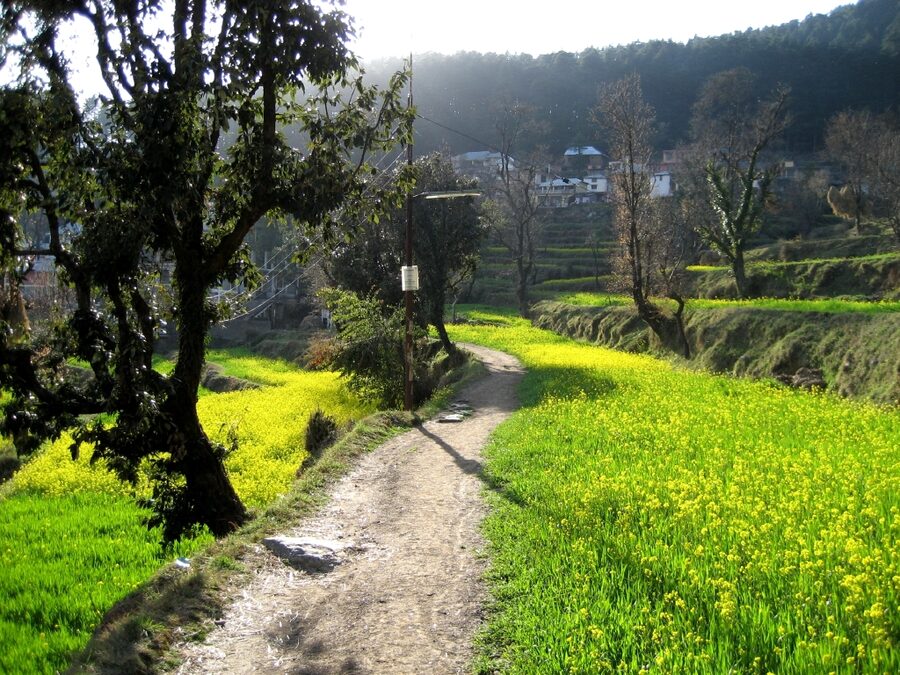
Dharamshala has four useful seasons for visitors and one to avoid if you can. The town gets more rain than almost anywhere else in Himachal, about 2,900 mm a year on the Dhauladhar windward side, so the monsoon dictates the calendar more than altitude does.
Mid-September to Mid-November: The Best Window
If you have a choice, come between the third week of September and the first week of November. The monsoon clears, the air is the cleanest it gets all year, and daytime temperatures hover between 15 and 22 degrees in McLeod Ganj.
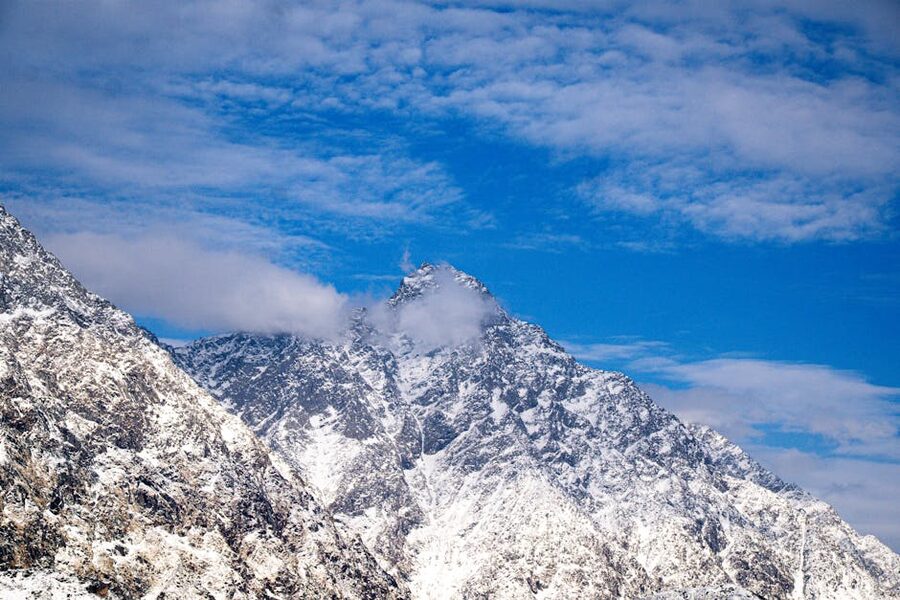
Triund is doable as a long day-walk in October, the trail dry enough to manage in trail runners. Crowds drop sharply once the school-holiday window closes in late June. October is the single best photographic month for the snow line.
December to February: For the Snow
The first proper snow lands in McLeod Ganj somewhere between Christmas and mid-January in most years; lower Dharamshala stays largely dry. Daytime temperatures in McLeod Ganj sit around 5 to 10 degrees, dropping below freezing at night.
The town empties out after New Year. Through January and February the cafés that stay open are mostly Tibetan-family kitchens; the seasonal places shut. This is the cheapest, quietest window. Many backpacker guesthouses in Dharamkot close from late December until late February.
Triund is doable as a snow trek but you need a guide and traction. Don’t attempt it solo if you haven’t done snow-walking before.
March to Mid-April: Spring Shoulder
March is when the rhododendron starts blooming in the upper villages and the Dhauladhar still has heavy snow on it. Café staff drift back from their winter postings in Goa and Kerala. The trails to Bhagsu, Triund, and the lesser-known Indrahar Pass approach all become workable again.
Late March to mid-April is the second-best window after autumn for general visiting: slightly less stable weather but cheaper rooms and emptier monasteries.
Mid-April to Mid-June: Peak Indian Tourist Season
This is when the long Delhi-NCR weekend caravans arrive. Hotel rates double or triple, McLeod Ganj’s main road becomes a 200-metre traffic jam from 11 am to 9 pm, and the Bhagsu waterfall trail turns into a queue.
If you must come in this window, travel on a Tuesday-to-Thursday cycle, book at least a month in advance, and base yourself in Dharamkot or Naddi rather than McLeod Ganj proper. The wider tourist attractions of Himachal all see the same surge through these months.
Late June to Mid-September: Monsoon
The rain is heavy here, much heavier than in Manali or Shimla. Intermittent landslides on the road in from Pathankot and on the McLeod Ganj approach are normal between July and August. The 2023 floods caused real damage to bridges and road sections across Kangra; reconstruction is largely complete but the geology hasn’t changed.
The advantages: empty cafés, the cheapest rates of the year, deodar forests at their lushest. The disadvantages: leeches above 1,800 metres, every viewpoint a sea of cloud, and trekking effectively suspended. Worth it only if you specifically like rainy hill-town atmospherics.
Getting to Dharamshala
The town has no direct train station. The realistic options are road from Delhi or Chandigarh, train as far as Pathankot and a road transfer, or flying into the small Kangra (Gaggal) airport.
By Road from Delhi or Chandigarh
Delhi to Dharamshala is roughly 480 km on the Chandigarh-Una-Hamirpur-Kangra route and takes 10 to 13 hours by overnight Volvo bus. HRTC (the Himachal state carrier) runs nightly AC Volvos from ISBT Kashmiri Gate; private operators run from Majnu ka Tila and Ramakrishna Ashram Marg.
Fares run ₹1,200 to ₹1,800 (about USD 14–22) one way for AC sleeper Volvos. Ordinary HRTC buses are cheaper at ₹700 to ₹900 but not worth the back pain unless you’re on an extreme budget. The road is mountainous from Una onwards. Book HRTC online at hrtchp.com.
From Chandigarh, the road distance is around 240 km and takes 6 to 7 hours by taxi (₹5,500 to ₹7,500, about USD 65–90). The drive is more pleasant than from Delhi because you skip the Punjab plains. Avoid the Friday-evening Delhi-out and Sunday-evening Delhi-back windows on long weekends; those are the worst times to be on the road.
By Train via Pathankot
The nearest mainline station is Pathankot Junction, 85 km from Dharamshala and roughly 3 hours by road. Multiple overnight trains run from Delhi: the Jammu Mail and the Jhelum Express both leave Delhi in the evening and arrive Pathankot between 5 and 7 in the morning.
From Pathankot, taxis to Dharamshala cost ₹2,500 to ₹3,500 (USD 30–42); HRTC buses run all morning and cost ₹250 to ₹400. There’s also a charming narrow-gauge “toy train” from Pathankot to Kangra and Joginder Nagar that some travellers ride for the experience: six trains a day, around 5 hours to Kangra, ₹40 to ₹100 for the journey. It’s slow and the stations are picturesque rather than convenient. Worth it only if you’ve come specifically for the experience.
By Air to Kangra (Gaggal)
Kangra Airport at Gaggal is 13 km from lower Dharamshala and about 25 km from McLeod Ganj. IndiGo, SpiceJet, and Alliance Air operate the route as of 2026, mostly to Delhi with some Chandigarh services. Flight time from Delhi is about 1 hour 25 minutes; fares run ₹4,500 to ₹12,000 (USD 55–145) depending on season.
The catch is that Gaggal is a single-runway field with no instrument-landing system, so cancellations and diversions to Amritsar are common in monsoon and during winter cloud cover. Build a buffer day if you’re flying in to catch an onward flight from Delhi. The taxi from the airport to McLeod Ganj costs ₹1,500 to ₹2,000.
If Gaggal flights are sold out or delayed, alternative airports are Amritsar (200 km, 4 to 5 hours by road, much better-connected internationally) and Chandigarh (244 km, 6 to 7 hours).
Getting Around: The Skyway and Everything Else
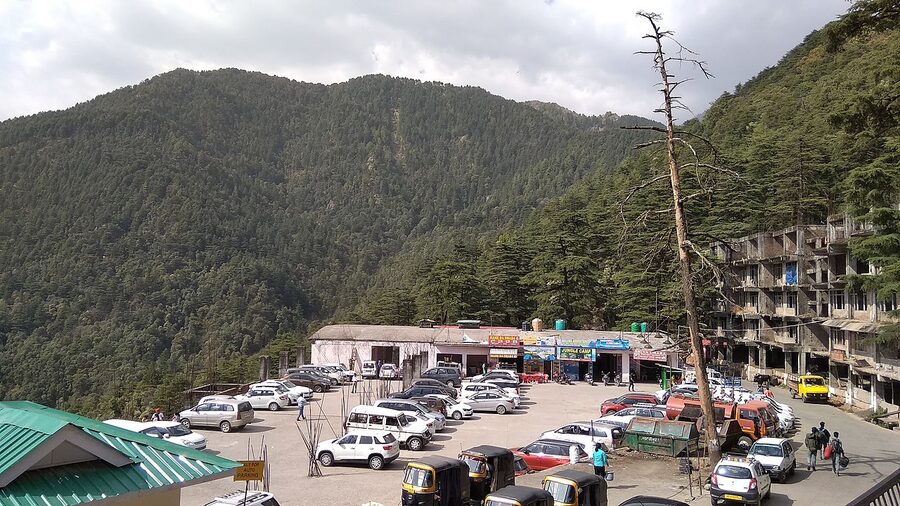
If you base in McLeod Ganj, you’ll walk almost everywhere within the upper town, the Bhagsu loop, and Dharamkot. Anything else needs a vehicle. The choices are:
Local buses. HRTC runs frequent buses between McLeod Ganj and the lower Dharamshala bus stand for ₹30, with stops at the major junctions. The ride takes 30 to 45 minutes. From the lower bus stand, onward buses run to Palampur, Kangra, Pathankot, and across to Dalhousie.
Auto-rickshaws. Within McLeod Ganj they are barely worth the bother because everything is walkable, but useful for hauling luggage from the bus stand to a hotel up Bhagsu Road. Standard short-hop rate is ₹100 to ₹150. Auto from McLeod Ganj to Naddi runs ₹250 to ₹350.
Taxis. The local taxi union sets fixed rates for sightseeing circuits. McLeod Ganj to Dharamshala one-way is ₹300; full-day local sightseeing is ₹2,500 to ₹3,500; full-day to Palampur tea gardens or Kangra Fort is ₹3,500 to ₹4,500. Numbers and rate cards are posted at the stand below the McLeod Ganj square; pay the union rate, no haggling needed.
The Dharamshala Skyway Ropeway
The Dharamshala Skyway is a 1.8 km gondola ropeway that opened in January 2022, connecting lower Dharamshala (just below the cricket stadium) to McLeod Ganj. It cuts what is often a 30-to-45-minute road journey to a 7-minute ride and gives you a wide view back across the Kangra valley on the way up.
Tickets are ₹450 one-way for Indian citizens and ₹600 for foreign tourists; return is roughly double. Operating hours are 9 am to 6 pm with the last upward run at 5:30. Cabins seat 8 and run on demand; weekend afternoons can mean a 30-minute wait at the lower station.
If you’ve got a car and you’re staying in lower Dharamshala but spending your day in McLeod Ganj, the Skyway pays for itself in fuel and parking stress within the first ride. If you’re already up top, you don’t need it; it’s not a sightseeing experience worth crossing town for.
The Tibetan Heart: McLeod Ganj’s Sights
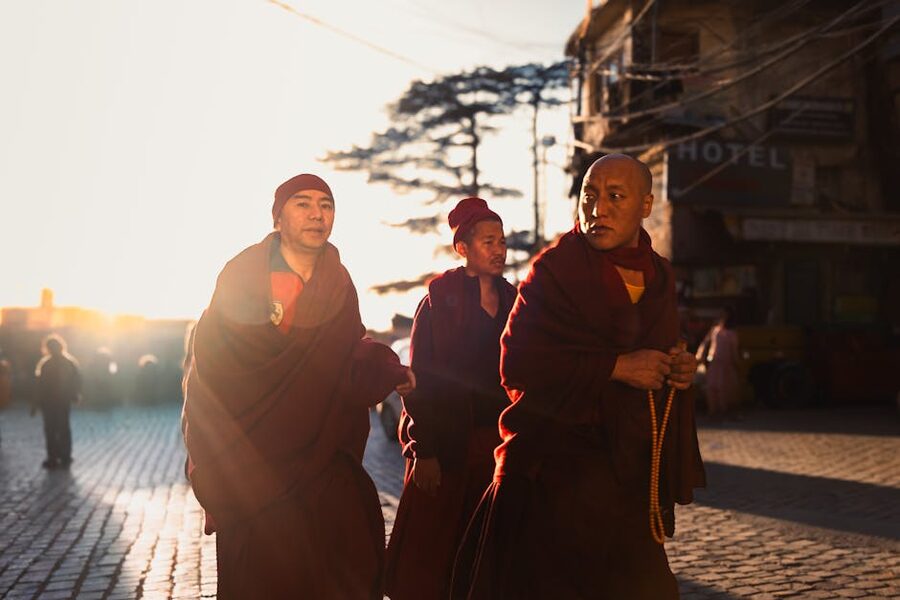
McLeod Ganj exists, in its current form, because of one event: in March 1959 the 14th Dalai Lama escaped Chinese-occupied Tibet, took refuge in India, and after a year in Mussoorie was given Dharamshala by Jawaharlal Nehru as a permanent base for the Tibetan government in exile. The town has been the centre of the global Tibetan diaspora ever since, and most of what travellers come to see in the upper town flows from that history.
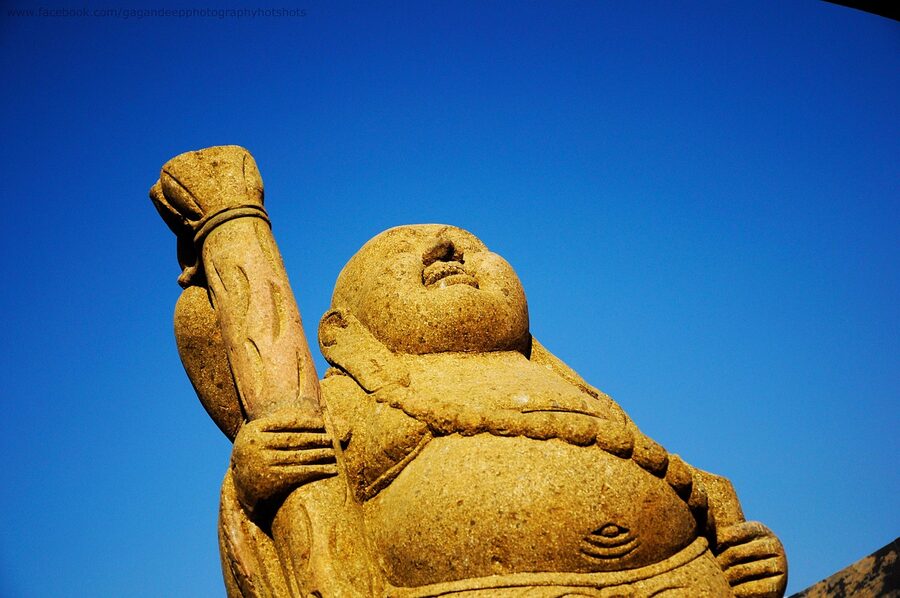
Tsuglagkhang Temple Complex (the Dalai Lama’s Temple)
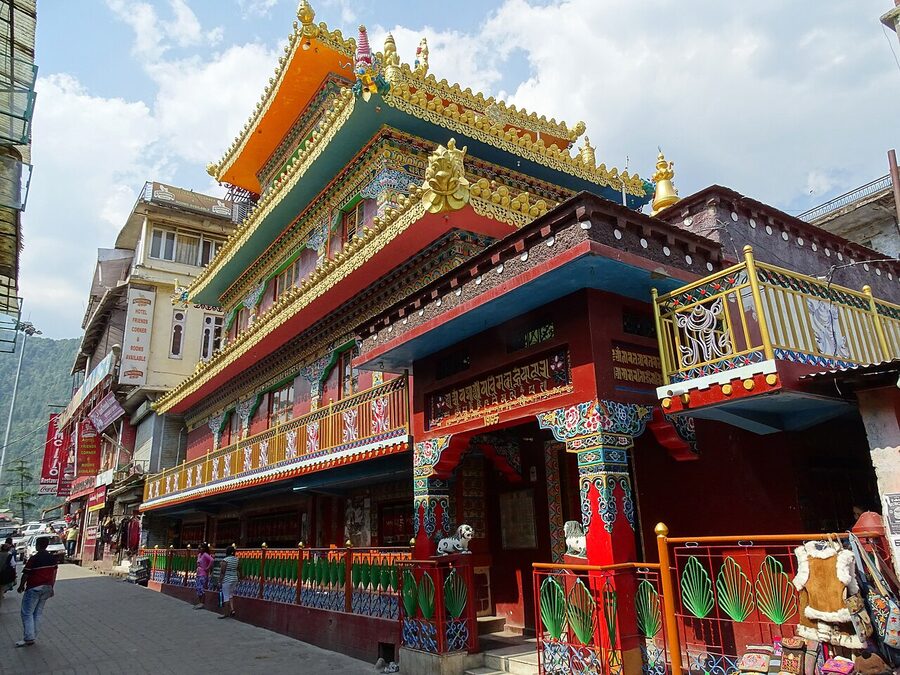
The Tsuglagkhang complex, on Temple Road at the southern end of McLeod Ganj, contains the Dalai Lama’s residence, the Namgyal Monastery, the Tibet Museum, and the main temple where public teachings are held. It’s a five-minute walk from the main square. The temple itself is open to the public from 7 am to 7 pm; the museum from 9 am to 5 pm with a ₹50 entry fee.
You can attend morning prayers and most monastic ceremonies free of charge. Turn up before 8 am, leave your shoes at the rack outside the temple hall, and sit at the back. The Dalai Lama gives public teachings in McLeod Ganj several times a year (usually before he travels for the winter); tickets are not sold, you register in person at the temple office two days before the teaching with a passport. Schedule is published at dalailama.com.
Even when he’s not present, Namgyal monks continue daily debate practice in the courtyard at around 3 pm. Worth twenty minutes of any visit.
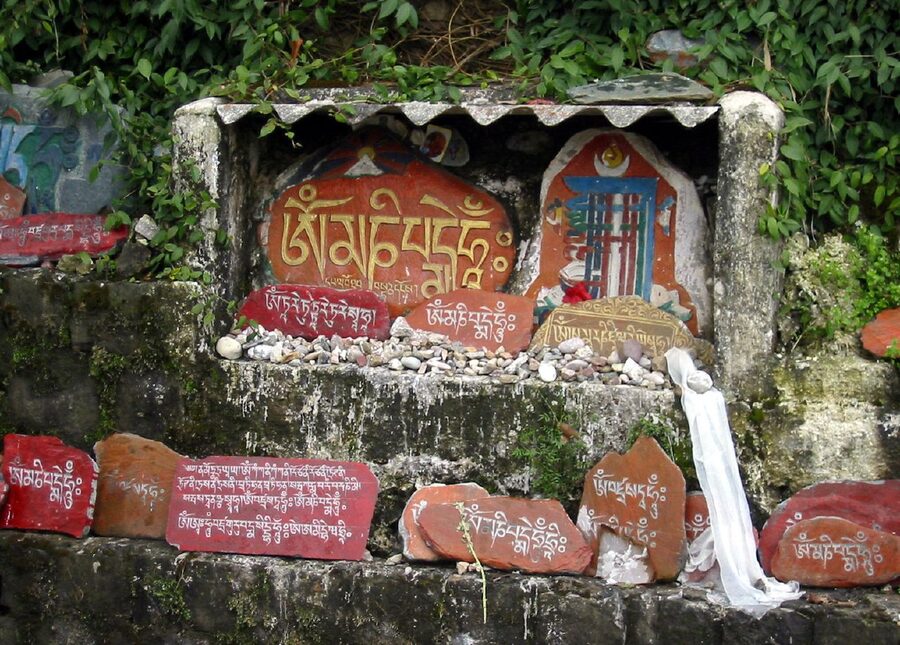
The Tibet Museum
Inside the temple complex, the Tibet Museum is small but worth an hour. It walks through the 1949 Chinese annexation, the 1959 escape, the Cultural Revolution destruction of monasteries, and the diaspora since. The displays are uneven: a lot of dense text, some video, period photographs that hit hard if you let them. ₹50 entry. Closed Mondays.
Namgyal Monastery
The Namgyal monks are the Dalai Lama’s personal monastery, the relocation of the original Namgyal in Lhasa, founded in 1574. Around 200 monks live and study here. The chanting at dawn (5:30 to 6:30 am) is usually open to respectful visitors; the late-afternoon debate sessions are louder and easier to find. Everything happens in the central courtyard.
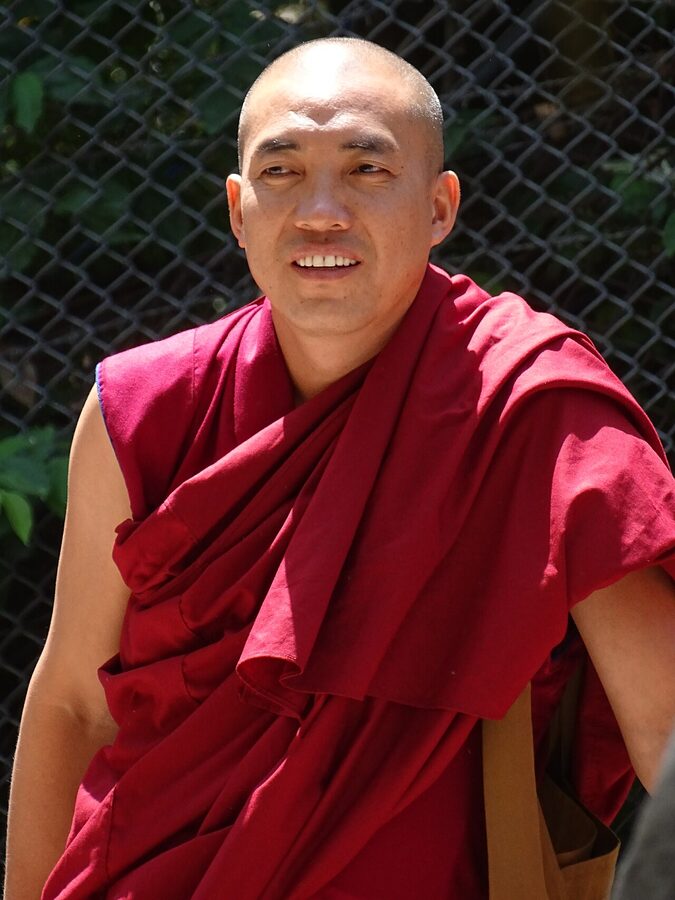
St John in the Wilderness
Two kilometres down the road from McLeod Ganj toward Forsyth Ganj sits a small Anglican stone church built in 1852, all neo-gothic and Belgian stained glass, which would look perfectly at home in Yorkshire. Lord Elgin, the British viceroy who lobbied to make this area a hill-station capital before dying in 1863, is buried in the churchyard. It’s a 25-minute walk from McLeod Ganj or a ₹200 auto round trip. The kind of place that takes 15 minutes to look at and stays in your memory disproportionately afterward.
Bhagsunag Temple and Waterfall
Two kilometres up Bhagsu Road from McLeod Ganj, Bhagsunag is a working Shiva temple with a stone tank fed by a natural spring. Locals come to bathe daily, more for ritual than tourism.
The temple’s local legend is that King Bhagsu, ruling a parched kingdom, drew water without permission from a spring belonging to the serpent deity Nag, fought him for the offence, lost, repented, and was forgiven. The spring was named Bhagsunag in honour of their reconciliation. Plenty of small temples in north India have founding myths; this one is unusually well-told and the carved relief inside the shrine illustrates the moment of forgiveness.
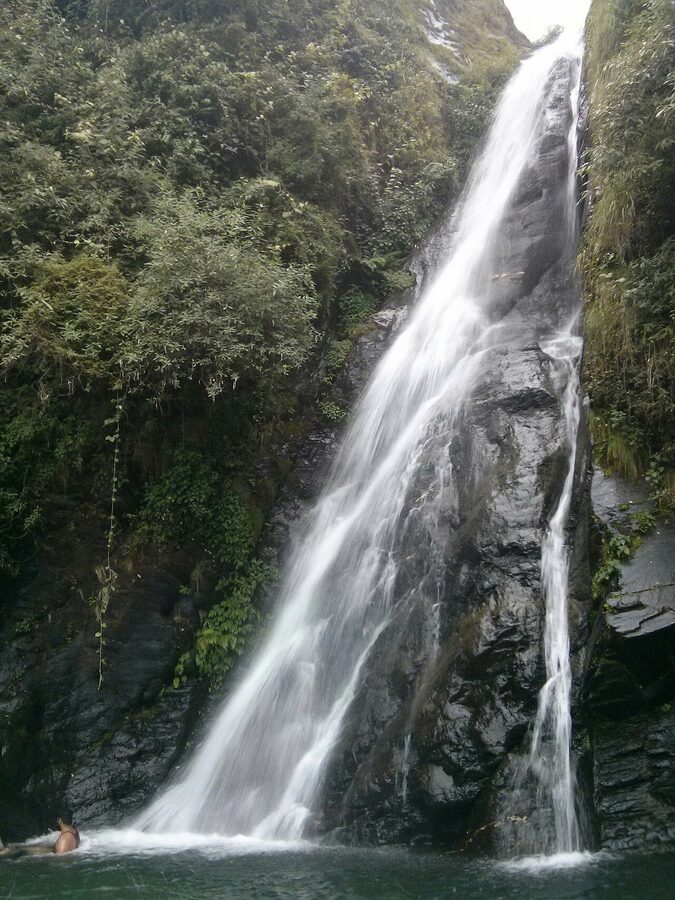
The waterfall is another 400 metres uphill, signposted from the temple. The path is paved, lined with cafés, and the walk takes 10 to 15 minutes. The fall itself is about 20 metres in monsoon, much smaller in dry season, and the pool at the base is shallow enough to wade.
Go before 9 am if you want it to yourself; by midday the trail is shoulder-to-shoulder. Above the fall, Shiva Café is the standard rest stop: basic food, view of the cascade, the kind of place that’s been run by the same Israeli ex-traveller for years.
Dal Lake (and Why You Can Skip It)
This is the small Dal Lake in Naddi, not the Kashmiri one. It’s a manmade tank surrounded by a tea-stall ring, which sounds nicer than it is. The water is murky most of the year, the immediate setting is unremarkable, and the walk to it from Naddi viewpoint is the only thing that justifies the detour. If you’ve already visited Naddi for the Dhauladhar view, you’re 200 metres from Dal Lake and might as well drop in for ten minutes. If you haven’t, it’s not a destination worth a separate trip.
Above the Square: Dharamkot and Naddi
The villages strung along the upper ridge are the part of Dharamshala that the long-stay travellers fall in love with. The character shifts surprisingly fast as you climb. Bhagsu I’ve covered above with the temple and waterfall; the other two are worth their own paragraphs.
Dharamkot
Dharamkot is fifteen minutes’ walk above Bhagsu, at around 2,082 metres. This is where the meditation crowd, the long-stay backpackers, and the people who came for two weeks and stayed for two months have gravitated.
The Vipassana Centre at Dhamma Sikhara runs ten-day silent courses from late February through October; Tushita Meditation Centre runs Tibetan-Buddhist introductory courses. Both fill weeks in advance through the season. The trailhead to Triund (Galu Devi Temple, where the official trail starts) is a 20-minute walk above Dharamkot’s main lane, which makes the village the natural base for trekkers.
Cafés here lean Israeli and European more than Tibetan. Trek and Dine, Bodhi Greens, the small bakeries clustered around the upper lane. The mix on any given day in the Dharamkot lane is roughly equal parts Indian backpackers, Israeli travellers, French and German long-stays, and the occasional yoga teacher trainee who came up for a course and never quite left.
Naddi
Naddi sits three kilometres north-west of McLeod Ganj at the western edge of the ridge, with a clean, uninterrupted view of the Dhauladhar wall. Naddi viewpoint, just before the village proper, is the standard sunset spot. Pull off the road, walk fifty metres to the railing, and you’ve got the entire range from Hanuman Tibba on the south-east to the saddles above Mun Peak on the north-west.
The light is best between 5:30 and sunset in March-May, and just before sunrise in late October and November when the air is at its clearest. Without your own vehicle Naddi can feel marooned, as I said earlier. With one, it’s the calmest base in the cluster.
Lower Dharamshala: Tea Gardens, Cricket, and Norbulingka
If you base in McLeod Ganj, lower Dharamshala becomes a half-day trip: drop down by Skyway or taxi mid-morning, see the cricket stadium, the museum, Norbulingka, and head up again before evening traffic. If you base in lower Dharamshala, this is your home turf and you’ll find more space to like than first-time visitors expect.
The HPCA Cricket Stadium
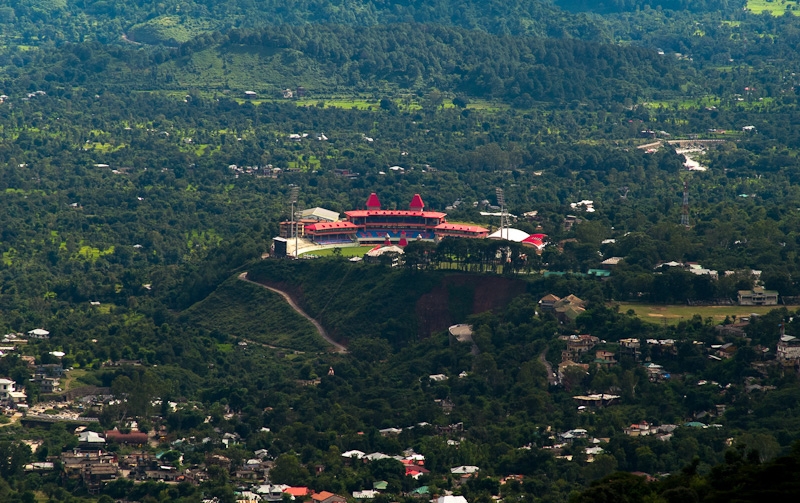
The Himachal Pradesh Cricket Association stadium, opened in 2003, sits at 1,457 metres on a plateau just below McLeod Ganj. It’s the highest international cricket ground in the world, and the Dhauladhar wall fills the entire backdrop behind the north stand. India has played World Cup matches here.
Unless there’s a fixture on, you can usually wander into the parikrama (the perimeter walk) and look down into the bowl from the top tier. Security is friendly; just smile and say you’d like to see the ground. Match tickets when there are matches sell out within hours of release; check bcci.tv for fixtures.
Norbulingka Institute
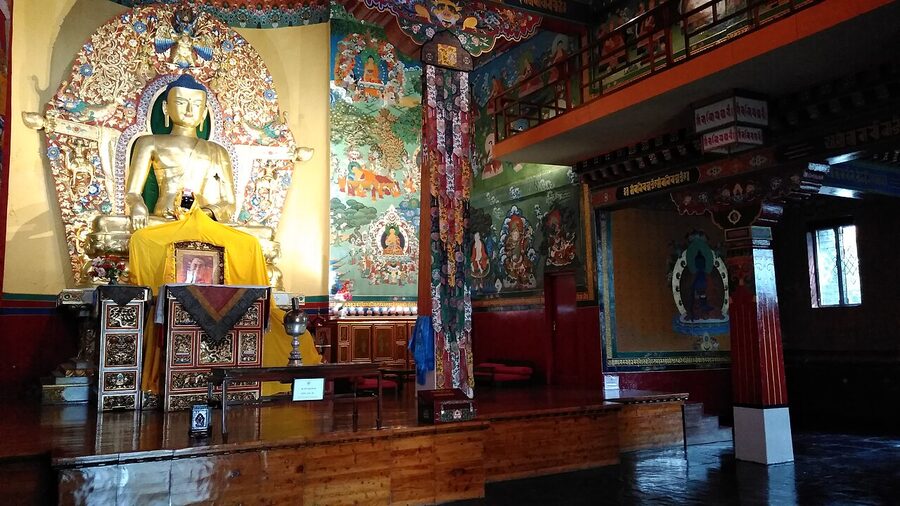
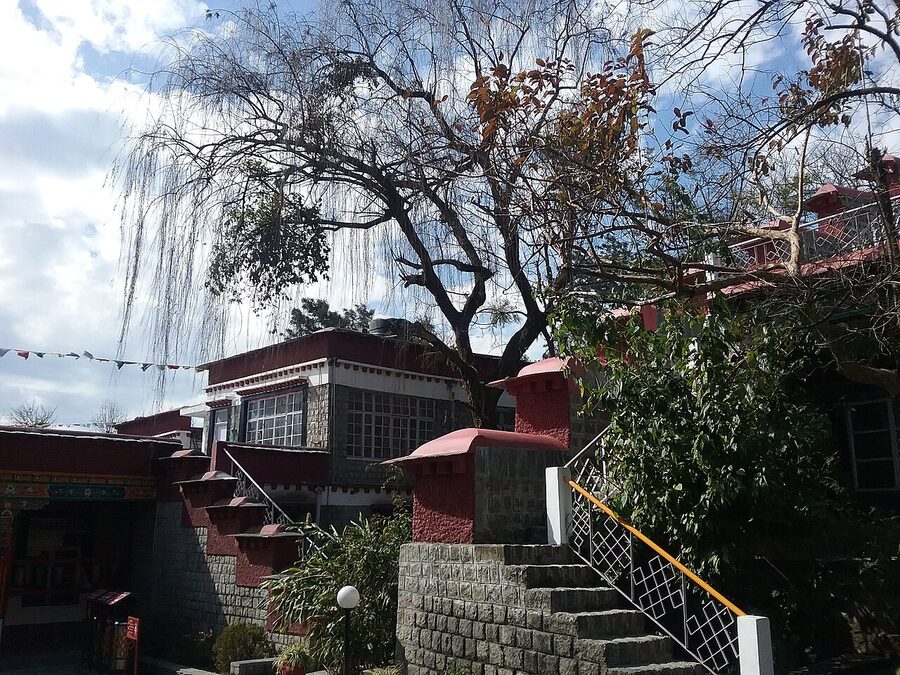
Eight kilometres south of Dharamshala in Sidhpur, Norbulingka was founded in 1995 to preserve traditional Tibetan arts: thangka painting, applique, statue-making, woodcarving, tailoring. Today it functions as an active school, a workshop complex, and one of the most beautiful gardens in Kangra. Open daily 9 am to 5:30 pm, ₹50 entry.
The Losel Doll Museum on site (additional ₹50) is genuinely lovely: a single hall of dioramas with Tibetan figurines in regional dress, some of them animated, all of them obsessively detailed.
The Norbulingka shop sells the institute’s craftsmen’s work. Nothing inexpensive, but the quality is real. A hand-stitched applique thangka is ₹15,000 to ₹50,000 (USD 180–600) and represents 200+ hours of labour. The on-site café is one of the better lunch stops on the Dharamshala-Palampur axis. Allow two hours if you’re rushing; three or four if you want to actually understand what’s being made.
Kangra Tea Gardens
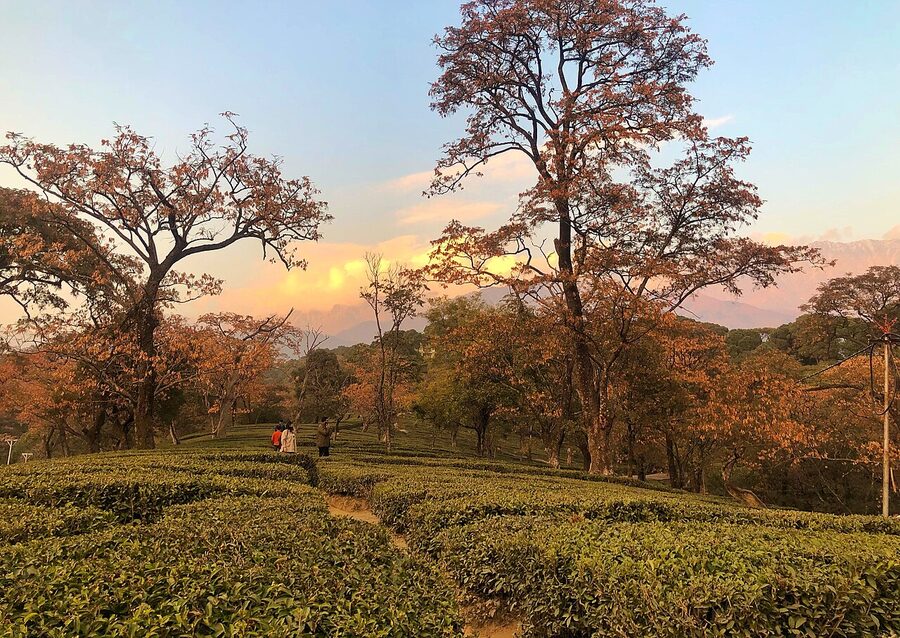
The slopes south of Dharamshala have grown tea since the 1850s, when the British East India Company experimented with Chinese tea bushes brought up via Calcutta. Kangra tea is now a Geographical Indication in its own right: lighter and more floral than Darjeeling, almost fruity at second flush.
The Wah Tea Estate at Palampur runs guided factory and plucking tours from March to October for ₹200 (under USD 3); their café terrace is a perfectly civil place to sit with a pot of first-flush. Smaller estates closer to Dharamshala (Mann Tea Estate near Palampur, the Dharmsala Tea Company plantation just north of the cricket stadium) offer drop-in tasting without the formal tour. A half-day excursion that looks like nothing on paper and is, on the right October afternoon, one of the better things you’ll do in Kangra.
Kangra Art Museum
In Kotwali Bazaar in lower Dharamshala, the Kangra Art Museum holds a small but genuinely interesting collection of Kangra-school miniature paintings, the 18th-century court style that produced some of the most refined Indian painting of the period. Other rooms cover Pahari woodcarving, Gaddi shepherd costumes, and weapons of the local kings. Open Tuesday to Sunday, 10 am to 5 pm, ₹20 entry. An hour is enough.
Day Trips Out: Jwalamukhi, Kangra Fort, Masroor
South-west of Dharamshala, three sites are worth a full day from a lower-town base. Jwalamukhi Temple, 55 km away, is one of the 51 Shakti Peethas, famous for the natural blue flames burning from the rock fissures inside the sanctum.
Kangra Fort, 20 km from Dharamshala, is a Katoch dynasty stronghold with foundations going back to the 4th century BCE and a clean, atmospheric ruin from the 1905 earthquake that flattened most of it. Masroor Rock-Cut Temples, 40 km out, are eighth-century monolithic shrines carved directly out of a sandstone outcrop, sometimes called the “Himalayan Ellora,” sometimes overrated for the comparison. Worth the trip nonetheless if you’ve got a day to spare and the lower-Dharamshala location to make it doable.
Triund: The Trek Everyone Talks About
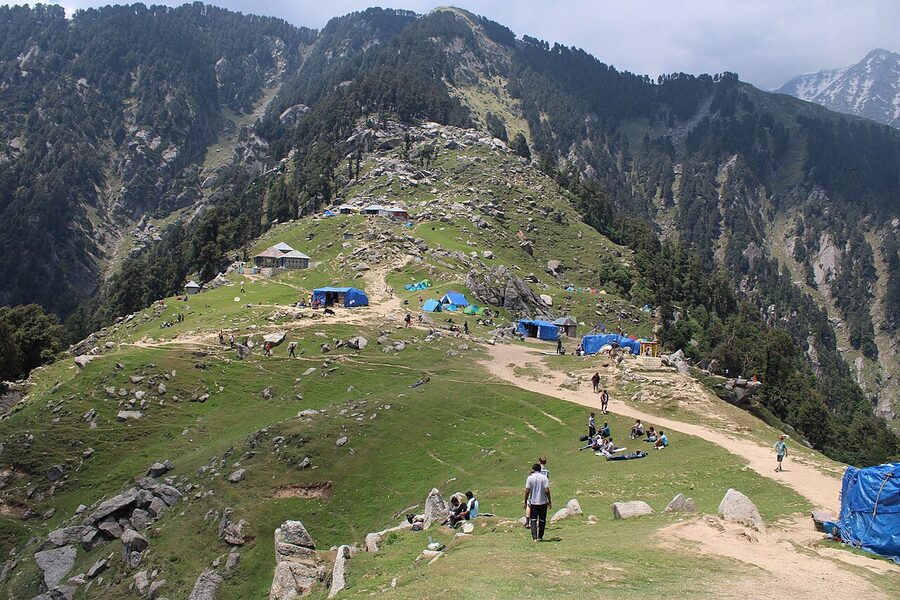
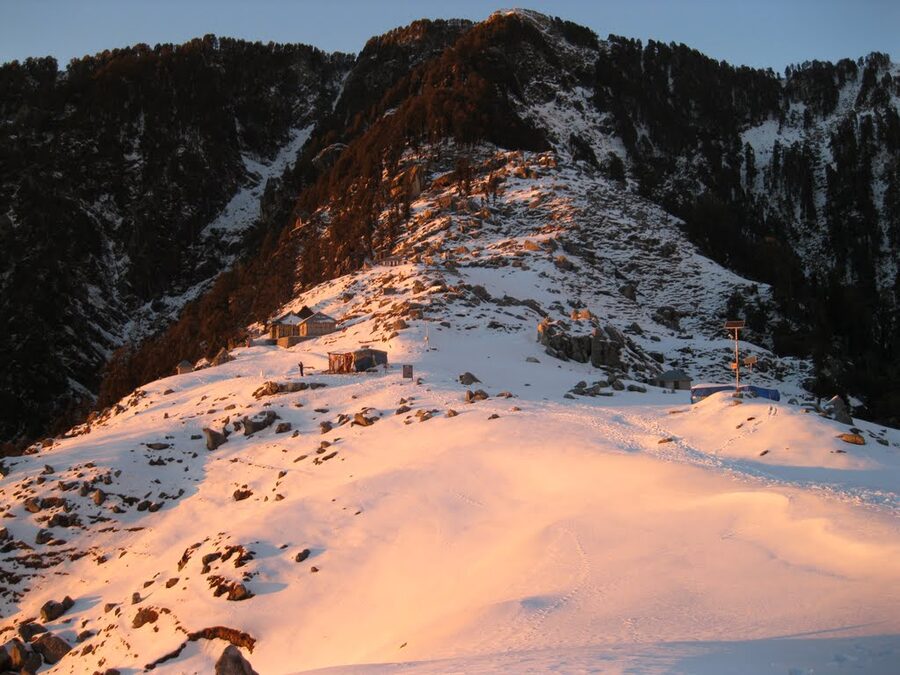
Triund is a small grassy ridge at 2,828 metres directly above Dharamkot, with the entire Dhauladhar snow line at your back when you reach the top. It’s the most-walked one-day trek in Himachal and the ascent is genuinely beautiful: six and a bit kilometres of switchbacks under rhododendron and oak from the Galu Devi temple trailhead to the ridge, gaining roughly 800 metres in altitude. Average time up is 3 to 4 hours; down is 2 to 3.
The trail is well-marked and you don’t need a guide unless you’re extending to Snowline Café (another 2 km up) or to Indrahar Pass (a multi-day technical route from here). Forest department ecotourism rules now require all visitors to register at Galu Devi temple before starting; the entry fee is ₹100 for Indian citizens, ₹500 for foreign nationals. Camping on the ridge requires a permit at the same office; overnight trekking has been periodically restricted after the deaths of unprepared trekkers in 2018-2019, so check current rules at the Dharamshala forest office before planning a camping night.
Carry water. There are 2 or 3 dhabas on the way up that sell tea, instant noodles, and bottled water at hill-town markup, but the water at the ridge itself is unreliable. Wear proper trail shoes, not slip-ons. The trail surface is mostly rock and root; sneakers ruin themselves and your ankles in equal measure.
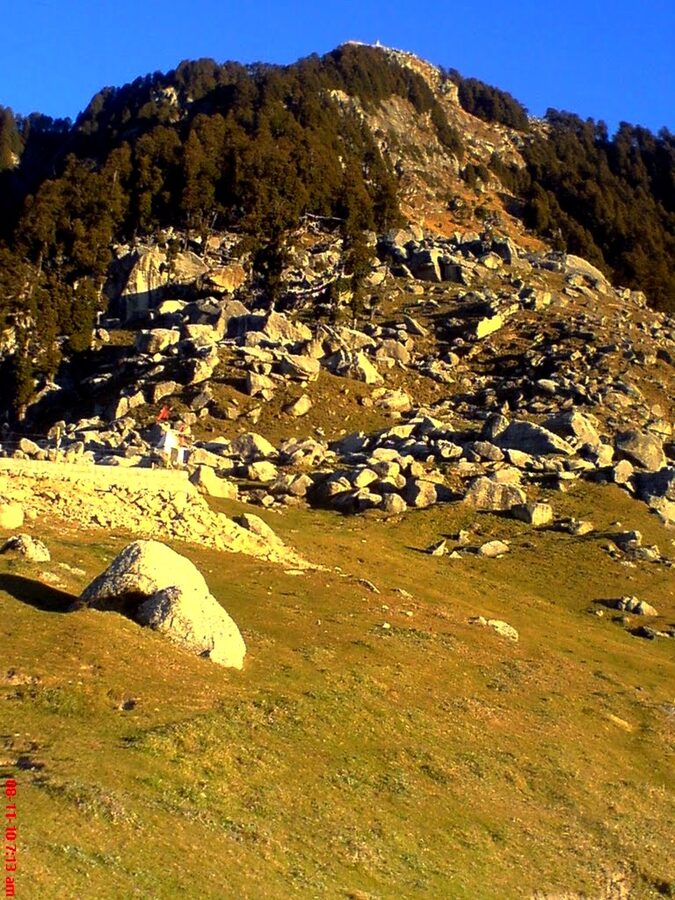
October to mid-December is the best window for clear views; March-April is the second best. January and February are doable as a snow trek with a guide. Avoid June-September unless you specifically want monsoon clouds; the views simply aren’t there.
Beyond Triund
Triund is the introduction. The serious trekking out of Dharamshala goes higher. Indrahar Pass at 4,342 metres takes you over the Dhauladhar to Bharmour in the Chamba valley, normally a 4-to-5 day trek requiring camping equipment and a guide. Kareri Lake at 2,934 metres is a quieter 2-day option, less spectacular than Indrahar but doable for fitter walkers without technical gear. Minkiani Pass and Lam Dal sit further along the same range. The full wildlife and nature offering of the Himachal high country stretches up from here all the way to Lahaul.
The Cafés and the Food
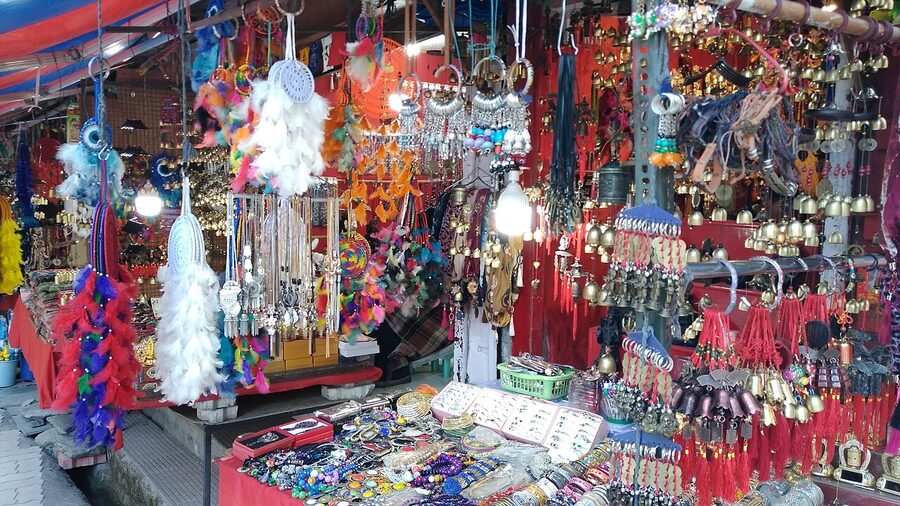
Dharamshala has the most varied food scene of any small town in the Indian Himalayas: Tibetan, Himachali, Punjabi, Israeli, Italian, Korean, Japanese, all within a kilometre of the McLeod Ganj square. The food is one of the genuine reasons people stay longer than they planned to.
Tibetan
For Tibetan cooking done unfussily (momos, thukpa, thenthuk, butter tea), the standards are Tibet Kitchen on Jogiwara Road and Lung Ta just below the temple. Both are sit-down places run by Tibetan families. Dishes run ₹150 to ₹350 (USD 2–4).
For the cheap and fast version, the momo carts at the upper square pump out chicken or vegetable steamed momos for ₹60 to ₹100 a plate and they are the best lunch in town. Tibet Quality Bakery on Jogiwara Road, next to the post office, does Tibetan butter cookies and a denser, savoury bread you won’t find elsewhere.
Israeli, European, Long-Stay Café Culture
The Israeli scene is concentrated in Bhagsu and Dharamkot. Trek and Dine in Dharamkot is the local-legend hummus-and-shakshuka place, serving since 1997, decent if you can get a table; some travellers find the staff brusque. Bodhi Greens, also in Dharamkot, does cold-pressed juices, sourdough sandwiches, and an organic vegan menu that runs out of its best dishes by mid-afternoon.
Illiterati Books and Coffee on lower Jogiwara Road, below the temple complex, is a bookshop-café with the best view of any food spot in town. Small portions, slow service, a bargain at ₹400 for a coffee and a slice of cake on the terrace at sunset.
Indian
For Punjabi-and-North-Indian, McLlo Restaurant on the McLeod Ganj square is the obvious choice: four storeys, big menu, decent if not exceptional food, popular for the rooftop and the bar. Locals tend to send visitors there for atmosphere rather than for the food itself. Snow Lion on Jogiwara Road has a cleaner version of the Indian-Tibetan mix at lower prices.
For pure street food in lower Dharamshala, the bun-tikki and chhole-bhature stalls on Sheila Chowk are the unpretentious version of breakfast: ₹50 to ₹100 a plate, no table, no hesitation about the queue.
Coffee
The standard places: Moonpeak Espresso on Temple Road for actual espresso (it’s the one café in town where the grind is right), Common Ground Cafe on the Sewarg Ashram Road towards Tushita for a fuller breakfast spread, Lung Ta on Jogiwara Road for cheap and reliable. Indian-coffee-house style, a strong filter coffee for ₹30, is harder to find in McLeod Ganj than you’d expect. Drop down to lower Dharamshala if that’s what you want.
Where to Stay: Specific Areas and Price Brackets
This is a destination guide rather than a hotel review, but the where-to-stay question matters enough that I’ll lay out the main brackets and what they get you in each area. The wider hotels overview for Himachal covers the rest of the state in detail.
Budget (₹500–1,500 / USD 6–18)
Backpacker hostels and the simplest guesthouses cluster in Bhagsu, Dharamkot, and the side-lanes off Jogiwara Road in McLeod Ganj. Dorm beds in Dharamkot run ₹400 to ₹700; a basic private room with shared bathroom is ₹800 to ₹1,200.
The properties at this price are family-run, slightly worn, perfectly clean. Hot water can be intermittent at the cheapest end. In December-February many of the Dharamkot places shut and the surviving budget rooms are mostly in McLeod Ganj proper.
Mid-Range (₹2,000–4,500 / USD 24–55)
This is the bracket where most travellers actually stay and where Dharamshala has the deepest range. McLeod Ganj has dozens of mid-range hotels along Jogiwara, Bhagsu, and Temple roads; Bhagsu has cleaner, slightly newer properties for the same price; Naddi has a small cluster of valley-view hotels at the upper end of the range.
In lower Dharamshala, the mid-range is concentrated around Kotwali Bazaar and the Cantonment area. Booking sensibly two to four weeks ahead in shoulder season gets you a clean, comfortable room with a view; last-minute in May or June will not.
Upper Mid-Range and Boutique (₹4,500–9,000 / USD 55–110)
Naddi is where the boutique and design-forward hotels live, with valley-view rooms at the upper end of this bracket. Norbulingka has its own guesthouse on the institute grounds (book directly through their site) which is one of the most distinctive stays in Kangra. In McLeod Ganj proper, this bracket gets you the upper floors of older mid-range hotels: better views, the same compact footprint.
Luxury (₹9,000+ / USD 110+)
The top end of the market is in lower Dharamshala and the spread south toward Palampur. Norbu The Montanna (an IHCL SeleQtions property, the same parent group as Taj) is the highest-profile, with the Hyatt Regency Dharamshala in the same bracket nearby. In McLeod Ganj proper, true luxury simply doesn’t exist; the geography won’t accommodate it.
A Few Things to Skip
None of these will ruin a trip; all are routinely overrated.
The “Bhagsu cake” tour. Bhagsu cake is fine. It’s a layered chocolate-and-toffee slab that nobody outside this small ridge has heard of and that every café advertises as a “must try.” Order one at one place, decide if you like it, move on. There is no “best” Bhagsu cake to chase across town.
Paid viewpoints with admission gates. A handful of small viewpoints around McLeod Ganj have started charging ₹50 to ₹100 entry for what is, basically, a fenced-off cliff edge. Naddi viewpoint, the kora path around the temple complex, and the open ridge at Galu Devi all give better views for free.
The Dharamshala-McLeod Ganj road as a sightseeing drive. It’s a 9 km hairpin through ordinary town. The Skyway gives you everything the road would and saves an hour each way.
Long Buddhist meditation courses if you came for two nights. A 10-day Vipassana course is a serious commitment with a strict drop-out rule. If you’ve got the time and the curiosity, it’s transformative. If you’ve got a four-day weekend and you’ve signed up because the cafés sound nice, you’ll quit on day three and feel terrible about it. Better to drop in for the open-to-the-public daily Tushita meditation sessions and decide whether to come back for the full course another trip.
Practical Notes
ATMs and money. Both McLeod Ganj and Kotwali Bazaar have several working ATMs (HDFC, SBI, ICICI). McLeod Ganj’s ATMs run out of cash on big weekends and refill on Mondays, not Sundays. Carry enough cash for trail food and small cafés where card machines are unreliable.
Connectivity. Mobile coverage is good across the cluster; Jio and Airtel both work to Triund ridge in clear weather. Wi-Fi in cafés is variable: the upmarket places have it, the family-run kitchens often don’t.
Language. Hindi is universal. English is widely spoken in tourist-facing places. Tibetan is the home language of perhaps 15 percent of the upper-town population, and Pahari (the local Kangri dialect) is what you’ll hear in the lower-town markets. A few words of any of them go a long way.
Altitude. Even McLeod Ganj at 1,750 m can give some visitors mild altitude effects on the first day, a slight headache or broken sleep, if they’ve come straight up from sea level. Don’t drink heavily on night one; do drink water; if you’re heading to Triund the next day, take it slowly.
Real altitude problems start higher. Triund at 2,828 m is fine for most people, Indrahar Pass at 4,342 m is not. The wider Lahaul and Spiti region across the main range goes up to 4,500 m on its standard tourist routes; preparing here helps there.
Permits. No permits are required to visit Dharamshala or the surrounding villages. Foreign nationals do need to carry passport at all times for hotel registration, and the Triund forest gate registers all visitors regardless of nationality. Inner Line Permits, required for parts of Lahaul-Spiti and Kinnaur, are not needed here.
What to pack. Layers. McLeod Ganj at 1,750 m and Naddi at 1,800 m can be 22 degrees by day and 8 degrees overnight in October, sometimes 5 in November. A windproof layer, a fleece, decent walking shoes, and rain protection in summer cover most situations. Sunscreen and sunglasses too: the UV at this altitude is stronger than people from the plains expect.
Building It into a Wider Himachal Trip
Dharamshala connects naturally with the rest of Himachal in two directions. Eastward, the Kangra-Mandi-Kullu road takes you to Manali in 6 to 7 hours, which makes a sensible week-long combination: three or four nights in Dharamshala, two or three in Manali, the drive a day in itself.
Northward across the Pir Panjal, through Mandi and over the Atal Tunnel, you reach Lahaul and the high desert beyond. North-westward, Dalhousie and Khajjiar are 4 to 5 hours by road and can be done as a 2-night extension or a separate trip. The full tourist attractions of Himachal spread from Solan in the south up through the Kangra and Kullu valleys to Spiti in the far east.
A Suggested Three-Day Plan from McLeod Ganj
Day one. Walk the Tsuglagkhang complex in the morning, including the Tibet Museum and the kora path. Lunch at Tibet Kitchen or one of the Jogiwara Road momo carts. Afternoon up to Bhagsu (temple, waterfall, Shiva Café) and return down through Bhagsu Road for sunset. Dinner at McLlo or back at one of the Dharamkot cafés if you’ve still got energy.
Day two. The Triund trek if you’re up for it. Start at 7 am from Galu Devi (auto from McLeod Ganj, ₹250); aim to be on the ridge by 11; lunch at Magic View Café below the ridge; back down by 4. Sore the next day, well-earned.
Day three. Lower Dharamshala loop. HPCA stadium first thing, Kangra Art Museum second, Norbulingka over a long lunch, tea estate on the way back if it’s plucking season. Skyway up to McLeod Ganj for sunset. Final dinner somewhere good: Illiterati if it’s bookable, Tibet Kitchen if not.
Last Word
Most people come to Dharamshala expecting one thing (the Tibetan Buddhist scene, or the trekking, or just a cool-weather break from the plains) and leave talking about something else. The combination is what does the work. The geography has stacked the upper Tibetan town directly above the Indian district seat directly above the Kangra-valley plain, and walking between the three is what makes the place coherent rather than a checklist of unconnected attractions.
If you’re picking a base, I’ve said it three times already and I’ll say it once more: McLeod Ganj for two or three nights is almost always the right answer. Add Naddi or lower Dharamshala for a fourth night only if you specifically want the contrast.
Come in October if the calendar permits. Walk the kora path at sunrise. Ride the Skyway down at least once. Skip the Bhagsu-cake bake-off. And take a packed lunch to Triund. The dhabas on the way up are useful, but the ridge itself is the reward, and that’s where you want to sit unhurried.