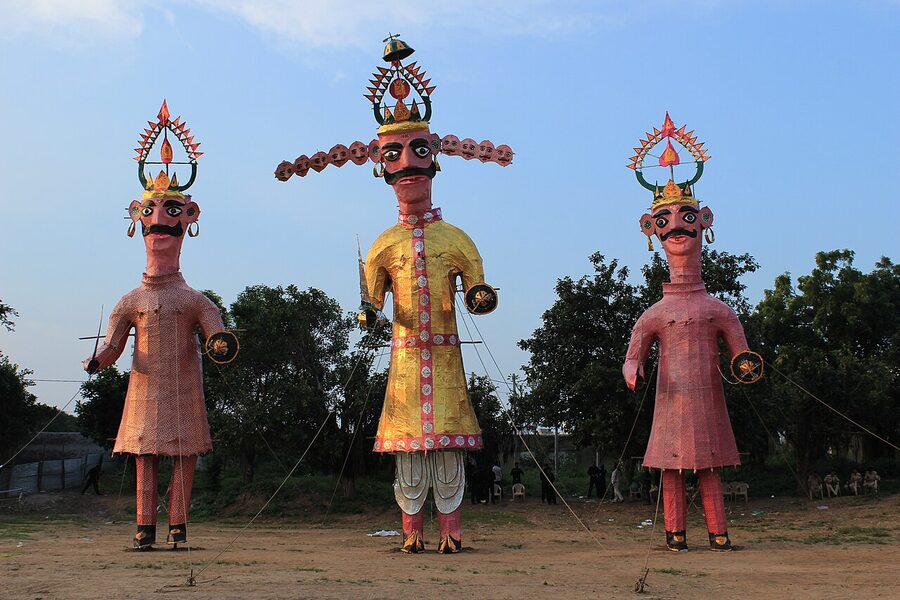
Most of India lights its Ravana effigy on Vijayadashami and goes home. Kullu starts a week-long festival on that same day, with no effigy at all.
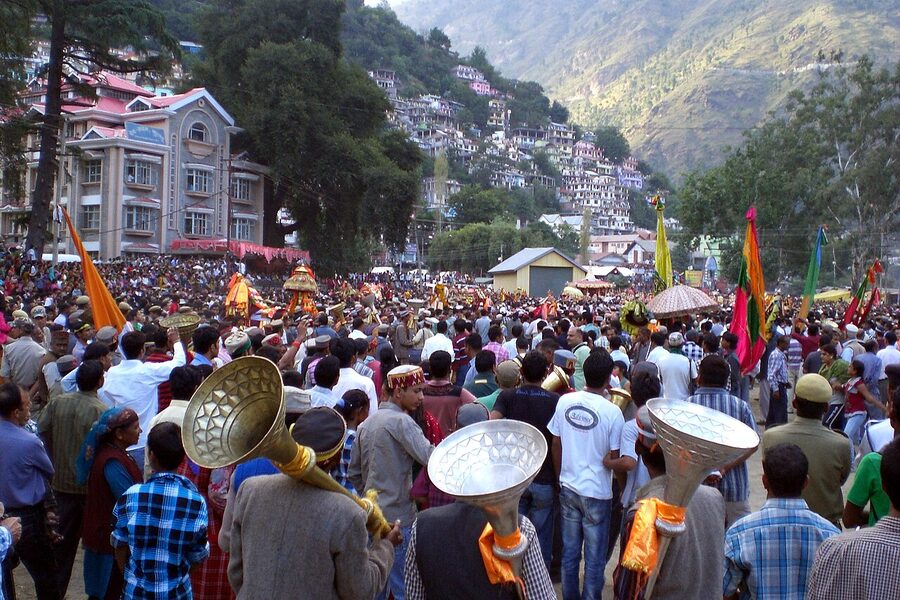
That single fact is what makes Kullu Dussehra worth travelling for. Across the country, people gather to watch a paper-and-bamboo Ravana go up in flame and call it the night the festival ends. In the Kullu Valley, a chariot leaves a college ground at the same hour, pulled by hand through narrow streets, and the festival is just beginning. It runs for seven days, draws between four and six lakh people in a typical year, and pulls in over two hundred local deities from villages across the valley, each travelling by palanquin under canopies that don’t stop moving until they reach Dhalpur Maidan.
If you’ve only seen Dussehra in Delhi or Mumbai, the Kullu version reads like a different festival entirely. There’s no burning. The Ramayana victory is honoured, but it’s secondary. The real subject of the week is something more specific to this part of the western Himalaya: a meeting of devtas, the local guardian deities of Kullu’s villages, who sit in a rough hierarchy under one head deity, Raghunathji, whose idol arrived in the valley in 1651 and whose lordship the others come to renew every year.
This guide walks through what actually happens during the seven days, the story behind it, who the key gods are, what to eat and buy at the fair, and how to actually get to Dhalpur Maidan and find a place to stand. Names, dates, and prices come from official festival publications, the Kullu district administration, and editorial sources cited at the foot of the piece. If something feels off when you visit, dates of the kind that shift with the lunar calendar do shift, and ground arrangements change year to year, so cross-check with the official festival site before you book.
In This Article
- Why Kullu’s Dussehra Begins When India’s Ends
- Seven Days, in Order
- The Story Behind Raghunathji’s Arrival in Kullu
- How the Devta System Actually Works
- Why the Procession Can’t Start Without Hidimba
- The Rath Yatra: What You’re Actually Looking At
- Dev Milan: A Week of God Meeting God
- Lankadahan: How Kullu Closes Its Dussehra
- The Cultural Fair at Kala Kendra and the Kullu Nati
- What to Eat: Sidu, Madra, Babru, and Chha Gosht
- Shawls, Caps, and What Else You’ll Want to Buy
- How to Actually Get to Kullu and Find a Place to Stand
- The Best Days of the Week to Go
- What’s Changed and What Hasn’t
- Where to Go Next in the Valley
- Practical Notes Before You Go
- Sources
Why Kullu’s Dussehra Begins When India’s Ends
Vijayadashami is the tenth day of Navratri, the Hindu calendar’s autumn festival cycle. Across most of the country, it’s the climax: the day Rama killed Ravana, the day Durga slew Mahishasura, the day the effigies burn. By dusk on Vijayadashami in Delhi, Lucknow, Mysore, and most of urban India, the fairgrounds are emptying out and people are heading home.
Kullu’s calendar puts the day at the other end of the arc. The valley’s tradition holds that this is the day Raghunathji, as Lord Rama, returns to Ayodhya in triumph, and so it is the day his subjects come to receive him. The festival begins here on Vijayadashami and runs forward for a week. There’s no Ravana figure to burn because the local theology doesn’t lean on the defeat. It leans on the homecoming, and on the long week of meetings, audiences, and visitations that follow it.
The practical effect of this: if you watch Dussehra in your home city on Day One and then board the night train or fly to Bhuntar the next morning, you can be at Dhalpur Maidan in time for the chariot pull on Day One of Kullu’s festival. That’s a real reason this festival has held its place in the national festival calendar even as countless local melas have faded.
Seven Days, in Order
The festival runs for exactly seven days from Vijayadashami. The dates shift each year with the Hindu lunar calendar but always fall in October. In 2025 the festival was held from 2 to 8 October. The 2026 dates will track Vijayadashami 2026, which falls later in the month.
The structure is consistent year to year:
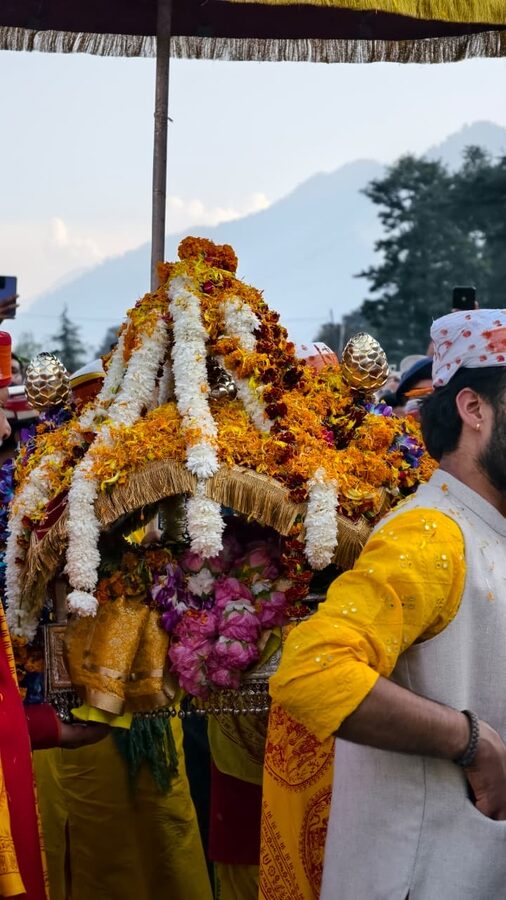
Day 1 (Vijayadashami): The opening. Raghunathji is brought from his temple at Sultanpur, on the south bank of the Beas, to a temporary camp at Dhalpur Maidan. The journey is the festival’s centrepiece. The idol is loaded onto a wooden rath, decorated with coloured fabric, and pulled through the narrow streets of the bazaar by ropes that dozens of devotees take hold of at once. Crowds line the rooftops and balconies along the route. The other devtas, who have travelled in from their villages over the previous days, fall in behind in their palanquins. The procession does not move quickly. Pulling the chariot is itself the act of devotion, and the slow pace gives every devotee on the rope their turn.
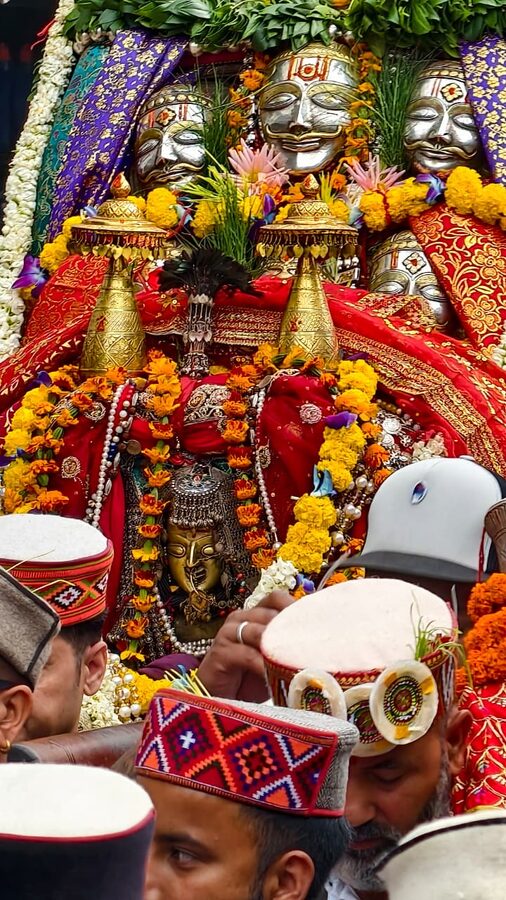
Days 2 to 6 (Dev Milan): The middle of the week is given over to Dev Milan, the meeting of the gods. Each visiting devta is assigned a place around Raghunathji’s camp at the maidan. Mornings and evenings see processions of palanquins moving through the festival ground as one devta visits another. The Kullu royal family, descended from the original line of Rajas and now headed by Maheshwar Singh, holds audiences with the visiting devtas through their goors, the human mediums each devta speaks through. Concerns of villages, harvests, weather, marriages, and disputes are aired. Most readers will not see this part of the festival up close: the audiences are not public spectacles. What you’ll see instead is the constant motion of palanquins, the drums, the trumpets called narsingha and karna, and the cultural programmes at the Kala Kendra running each evening.
Day 7 (Lankadahan): The closing day. Raghunathji’s chariot is taken to the bank of the Beas, where a small heap of dry grass and brushwood is set on fire. This is Lankadahan, the burning of Lanka, but you’ll notice immediately that there’s no Ravana effigy. The fire is symbolic, brief, and pointedly not the spectacle that an effigy burning would be. Once the bonfire dies, the chariot is taken back to Sultanpur and Raghunathji returns to his temple. The visiting devtas leave the next day for their own villages, often on foot for the first leg before transferring to vehicles.
The Story Behind Raghunathji’s Arrival in Kullu
The festival exists because of a single bad decision by a 17th-century king, and an attempt to atone for it that pulled the head deity of the valley out of Ayodhya, a thousand kilometres away on the Gangetic plain.
The king was Raja Jagat Singh, who ruled Kullu from 1637 to 1672. Court records and the oral histories collected by 19th-century British administrators give a consistent version: Jagat Singh was told that a Brahmin called Durga Dutt, in the nearby village of Tipri, possessed a hoard of pearls. Jagat Singh sent his men to seize them. Durga Dutt insisted, truthfully, that he had no pearls. The pressure escalated. Eventually, fearing worse for his family, Durga Dutt locked himself, his wife, and his children in his house and set it on fire. As he burned, he cursed the king.
What followed reads, in the local histories, as a long collapse. Jagat Singh fell ill. He hallucinated. He saw worms in his food and human blood in his drinking water. The court physicians and the Ayurvedic vaidyas couldn’t help. Holy men were brought in. Nothing worked. Eventually a wandering ascetic, known in the sources as Krishan Dutt, or Pahari Baba, told the king that the only cure was the charanamrit, the consecrated water, of an idol of Lord Rama himself, and that the idol must come from Ayodhya, the seat of Rama’s mythological kingdom.
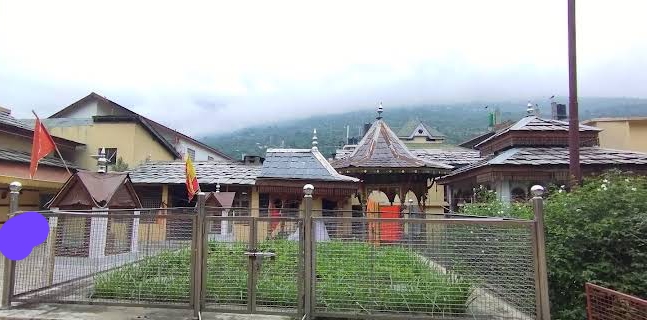
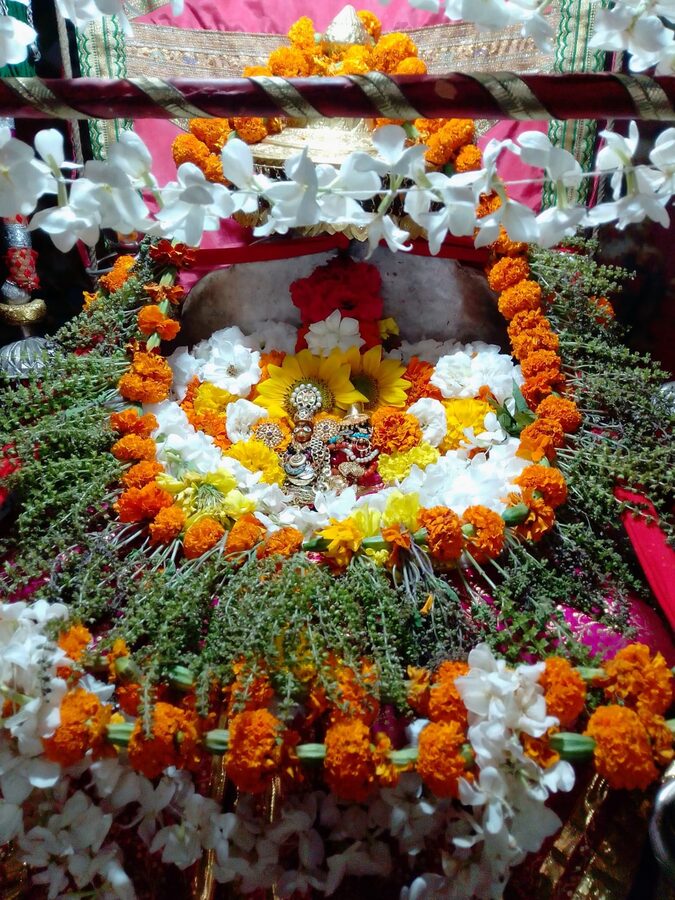
The task fell to a disciple called Damodar Dass. He travelled to Ayodhya, retrieved an idol from the Tret Nath temple, and brought it back to Kullu in July 1651. The idol was installed at Sultanpur, the royal seat, where Raghunath Mandir still stands. The king drank the charanamrit, recovered, and made a public act of atonement that changed the political and religious shape of the valley: he abdicated his throne to Raghunathji and declared himself the lord’s chharibardar, his staff bearer. The kingdom from then on belonged, in the formal religious sense, to Raghunathji. The king ruled as the deity’s manager.
From the same year, the king issued an order to all the kardars, the human managers of the valley’s local devtas, to assemble at Kullu on Vijayadashami and pay their respects to the new head deity. That assembly is what became Kullu Dussehra. It has been held every year since.
How the Devta System Actually Works
To make sense of what you’re watching at the festival, it helps to understand the structure of devtas in Kullu, which is unusual even by Indian standards.
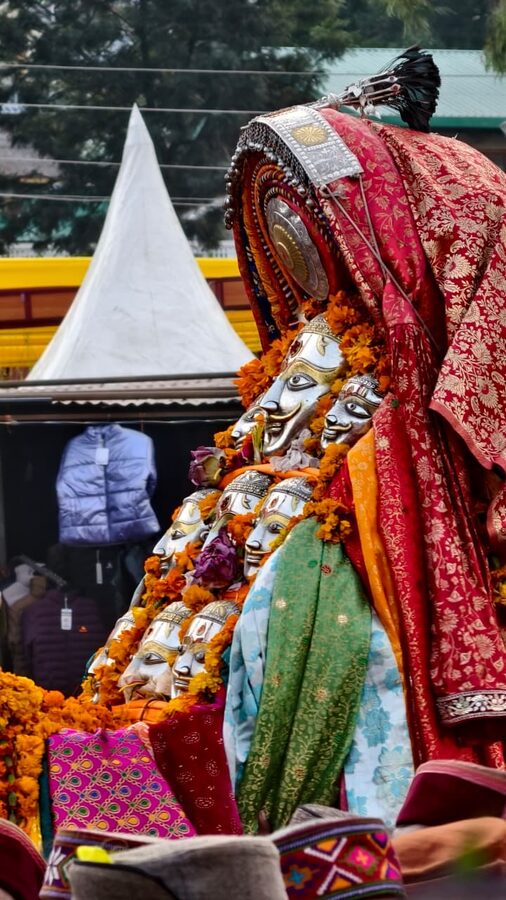
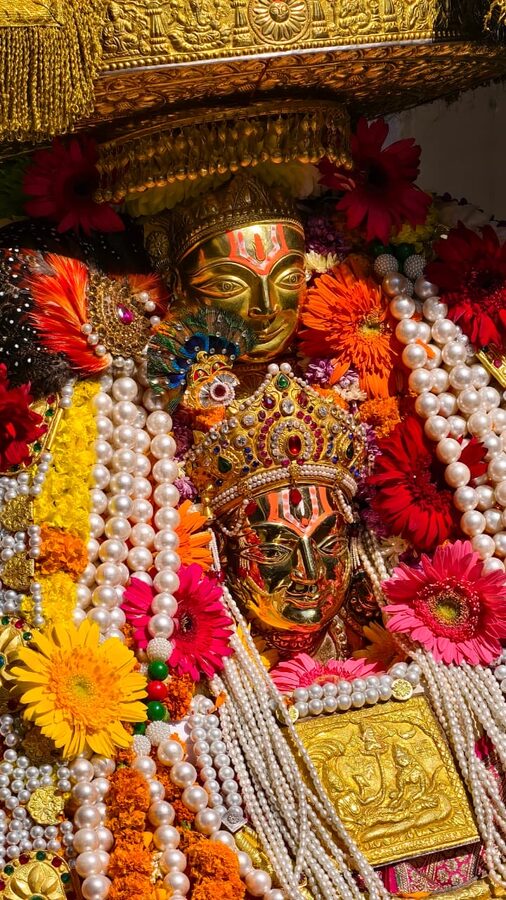
Each village in the valley has its own devta. There are layers above this: clan devtas, regional devtas, and at the top, the head deity of the whole region, who in this case is Raghunathji. The devta is treated, in the traditional system, as a real owner of land. Until the 20th century the devta was the legal owner of the land its temple stood on, with the kardars acting as managers and the income from the land treated as the devta’s. Even today, with land laws long modernised, the relationship between the village and its devta is taken seriously: kardars handle ritual and finance, goors speak for the devta when consulted, and major decisions in a village are still sometimes referred to the local deity through a goor before being acted on.
The key roles to know:
- Kardar: The human manager of a devta. Handles the temple, the deity’s belongings, and the practical organisation of festivals and journeys.
- Goor: The medium. The goor is the person the devta speaks through. At Dussehra, the goor is what allows the king and the kardars to ask the devta direct questions about the village’s needs. The goor enters a trance state and the devta’s reply is given through them.
- Pujari: The temple priest. The Raghunathji temple at Sultanpur has its own line of pujaris descended from priests originally brought from the Tret Nath temple at Ayodhya in the 17th century.
The devtas come to Dhalpur in a defined order, with rank and seniority observed. The chariot pull on Day One cannot begin until the most powerful of the visiting devis, Hidimba Devi of Manali, has arrived. The festival’s organisational committee, headed by the kardar union and coordinated with the district administration, manages travel and accommodation for all the visiting devtas, with subsidies scaled by status. What was once the king’s personal concern is now a logistical operation that spends weeks on preparation.
Why the Procession Can’t Start Without Hidimba
Hidimba Devi, also written Hadimba, is one of the most powerful aboriginal deities of the Kullu region. Her temple is at Dhungri, on the wooded slope above Manali, about 40 kilometres up-valley from Kullu town. The temple itself, with its four-tiered pagoda roof, was built by Raja Bahadur Singh in 1553, almost a century before Raghunathji arrived in the valley.
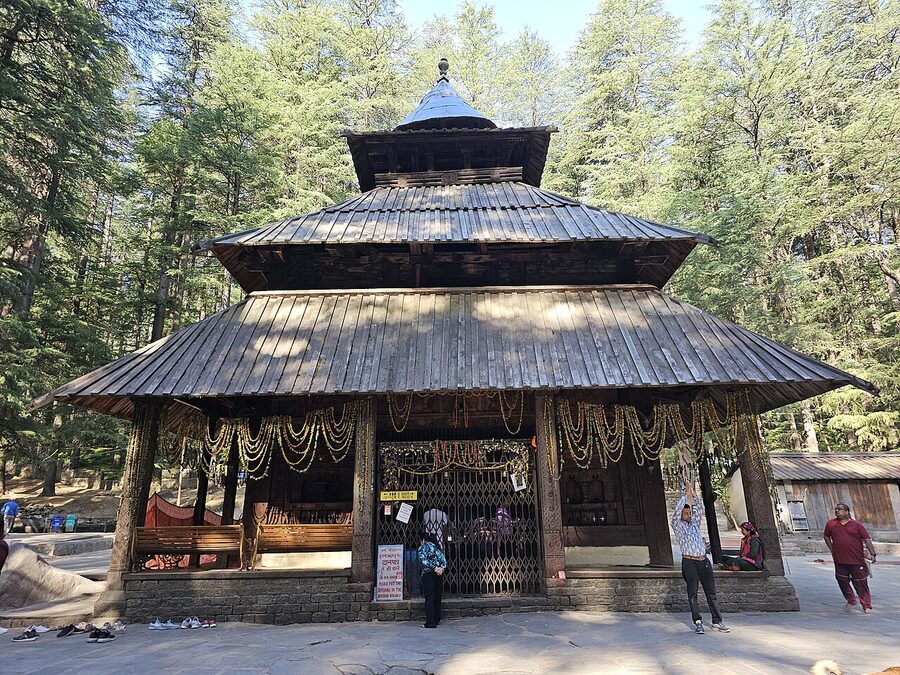
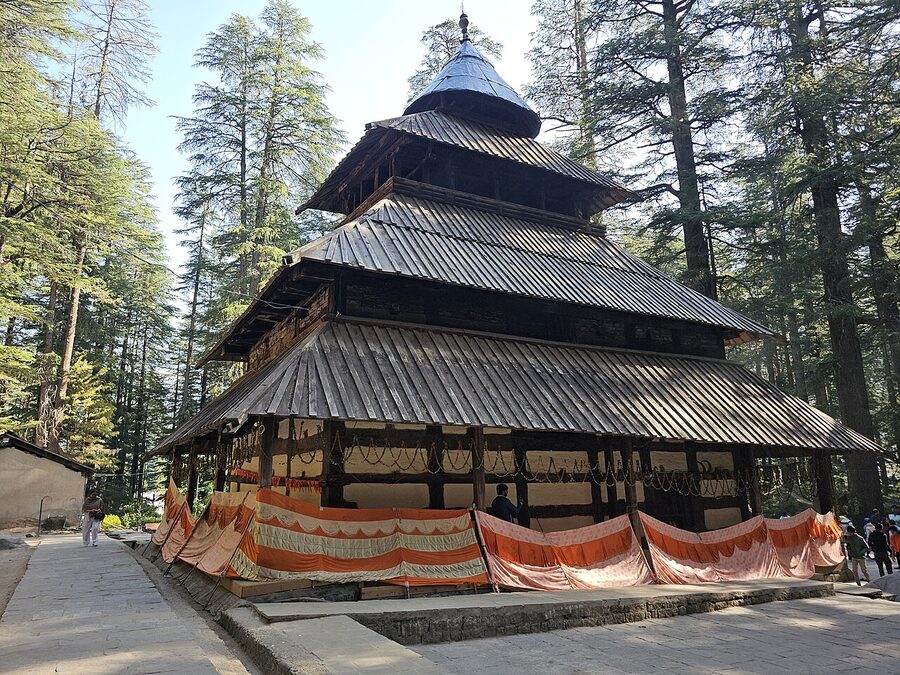
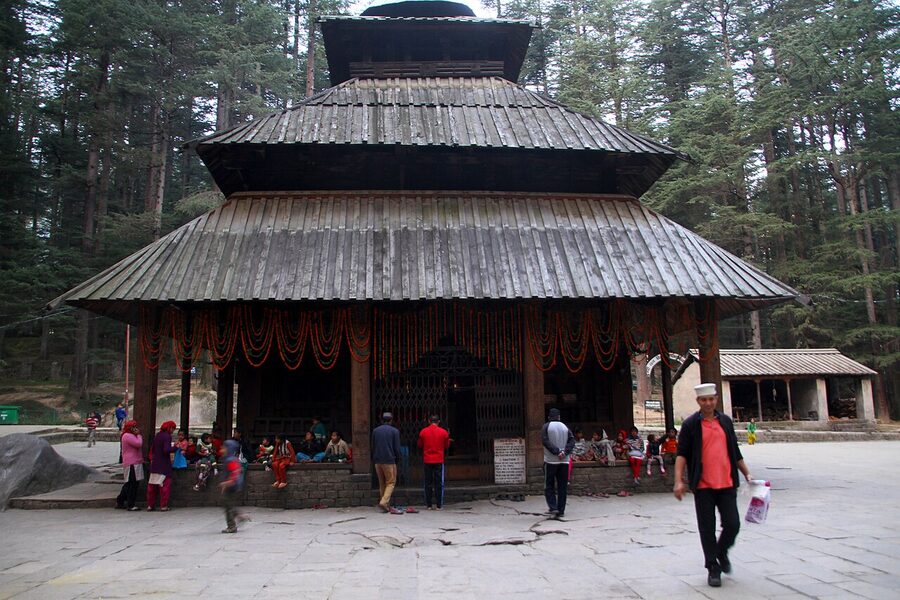
The protocol of Kullu Dussehra holds that Raghunathji’s chariot does not begin its journey on Day One until Hidimba’s palanquin reaches the procession ground. She is treated as a maternal figure to the king’s lineage and to Raghunathji himself, and her arrival is the formal cue for the festival to start. If you stand at the maidan on the morning of Day One, you’ll see the entire procession waiting, the rath ready, the ropes laid out, the crowd packed in, and nothing happening, because the cue hasn’t come yet. When Hidimba’s palanquin appears at the head of the slope and is brought to the maidan, the procession moves.
It’s worth visiting her temple at Dhungri before the festival if you can. The Hidimba Devi Temple is the most-visited site in Manali outside the festival season, and you’ll get a clearer sense of her standing in the local pantheon if you’ve stood inside the small wooden sanctum, with the rock outcrop she’s said to have meditated on still partly visible inside. She is the only major Kullu devi whose status as the festival’s gatekeeper is built into the protocol.
The Rath Yatra: What You’re Actually Looking At
The rath itself is a wooden chariot kept in storage between festivals. In the days before Vijayadashami it’s brought out, repaired, decorated with bright cloth, draped with flowers, and parked at the lower end of Dhalpur Maidan to receive the idol. It’s not a single permanent chariot in the sense of the Puri Jagannath rath; it’s reassembled each year and the decoration changes.
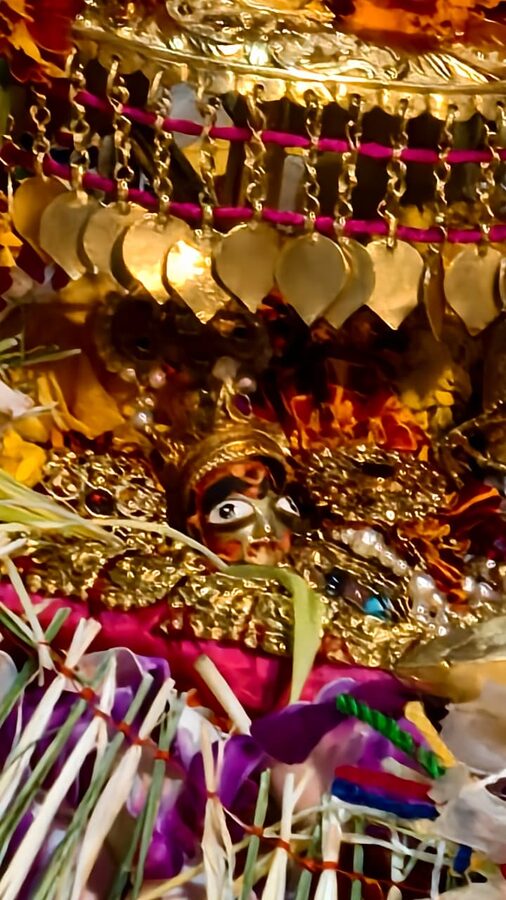
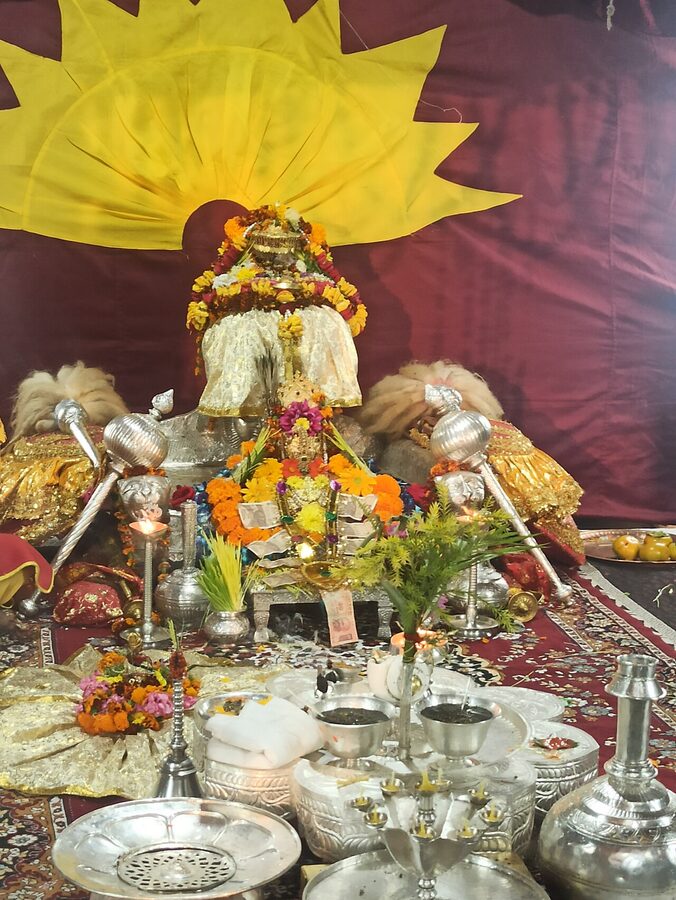
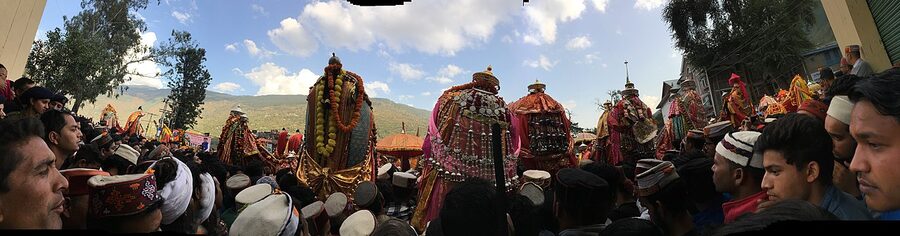
The idol that travels in it is not the main Raghunathji idol from Sultanpur. The main idol stays at the temple. What rides in the rath is a smaller chal-murti, a “moving idol”, taken out specifically for processions. The chal-murti is dressed for the occasion in Pahari brocade, garlanded with marigolds, and placed in a small canopy on the chariot’s central platform. The royal family attends. So do the goors and kardars of the major devtas.
The pulling itself is the moment most photographers gather for. Long ropes are tied to the front of the chariot. Devotees who have travelled from across the valley take hold of the ropes and pull, with the chariot moving in short slow sections of a few metres at a time before pausing while more devotees take their turn at the rope. Naga devtas, the snake gods who hold a particular role at the festival, lead the procession on the front of the chariot, traditionally credited with clearing the path and managing the crowd. The whole journey from the lower maidan to the upper end of the procession ground takes hours.
If you want to be on the rope yourself, the basic rule is: arrive early, stand near the chariot during the morning hours, and look approachable. There is no formal queue. Foreign visitors and visitors from other parts of India who show interest are usually welcomed onto the rope. Wear sturdy shoes. The pull is slow but it isn’t gentle, and the ground around the chariot is uneven.
Dev Milan: A Week of God Meeting God
From Day Two through Day Six, the centre of the festival is the assembly of devtas at Dhalpur Maidan. Each visiting deity has its own space, marked by the village’s banners and a small encampment for the kardars and the devotee-musicians who accompany the palanquin. By the morning of Day Two there are typically over two hundred such encampments around the perimeter of the maidan.
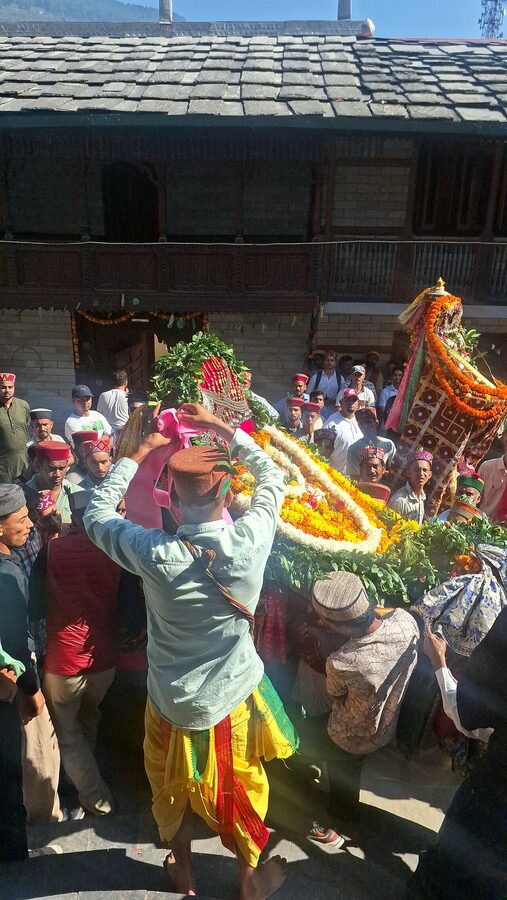
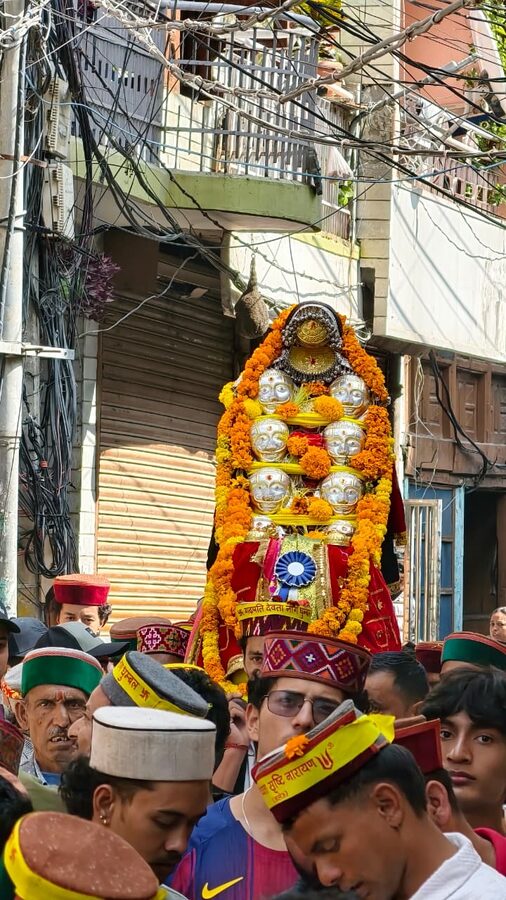
The day’s rhythm is processional. Each devta visits Raghunathji’s camp at least once during the festival. Pairs and groups of devtas visit each other. Some devtas have ongoing relationships, friendly or otherwise, that play out year after year through the protocol of who calls on whom and in what order. The most consistently noted is the relationship between Raghunathji and Jamlu Devta, the powerful and famously independent deity of Malana village in the Parvati Valley. Jamlu’s tradition does not bow to Raghunathji. He attends the festival but does not enter Raghunathji’s camp. He is acknowledged from a distance. Local writers will tell you this is one of the most-watched moments of the festival every year, and it is.
The king and his family receive the visiting devtas through their goors. Concerns are raised, advice is asked, and replies are given. These are private exchanges by tradition, but you can sit in the public gallery and watch the queue of palanquins forming each day. The goors when active are immediately recognisable: the trance state involves a distinct posture and a marked change in voice, and the kardars stand close to write down the answer.
For visitors, the practical advice is: don’t try to follow any single devta around the maidan. Pick a spot near the centre and let the procession come to you. The constant motion of palanquins around the camp is the show.
Lankadahan: How Kullu Closes Its Dussehra
The seventh day is Lankadahan, the burning of Lanka. In most of India, Lanka is the giant Ravana effigy that goes up in fireworks at sunset on Dussehra day. In Kullu, Lanka is a small heap of dry brushwood on the bank of the Beas River, lit briefly in the late afternoon to symbolise the destruction of the demon king’s city.
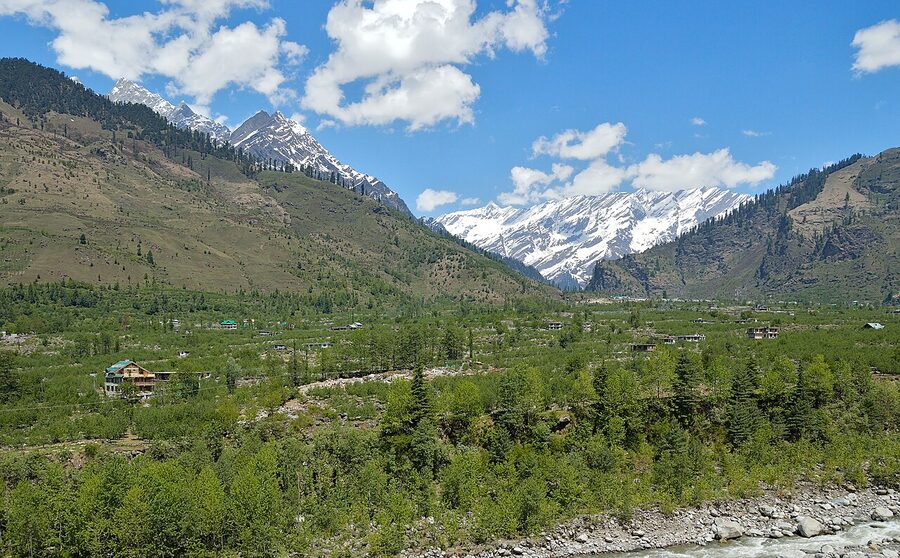
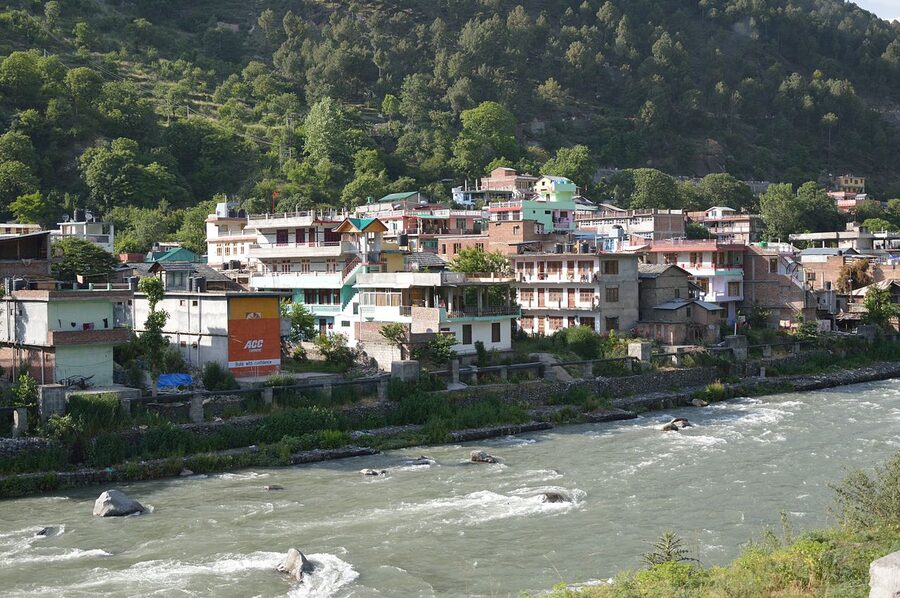
The chariot is taken from the maidan down to the riverbank. The bonfire is lit. The fire is small and it doesn’t last long. There’s no firework. The atmosphere is more procession than spectacle. The point of the day is the closing of the cycle, not a climactic moment of destruction.
This is the day that historically saw animal sacrifices. The traditional practice was to sacrifice a buffalo, a male lamb, a fish, a crab, and a chicken on the river bank as part of the closing rites. Animal sacrifice was officially banned in Himachal Pradesh by a 2014 High Court ruling, and the public sacrifices at Kullu Dussehra have stopped. Sahapedia and other documenting sources note that some sacrifices continue privately in remote spots away from the main ground. If this matters to you, the public-facing festival you’ll see no longer includes animal sacrifice, and the practice the High Court targeted has been substantially curtailed.
After the fire burns down, the chariot is reversed and taken back to Sultanpur. Raghunathji returns to his temple. The devotees who pulled the rath out join the procession back. By the time the idol is reinstalled at Raghunath Mandir, Kullu’s Dussehra is officially closed.
The Cultural Fair at Kala Kendra and the Kullu Nati
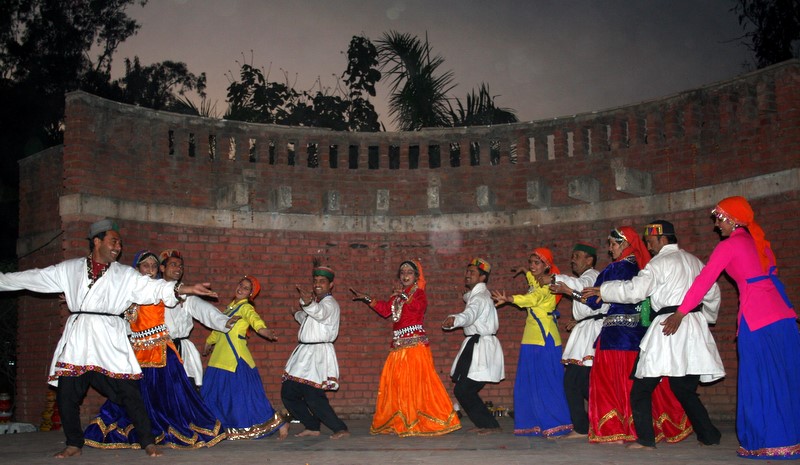
Running alongside the religious calendar from Day Two to Day Six is the cultural programme at the Kala Kendra, the festival’s arts centre on the maidan. Each evening features performances of folk dance, music, theatre, and themed shows. In recent years a particular social theme has been chosen for the festival, with the arts programme built around it.
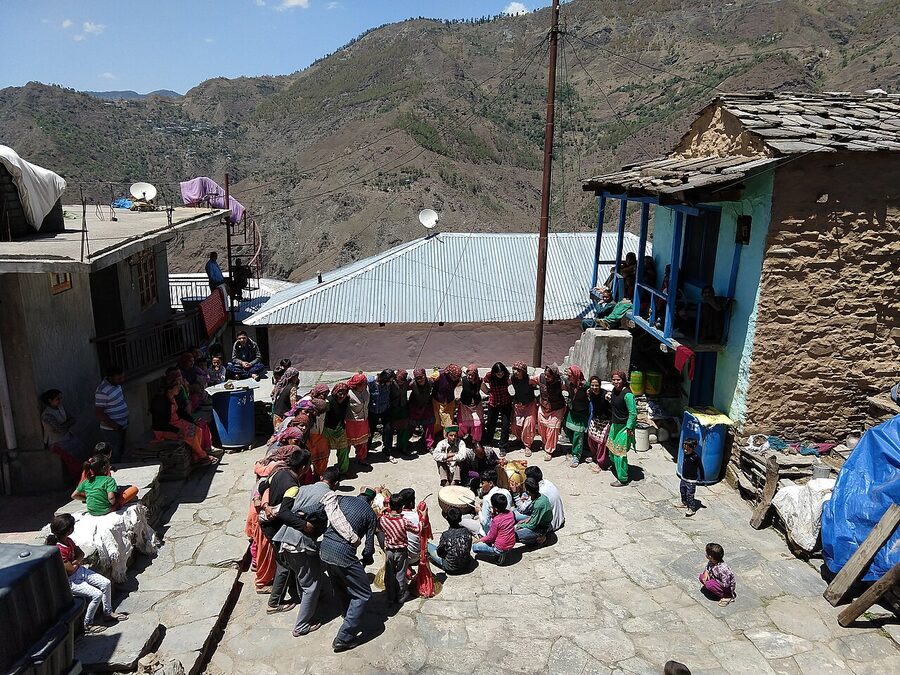
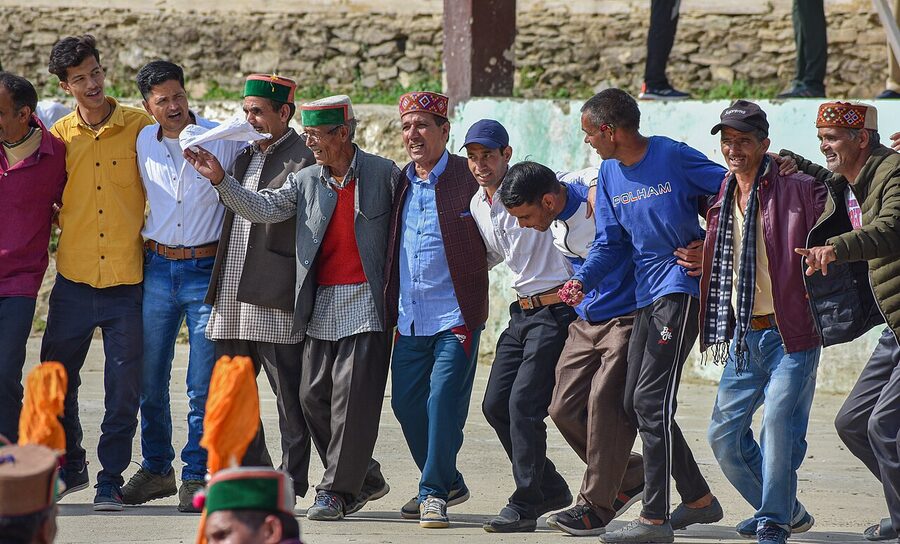
The dance you’ll see most often is the Kullu Nati, sometimes spelled Natti, the traditional folk dance of the Kullu Valley. It’s performed in groups, often very large groups, with dancers in lines that move in a slow circular pattern, hands joined, with footwork that picks up speed as the music builds. The original moonlight version of the dance, danced by villagers themselves at the festival ground, is now rare. What you’ll see today is a programmed version performed by trained groups in the Kala Kendra auditorium, with the festival’s own organising committee selecting performers each year.
Performances are usually free to attend if you can get in. The auditorium fills early. The international dance section of the programme, which began after the 1972 designation as an International Festival, sometimes features visiting troupes from neighbouring countries and from elsewhere in India.
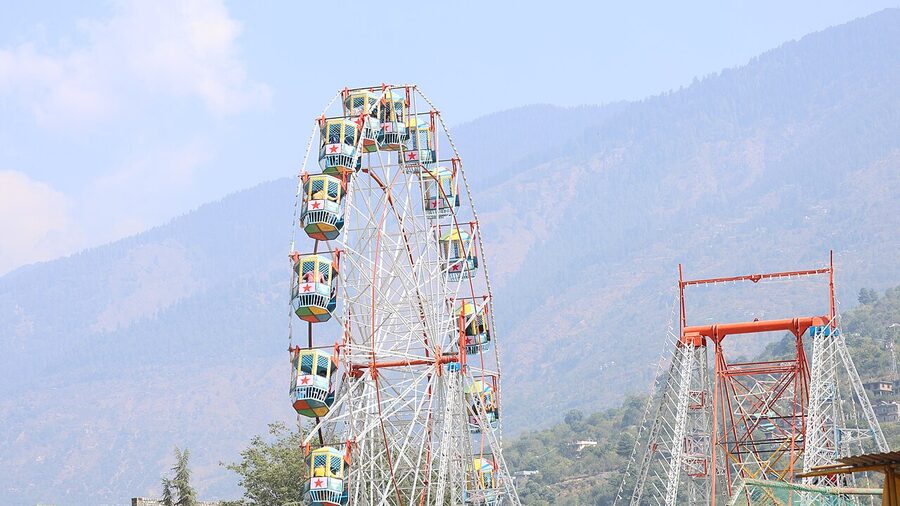
The cultural fair extends out from the auditorium across the rest of the maidan. Stalls sell handicrafts, food, household goods, and clothing. The combination of religious procession, dance programme, and trade fair is what gives Kullu Dussehra its specific character: a religious festival that has always also been the largest annual market for the region.
What to Eat: Sidu, Madra, Babru, and Chha Gosht
Pahari food is its own cuisine, distinct from the food of the Indian plains, and Kullu Dussehra is one of the best opportunities in the year to eat it in concentrated form. The food stalls at the maidan run for the full week of the festival. Local restaurants in Kullu town, especially around the Akhara Bazaar and Dhalpur, also adjust their menus for the influx.
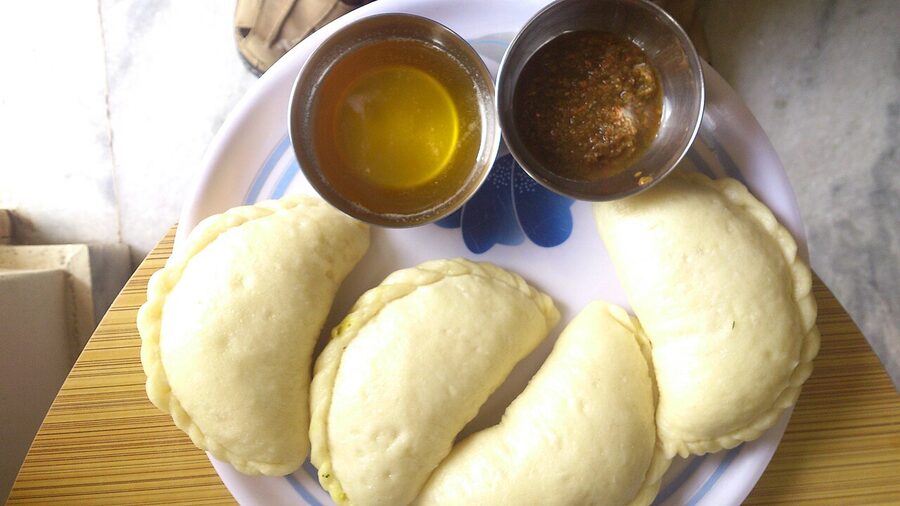
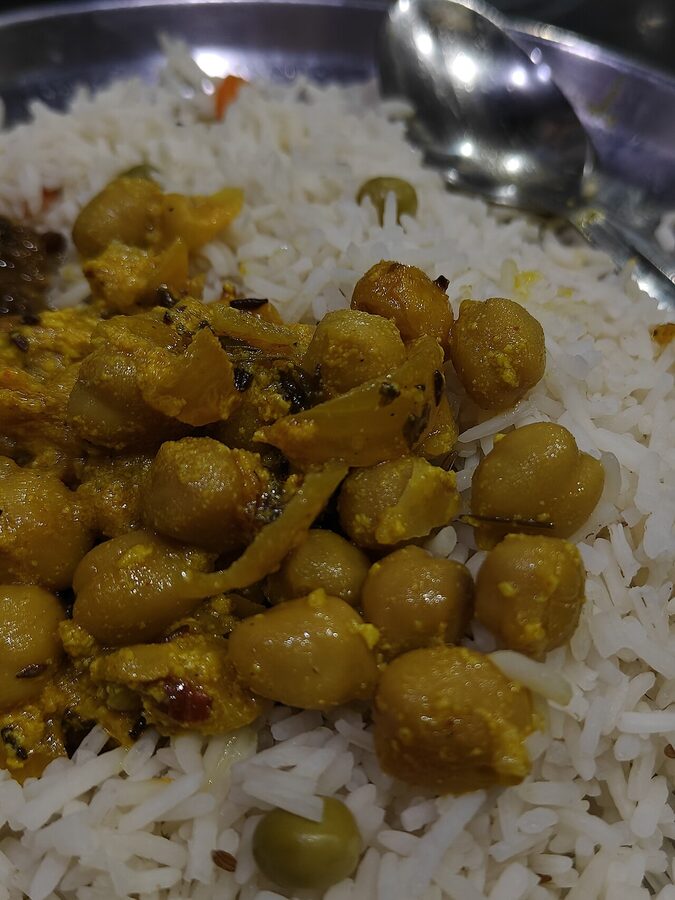
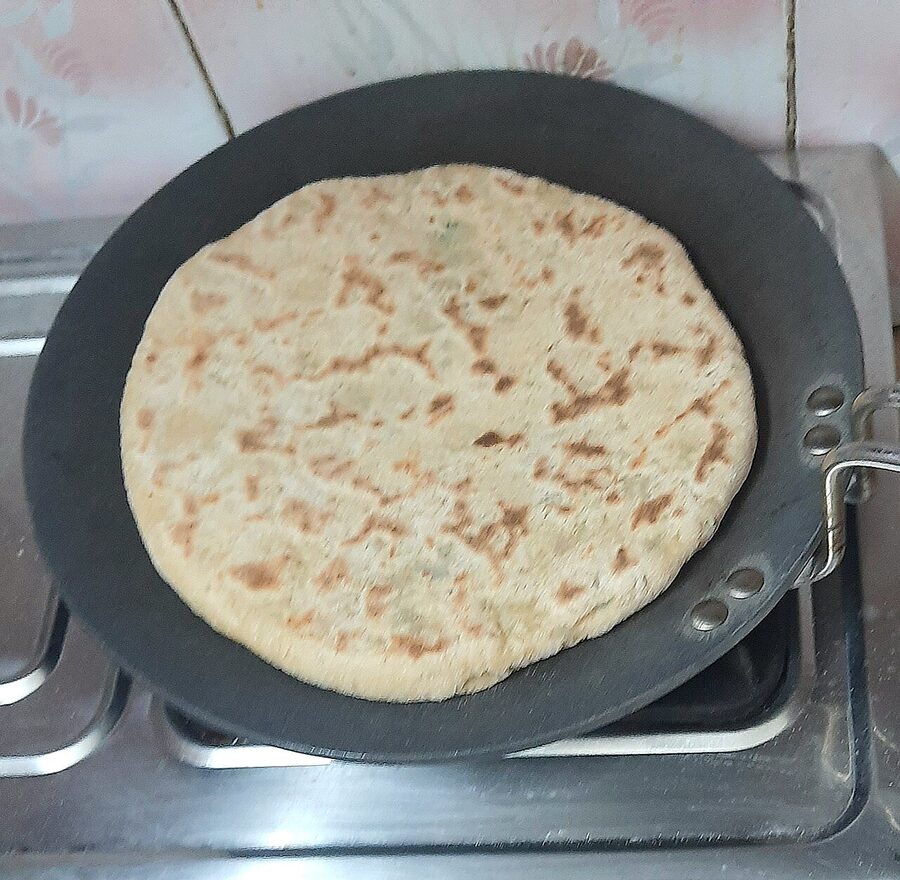
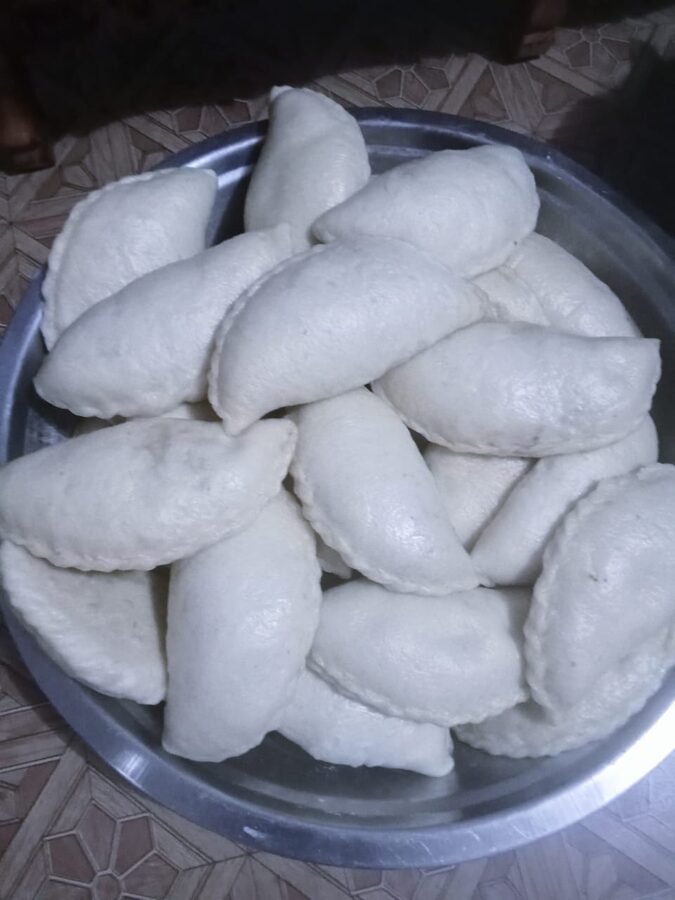
The dishes to look for:
- Sidu (also Siddu): A wheat-flour bread leavened with yeast and filled with a paste of poppy seeds, walnuts, or paneer, then steamed and eaten with ghee. Sidu is the iconic dish of the Kullu Valley. It’s heavy, warming, and served as a meal in itself rather than a side. The festival stalls usually offer the walnut-and-poppy-seed version.
- Madra: A slow-cooked yoghurt-based curry, traditionally made with chickpeas (chana madra) or with kidney beans or chickpea-paneer combinations. It’s seasoned with cinnamon, cardamom, cloves, and cumin, and the yoghurt gives it a tang that distinguishes it from the heavier gravies of the plains. Madra is served at every Pahari wedding feast and at most festival meals.
- Babru: Black-gram-stuffed deep-fried bread. Smaller and richer than sidu, often served at festivals as part of a larger plate.
- Chha Gosht: Mutton cooked in a yoghurt and gram-flour gravy, mildly spiced, served with rice. The dish takes time and the festival stalls don’t always offer it; the better restaurants in Kullu town do.
- Aktori: A sweet pancake made with buckwheat flour, traditionally eaten at festivals.
- Sepu Vadi: Black-gram dumplings simmered in spinach gravy.
Tea at the festival is the standard masala chai of the rest of India. The locally produced chhang, a fermented millet or barley drink, is sometimes available informally near the maidan but isn’t sold at the regulated festival stalls.
Shawls, Caps, and What Else You’ll Want to Buy
The festival has been a regional trade fair since its inception, and the shopping is one of the genuine draws. The Kullu Valley produces some of India’s most distinctive textiles, and the festival is when the village weavers bring their best work to a single ground for a single week.
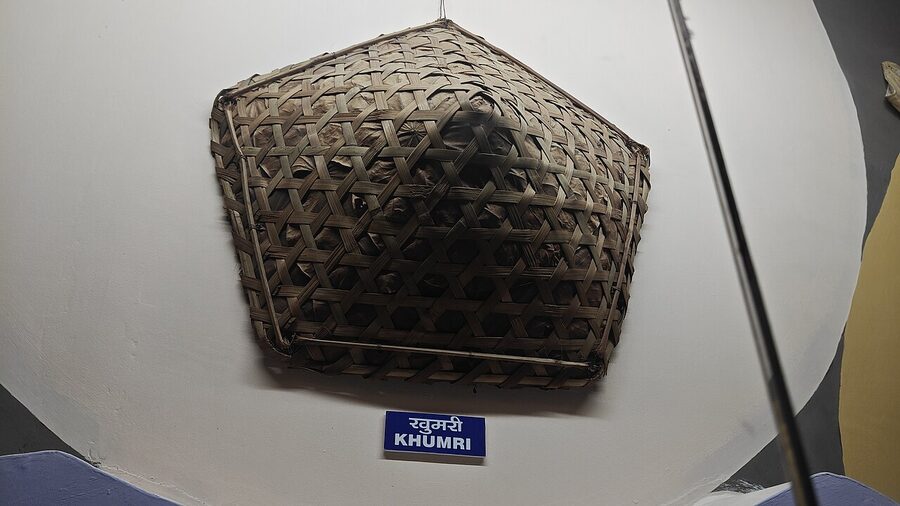
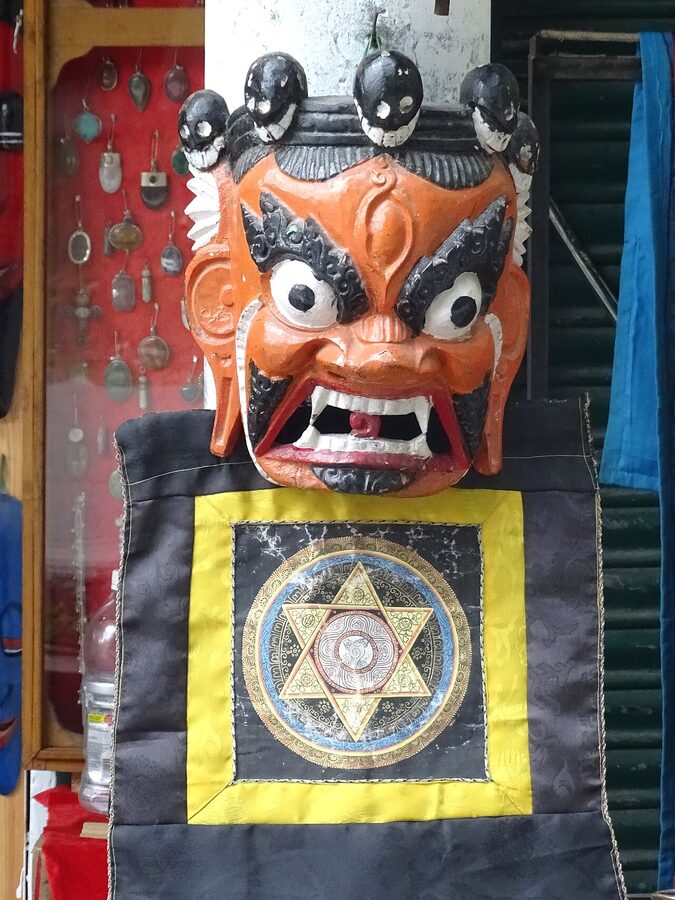
What’s worth your attention:
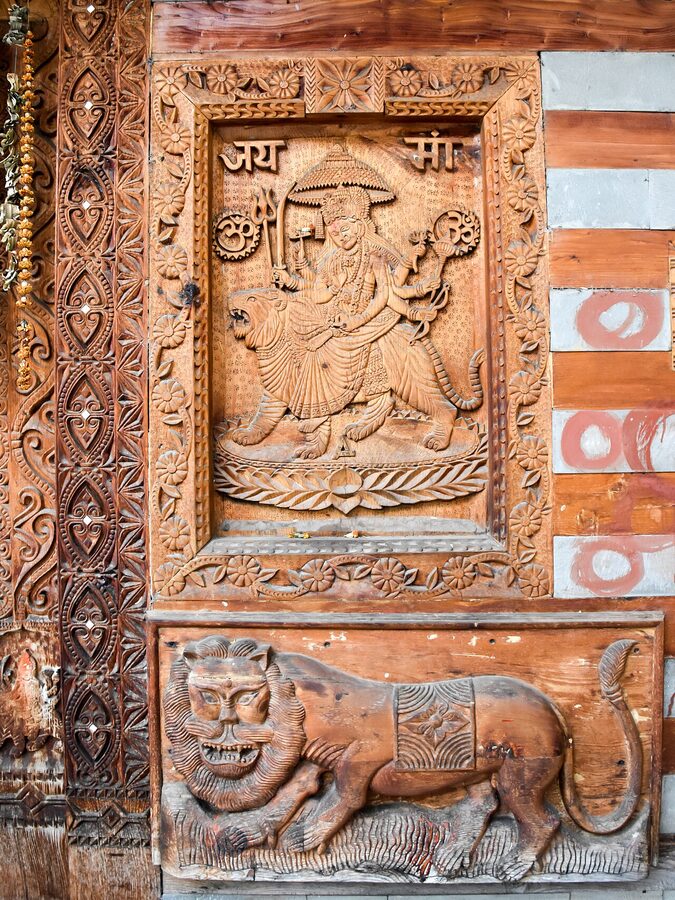
- Kullu shawls: Woven from wool, usually with the geometric border patterns that have become a signature of the valley. Genuine Kullu shawls are made on handlooms in the villages and carry a distinctive border in red, black, yellow, green, and white geometric blocks. Look for the Bhuttico cooperative outlet at the festival or in town if you want certified handloom: it’s the largest of the Kullu weavers’ cooperatives and the most reliable source of genuine Kullu shawls. Pure pashmina is rarer and significantly more expensive.
- Kullu cap (Himachali topi): The flat-topped felted-wool cap with a coloured front band, worn across the western Himalayan states. The colour of the band signals the wearer’s region: green is associated with the Kullu side, maroon with the Bushahr region near Shimla, and there are local variations. The caps at the festival are usually well-priced compared to what you’ll find at tourist shops in Shimla or Manali.
- Kinnauri shawls and stoles: Brought down from the higher Kinnaur district, with finer weaving and more intricate borders than standard Kullu shawls. Worth comparing.
- Pattoos: The heavier woollen wraps worn by women in the higher villages, traditionally as everyday outerwear. Less commonly sold to visitors but available at the festival.
- Wood carving and metalwork: The valley’s temple-carving tradition translates into smaller pieces sold at the festival. Look at the work coming from Bekhli and the smaller villages around Naggar.
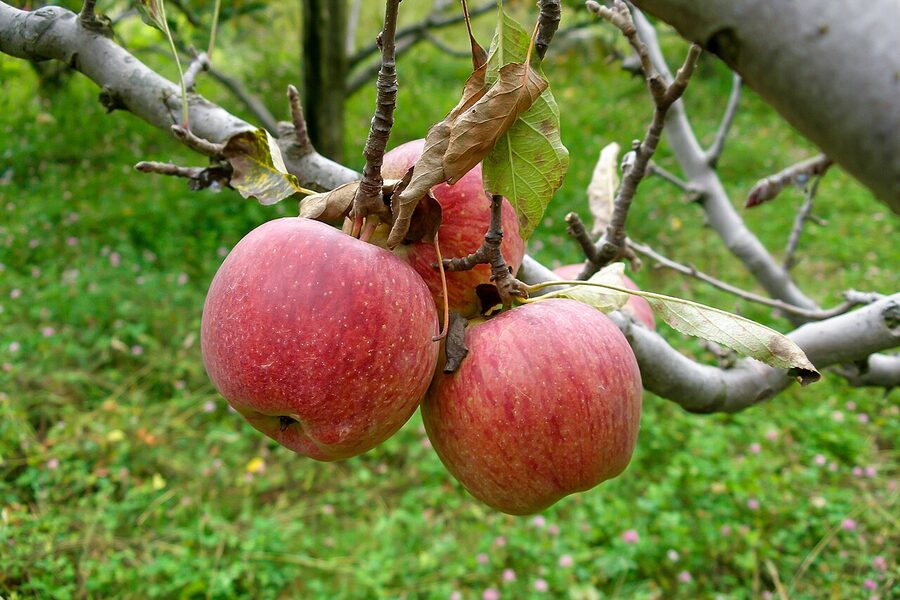
- Apples and dried fruit: October is the tail end of the apple harvest. The festival is a good time to buy Kullu apples direct from the producers, and the dried apricots and walnuts brought down from the upper valley are excellent.
Bargaining is expected but not aggressive. The cooperative stalls (Bhuttico, Khadi outlets) tend to have fixed prices. The independent sellers expect a discount of around 10 to 20 percent on the first asking price.
How to Actually Get to Kullu and Find a Place to Stand
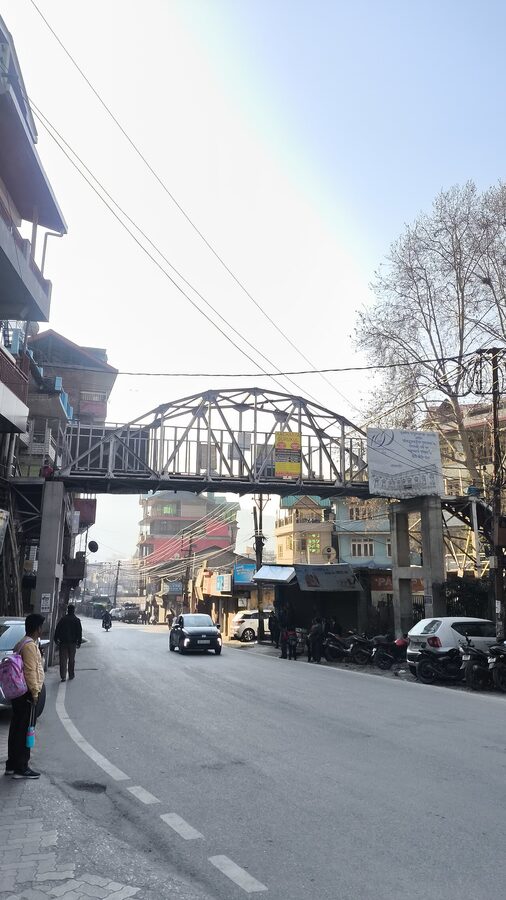
Kullu town sits on the banks of the Beas at an altitude of 1,230 metres, about 250 kilometres north of Chandigarh and 530 kilometres from Delhi. It’s the district headquarters of Kullu district and the festival ground at Dhalpur is in the centre of town, easily walkable from anywhere you’ll likely stay.
The realistic options for getting in:
- By air: Bhuntar Airport (also called Kullu-Manali Airport) is 10 kilometres south of Kullu town. Flights connect to Delhi via small aircraft, with weather-related cancellations frequent in shoulder seasons. Festival week sees demand spike. Book at least a month ahead.
- By road from Delhi or Chandigarh: The classic route. Volvo and Himachal Roadways AC buses run overnight from ISBT Kashmiri Gate in Delhi (around 12 to 14 hours) and from Chandigarh’s Sector 43 ISBT (around 8 to 10 hours). A booking through HRTC’s online system is the safest. Private operators run too but service quality varies.
- By road from Manali: Manali is 40 kilometres north up the valley, an hour to ninety minutes by taxi or bus. Many visitors base in Manali during the festival to escape the worst of the Kullu town accommodation crunch and commute in for the day.
- By rail: The nearest broad-gauge station is Chandigarh, with onward road travel of 8 to 10 hours. The Kalka-Shimla narrow-gauge line is scenic but does not get you closer to Kullu.
For accommodation during the festival, the realistic position is: Kullu town hotels are booked solid, sometimes months in advance, and rates climb significantly for the festival week. If you’re set on staying in Kullu itself, look at HPTDC’s Sarvari and Silver Moon properties first (book through hptdc.in), and at the privately run options around Akhara Bazaar and Dhalpur. If you can’t get a room in Kullu, base in Manali and commute in. Manali’s bed capacity is far larger and you’ll find options at all price points even during the festival.
For the chariot pull on Day One, plan to be at Dhalpur Maidan by 9 or 10 in the morning. The actual procession may not start until early afternoon, depending on when Hidimba’s palanquin arrives, but the maidan starts filling early and the best vantage points along the procession route are gone by midday. Locals and longer-staying visitors get the rooftop spots along the route through advance arrangement; the practical alternative for first-timers is to find a position at the lower end of the maidan where the chariot starts, or to walk a short stretch with the procession itself.
The Best Days of the Week to Go
If you can only spend two or three days at the festival, the most rewarding combination is:
- Day 1 (Vijayadashami): The opening Rath Yatra. The biggest single moment of the festival. Crowded but unmissable.
- Day 3 or 4: The middle of the Dev Milan period, when the maximum number of devtas are present and the festival ground is at its fullest. Better for unhurried watching, photography, shopping, and food.
- Day 7 (Lankadahan): The closing day at the Beas. Smaller crowds than Day 1, with a different mood. Worth attending if you have time and want to see the cycle close.
The middle of the week is the sweet spot for visitors who want to take their time. Photographers find the procession activity is constant, the light is better than on Day 1 when crowds compete for vantage, and the cultural programme at Kala Kendra has hit its rhythm. If you’re at the festival to shop, Days 4 and 5 are when the trade stalls have their full inventory out and prices haven’t yet started softening for last-day clearance.
What’s Changed and What Hasn’t
The festival has grown considerably since the 1972 International Festival designation, and not all of the changes have been easy ones. Three are worth knowing about before you go.
First, the trade. What was originally an exchange of locally made handmade goods has shifted heavily towards mass-produced items brought in from Ludhiana, Saharanpur, and the Punjabi factory belt. The handloom shawls and caps are still there, but they share floor space with imported plastic toys and machine-made garments. The cooperative stalls are the easiest place to find what’s actually local.
Second, the dance. The Nati that you see now in the Kala Kendra auditorium is performed by trained groups under organising committee selection. The older form, danced spontaneously by villagers under moonlight at the maidan around their devta’s encampment, has largely faded. A handful of village groups still bring their own dance, but the central performances are now staged shows rather than community participation.
Third, the animal sacrifices. The 2014 High Court ban changed the public face of Day 7 substantially. The festival no longer includes the public sacrifice of buffalo, lamb, fish, crab, and chicken that once marked the Lankadahan day. The bonfire remains; the slaughter does not. Whether this counts as loss or progress depends on your view, but the change is significant and is the most visible difference between the festival as it was a generation ago and the festival as it runs now.
What hasn’t changed is the central event. The chariot leaves the lower maidan on Day One. The devtas come from across the valley. The king’s family receives them through the goors. The devotees pull the rope. The week ends at the Beas. None of that has been simplified, miniaturised, or commercialised away. Kullu Dussehra in 2026 looks recognisably like Kullu Dussehra in 1971, and like the festival the British administrators were sketching in the 1870s, and like the gathering that Raja Jagat Singh first ordered in 1651.
Where to Go Next in the Valley
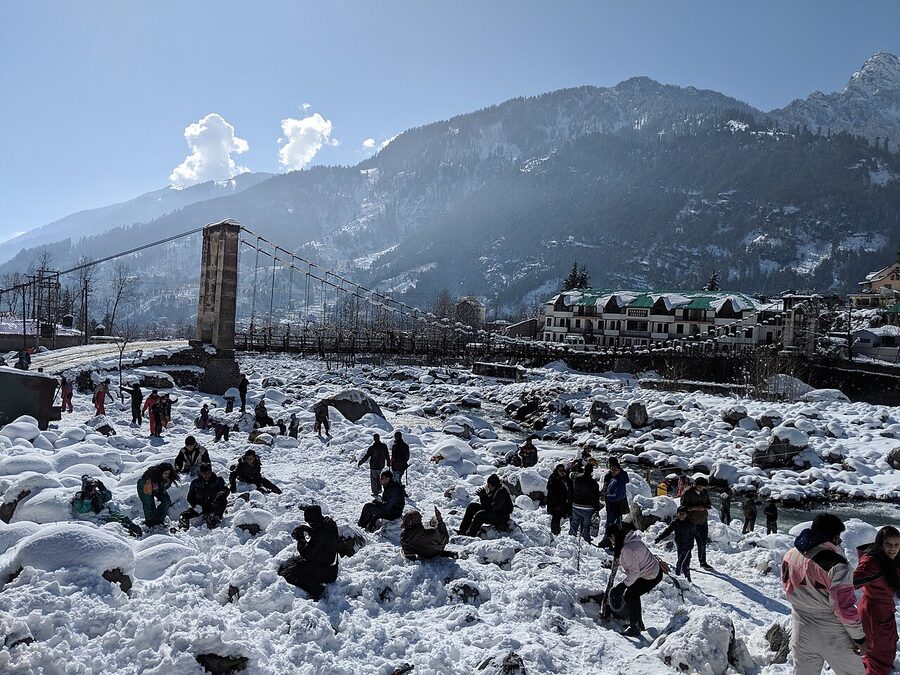
If you’ve come for the festival, the surrounding region rewards a longer stay. Manali is the obvious next stop, an hour up the valley, with the Hidimba Devi Temple at Dhungri now familiar from your festival reading. The Manali tourist attractions area is well-trodden but Hidimba’s temple complex repays a careful visit out of season, when you can see the four-tiered roof and the wooden carving without the festival crowd around it.
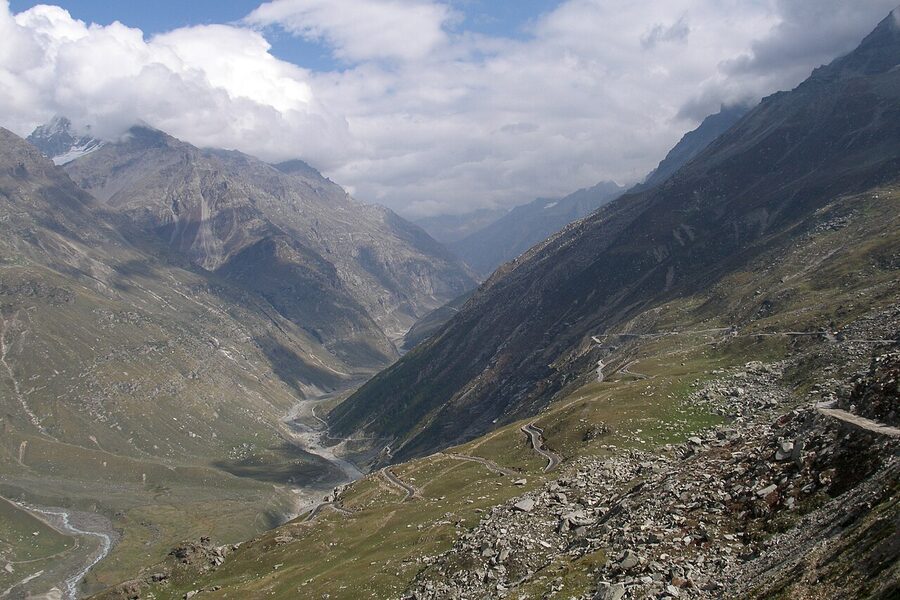
For the higher Himalaya, the road north over Rohtang Pass leads to Lahaul and Spiti. The Lahaul and Spiti region is harder to reach but produces some of the most striking landscape in the Indian Himalaya. The road is open from June to October most years and can close suddenly with early snow.
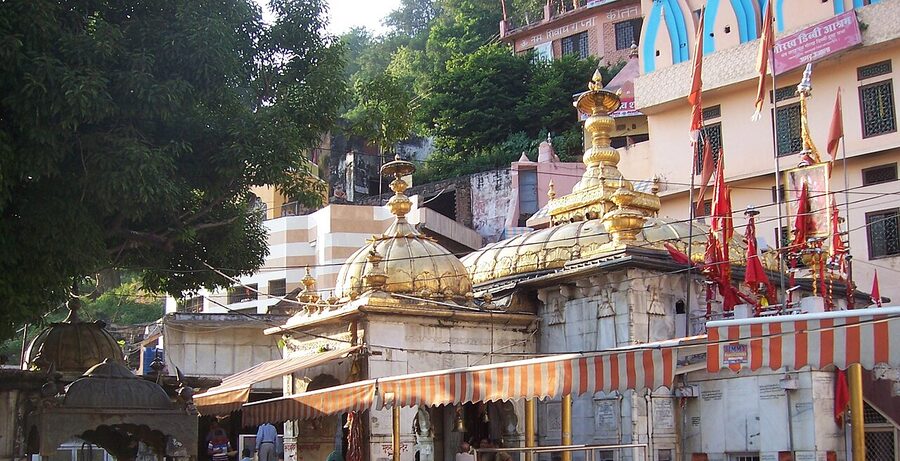
For other festivals, the broader fairs and festivals of Himachal calendar is dense, with the Minjar Fair at Chamba in late July, the Lavi Fair at Rampur in November, and smaller village melas almost every week of the year in some part of the state. For a more general orientation to the valley’s draws, the tourist attractions of Himachal overview covers the better-known sites; for a temple-focused itinerary, the Jwalamukhi Temple at Kangra is the most-visited Shakti pith in the state and pairs naturally with a Kullu Dussehra visit if you have the time.
If you’re planning the trip as a packaged itinerary, the Himachal tour packages rundown will give you a sense of what’s typically included. For couples, the honeymoon in Himachal guide focuses on the quieter properties around the Tirthan and Sangla valleys. For staying in the area more generally, the hotels in Himachal overview lists the better options across the major destinations, and the Where to Stay archive collects the more detailed property reviews. For festival-related context, the Festivals & Culture archive collects the cultural pieces; for outdoor planning, Things To Do is the activity index.
Practical Notes Before You Go
A short checklist for the week of the festival:
- Carry cash. Card acceptance at festival stalls is patchy and the Sultanpur ATM queues are not pleasant.
- Dress for cool October mornings and warm afternoons. Layers. A fleece works for the morning of the Rath Yatra; you won’t need it by the time the chariot starts moving.
- Sturdy shoes are non-negotiable. The maidan ground is uneven and gets muddy if there’s been rain.
- Photography is generally welcome but not at the moments of devta-king audience. Watch the kardars’ body language. If they ask you to step back, step back.
- The drums and trumpets are loud at close range. If you’re sensitive to volume, plan for some distance from the procession.
- Hydrate. Altitude isn’t extreme at Kullu but the dry October air dehydrates you faster than you’ll notice.
- If you’re pulling on the rath rope, take off rings and watches. The rope is rough, and pulling in a crowd of strangers is no place for jewellery.
- Buy your shawl on Day 4 or 5. Day 1 buyers pay the most; last-day buyers get the leftover stock. The middle of the week is the sweet spot.
- Don’t try to do the festival as a day trip from Manali if you can avoid it. The buses back at the end of Day One are full and the road can take twice as long as usual.
A festival that begins where most others end, in a valley that runs against the grain of the rest of the country in more ways than this one. If you’ve made the trip up from the plains, it’s worth giving it the full week, or at least the days that include the opening and the close. The valley is at its best in October. The festival pulls in everything that makes Kullu specific: the temple carvers, the village weavers, the moonlight dancers, the goors and the kardars, the visiting devtas with their drums, the chariot ropes worn smooth by a century of pulling. There’s nothing else like it in the Himalaya.
Sources
Festival dates, programme structure, and royal-family details cross-referenced from the official Kullu Dussehra portal (Himachal Pradesh state government), the Kullu district administration, and the Incredible India festival page. Origin story, devta-system terminology, and historical detail drawn from Shadab Hassan Khan’s Sahapedia essay on the festival, with cross-references to AFP Harcourt’s The Himalayan Districts of Kooloo, Lahoul and Spiti (1871) and Dr Hirananda Shastri’s Vanshawali. Animal-sacrifice ban dates from the 2014 Himachal Pradesh High Court ruling.