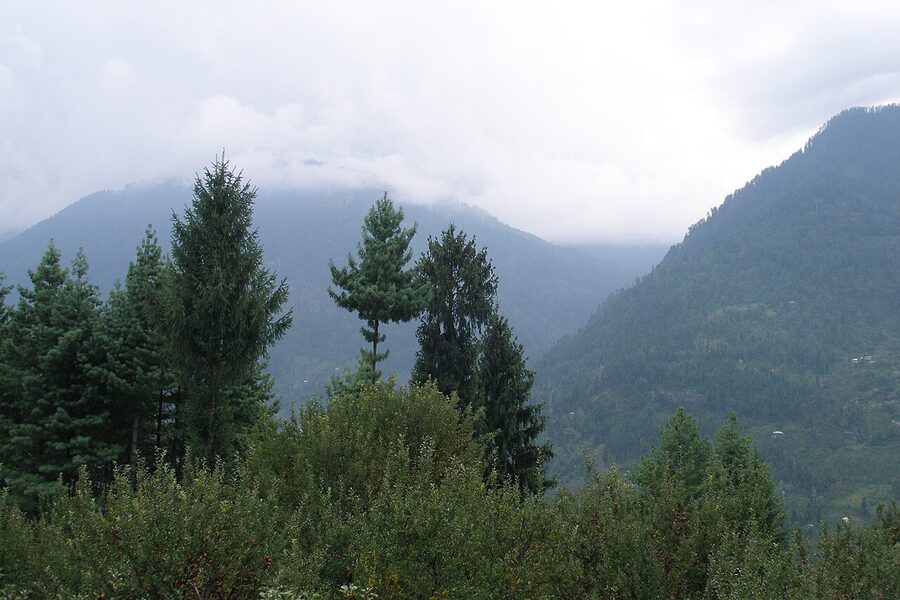
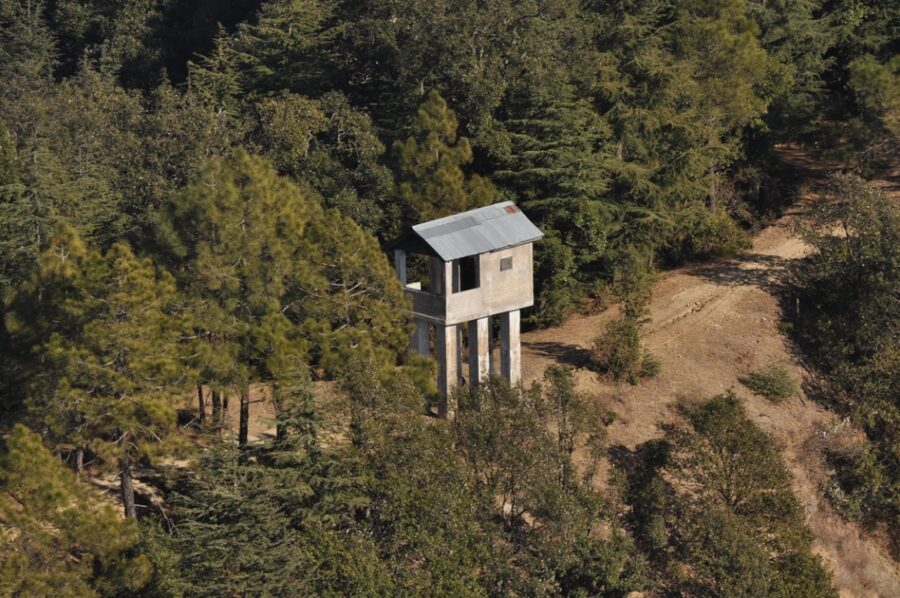
The short version of wildlife in Himachal Pradesh: the only routine sighting most visitors get is a snow leopard, and only in winter, and only above Kibber village in Spiti. Everywhere else in the state you’re looking at signs, calls, hoof prints, the occasional pheasant flushing through deodar, and the long odds of catching a goral or barking deer at the edge of a forest road. The thirty-two sanctuaries and five national parks contain genuinely rare species. The realistic chance of seeing them on a normal trip is small, and knowing that up front shapes the trip you should actually plan.
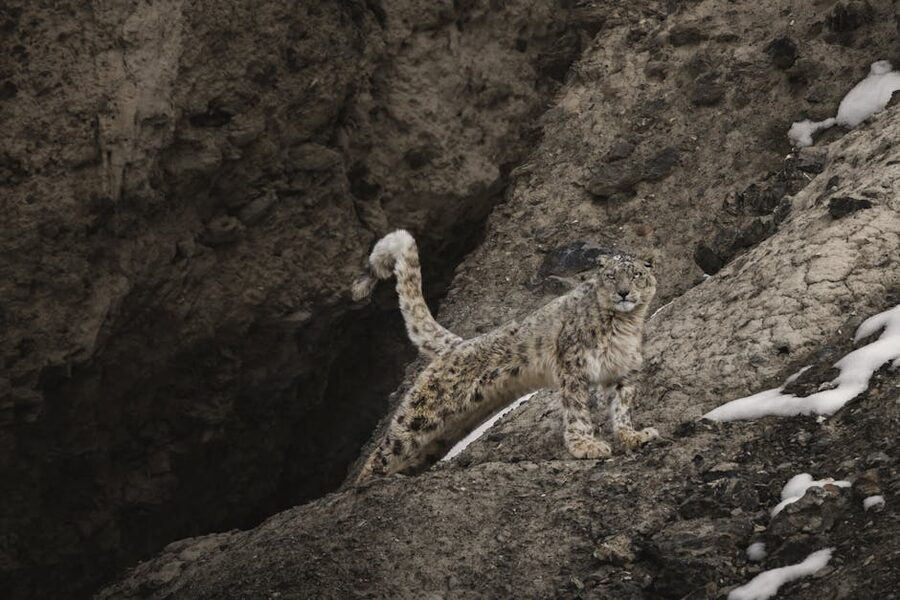
Himachal covers 55,673 square kilometres of the western Himalayas, roughly the area of Croatia. The protected area network covers about 11,000 of those, just under twenty percent of the state. By Indian standards that’s a large protection footprint.
The five national parks, thirty-two sanctuaries (originally thirty-three before Sainj was merged into the Great Himalayan National Park in 2010), and three conservation reserves between them protect a vertical column from the Shivalik foothills at 350 metres up to the high cold-desert ridges of Spiti above 6,000 metres. Inside that column live snow leopards, two species of Himalayan bear, the western tragopan (HP’s state bird), the Himalayan monal, the musk deer, and a thinly distributed population of leopards, deer, and goat-antelopes that move across elevation bands with the seasons.
This guide is the index article for the protected area system. It covers what’s actually inside each major park, which species live where, where you have any realistic chance of seeing them, and how to fit a wildlife-focused day or week into the standard Himachal trip. Where we have a deep-dive elsewhere on the site, we link down to it rather than repeat the detail.
In This Article
- The Protected Area System at a Glance
- The Great Himalayan National Park
- Pin Valley National Park
- Kibber Wildlife Sanctuary
- The Snow Leopard
- The Himalayan Brown Bear
- The Pheasants: Monal, Tragopan, Koklass, Cheer
- The Musk Deer, the Tahr, the Ibex, and the Bharal
- The Tibetan Wolf and the Other Carnivores
- The Other Sanctuaries Worth Knowing About
- Tirthan Wildlife Sanctuary
- Daranghati Wildlife Sanctuary
- Manali Wildlife Sanctuary
- Chail Wildlife Sanctuary
- Maharana Pratap Sagar (Pong Dam)
- Khirganga, Inderkilla, and Simbalbara
- The Lake and Cold-Desert Conservation Reserves
- What You’ll Realistically See
- How to Plan a Wildlife-Focused Trip
- Pick the Right Season
- Get the Permits Right
- Hire Local Guides
- Stay Realistic About Sightings
- Booking and Onward Reading
The Protected Area System at a Glance
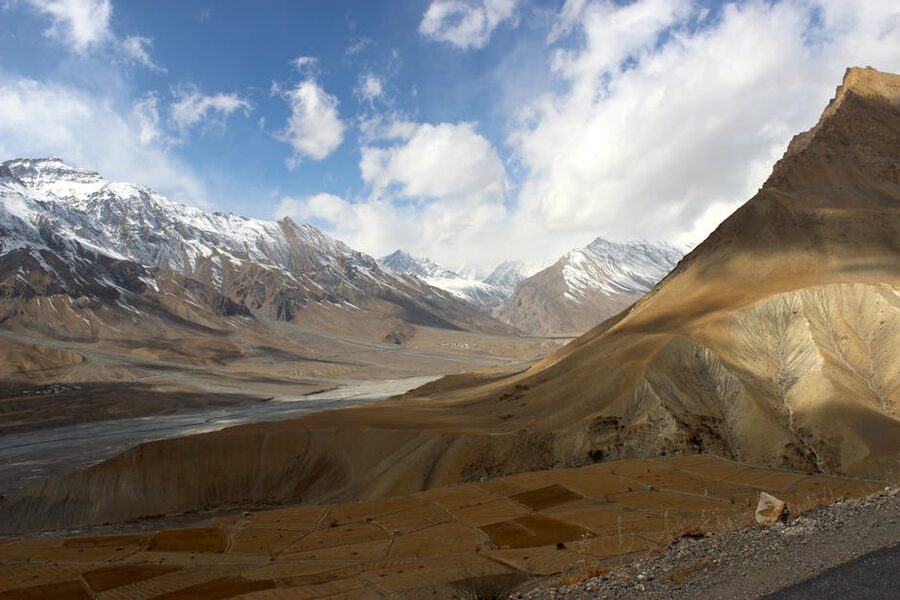
Himachal’s protected areas split cleanly into three groups. First, the high-altitude alpine and cold-desert reserves of Spiti and the upper trans-Himalaya. This is where the snow leopard, Siberian ibex, blue sheep (bharal), Tibetan wolf, and Himalayan brown bear actually live in viable numbers. Pin Valley National Park, the Kibber Wildlife Sanctuary, the Chandra Taal Conservation Reserve, and the smaller sanctuaries of Lippa-Asrang and Kanawar fall in this group; the Lahaul and Spiti guide covers road access for the whole cluster.
Second, the mid-elevation temperate forest reserves of Kullu, Kangra, and the upper Sutlej. The Great Himalayan National Park is the centrepiece, UNESCO-listed in 2014; the Tirthan and Sainj sanctuaries buffer it, and the newer Khirganga and Inderkilla national parks plus the Manali, Kanawar, and Daranghati sanctuaries extend the band. This is where the monal, the western tragopan, the musk deer, and the Himalayan black bear are most concentrated. Most visitors approach this cluster from the Kullu Valley or the Tirthan Valley.
Third, the low-elevation Shivalik and lake reserves of the southern districts. Simbalbara National Park sits in sal forest at under 1,000 metres. The Maharana Pratap Sagar (Pong Dam) wildlife sanctuary, near Dharamshala, holds the single largest concentration of overwintering waterfowl in north India.
The list below covers the parks and the most ecologically significant sanctuaries; the Forest Department’s full catalogue runs longer.
| Protected area | Type | District | Area (km²) | Established | Headline species |
|---|---|---|---|---|---|
| Great Himalayan | National Park | Kullu | 1,171 | 1984 | Snow leopard, brown bear, monal, tragopan |
| Pin Valley | National Park | Lahaul & Spiti, Kinnaur | 675 | 1987 | Snow leopard, ibex, blue sheep, red fox |
| Khirganga | National Park | Kullu | 710 | 2010 | Black bear, snow leopard, tahr, musk deer |
| Inderkilla | National Park | Kullu | 104 | 2010 | Brown and black bear, leopard, tahr |
| Simbalbara | National Park | Sirmaur | 27.88 | 1958 (NP 2010) | Goral, sambar, chital, leopard |
| Kibber | Sanctuary | Lahaul & Spiti | 2,220 | 1992 | Snow leopard, ibex, bharal, Tibetan wolf |
| Maharana Pratap Sagar (Pong Dam) | Sanctuary | Kangra | 307 | 1983 | Bar-headed goose, ruddy shelduck, 220+ bird species |
| Tirthan | Sanctuary | Kullu | 61.12 | 1992 | Snow leopard, musk deer, brown bear, tahr |
| Daranghati | Sanctuary | Shimla | 167 | 1962 | Tragopan, monal, koklass, musk deer |
| Manali | Sanctuary | Kullu | 31.8 | 1954 | Black bear, leopard, monal, koklass |
| Chail | Sanctuary | Solan / Sirmaur | 110 | 1976 | Cheer pheasant, sambar, ghoral, leopard |
| Kalatop-Khajjiar | Sanctuary | Chamba | 30.69 | 1949 | Black bear, serow, deer, jackal |
| Sechu Tuan Nala | Sanctuary | Chamba | 655 | 1962 | Snow leopard, brown bear, ibex |
| Kanawar | Sanctuary | Kullu | 61.57 | 1954 | Tahr, snow leopard, brown bear, marten |
Two practical notes before going further. The line between national park and wildlife sanctuary in Indian law is administrative, not biological. The protection status is similar; the park has slightly stricter use rules, and both fall under the Wildlife Protection Act of 1972.
The other thing to know: most of these areas don’t have visitor infrastructure in the way Indian tiger reserves do. There are no jeep safaris, no fixed game-drive routes, no luxury lodges inside park boundaries. You walk, you camp at sanctioned spots with permits, and you do not pet the bears.
The Great Himalayan National Park
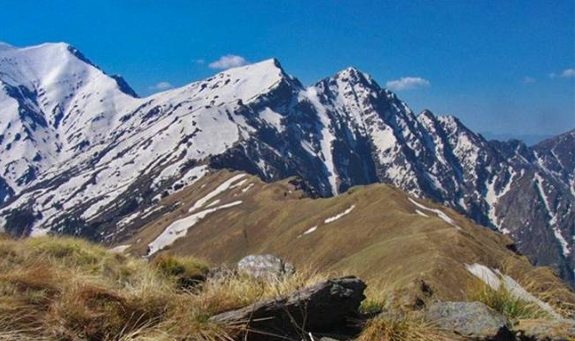
The Great Himalayan National Park (GHNP) is the centrepiece of Himachal’s wildlife protection. Established in 1984, expanded with the merger of the Sainj and Tirthan sanctuaries to bring the contiguous protected area to 1,171 square kilometres, and inscribed on the UNESCO World Heritage list in 2014. It is the only Himalayan national park between Kashmir’s Hemis and Uttarakhand’s Nanda Devi to hold full World Heritage status.
The park covers the entire upper catchment of three west-bank tributaries of the Beas: the Sainj, the Tirthan, and the Jiwa nala. Valley floors at around 1,500 metres climb to ridge crests above 6,000 metres. That’s over 4,500 vertical metres compressed into a horizontal distance of barely fifty kilometres, and the compression is what makes it biologically distinctive. Every Himalayan habitat band, from subtropical chir pine through temperate oak and deodar through birch and rhododendron into alpine pasture and snow, sits inside a single contiguous reserve.
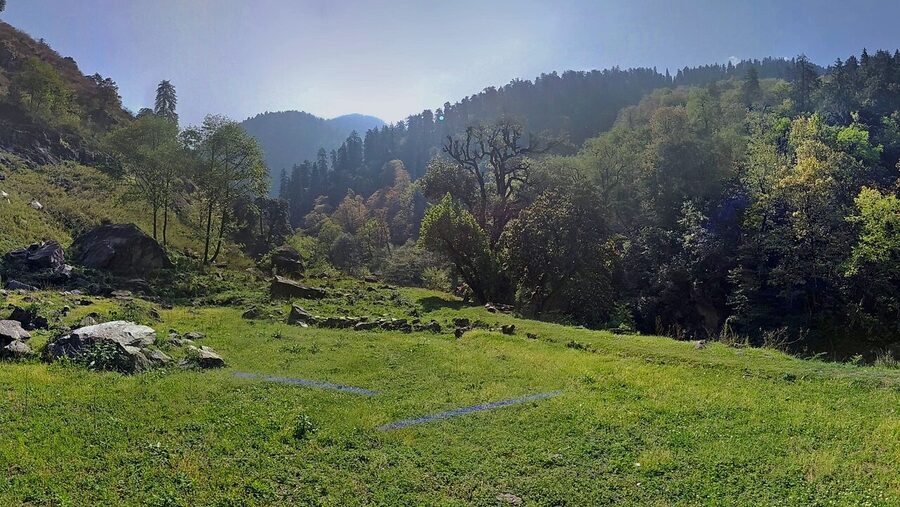
The park’s wildlife inventory runs to over 375 faunal species, including 31 mammals and 181 birds. The headline mammals are the snow leopard (a small but resident population in the upper Tirthan and Sainj catchments), the Himalayan brown bear, the Himalayan tahr, the bharal, the musk deer, the Himalayan black bear at lower elevations, and the Indian leopard in the lower oak forest.
The headline birds are the western tragopan (this is one of the better global sites for the species), the Himalayan monal (common between 2,800 and 4,000 metres), the koklass pheasant (audible at dawn in the deodar belt), the cheer pheasant, and the Himalayan snowcock above the treeline.
You will not see most of these on a casual visit. The park isn’t set up for drive-by viewing. The standard way visitors experience GHNP is through one of the multi-day treks the Forest Department permits from the Sai Ropa office near Banjar, on the Tirthan side.
The most popular routes are the Tirthan Valley trek to the Tirath meadow (3-4 days, easy gradient), the Sainj Valley trek to the Shakti and Maraur villages and on into the high pasture (5-7 days, moderate to hard), and the longer Pin-Parvati pass crossing that exits north into Spiti via the Pin Valley National Park (10 days, expedition-grade, snow-line camps). On any of these you’ll see monal, langur troops, possibly bharal in the upper sections, and the bird life of the temperate forest band. Snow leopard and bear sightings are vanishingly rare; what you’ll get is the topography they live in, which on a clear morning is reward enough.
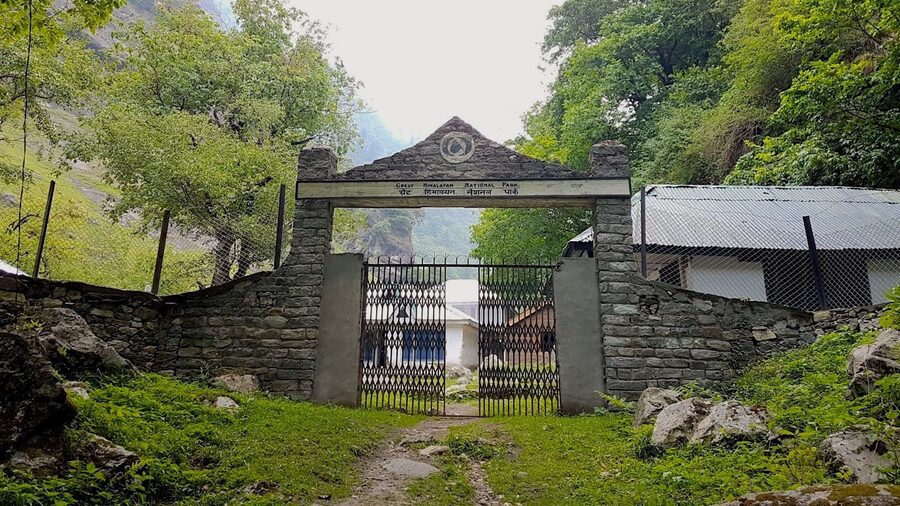
The administrative headquarters is at Shamshi in the Kullu Valley, on the Manali-Kullu road. The field office that issues trekking permits is at Sai Ropa, about 60 kilometres south of Manali on the road into the Tirthan Valley. Permits are nominal: ~₹50 per day (~$0.60) for Indians, ~₹200 per day (~$2.40) for foreign nationals, with guide and porter fees extra and broadly fixed by the local cooperatives.
The cooperatives are drawn mostly from the buffer villages of Sai Ropa, Gushaini, Ropa, Shakti, and Maraur, and permit-related work has become one of the better park-edge livelihood programmes in the Indian Himalayas. The official park site, greathimalayannationalpark.org, carries current forms and fees. For broader destination context, see the tourist attractions of Himachal guide.
Pin Valley National Park
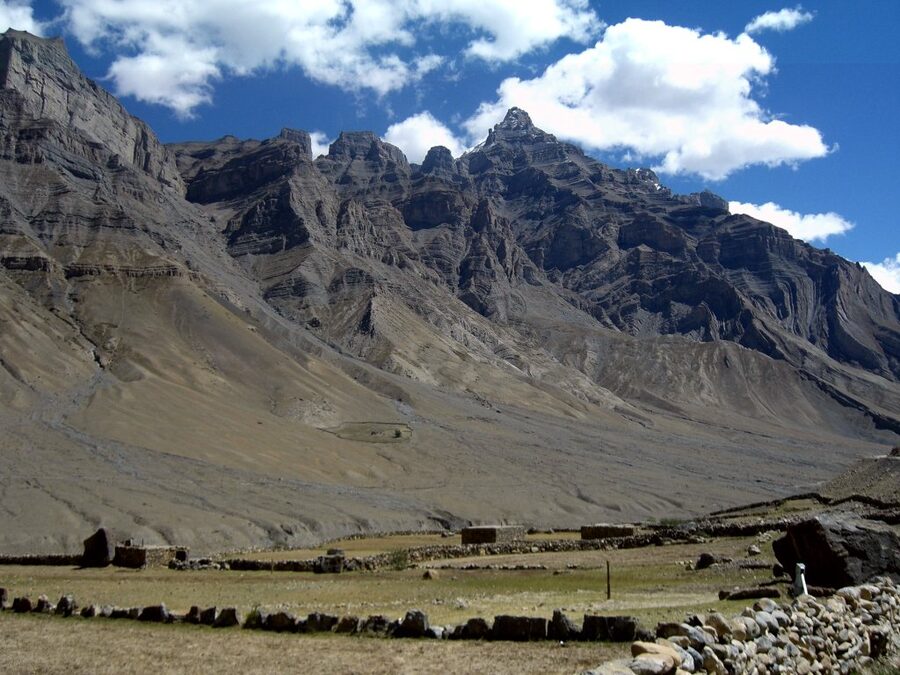
If GHNP is the forested centrepiece, Pin Valley is the cold-desert counterpoint. Established in 1987, the park covers 675 square kilometres straddling Lahaul-Spiti and the upper reaches of Kinnaur, with elevations from about 3,500 metres up to over 6,000. This is true high-altitude trans-Himalaya: barely any vegetation, total annual precipitation under 200 mm, sub-zero temperatures from October through April.
The park is home to a small but viable population of snow leopards, Siberian ibex, blue sheep, red foxes, weasels, and pine martens. The bird life includes Himalayan snowcock, chukar partridge, snow partridge, golden eagle, and lammergeier. Twenty-two rare and endangered medicinal plant species have been documented across the park’s habitat types, including the kutki and atis used in traditional Tibetan medicine.
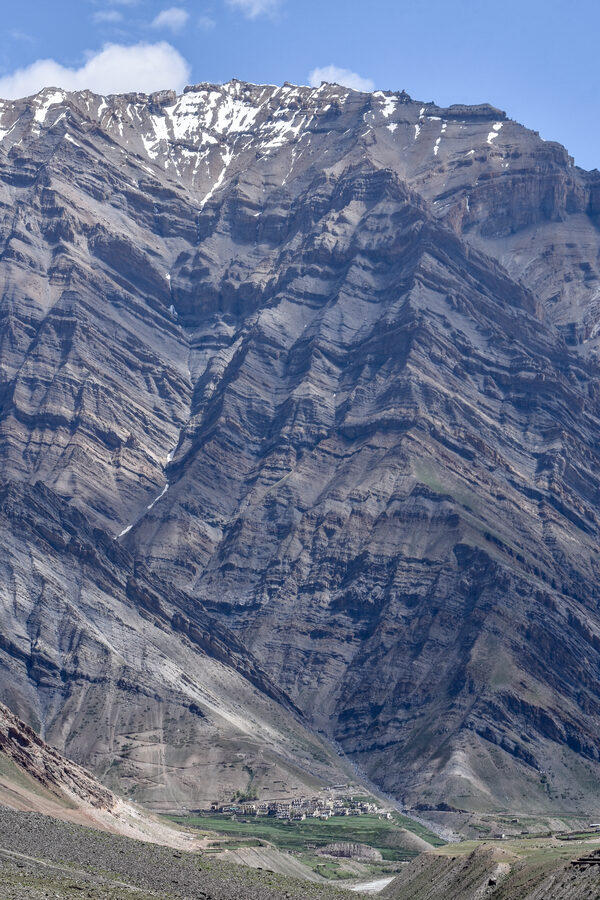
The way most visitors see Pin Valley is on a day-trip drive from Kaza. The road runs south from Kaza, crosses the Spiti river at Attargo, and follows the Pin tributary up to Mudh village at around 3,800 metres. Mudh is the road-end and the start of the high-pass treks (Pin-Parvati to Kullu, Pin-Bhabha to Kinnaur).
The drive itself takes about three hours each way and goes through the Buddhist village monasteries of Gulling, Kungri (one of Spiti’s oldest, founded in the early 14th century), Sangam, and Sagnam. You’ll see ibex tracks on the road embankment in winter, occasional bharal herds across the river, and resident corvids and choughs everywhere. Casual snow leopard sightings are essentially nil; the cats hold the higher cliffs and move at dawn and dusk. The serious wildlife viewing in the cold-desert reserves is in the next sanctuary north, Kibber.
Kibber Wildlife Sanctuary
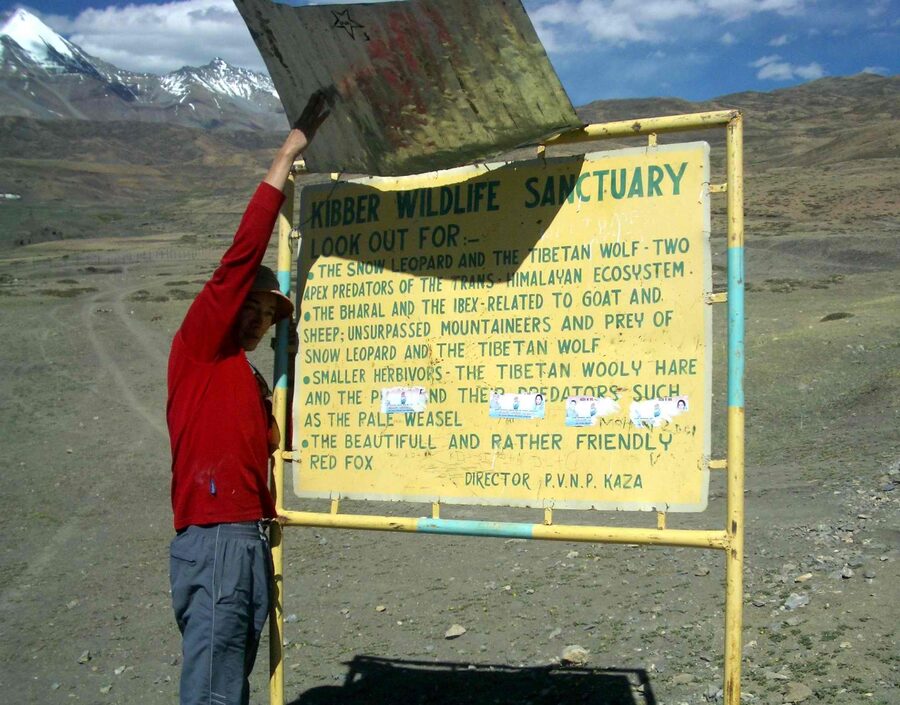
Kibber Wildlife Sanctuary is the protected area most readers come to this article looking for, even if they don’t know its name yet. It is the headquarters of snow leopard tourism in India.
2,220 square kilometres of cold desert at elevations between 3,800 and 6,000 metres, gazetted in 1992, with Kibber village (population around 380) sitting at 4,200 metres at its centre. This is the place where the chance of actually seeing a wild snow leopard is, by Himalayan standards, surprisingly good. A 2018 estimate put the resident sanctuary population at around 30 individuals; the 2024 nationwide Snow Leopard Population Assessment coordinated by the Wildlife Institute of India put the whole HP population at 51 adults, with a 2025 update revising that to roughly 83 to 86. A meaningful share of those animals live in and around Kibber.
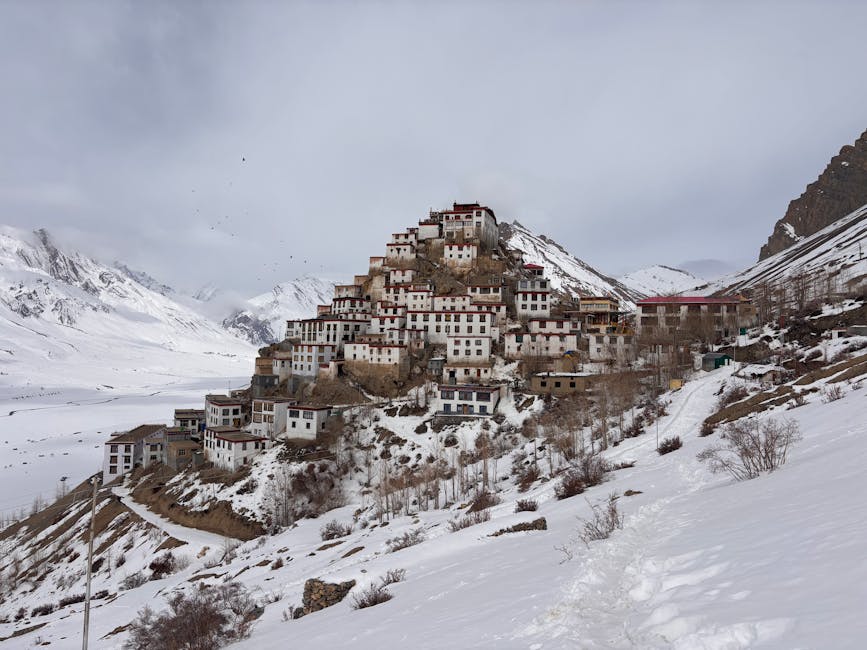
The reason Kibber works for sightings comes down to terrain and prey biology. The cliffs immediately above the village hold a high concentration of blue sheep (bharal), the snow leopard’s principal prey across its range. Snow drives the bharal down to lower scree slopes in winter, the leopards follow the bharal, and the cliffs above the village are exposed enough that careful spotting from village rooftops or established camera-trap ridges produces sightings.
Reputable Indian wildlife outfits run organised tracking trips from late January through mid-March, typically 7 to 10 day itineraries with local trackers, spotting scopes, and full-board accommodation in Kibber and Komik village homestays. Costs at the time of writing run from around ₹70,000 to ₹1,35,000 per person for the standard 10-day expedition (~$840 to $1,620), with international wildlife photography operators charging higher (₹1.5 lakh and up). The hit rate on a 7 to 10 day trip with a competent local team runs around 60 to 70 percent, weather-dependent. Casual day trips don’t see snow leopards; you need the days, the trackers, and the patience.
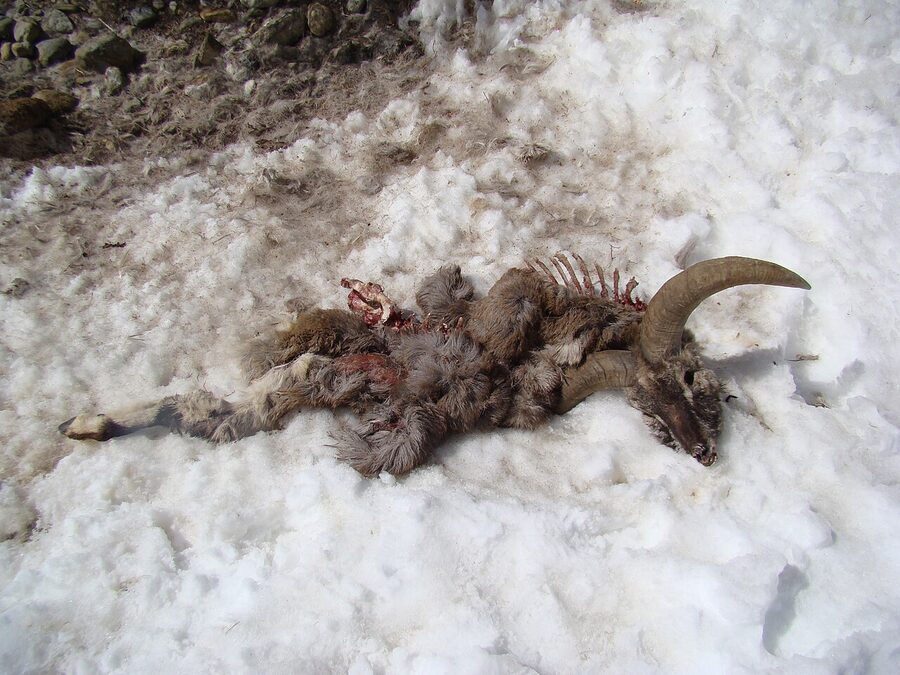
The Kibber model is also a quietly important conservation story. Until the late 1990s the dominant relationship between Kibber’s villagers and the snow leopards was conflict: livestock kills, retaliatory poisoning, and steadily declining wild prey as bharal were hunted for meat.
The Nature Conservation Foundation, working with the Forest Department and the Snow Leopard Trust, set up India’s first community-managed livestock insurance scheme in Kibber in 2002 and negotiated a community-managed reserve where bharal numbers were allowed to recover. Bharal populations have grown substantially since, retaliatory leopard killings have effectively stopped, and the model has spread to four village clusters across Spiti and Ladakh. It’s one of the most-cited human-wildlife coexistence success stories in Indian conservation. The Snow Leopard Trust publishes annual updates on the Kibber programme.
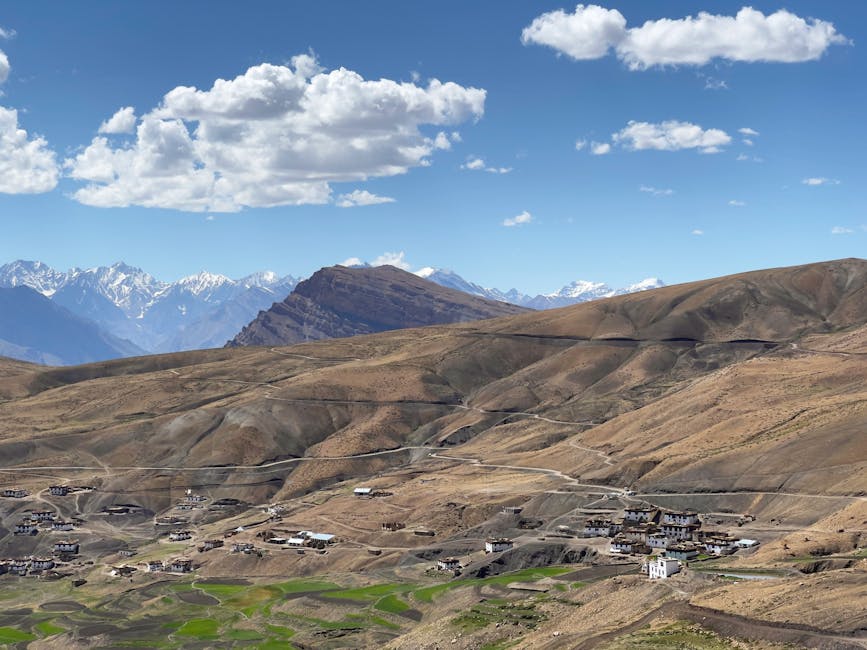
Outside the winter tracking season, Kibber is still worth a visit. The bharal are still there (without snow they’re harder to see, but they’re there), the Siberian ibex come down to the salt licks in early summer, and the Tibetan wolf, a different and more elusive animal than the Indian wolf, is occasionally seen from the road between Kaza and Kibber. The drive up from Kaza is about an hour, the village has homestays in the ₹1,500 to ₹3,500 per night range (~$18 to $42), and a permit isn’t required for casual day visits.
The Snow Leopard
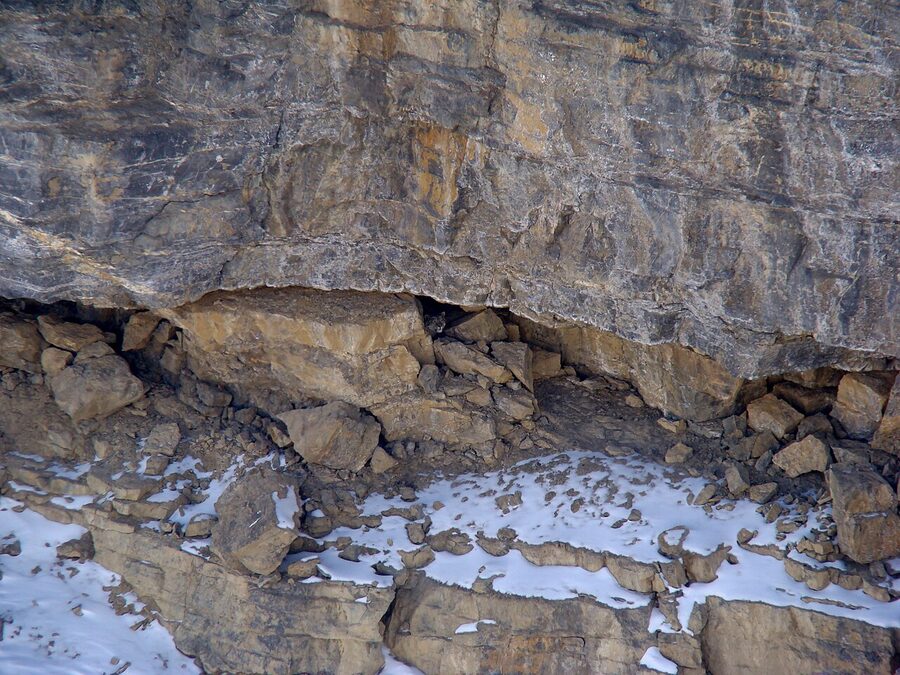
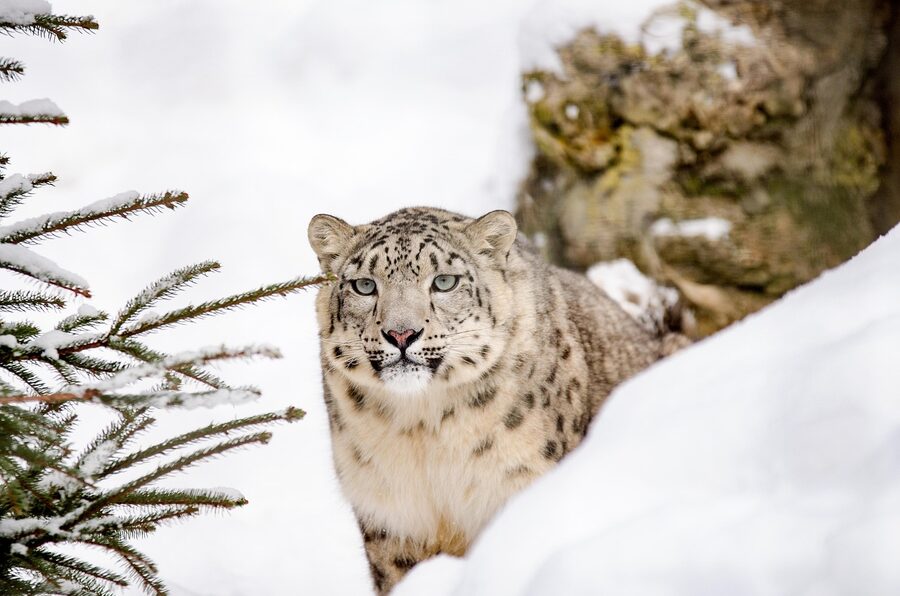
Some species deserve a deeper note than the protected-area paragraphs allow, starting with the snow leopard (Panthera uncia). Listed as Vulnerable on the IUCN Red List, with a global population estimated between 4,000 and 6,500 mature animals across twelve range states. India’s 2024 baseline survey put the country population at 718 individuals, with Ladakh holding the largest concentration (380 to 598 animals) and smaller populations in Uttarakhand, Sikkim, Arunachal Pradesh, and Himachal. The HP estimate for 2024-25 sits in the 51 to 86 range, distributed across Spiti, Lahaul, Kinnaur, the upper Kullu, and the Pangi valley of Chamba.
Home ranges are large. Males typically hold 144 to 270 square kilometres; females 83 to 165, with under 20 percent territorial overlap between adjacent individuals. This is what makes them so hard to see. A single cat is hunting an area larger than most Indian wildlife sanctuaries.
The whitish-grey coat with dark rosettes is precise camouflage for cliff terrain; you can be looking directly at one and not see it. Camera trap data from the Kibber programme records cats in and around the sanctuary across all twelve months, but visual sightings concentrate between mid-January and mid-March, when snow drives the bharal down and prey activity stacks up in the lower cliffs above settled villages.
What this means in practice: go to Kibber in February with a multi-day organised tracking trip and your chance is around two in three. Visit any other protected area in HP at any other time of year and your chance is, for practical purposes, zero. There are persistent rumours of snow leopards in the upper Tirthan, the Pin-Parvati pass, the Sechu Tuan Nala in Pangi, and occasionally above Manali, and the rumours are mostly true. These are real but very sparse populations, and sightings outside Kibber in winter are documented in single digits per year across the entire state.
The Himalayan Brown Bear
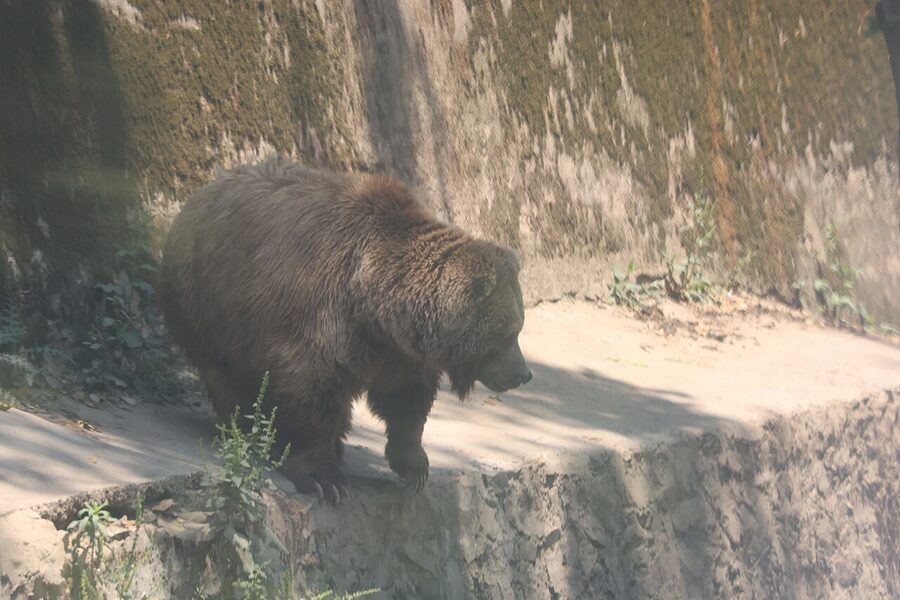
The Himalayan brown bear (Ursus arctos isabellinus) is the high-altitude bear of the western Himalayas. The Indian population is small and threatened, concentrated in Ladakh, Kashmir, and the upper reaches of Himachal. Inside HP, breeding populations are documented in GHNP, Pin Valley, the Kibber sanctuary, the Sechu Tuan Nala in Pangi, and the upper Tirthan.
Adult males weigh 130 to 250 kilograms, females 85 to 175. They emerge from winter dens in May, feed through the short alpine summer on roots, marmots, carrion, and any livestock they can take from the high pasture, and re-den by November. Sightings on standard treks are rare but not impossible; GHNP rangers record visual encounters most summers in the upper Sainj and Tirthan catchments.
The other bear is the Himalayan black bear (Ursus thibetanus laniger), much more common across the state at lower elevations. Black bears live across the entire mid-altitude oak and deodar belt, through most of Kullu and Kangra and the lower elevations of the Manali sanctuary, the Khirganga, Inderkilla, and Khokhan reserves, the Chail and Kalatop sanctuaries, and on into Chamba.
They raid apple and walnut orchards in autumn and account for the bulk of bear-human conflict in the state. The Forest Department posts seasonal warnings in affected areas; take them seriously. Black bears are aggressive when surprised, especially with cubs, and several maulings are recorded across HP every year. If you’re walking the lower forest belt in September or October, make noise.
The Pheasants: Monal, Tragopan, Koklass, Cheer
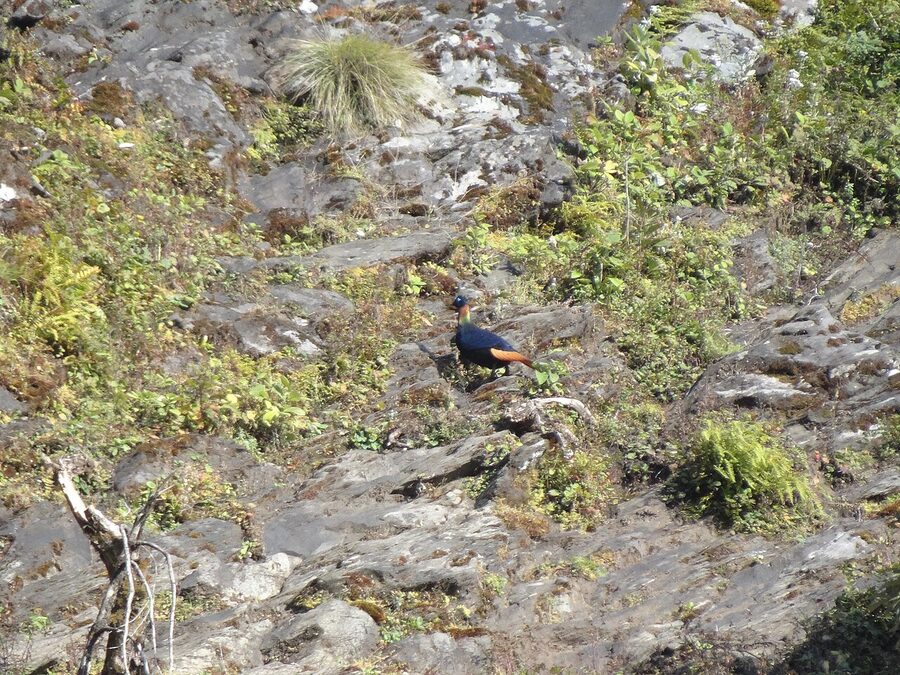
The Himalayan pheasants are what the patient walker actually gets to see. Four species matter for HP, in order of how likely you are to encounter them.
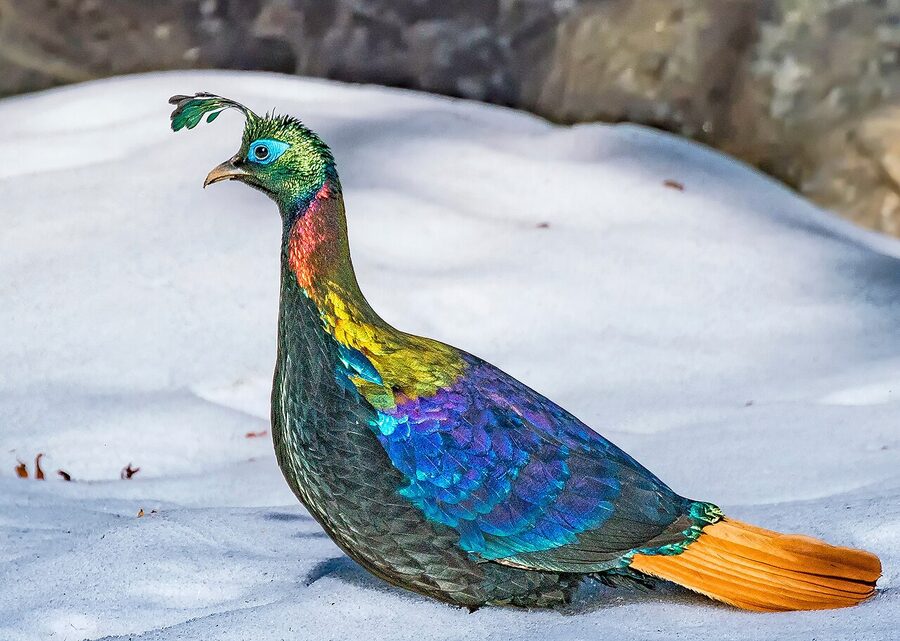
The Himalayan monal (Lophophorus impejanus) is the most realistic. Roughly chicken-sized, with the male carrying an iridescent green-blue head crest, copper-orange back, and rainbow-iridescent wings that flash in flight. The monal lives across the upper temperate forest belt and alpine grassland between 2,400 and 4,500 metres. It is the state bird of HP (and of Uttarakhand, and the national bird of Nepal where it’s called the danphe).
Best seen at dawn and late afternoon between October and April, when the birds drop down to lower elevations to feed on south-facing slopes. Reliable spots include the upper trails of the Manali Wildlife Sanctuary, the Sai Ropa to Tirath route in GHNP, the meadows above Khajjiar in the Kalatop sanctuary, and the high pastures of Daranghati. eBird hotspot data shows sightings across most months of the year, with peak observations between November and March.
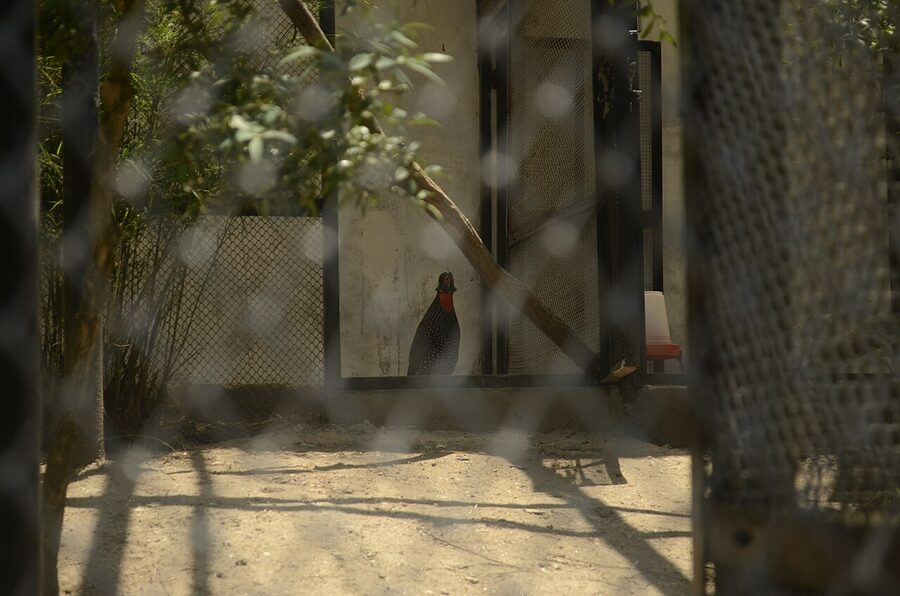
The western tragopan (Tragopan melanocephalus) is the prize, and it is genuinely rare. The global population is estimated at fewer than 5,000 birds, distributed thinly across the western Himalayas from Khyber Pakhtunkhwa east to Uttarakhand, with strongholds in Kishtwar, Chamba, and Kullu in HP. The species was given state-bird status in HP in 2007 specifically to raise its conservation profile.
The males are spectacular: a black head with red wattles and lappets, a body of black ground colour studded with white pearl spots ringed in chestnut. The bird is shy, prefers undisturbed dense oak-conifer forest at 2,400 to 3,600 metres, and is mostly heard rather than seen. The call is a low growling moan at dawn that carries through the forest.
The Sarahan Pheasantry, in Rampur tehsil of Shimla district, runs the captive breeding programme that began in 1993. The captive population now stands at over 40 individuals, with 2024-25 recorded as the strongest hatching season since the programme started, and experimental wild releases in GHNP and Daranghati Sanctuary have been actively discussed for 2026 to 2028. The wild stronghold inside HP is the Daranghati Sanctuary near Rampur. Camera trap data from GHNP confirms wild populations in the upper Sainj and Tirthan catchments.
The koklass pheasant (Pucrasia macrolopha) is smaller and more cryptically patterned than the monal, with a dark mottled body and a thin pointed crest. It prefers dense oak and conifer forest at middle elevations, and is much more often heard than seen. The call is a loud crowing two-note that carries at dawn.
The cheer pheasant (Catreus wallichii) is a long-tailed pheasant of grassland and open scrub at 1,500 to 3,000 metres, increasingly rare due to habitat loss and hunting. The most reliable HP populations are in the Chail Wildlife Sanctuary (a captive-breeding-and-release programme has been running there since 1988) and on the open south-facing slopes of Kalatop. If you’re a dedicated birder, the cheer is the one to dedicate the trip to.
The Musk Deer, the Tahr, the Ibex, and the Bharal
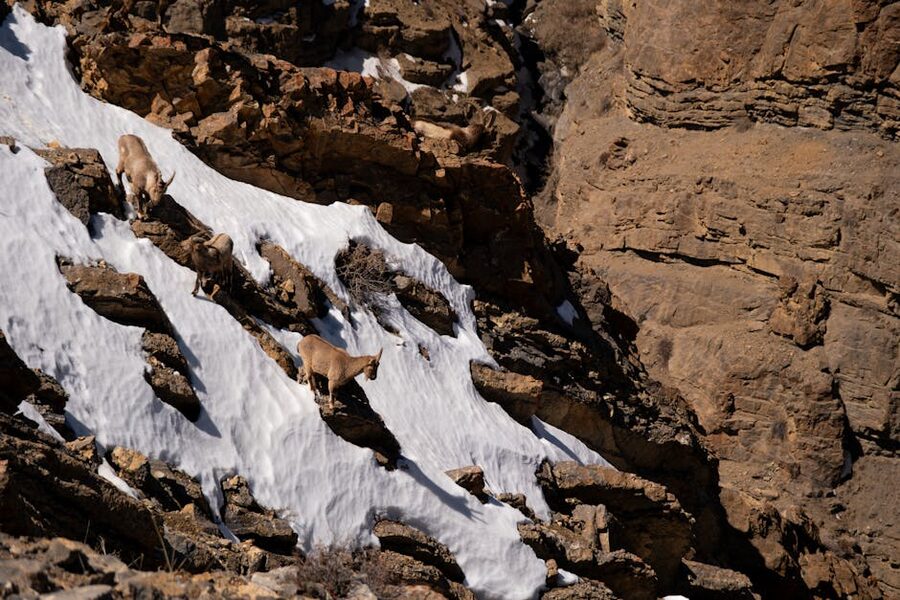
The high-country grazers are the wildlife you have a realistic chance of seeing without a specialist tracking trip. The Siberian ibex (Capra sibirica) lives across the trans-Himalayan reserves of Spiti and Kinnaur, with the strongest populations in Pin Valley, Kibber, and Lippa-Asrang.
Mature males carry the long curved scimitar horns that are this species’ signature; herds of females and young graze openly on the rocky slopes above 3,500 metres, often within view of the Kaza-Kibber and Kaza-Mudh roads. June and July, when the herds drop to lower elevations to graze the new alpine grass, are the easiest months for sightings. A short drive up the Komik or Langza road from Kaza in summer should produce at least one ibex group with a spotting scope or even good binoculars.
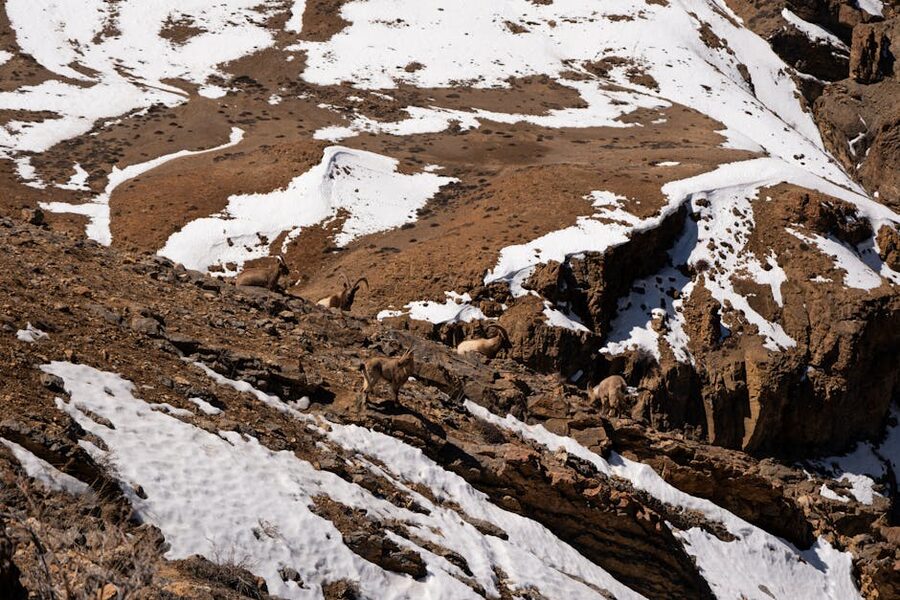
The Himalayan blue sheep, or bharal (Pseudois nayaur), looks like an intermediate between a sheep and a goat, with short curved horns in both sexes, a slate-grey coat with black flank stripes, and a marked preference for cliff habitat that keeps it safer from leopards and wolves. It’s common across the trans-Himalayan reserves: Pin Valley, Kibber, Sechu Tuan Nala. Numbers in Kibber are critical to the snow leopard population there; long-term monitoring shows the bharal population has tripled since the community-managed reserve was established in the early 2000s.
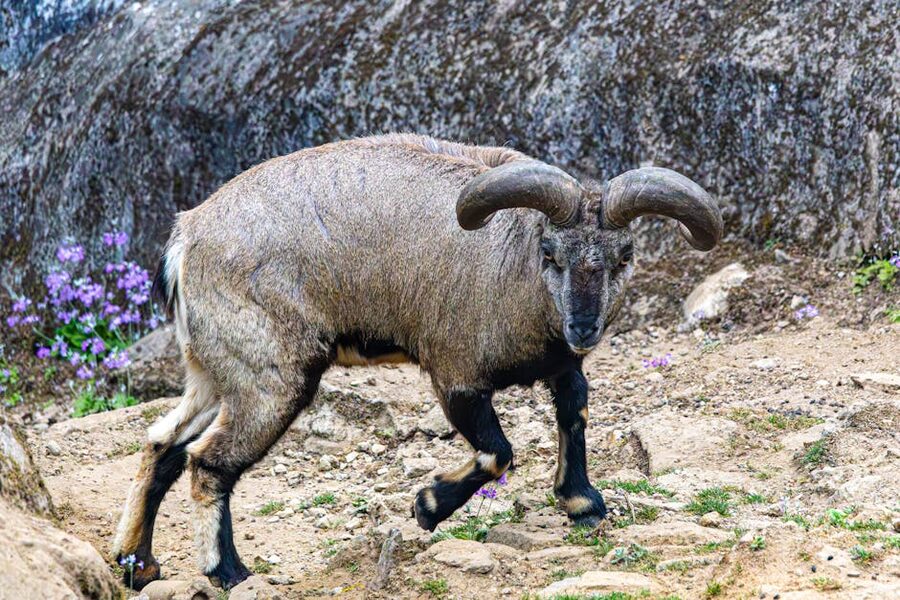
The Himalayan tahr (Hemitragus jemlahicus) is a large goat-antelope of the temperate forest and lower alpine zones, primarily on the southern slopes of the western Himalayas. In HP, populations are concentrated in Khirganga National Park (especially the upper Parvati catchment), the Tirthan and Sainj sanctuaries that feed into GHNP, the Kanawar sanctuary in Kullu, and the Manali Wildlife Sanctuary. Tahr are shyer and harder to see than ibex; you’re more likely to find their droppings and patches of grazed grass on a steep slope than the animals themselves.
The Himalayan musk deer (Moschus leucogaster) is the smallest and shyest of the deer family in the state, found in dense oak and birch forest between 2,400 and 4,200 metres across most of the temperate-zone reserves: Manali, Kanawar, Khirganga, GHNP, Daranghati. The musk gland of the male was the species’ historical curse; commercial musk poaching in the 1970s and 80s reduced populations across the entire western Himalayas. The species is now listed under Schedule I of the Wildlife Protection Act, but recovery is slow. Casual sighting on a day walk is essentially nil; even ranger camera traps from GHNP record the species in single digits per camera per year.
The Tibetan Wolf and the Other Carnivores
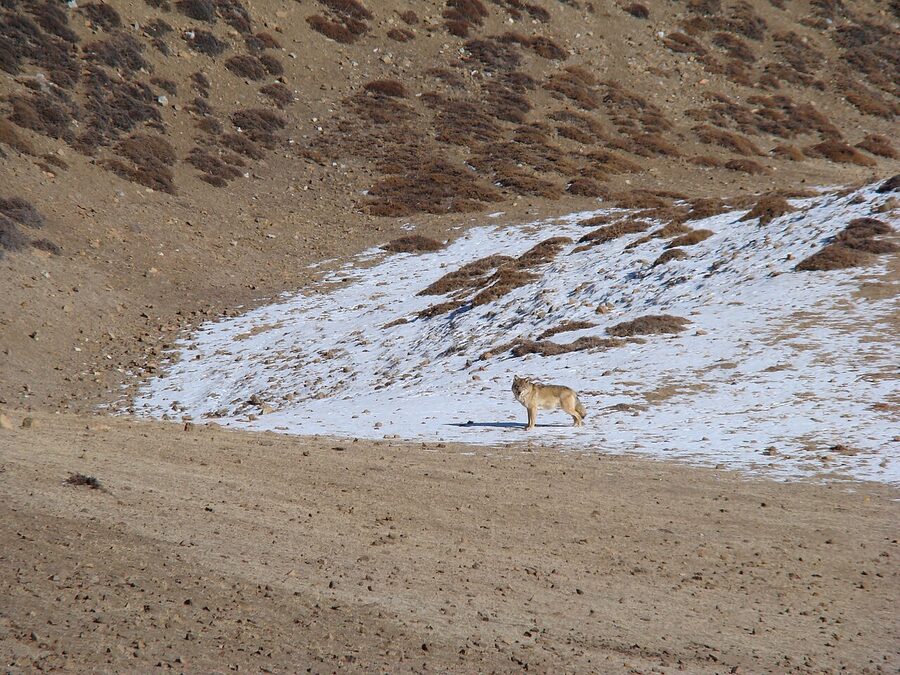
The Tibetan wolf (Canis lupus chanco) is the high-altitude wolf of the trans-Himalayas, occupying the same Spiti country as the snow leopard but with a different ecology: group hunting on the open alpine plateau rather than ambush from cliffs. Population estimates in HP are imprecise but suggest two to three dozen breeding pairs across upper Spiti and Kinnaur. They’re occasionally seen from the Kaza-Tabo and Kaza-Kibber roads in winter, more often heard at dusk, and remain a low-grade source of livestock conflict in Kibber and Komik villages. The Indian wolf (Canis lupus pallipes) is the lower-elevation cousin, present in small numbers in the Shivalik foothills but rarely encountered.
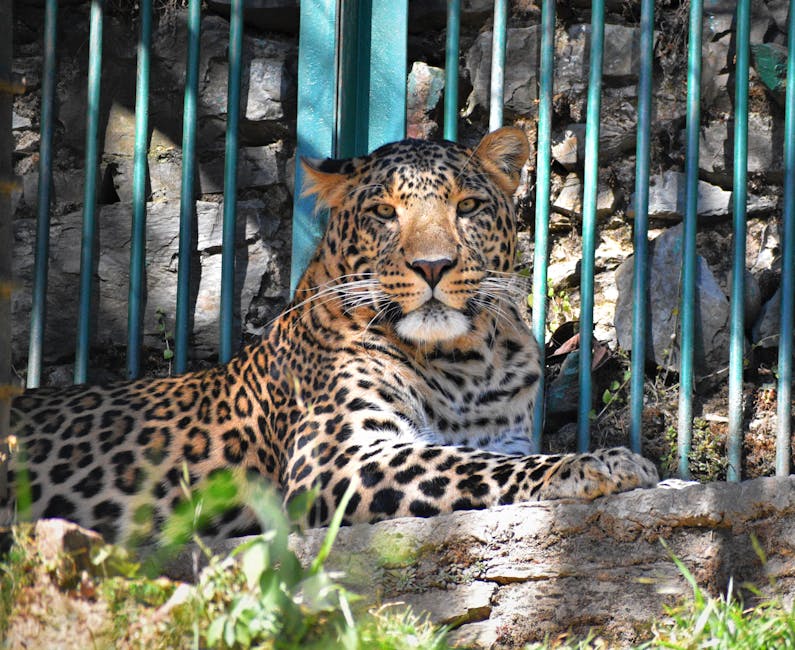
The Indian leopard (Panthera pardus fusca) is the most widely distributed large carnivore in the state. It occupies the entire mid-elevation forest belt from the Shivaliks at 350 metres up to upper oak forests around 3,000 metres, with concentrations in every protected area listed above except the highest cold-desert reserves. Populations aren’t formally counted in most HP sanctuaries, but the leopard is the most common large cat in the state by an order of magnitude.
They take livestock from village settlements, occasionally fatally injure humans (most attacks are on small children at dusk), and are the carnivore the Forest Department actually loses sleep over. You will probably not see one: they’re nocturnal, secretive, and cover large home ranges, with a single male holding 50 to 80 square kilometres of forest. The Chail sanctuary, the lower Manali sanctuary, the buffer of GHNP, and the Daranghati sanctuary all hold resident leopards; sightings are documented but uncommon.
Smaller carnivores worth knowing about: the Himalayan yellow-throated marten (a striking mustelid often seen hunting in the trees of the deodar belt), the Himalayan palm civet, the red fox (common in upper Spiti and Kinnaur), the Tibetan sand fox (rarer, restricted to the highest cold-desert), the stone marten, the Pallas’s cat (very rarely sighted in upper Spiti), and the Indian crested porcupine in the lower forests.
The Other Sanctuaries Worth Knowing About
Beyond GHNP, Pin Valley, and Kibber, several sanctuaries deserve a paragraph for travellers planning a wildlife-themed trip.
Tirthan Wildlife Sanctuary
Tirthan covers 61.12 square kilometres on the eastern boundary of GHNP, between roughly 1,800 and 5,000 metres. Established in 1992, it functions as the eastern buffer for the national park and was officially named the Best Managed Protected Area of India in the 2021 Management Effectiveness Evaluation.
The Tirthan Valley itself, with the villages of Banjar, Sai Ropa, Gushaini, and Nagini, is the most accessible base for trekking into GHNP and a destination in its own right for what’s locally called slow travel: homestays, river fishing for brown trout (catch-and-release with permits), and short walks into the lower forest belt. The species list is the same as GHNP, with the same realistic chances of actually seeing them. Where Tirthan adds value is the village infrastructure: a dozen or so well-run homestays, a mature local guide network, and far fewer tourists than the Kullu side. For a Manali-based traveller wanting a sanctuary day-trip, Tirthan is two and a half hours by road and the better choice over the Manali sanctuary itself if you have the time.
Daranghati Wildlife Sanctuary
Daranghati covers 167 square kilometres in the upper Sutlej catchment near Rampur, in Shimla district. Established in 1962, the sanctuary protects one of the better wild populations of western tragopan in HP, plus monal, koklass, kalij pheasant, musk deer, goral, tahr, brown bear, and leopard.
Access is from Rampur on the Hindustan-Tibet road; the nearest villages are Sungri and Khamadi. The sanctuary has limited visitor infrastructure: no jeep access inside, no constructed lodging within the boundary, and a modest Forest Department rest house at Khamadi. Most birders who go to Daranghati go specifically for the tragopan, and most camp at Sungri or Khamadi for the dawn approach. April to June is the best season for tragopan vocalisations and visibility, before the monsoon thickens cover.
Manali Wildlife Sanctuary
The Manali sanctuary covers 31.8 square kilometres immediately west of Manali town, between roughly 1,950 metres at the Manalsu river and 5,200 metres on the Hanuman Tibba ridge. It is small by Indian sanctuary standards but unusually accessible. The eastern boundary is a fifteen-minute walk from the Manali bus stand, through Old Manali.
The standard day-trail is an 11-kilometre loop with about 1,140 metres of elevation gain, taking five to six hours for a moderately fit walker. Wildlife on the day-walk runs to monal at the upper meadow, langur troops in the lower forest, occasional barking deer, and the resident bird life of the deodar and oak belts; higher sections occasionally produce ibex or goral. Full breakdown of what’s actually inside the sanctuary, the trail logistics, the Lamadugh extension, and the Hanuman Tibba mountaineering objectives is in the dedicated Manali Wildlife Sanctuary guide.
Chail Wildlife Sanctuary
The Chail sanctuary covers 110 square kilometres in Solan and Sirmaur districts, around 40 kilometres south-east of Shimla on the Kalka-Shimla road. Established in 1976, it protects the dense oak, pine, and deodar forest around the old Maharaja of Patiala’s hill estate at Chail.
Headline species are the cheer pheasant (subject of a notable captive-breeding and release programme since 1988), sambar deer, ghoral, leopard, Himalayan black bear, and the rhesus macaque and langur troops common across the lower forest belt. The sanctuary’s relative accessibility from Shimla and Chandigarh makes it the most-visited wildlife reserve in southern HP. The dedicated Chail Wildlife Sanctuary guide covers the trail network and the cheer pheasant programme, and the practicalities of basing a trip out of Chail Palace or one of the other Chail accommodation options.
Maharana Pratap Sagar (Pong Dam)
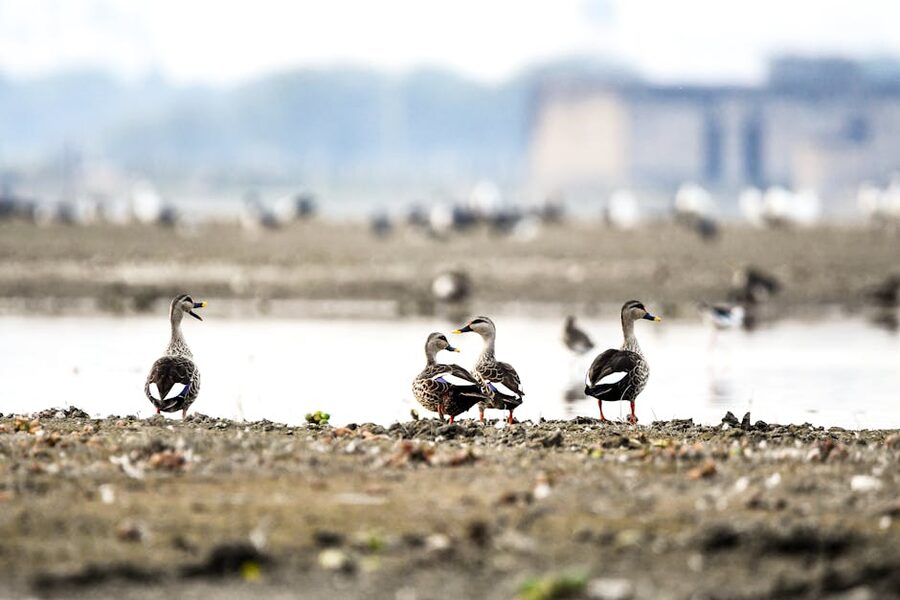
The Pong Dam reservoir on the Beas in Kangra district is HP’s only major wetland protected area and the single most important winter waterbird site in the western Himalayan foothills. Declared a wildlife sanctuary in 1983 and designated a Ramsar wetland in 2002, the sanctuary covers 307 square kilometres of reservoir water and surrounding shoreline. The wetland portion alone is 156 square kilometres.
More than 220 bird species of 54 families have been recorded at the site. The headline winter migrants are the bar-headed goose (which crosses the main Himalayan range to reach Pong from breeding grounds in central Asia), ruddy shelduck, northern pintail, common teal, gadwall, mallard, and a long list of waders and small grebes. The 2015 mid-winter waterfowl census recorded over 130,000 birds at Pong; later counts have been comparable or higher.
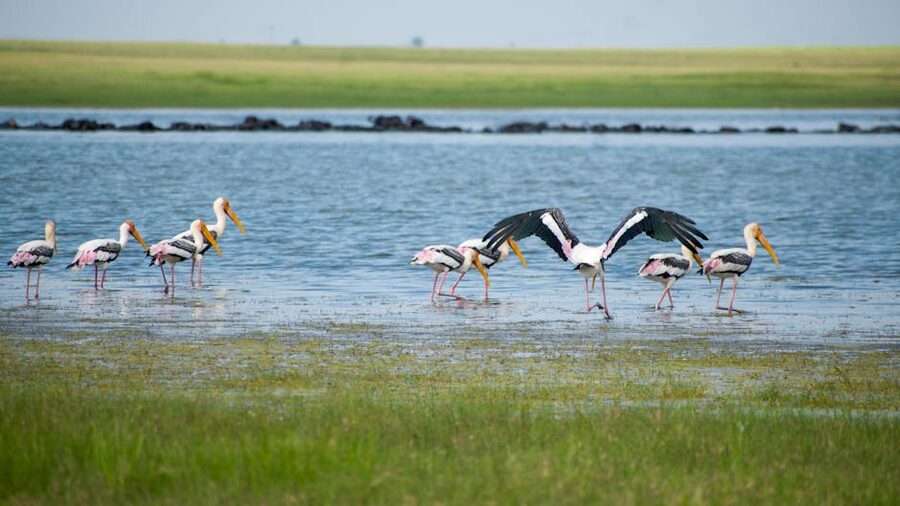
The peak observation window at Pong is late November to late February. Boat trips around the major bird islands (Ransar, Gajj, and others) operate out of the Nagrota Surian and Dhameta launch points; the Forest Department issues permits and runs a small interpretation centre at Nagrota Surian. A serious birder can put up 100 species in a long weekend. The dam sits about 25 kilometres south of Dharamshala, which makes it a feasible day-trip from a Kangra-Dharamshala base or a destination in its own right.
Khirganga, Inderkilla, and Simbalbara
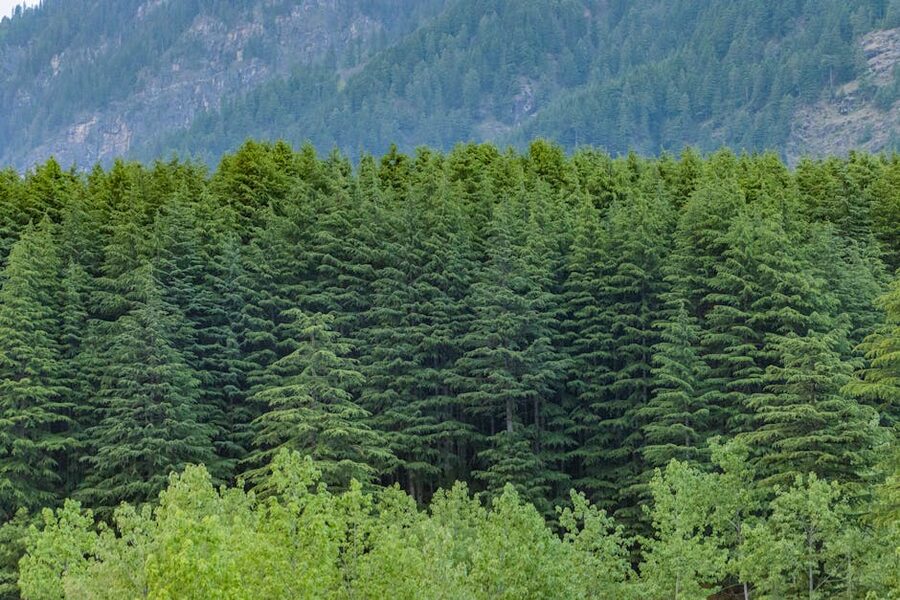
Three of HP’s national parks were created relatively recently, in 2010, by upgrading existing forest divisions to full park status. Khirganga National Park covers 710 square kilometres of the upper Parvati Valley between 2,000 and 5,500 metres; Parvati Parbat at 6,632 metres is the dominant peak. The park overlaps habitat for snow leopard, black bear, tahr, musk deer, the Himalayan yellow-throated marten, and a strong list of pheasants including the western tragopan and the monal. Lower elevations are accessible from Kasol and Manikaran on the Bhuntar-Manikaran road; deeper park access is via the Pin-Parvati pass route, which is an expedition rather than a day-trip.
Inderkilla National Park is a much smaller protected area of 104 square kilometres in the Kullu Valley, around 46 kilometres from Kullu-Manali airport. The park protects subtropical and temperate forest along the Beas with similar species composition to the Manali sanctuary. Visitor infrastructure is limited; most travellers experience the park inadvertently by walking from Naggar or Bhuntar into the surrounding hills.
Simbalbara National Park is the outlier: a small park of 27.88 square kilometres in the Shivalik foothills of Sirmaur district, originally a sanctuary from 1958 and upgraded to national park status in 2010. The habitat is dense sal (Shorea robusta) forest with grassy glades and a perennial stream. The species composition is more like the Terai parks of north India than the rest of HP, with sambar, chital, goral, and historically tigers, though tiger occupancy is now uncertain.
The park is accessible from Nahan on the HP-Haryana border. October and November are the optimal months. Simbalbara is the one park in HP where you might see Indian rollers, kingfishers, and three species of hornbill, the avifauna of the foothill belt rather than the high mountain.
The Lake and Cold-Desert Conservation Reserves

HP’s three notified conservation reserves are Chandra Taal in Lahaul (a small reserve protecting the lake and its immediate catchment), Tundah in Chamba (alpine pasture and high-altitude wetland), and Naina Devi in Bilaspur (lower-elevation forest around the temple complex).
Of these, Chandra Taal is the most visited. The high-altitude lake at 4,300 metres on the Manali-Kaza road is one of the visual landmarks of any Spiti circuit, and the reserve protects its immediate catchment from grazing and infrastructure development. The lake is accessible by road from Batal or Losar between roughly mid-June and early October. Chandra Taal is not a wildlife-watching destination in the conventional sense; it’s a landscape and a watershed, and the wildlife you might see is incidental (occasional bharal on the surrounding slopes, choughs and other corvids on the shore).
What You’ll Realistically See
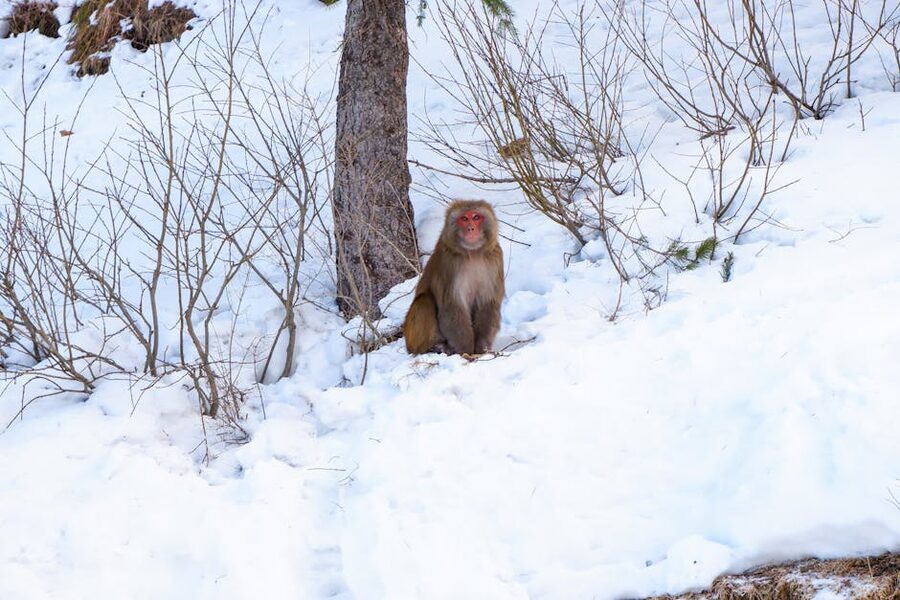
If you take only one thing from this guide, take this: the wildlife you’ll actually see in Himachal on a normal trip is unspectacular and present everywhere. Rhesus macaques and grey langurs in every hill-station forest, the occasional barking deer breaking through undergrowth on a quiet road, the yellow-throated marten flickering through upper deodar branches if you sit still for an hour. The crowing call of a koklass at dawn from a Manu Temple guesthouse window, the monal in a sudden flash across a meadow trail above Lamadugh in February: these are the genuine encounters most visitors will have.
The headline species are real, but they require either luck, equipment (binoculars or a spotting scope), patience (multi-day camps in the right habitat), or a dedicated tracking trip in winter. A breakdown of realistic probabilities, by setting:
- A standard 5-day Manali or Shimla trip: macaques and langurs daily; barking deer or goral once or twice if you walk forest trails; monal possible if you walk above 2,800 metres at dawn; pheasants heard more than seen; everything else unlikely.
- A 3-day GHNP trek from Sai Ropa: add monal sightings most days; tragopan calls likely; bharal and tahr possible at the upper end of the trek; bear sign possible, bear sightings rare; snow leopard essentially impossible.
- A 7-day Spiti loop in summer: ibex and bharal almost certain on the Pin Valley and Kibber drives; Tibetan wolf possible at dusk; choughs, lammergeier, and golden eagle reliable in the high passes; snow leopard rare.
- A 7 to 10-day Kibber tracking trip in February: snow leopard probability around 60 to 70 percent with a competent local team; bharal certain; ibex likely; Tibetan wolf possible; brown bear out of season (denning).
- A 3-day birding trip to Pong Dam in January: 80 to 100 bird species realistic; tens of thousands of waterfowl visible from the boat trips; bar-headed goose and ruddy shelduck almost certain.
The state’s wildlife is not the headline reason to come to Himachal. The hill stations, the trekking valleys, the temples and monasteries, and the festivals fill that role for most visitors, and the relevant guides for those trips are the tourist attractions of Himachal overview, the fairs and festivals calendar, and the honeymoon in Himachal page for couples.
If you want one wildlife encounter the rest of India can’t match, two answers stand out. The first is the snow leopard at Kibber in February. The second is the bar-headed goose flock at Pong in January, lifting off the lake at dawn after crossing the Himalayan range from breeding grounds in Mongolia and Tibet. Either is the kind of trip you remember years afterwards.
How to Plan a Wildlife-Focused Trip
The principles below cover the practical logistics of a wildlife-themed visit to HP, whether for a few days within a longer hill-station trip or as a dedicated week.
Pick the Right Season
Wildlife seasonality in HP is sharp. The high-altitude reserves of Spiti are accessible only from June to early October by the Manali road (the Atal Tunnel keeps Lahaul open longer; the Spiti road via Kunzum Pass is the seasonal one). From October to May the access is from Shimla via Kinnaur, which is open all year but slower.
Snow leopard tracking trips run only from late January to mid-March. The Pong Dam waterfowl season is late November to late February. Tragopan and monal are most active and visible before the monsoon, March to May, and again in October-November after the rains.
The mid-elevation forests of GHNP and Manali sanctuary are most pleasant for trekking in May, June, September, and October. The monsoon (July to early September) is generally the worst time for wildlife trips: leech-heavy forests, slippery trails, low visibility.
Get the Permits Right
Day visits to most sanctuaries require only a small entry fee paid at the Forest Department gate (₹10 to ₹250 for Indians, broadly 4x that for foreign nationals; about $0.12 to $12 either way). Multi-day treks inside national parks require advance permits from the field office: GHNP from Sai Ropa, Pin Valley from the Kaza office, Khirganga via the Kullu DFO. The official park websites publish current forms; for GHNP the park website has the permit application.
For Inner Line areas of Spiti and Kinnaur (which apply for foreign nationals beyond Tabo on the Spiti side and beyond Reckong Peo on the Kinnaur side), the additional Inner Line Permit is issued at the SDM office in Reckong Peo or the Tabo border post. Indian nationals don’t need an ILP. The Himachal Pradesh Forest Department’s official portal publishes the consolidated permit and fee schedule.
Hire Local Guides
For snow leopard tracking trips at Kibber, working with one of the established Spiti operators is essential. These are run by village cooperatives and a handful of dedicated wildlife outfits based out of Kaza. Local trackers know the cliffs and the cat behaviour in a way no out-of-state guide can match.
For the GHNP and Tirthan treks, the Sai Ropa and Gushaini guide cooperatives are the standard arrangement; rates are broadly fixed (₹1,500 to ₹2,500 per day for guide, ~$18 to $30; ₹1,200 to ₹1,800 per day for porters, ~$14 to $22). The income directly supports the buffer-village conservation programme. For Pong Dam, the Forest Department interpretation centre at Nagrota Surian provides the boat trip operators and the bird-list checklist.
Stay Realistic About Sightings
The single most important thing a wildlife-focused trip to HP can do is set the expectation correctly before arrival. The Indian Himalayas don’t give up sightings easily. Tracking trips that succeed do so because of multi-day patience and good local knowledge, not because the wildlife is conveniently located. The compensation is that what you do see (the monal flushing at sunrise, the ibex herd traversing a ridge a kilometre away, the snow leopard spotting scope view of a cat in cliff terrain) is the genuine article: not a captive display, not a managed safari park, but a wild animal in the landscape it actually lives in.
Booking and Onward Reading
Most wildlife-focused travellers in HP combine the wildlife portion with a broader hill-station or trekking trip. The state’s main accommodation areas for that purpose are the Manali hotels by neighbourhood guide for the Kullu and GHNP base, the Chail accommodation options for the southern sanctuaries, and the Hotels in Himachal Pradesh overview for the broader state.
Tour operators selling end-to-end itineraries are catalogued in the Himachal tour packages guide and the Delhi to Manali transport overview. For travellers timing the trip around festivals, the fairs and festivals calendar and the Kullu Dussehra guide cover the cultural anchors. For destination context, the Manali tourist attractions page, the Jwalamukhi temple guide, and the Dalhousie and Bir-Billing overviews cover the hubs adjacent to the most-visited reserves.
The wildlife you’ll see in HP is rarely the wildlife you came expecting. Spend three days in Spiti looking for snow leopards and you’ll probably see Tibetan wolves and golden eagles instead; walk into GHNP for tragopan and you’ll come out with monal photographs and a koklass call recording. Plan a Pong Dam birding trip for the bar-headed goose and find yourself standing on a boat at dawn while a hundred and twenty thousand assorted waterfowl lift off in waves. The state isn’t a wildlife park; it’s a working landscape with wildlife in it, and the encounters that come from that are different from what a Ranthambore safari produces, and for many travellers more valuable.