
The first time I came up the Parvati Valley I shared a Volvo seat with a kid from Faridabad on a four-day weekend, a woman from Tel Aviv on her sixth month in India, and a Manikaran-bound retiree heading up for the gurudwara. That mix is the valley. Most hill stations in Himachal sort their visitors neatly: Shimla gets the family-on-a-package, Manali gets the honeymoon and the school-holiday wave, Dharamshala gets the dharma-seekers. Kasol gets all of it at once, plus a long-stay foreigner contingent that has been quietly running cafes here for thirty years, plus the Himachali farmer who grew up next to the cannabis fields and now rents out a room above his apple shed for a thousand rupees a night. If you want a hill station that resolves into one tidy idea, you should go somewhere else.
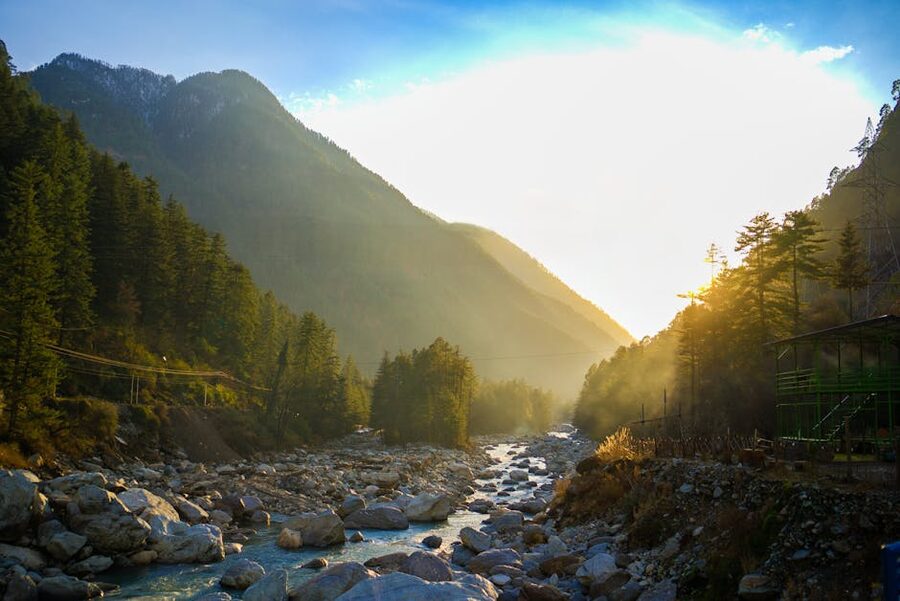
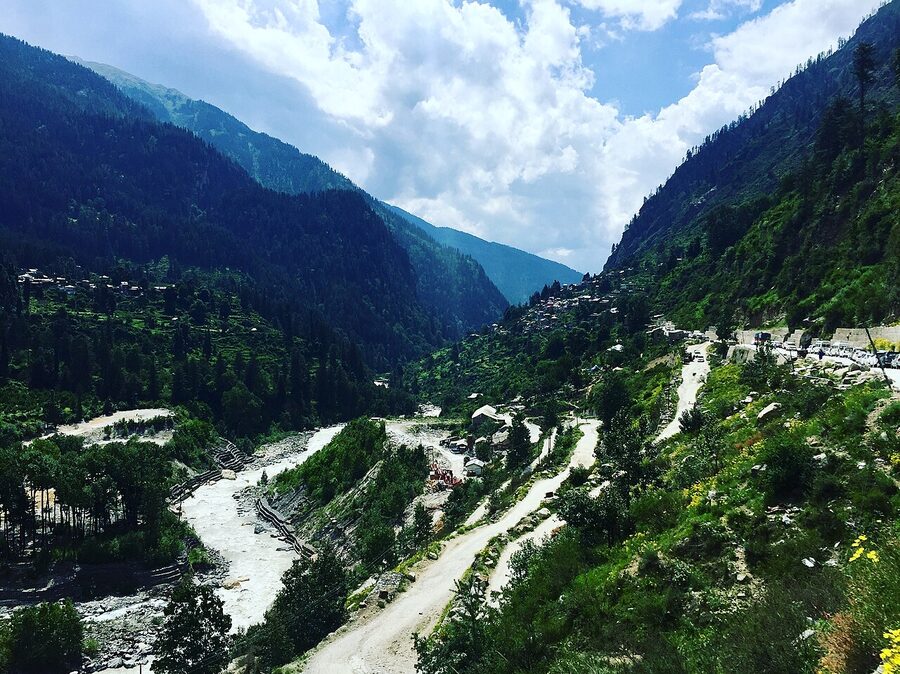
Parvati Valley is the long, steep-sided side trip that branches east off the Manali highway at Bhuntar. It climbs about thirty kilometres up to the road head at Barshaini and continues from there as a network of footpaths into hot springs, glacial meadows, and the trekking passes that connect over to Spiti. Kasol is the main town, sitting at 1,580 metres on the right bank of the river, thirty kilometres in from Bhuntar.
It started as a Himachali farming hamlet, became an Israeli backpacker town in the early 1990s, and by the late 2010s had absorbed everyone else: Delhi weekenders, Bangalore remote workers, German bakers, French dropouts, and a steady drip of UK gap-year travellers. The signs in the cafes are now in three languages, sometimes four. The food is half Himachali, half Israeli, with a side of pizza.
This guide is for the traveller deciding whether the Parvati Valley fits their Himachal trip, particularly if you are weighing it against the standard Shimla-Manali-Dharamshala loop, or wondering how it differs from the more obviously scenic Manali region just up the road. The short answer is that it is a different kind of trip altogether. People who want a hill station they can settle into for a week or three, walk a lot, eat well, and meet the kind of long-stayers who can recommend a homestay in a village you have never heard of, will find Parvati does what it does better than anywhere else in Himachal.
Who Actually Goes to Parvati Valley
The reason this place feels different from the rest of Himachal is the demographic mix, and the demographic mix is the result of three layered waves that never quite went away.
The first wave is the Himachali villagers themselves. The valley has been farmed and grazed by Pahari communities for centuries; the upper villages were nearly cut off from outside influence until road-building reached Manikaran in the 1970s. Their houses are stone-and-deodar, built into the slope, with slate roofs.
They run a chunk of the homestay economy now, but most are still apple farmers, sheep herders, or part-time charas producers (more on that last one later). If you stay in a Pulga or Tulga or Grahan homestay, you are usually staying in a working farmer’s house, not a guesthouse pretending to be one.
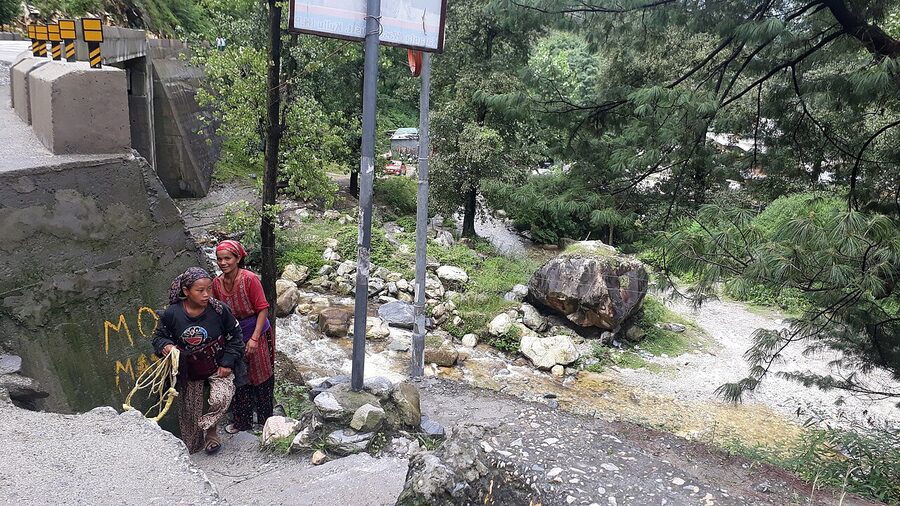
The second wave is Israeli, and it is what gave Kasol its nickname Mini Israel. Beginning in the early 1990s, post-army Israeli twenty-somethings on the standard year-out India trip discovered Kasol as a place to decompress after the Goa beach circuit. Word spread inside Israel through the army-discharge traveller network.
By 2005 you could buy Hebrew newspapers in three Kasol cafes. By 2015 the menus had shakshuka, sabich, malabi, and proper hummus alongside Himachali siddu. Most Israeli travellers now stay for two to six weeks, often returning year after year, and they run a noticeable share of the cafes in Old Kasol either openly or as silent partners with Himachali families.
The third wave is the Indian domestic traveller, which arrived later but is now numerically dominant. Through the 2010s, Bollywood films and Instagram travel accounts pushed Kasol from niche backpacker stop into mainstream Delhi-NCR hill-getaway destination. The summer-school-holiday wave from May to early July, and the New Year crush around the Kasol Music Festival, are now overwhelmingly Indian. Most domestic visitors come for a long weekend, base in a Kasol or Tosh hotel, and run a tight Manikaran-Chalal-Kasol-Tosh circuit before driving back to Delhi.
What this produces, on a Saturday in June, is a town where you can hear Hebrew, Hindi, Punjabi, French, English, and a Pahari dialect within three minutes of walking down the main lane. A typical Old Kasol cafe has a charred-wood interior, a Hebrew-named playlist, a cook from Bihar making both shakshuka and aloo paratha, and an owner from Mumbai. Nowhere else in Himachal sounds quite like it.
When to Go
The valley has the same five seasons as the rest of upper Himachal, but the way they hit Kasol is specific enough to plan around.
Mid-March to End of April: The Shoulder That Almost Nobody Uses
This is the best-kept secret window. The lower trails open up first, the rhododendron flowers in early April, and rates are low because the school-holiday surge has not yet hit. Daytime temperatures sit between 12 and 20 degrees, dropping near freezing at night.
Kheerganga and Tosh are accessible by mid-April. Pin Parvati Pass is firmly closed until June and stays closed until late September. Old Kasol cafes start reopening in the third week of March; by the first week of April most of them are back. If you want a Parvati trip without the crowds, this is the window.
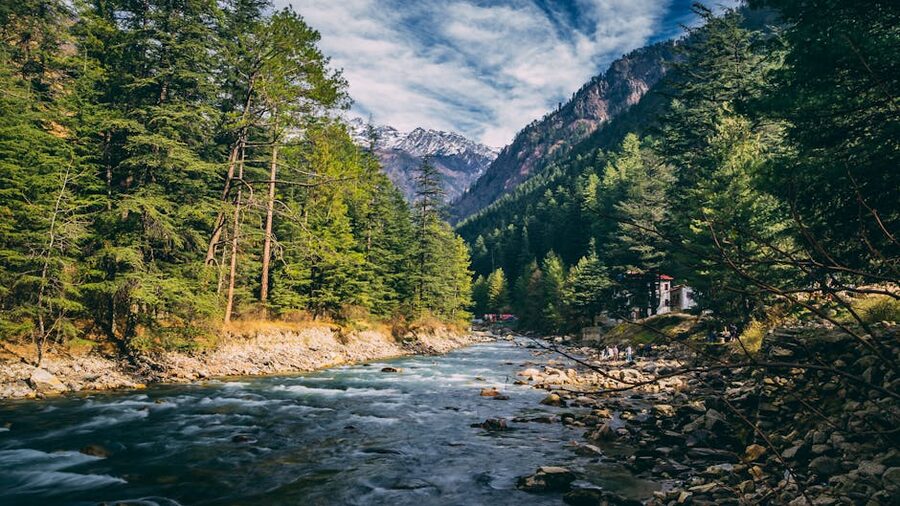
May to Mid-July: The Domestic Surge
Indian school holidays push hotel rates up to two or three times shoulder pricing in Kasol and Tosh. The main road in Kasol becomes a continuous queue of taxis on weekends. The cafes get crowded.
If you want this window, travel mid-week and base outside the main town in a quieter village like Chalal, Pulga, or Kalga. Pin Parvati Pass opens in late June for trekkers with permits; the lower treks are all open. The weather is reliable through mid-June, but by the last week of June the monsoon front is close and afternoon rain becomes likely.
Mid-July to Mid-September: Monsoon
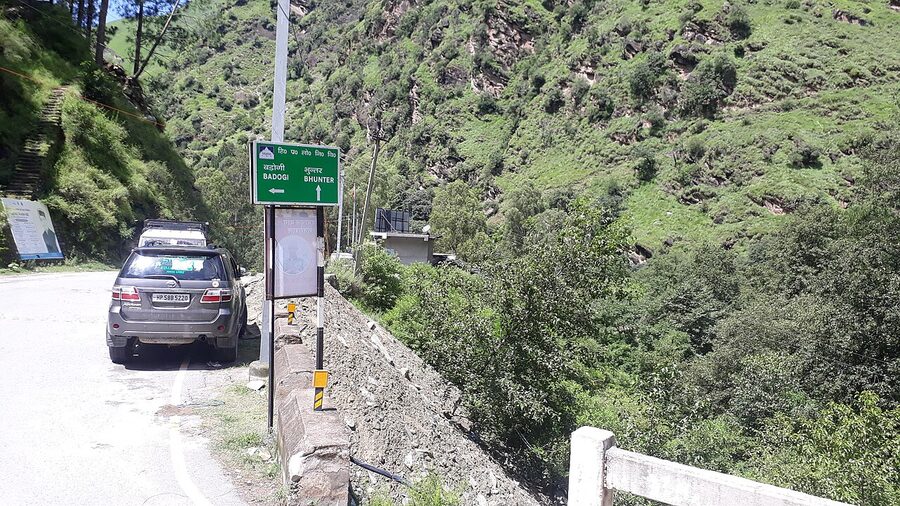
The Kullu district sits in an active monsoon belt, and the Parvati Valley specifically is one of the worst affected in Himachal for landslides. The 2023 monsoon caused catastrophic damage to the Mandi-Kullu stretch of the highway and to several stretches inside the valley itself; rebuilding has largely finished, but the geology has not changed and 2024 brought further closures.
Travel during peak monsoon if you have flexibility and don’t mind sitting out a closure for two days, otherwise plan around it. The valley is genuinely beautiful in late July when the slopes are at their greenest, but you will see it through cloud half the time.
Late September to Mid-November: The Best Window for First-Time Visitors
If you only have one trip, take it now. The monsoon clears by the third week of September, the air is at its cleanest, the Parvati runs glacial green again, and the upper villages get their first dusting of snow on the high peaks while the trails below stay open and dry.
Kheerganga is at its best, Tosh in October is exceptional, and hotel rates drop by half from peak. The cannabis harvest happens in late September and runs through October; if you want to see the actual rolling work in the upper villages, October is when. I would pick the second week of October for a first trip if I had to pick one week. For couples weaving Parvati into a wider Himachal honeymoon, the autumn window is also when the deodar belt above Tosh photographs best.
December to Early March: Winter
Most of the cafe scene closes. Many Kasol owners migrate down to Goa for the season, and many Tosh and Tulga homestays shut entirely. The villagers stay; the long-stay foreigners often don’t. Snowfall is heavy through January and February in the upper valley, and Tosh, Kalga, and the Kheerganga base camp can all be cut off after a heavy fall.
New Year’s Eve in Kasol is a different scene entirely: the Kasol Music Festival pulls a domestic crowd up for the holiday, hotel rates spike to triple, and the town runs like a January Goa for one week. Outside that week, winter Kasol is genuinely quiet and quite cold, with Manikaran’s hot springs becoming the main attraction. Bring proper winter layers, not just a fleece.
Getting There from Bhuntar
The valley begins where the Parvati River meets the Beas at Bhuntar, a small town with a single-runway airport that handles a handful of weekly Alliance Air flights from Delhi. Most travellers arrive overland.
From Delhi, the realistic options are an overnight Volvo bus or a private taxi via the Chandigarh route. HRTC, the Himachal state carrier, and several private operators including Zingbus run nightly AC sleeper Volvos from Kashmiri Gate ISBT and Majnu ka Tila, leaving between 5 PM and 9 PM and arriving in Bhuntar between 7 AM and 10 AM the next morning.
Fares are ₹1,200 to ₹1,800 (about $14 to $22) one way, and the ride takes twelve to fourteen hours under good conditions. The official HRTC online booking site is at hrtchp.com; private operators are easiest via RedBus. If you would rather have a driver lined up the whole way, our Delhi-Manali tour overview covers the same corridor and many operators will divert via Bhuntar on request.
From Chandigarh airport, taxis to Kasol run ₹7,000 to ₹9,000 (about $84 to $108) and take seven to eight hours. The Kiratpur-Manali expressway has cut the drive significantly compared to the old route. Depending on traffic on the climb out of Mandi, expect six to seven hours from Chandigarh to Bhuntar plus another hour to Kasol.
From Manali, Kasol is fifty kilometres south by road, around two hours in good conditions and four in bad. Anyone doing a wider Himachal loop usually links the two: most travellers do Shimla, Manali, Parvati Valley, and back, or Parvati Valley, Manali, Lahaul, and onward to Lahaul and Spiti. If you would rather hand the routing off entirely, our Himachal tour packages page lists operators who run that loop with Kasol as an optional inclusion.
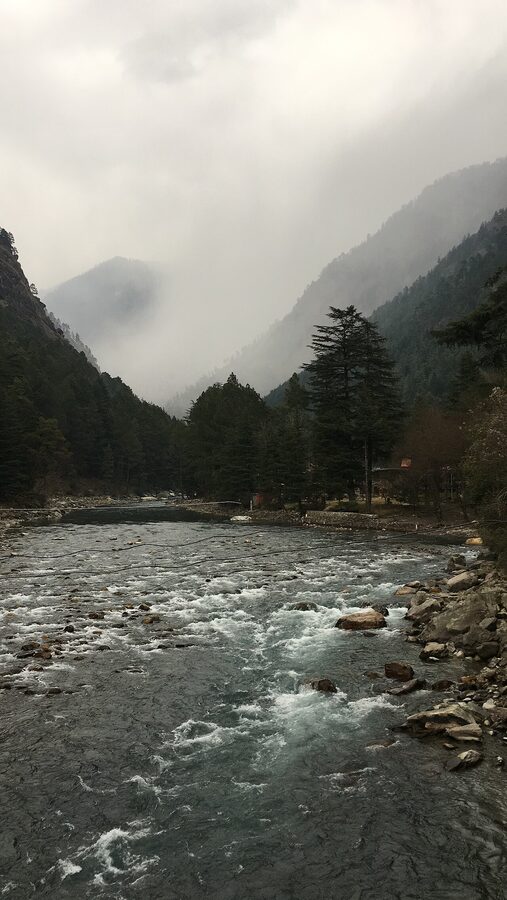
The road into the valley itself starts at Bhuntar’s junction with the Manali highway. From Bhuntar bus station, local buses to Manikaran run roughly every hour from 5:30 AM to about 6 PM, costing ₹80 to ₹120 (about $1 to $1.50). They stop at Jari (the turn-off for Malana), Kasol, and Manikaran.
After Manikaran, only a smaller share of buses continue up the steeper road to Barshaini, the road head; those typically leave Bhuntar at 8 AM, 11 AM, and 2 PM, with a final return from Barshaini around 4 PM. A shared taxi from Bhuntar to Kasol is around ₹250 to ₹400 (about $3 to $5) per seat; private taxis are ₹1,500 to ₹2,000 ($18 to $24) one way.
Kasol: The Town That Holds Everything
Kasol is small. The whole walkable area is maybe a kilometre long, strung along the road on the right bank of the river. There are roughly two halves: New Kasol on the highway side with the bus stand, the larger hotels, and the tour-operator offices, and Old Kasol across the small bridge at the eastern end, where most of the long-stay cafes and the river-frontage guesthouses live. Both halves are walkable from each other in fifteen minutes.
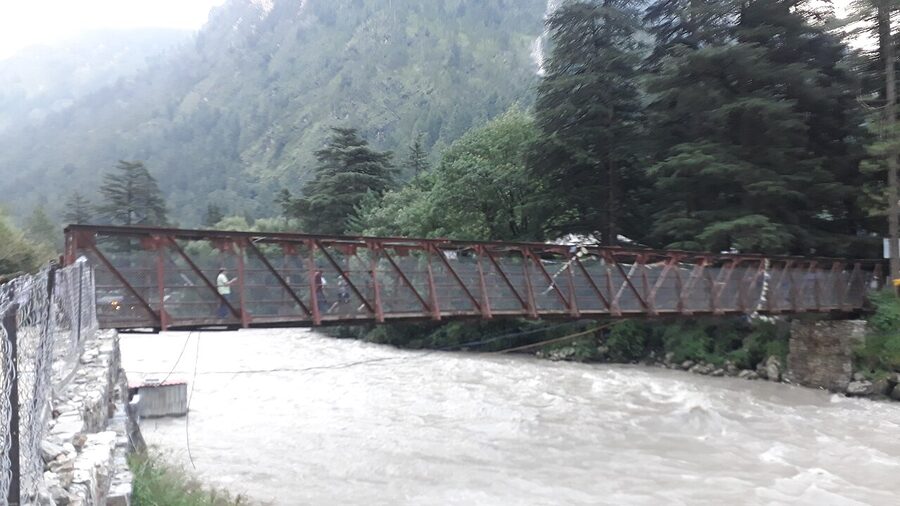
Old Kasol
This is what most people come for, and it’s where you should base if your Kasol stay is more than two nights. The lane along the river holds a dozen cafes, three or four bakeries, a couple of legitimate Israeli-run kitchens, and small-scale guesthouses with rooms in the ₹800 to ₹2,000 range (about $10 to $24).
Walking along it at 8 PM in October, with the river loud and the cafes lit, is the experience that built the town’s reputation. Evergreen Cafe and the long-running Moon Dance Cafe near the bridge are reliable for both shakshuka and trout. Stone Garden Cafe in the main market does great chai, mediocre pasta, and live music most evenings. None of these places are quiet; the fact that they aren’t quiet is the point.
New Kasol
The strip along the main road is where the buses pull in, where the larger mid-range hotels sit, and where the more tourist-oriented restaurants are. It is louder, has more honking, and is where the day-tripper crowd from Manali bases itself for a single night before driving back.
If you are arriving for two nights only and planning a quick loop, New Kasol works fine. If you are staying longer, cross the bridge.
What Kasol Isn’t
One important thing to flag, because most travel sites about Kasol whitewash it: this is not a quiet hill village in any meaningful sense. It is loud, crowded on weekends, and has a real party culture. Trance and electronic music plays from cafes until well past midnight in the high season, drinks flow freely, and the cannabis economy is open and visible.
If you want a sleepy mountain hamlet, do not come to Kasol; go up to Grahan, or Pulga, or further. Kasol is the hub the rest of the valley feeds off, not a quiet retreat in itself.
The other thing worth knowing: Kasol has had a long-standing reputation for traveller disappearances. Wikipedia’s Parvati Valley page bluntly notes that dozens of international backpackers have vanished without trace in and around the valley over the past three decades, an average of about one a year. Most disappearances involve solo travellers heading off-trail into the upper villages without telling anyone where they were going.
The lesson is mundane but worth taking seriously. If you are trekking solo, tell someone in Kasol your route and your expected return time, register at the police checkpoint at Barshaini for any trek beyond Kheerganga, and stick to marked trails. The valley is not dangerous in any unusual way; the problem is the combination of solo travellers, casual drug use, off-trail wandering, and remote terrain. Mitigate the variables you can.
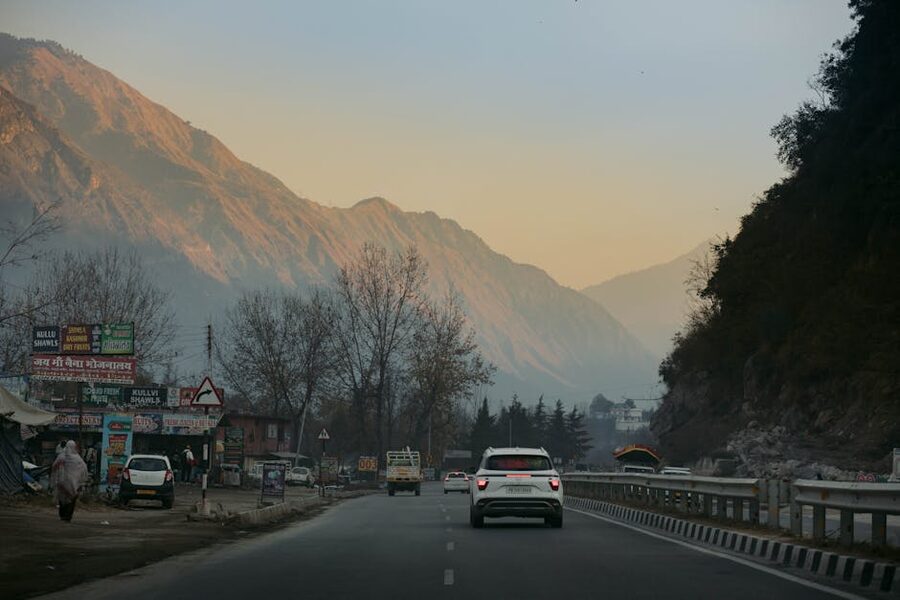
Manikaran: Hot Springs and a Working Gurudwara
Three and a half kilometres up the road from Kasol, Manikaran sits at 1,760 metres on both banks of the river, connected by a couple of pedestrian bridges. It is older than Kasol, smaller in tourist footprint, and has a completely different feel: this is a working pilgrimage town for both Sikhs and Hindus, and it has been since long before the backpackers arrived.
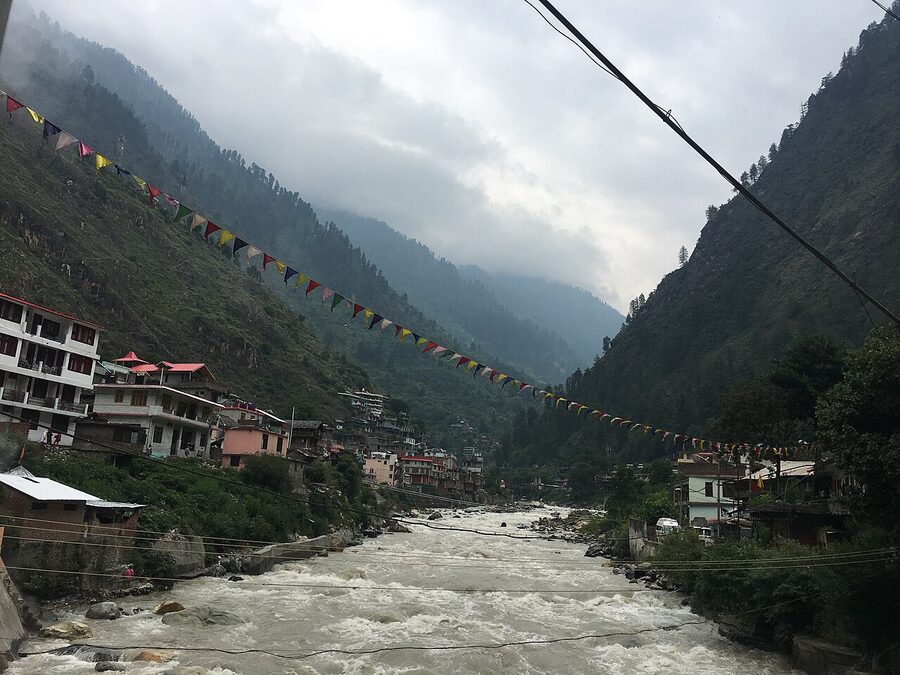
The hot springs at Manikaran are remarkable for a specific reason: they emerge at between 64 and 80 degrees Celsius, hot enough to cook with, and the gurudwara does. The langar kitchen suspends sacks of rice and dal in cloth bundles directly into the spring, and the food is steamed in twenty minutes.
According to Sikh tradition, Guru Nanak visited Manikaran on his third Udasi in 1574, and the miracle of the floating chapatis (bread that sank into the boiling water and rose up cooked) is the founding story of the gurudwara that stands here now. The langar serves a free meal to any visitor; you cover your head, leave your shoes outside, and queue with everyone else. It is one of the more humbling experiences in Himachal, and it is free.
The Hindu side of Manikaran has its own legend. Parvati lost her earring (the manikaran, literally) in the river; Shiva opened his third eye in anger; Shesha the serpent surfaced from the underworld breathing the boiling waters that brought up precious stones along with the lost earring.
The Lord Ram Chandra temple on the south bank, built by Raja Jagat Singh in the fifteenth century and damaged in the 1905 Kangra earthquake, is the central Hindu site. The hot-spring bathing ghats are open to everyone, separated by gender, free, and busy on weekends. The mix of Sikh and Hindu pilgrimage in one small town is unusual even by Indian standards; for context on how this sits within the wider festival calendar of Himachal, Manikaran’s busiest weeks are late February for Maha Shivratri and any full-moon weekend through summer.
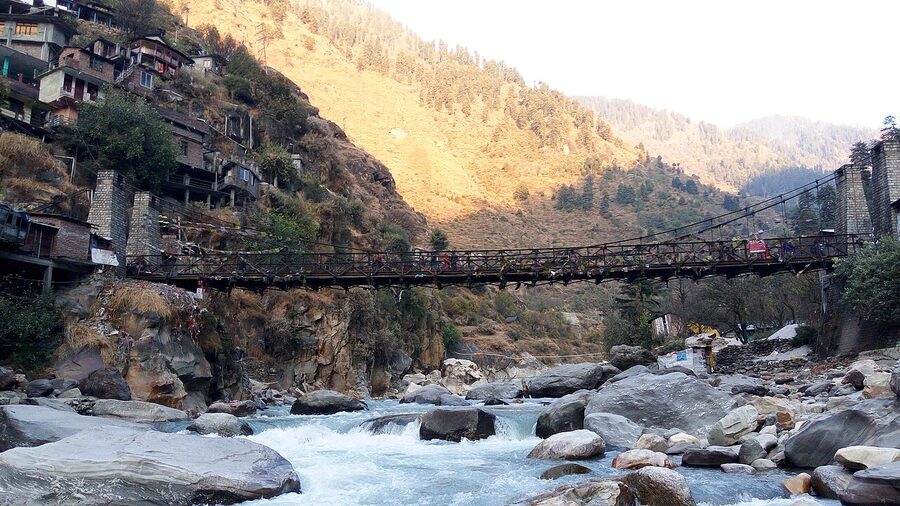
You can stay overnight at the gurudwara’s free pilgrim accommodation if you are happy with shared dormitory rooms and travelling on something close to a vow of poverty. Most travellers visit Manikaran as a half-day trip from Kasol and walk back along the road.
The walk is forty-five minutes one way and follows the river the whole way, with the option to cross into the older lanes of Manikaran on the far bank for a markedly less touristed experience. Skip the local jeep tours of the temple; they cost ₹200 (about $2.40) and add nothing. Walk it.
Chalal: The Village You Have to Walk To
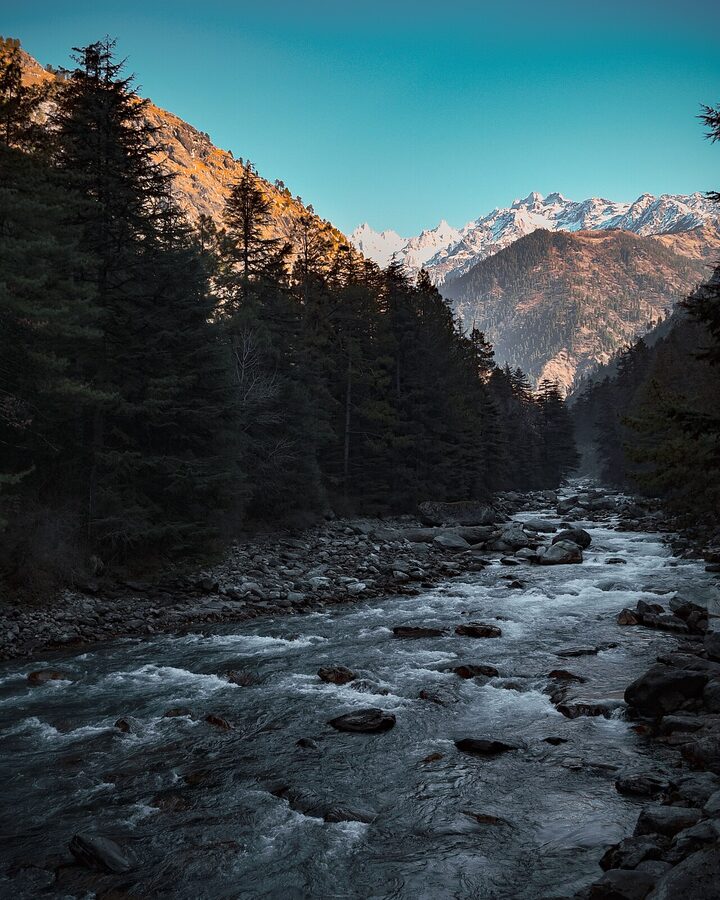
Across the metal footbridge at the eastern end of Old Kasol, a single trail climbs into the deodar forest and traces the left bank of the river upstream. Forty-five minutes of easy walking later you arrive at Chalal, a village of perhaps thirty houses and a dozen guesthouses set back from the river in a sparse pine clearing. There is no road in. The trail is the only way.
Chalal does what Kasol promised but stopped delivering once the road came in: it is quiet, the river is loud rather than the cafes, and the cafes that exist are small affairs with three or four tables and a single Himachali family running them.
The hike in is short enough that you can do it as an afternoon walk from Kasol, but most people who try it end up booking a night. Rooms run ₹700 to ₹1,500 (about $8 to $18) in the budget guesthouses; the better river-view options run ₹1,500 to ₹2,500 (about $18 to $30) with breakfast. Pine Woods Guest House and Cafe on the Chalal trail itself is one of the more reliably reviewed mid-range options. There is mobile signal but no ATM and few shops, so bring a power bank and some cash.
One thing to know: Chalal has a reputation for psy-trance parties, particularly in season. Most are advertised informally on cafe noticeboards in Kasol two or three days in advance.
If that is what you are after, you have found it. If you want a quiet hill night, ask at your guesthouse whether anything is on before you commit. A quiet Tuesday in Chalal is genuinely quiet. A Friday in late June is not.
Tosh: The Backpacker Base Above the Road Head
Tosh is the largest of the upper villages and the one most travellers spend a few nights in. It sits above Barshaini, perched on the right bank at about 2,400 metres, a forty-five-minute uphill walk from the road head. You can pay a shared jeep ₹100 (about $1.20) a seat to drive most of the way up if you have heavy bags, but the walk is not difficult.
Tosh sits in a wide bend of the upper Parvati where the snow peaks of the Pin Parvati range come into full view to the north and east. On a clear October morning the visibility from the upper edge of the village is exceptional.
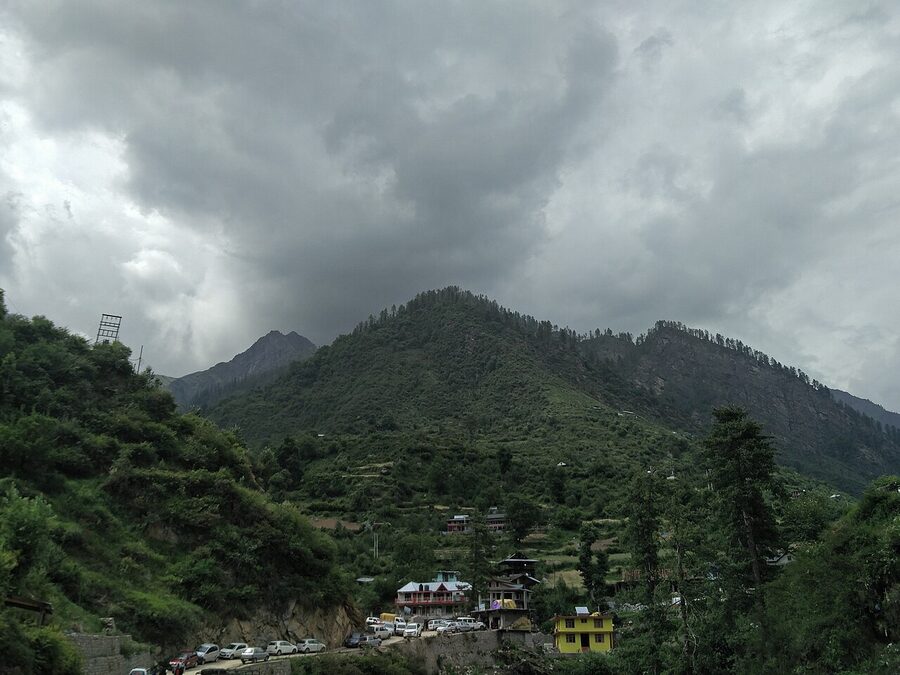
Tosh is what Kasol was twenty years ago: small, mostly Himachali-run, cheaper than the road towns, and overrun on summer weekends. Rooms in the budget guesthouses run ₹500 to ₹1,200 (about $6 to $14), better mid-range stays with proper double-glazing and balcony views run ₹1,500 to ₹3,000 (about $18 to $36), and the genuinely nice places such as the rooms above Pink Floyd Cafe and Yellowjackets Hostel run ₹2,000 to ₹3,500 (about $24 to $42) in season and book up two weeks ahead in October.
The food at Pink Floyd Cafe is locally famous and worth the climb to the upper village; the cafe’s wide windows look straight at Tosh Lake and the snow line. Cell signal is patchy and most guesthouse wifi is slow.
From Tosh you can hike an hour further uphill to Kutla, a smaller and quieter village that has a single cluster of homestays and views directly onto the snow line. Kutla is what travellers who find Tosh too crowded move on to. Beyond Kutla the trail continues to Buni Buni meadow, a four-to-five-hour walk that gets you above the tree line for a long-day return.
Kalga, Pulga, and the Barshaini Cluster
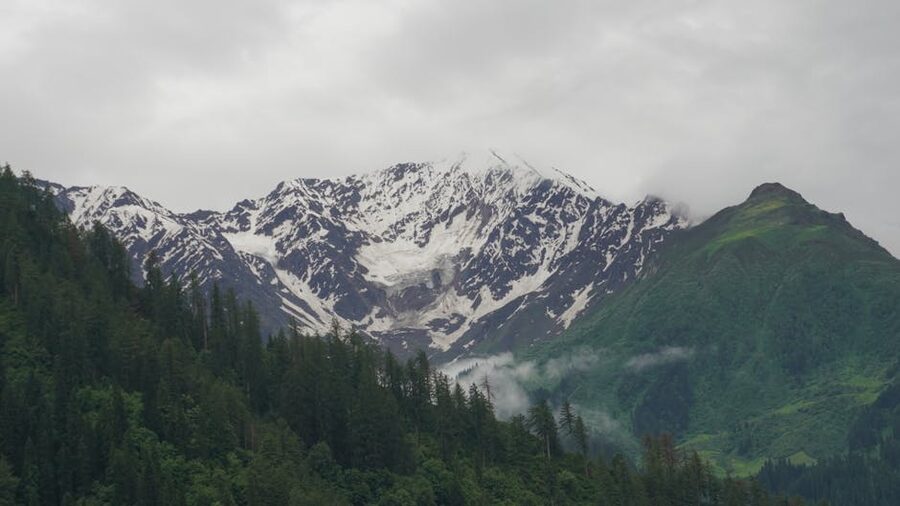
Barshaini itself is just the road head: a bus stand, a couple of dhabas, a hydro-project canteen, and a footbridge across the Parvati. Almost no one stays in Barshaini. The reason it matters is that three of the most rewarding upper villages branch off it: Kalga and Pulga to the right of the river, Tulga slightly further up, and Tosh down the road. These are the villages that long-stayers tend to settle into for two or three weeks at a time.
Kalga sits about two kilometres uphill from Barshaini, a thirty-minute walk through apple orchards. It is small, maybe twenty-five houses, and quiet, with a handful of homestays in the ₹400 to ₹1,000 (about $5 to $12) range and a couple of slightly nicer riverside cafes that double as guesthouses.
Pulga is half an hour beyond Kalga along a connected trail and is even quieter. Tulga is the smallest of the three and the highest. The three villages share a network of forest trails that loop between them in a half-day; you can stay in any one and visit the others for lunch.
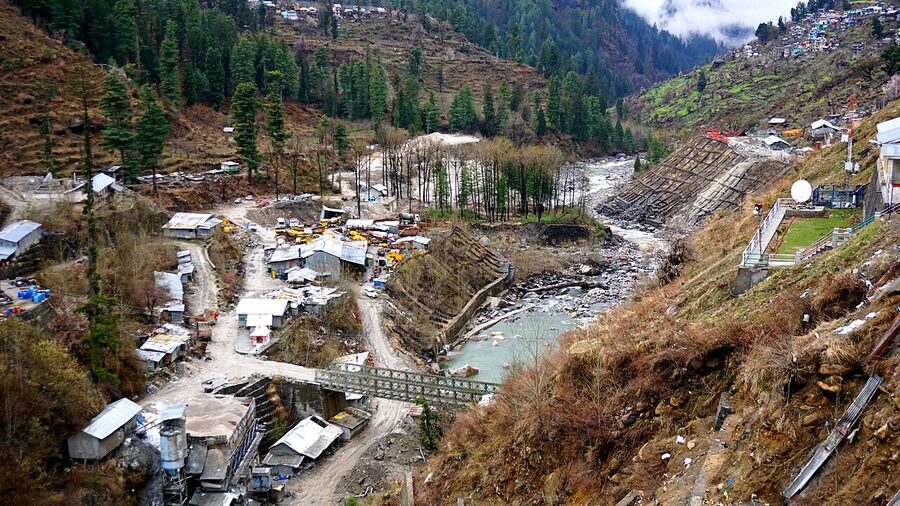
If you want the quietest stay in the valley that is still accessible without a serious trek, Kalga is the answer. The Travelling Slacker blog called Kalga the village to settle in for several days at ₹150 a night; that was 2017 pricing, the current floor is ₹400, but the principle is the same. You will not have wifi worth using. You will have stars and apple trees and one cafe.
Malana: The Closed Village
Malana is twenty-two kilometres from Kasol by road plus a steep hour-and-a-half hike from the road head on the Jari side, or a longer four-to-six-hour trek over from Naggar via the Chandrakhani Pass. It deserves its own paragraph because it is unlike anywhere else in the valley.
The village is famous for three things. First, it is one of the very oldest continuously democratic communities anywhere; the village council, made up of an upper and lower house, has governed Malana for centuries and still adjudicates internal disputes through the Jamlu Devta deity oracle rather than through outside courts.
Second, the residents speak Kanashi, a language unrelated to Hindi or any of the Pahari dialects, of disputed origin; some scholars link it to Sino-Tibetan, others to remnant Indo-Aryan. Third, and most famously, the village has been the centre of high-grade hashish production (the variety known internationally as Malana Cream) for at least four decades, which is what made it a backpacker pilgrimage site through the 1990s and 2000s.
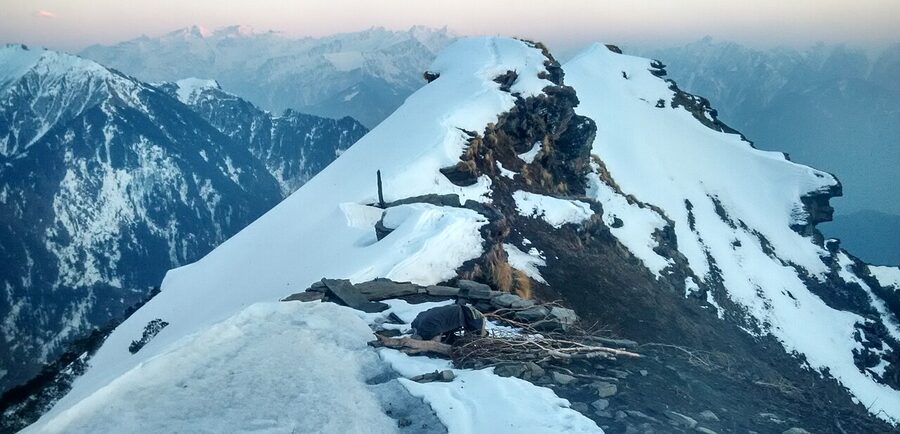
Two practical things to know before you go. The village strictly enforces a no-touch rule on outsiders: do not touch the houses, the temple, or any villager. Walk on the marked path, sit only where you are told to sit, and ask before photographing anyone. Fines for breaking the rule are real and are enforced by the council.
Second, after a 2008 fire destroyed the upper village and the rebuild that followed, the council restricted overnight stays for outsiders in the village proper. Tourist accommodation is now in the small cluster of guesthouses outside the village boundary on the way in, which is fine but is worth knowing in advance.
Whether to actually go is a judgement call. If you are interested in the language, the governance, the temple, or the ethnographic uniqueness of the place, it is worth the day trip from Kasol; go with curiosity rather than as drug tourism, which the village is increasingly tired of. If you are going to ogle, do everyone a favour and stay in Tosh.
Kheerganga: The Trek Most People Come For
Kheerganga is the natural hot-spring complex at the head of the side valley above Barshaini, sitting at about 2,950 metres in a meadow that opens up suddenly after a long forested climb. The trek up from Barshaini is roughly thirteen kilometres one way, with about 1,100 metres of elevation gain. It takes a fit walker four to five hours up, three to four down. Most people break it into a stay overnight at the meadow camps and walk out the next morning.
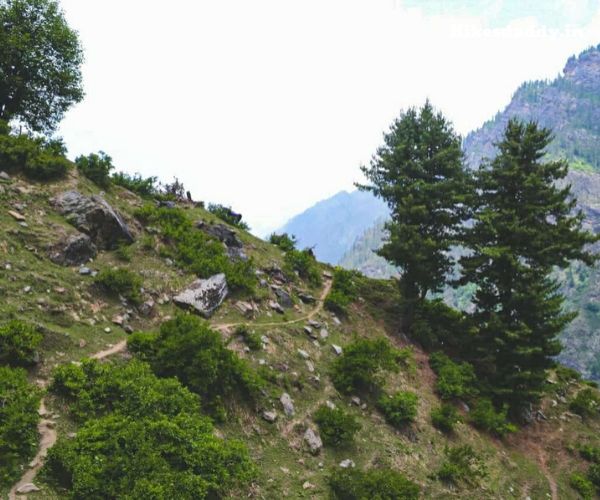
The trail forks at the start. The shorter and steeper Nakthan-Rudranag route on the right bank goes through Nakthan village, past the Rudra Nag waterfall, and up to the meadow. The longer Kalga route on the left bank loops up through Kalga and Tulga and is gentler underfoot.
Most guides recommend going up via Nakthan and back via Kalga so you see different terrain in each direction. Pace yourself on the climb; it is a real walk, not a stroll, and the altitude bites the last hour for anyone who has come up from the plains.
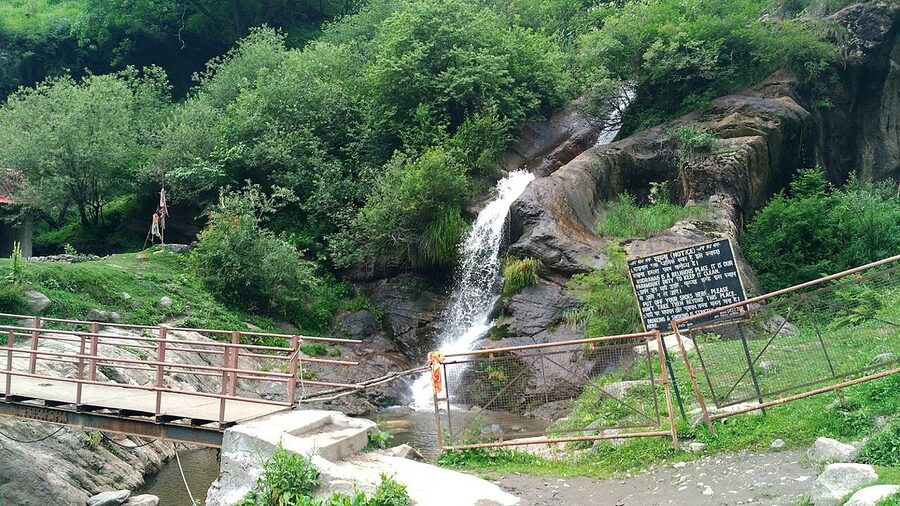
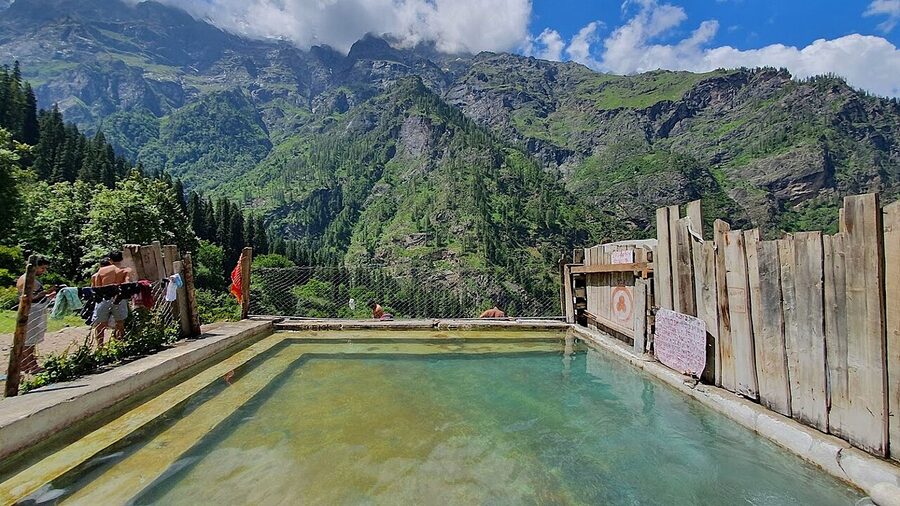
The hot springs themselves are managed: the open-air pool is segregated by gender and free to use, cleaned each morning by the temple committee. Etiquette is straightforward (no soap, no shampoo, leave clothes neatly stacked on the rocks). The water sits at about 40 degrees Celsius, hot enough to cook the day’s climb out of your legs in twenty minutes.
The Shiva legend has the meadow as the spot where the god meditated for thousands of years, and the small temple at the upper end of the meadow is a working pilgrimage site.
Accommodation up top is in tented camps that operate from April through October. Rates run ₹800 to ₹1,500 (about $10 to $18) per person including dinner and breakfast in the standard camps; the slightly nicer dome tents go to around ₹2,000 ($24).
The National Green Tribunal periodically restricts camp numbers, and the regulations have shifted several times over the past five years, so options on any given night may be fewer than you expect in peak season. Bring a sleeping bag liner regardless of what the camps provide. Nights at 2,950 metres are cold even in June.
Jari and Grahan: The Quieter Routes
If you are tired of Kasol’s noise and want somewhere genuinely off the main loop, two options branch out from the lower valley.
Jari is the small road junction roughly halfway between Bhuntar and Kasol where the side road climbs up to Malana. Jari itself is unremarkable (a dhaba strip and a few apple orchards), but it is the legitimate base for the Malana trek and has quieter accommodation than Kasol at half the price. A handful of small guesthouses on the strip cover most needs if you intend to do Malana as a day trip.
Grahan is the village three to five hours’ uphill walk from Kasol, climbing through pine and oak forest along a mountain stream. The walk gains about 750 metres over nine kilometres and is moderately strenuous. There is no road in.
Grahan has perhaps twenty-five houses, a dozen homestays, no mobile signal, no shops to speak of, and no alcohol (the village council has banned it). What it has is what most travellers spend years looking for in Himachal: a working farming village, plus the kind of quiet you only get when there is no road and no signal.
Expect to pay ₹600 to ₹1,000 (about $7 to $12) for a homestay room with three meals included. Phoning ahead is not really possible; just turn up. There are always rooms outside June. The single dhaba on the trail roughly halfway up has been adding a few simple guest rooms recently if you want to break the climb.
Charas: The Thing Nobody Wants to Talk About First
It is impossible to write about the Parvati Valley without addressing the cannabis economy, because it shapes the entire region (the tourism, the demographics, the seasonal rhythm of the upper villages) and to be blunt, half of why most foreign backpackers came in the first place.
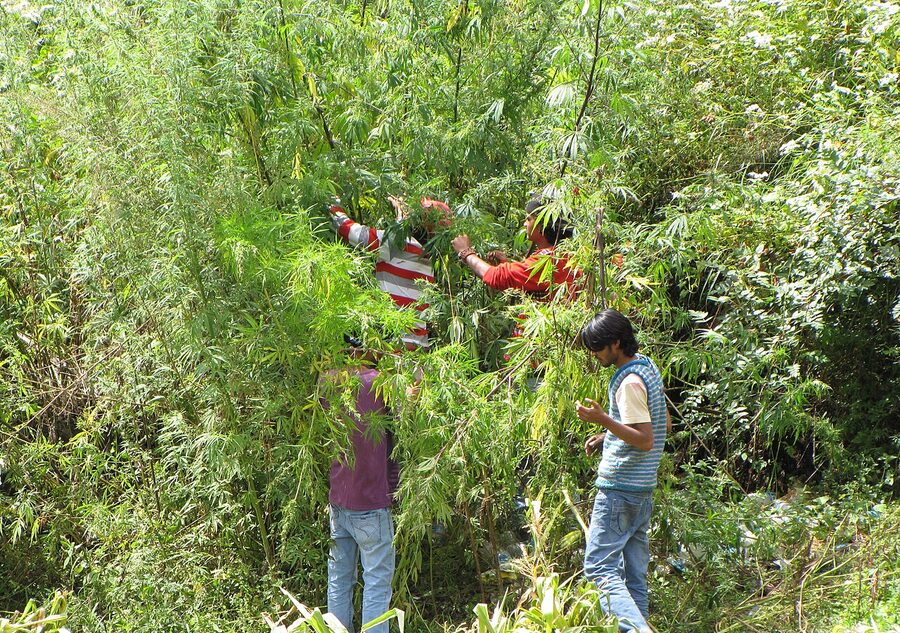
The valley is one of the world’s significant producers of high-grade hand-rubbed hashish, known internationally as Malana Cream. The plant grows wild on the slopes of every village from Jari upward; the rubbing season runs September into November.
In the upper villages, particularly Tosh, Malana, Kutla, and Kalga, large parts of the local economy are built around the harvest. A kilo of finished cream sells for international prices that translate into a year of income for a Himachali family. This is not a secret. It is openly visible if you spend three days walking around in October.
Three things to be clear about. First: cannabis and its derivatives are illegal in India under the NDPS Act of 1985, and possession of even small quantities is a criminal offence. Local enforcement is patchy and has tended to focus on commercial-quantity supply rather than personal use, but this is not legal cover. The Himachal Pradesh police periodically run sweeps in Kasol and at the Bhuntar checkpoint, and foreigners caught with significant quantities have served real prison time.
Second: the laid-back drug-tourism reputation of Kasol attracts a particular kind of traveller, and that reputation is also why the valley draws disproportionate police attention compared to other Himachal hill stations. If you are clean, you have nothing to worry about. If you are not, you are taking a real risk and you should know that.
Third, and the point most travel blogs miss: the cannabis economy has had genuine and complicated effects on the upper villages. It has made some Himachali families significantly wealthier than their farming-only neighbours; it has also fuelled debt cycles, addiction in the next generation, and a tourist culture in places like Malana that the village council is actively trying to roll back.
Visitors who treat the valley as a drug park rather than a place where people live are part of the problem. Visitors who simply walk respectfully through and come for the mountains, the rivers, and the food are not.
If you are not interested in the cannabis side of things at all, you can ignore it almost entirely. Old Kasol cafes do not push it, Manikaran is a working pilgrimage town with no scene, Grahan is alcohol-free, and the morning trail to Kheerganga is full of normal walkers. The valley is bigger than its reputation.
Where to Stay Across the Valley
Most travellers split their stay across two or three villages rather than basing in one. A common shape is one or two nights in Kasol to acclimatise and provision, two nights in Tosh or Kalga, and one night up at Kheerganga. A few options that have been consistently well reviewed and book reliably online:
Kasol, backpacker hostels: The Hosteller Kasol (Official site | Booking.com | Agoda) is the cleanest of the larger hostels, dorms from ₹700 (about $8), with a river-frontage location at the end of Old Kasol. Zostel Kasol Katagla (Official site | Booking.com) is slightly out of town but with the better view, dorms from ₹900 (about $11). Moustache Hostel Kasol (Official site | Klook) is riverside and party-leaning, fine if you want the Kasol scene at full volume.
Kasol, mid-range: Family-run guesthouses along the river-side lane in Old Kasol run ₹1,500 to ₹3,000 (about $18 to $36); most are not on the booking platforms, so walk in once you arrive and pick what you like. Hotel Sandhya Kasol on the upper edge of New Kasol and the much pricier Himalayan Village Resort (Kailasha) at the western end are the larger options bookable online; both are fine for a one-night transit but lack the river-frontage that makes Old Kasol Old Kasol.
Tosh: Pink Floyd Cafe and Yellowjackets Hostel are the two consistently recommended in the village; expect ₹1,500 to ₹3,000 (about $18 to $36) for a double in season. Smaller family-run guesthouses fill in the rest of the budget tier from the village square upward. Book ahead in October only if you are travelling in a group of four or more.
Kalga / Pulga: Walk in. There are no online listings worth using. Expect ₹400 to ₹1,200 (about $5 to $14) for a homestay room with a meal included.
Manikaran: Most travellers don’t stay overnight. If you do, the gurudwara serves free dormitory accommodation to pilgrims and travellers (donation appreciated, basic but clean), and HPTDC’s Manikaran property on the south bank has a handful of mid-range doubles in the ₹2,500 to ₹4,000 (about $30 to $48) range.
For the wider Himachal context (pricing tiers across the state, what to expect from heritage versus business chains, the budget tier), see our overview of hotels in Himachal. The Parvati Valley sits at the budget-and-homestay end of the state’s accommodation ladder; you will not find heritage palaces or luxury resorts here, and that is part of the point. If you would rather have your hotels booked end-to-end before you fly in, our Manali hotels by neighbourhood guide covers the obvious overnight stop on the way out.
Practical Things Worth Knowing
A short list of things that will save you trouble:
Money. There are working ATMs in Kasol (two on the main road) and in Manikaran. There are no ATMs in Tosh, Kalga, Pulga, Grahan, or Malana. Stock cash before you leave Kasol; most upper-village homestays are cash-only.
Mobile signal. Jio works reasonably well in Kasol, Manikaran, and lower Tosh; Vi and Airtel are patchy. Above Tosh and beyond Kalga, signal is intermittent at best, and there is no signal at all at Kheerganga or in Grahan. Plan for offline use of maps and accommodation searches.
Power. Power cuts are routine, particularly in monsoon. Bring a power bank if you plan to do any longer trekking.
Permits and registration. No permits are required for Kasol, Manikaran, Tosh, or the day-trek villages including Kheerganga, Kalga, and Grahan. Pin Parvati Pass and the Sara Umga trek require Inner Line Permits and a registered guide; arrange through the trekking offices in Kasol and budget two to three days for the paperwork. Foreign trekkers should also register at the police checkpoint in Barshaini for any overnight trek above Kheerganga.
Altitude. Kasol at 1,580 metres is low enough that altitude is not an issue. Kheerganga at 2,950 metres can produce mild headaches in travellers who have come straight up from sea level; if you are heading further to Pin Parvati or up over Sara Umga, build acclimatisation days in. Drink more water than you think you need.
Road safety. The Bhuntar-Manikaran road has had multiple landslide events in recent monsoons. Check current road conditions before you go, particularly between mid-July and mid-September. The Himachal Pradesh state disaster management portal at hpsdma.nic.in publishes current advisories; the local HRTC bus stand at Bhuntar has the most up-to-date information on which routes are running.
Food safety. Standard rules apply. The cafes in Old Kasol are generally clean; the further from town you go the more you should stick to recently cooked food and bottled water. Trout from the Parvati is a regional speciality and is genuinely good, particularly at the riverside cafes in Old Kasol and at small family kitchens up in Tosh.
A Suggested Five-to-Seven Day Shape
If you are doing the valley as a self-contained trip rather than as part of a larger Himachal loop, here is a shape that works for most travellers without forcing the pace:
Day 1. Arrive Bhuntar, transfer to Kasol, settle into Old Kasol, walk to the bridge and across to Chalal in the late afternoon, dinner at one of the riverside cafes.
Day 2. Easy day in and around Kasol. Walk to Manikaran in the morning, lunch at the gurudwara, hot-spring soak, walk back along the river. Afternoon free; explore the cafe scene.
Day 3. Move up the valley to Tosh. Bus or shared taxi to Barshaini, hike up to Tosh, settle in. Evening view from upper Tosh; dinner at Pink Floyd Cafe.
Day 4. Day hike from Tosh to Kutla and back, or up to Buni Buni meadow if you are fit. Late lunch at Kutla; back to Tosh for the night.
Day 5. Hike to Kheerganga. Up via Nakthan, soak at the meadow, overnight in a camp.
Day 6. Hike back down via the Kalga route. Either stay a night in Kalga or continue down to Kasol in the afternoon.
Day 7. Buffer day, useful for weather, useful for adding Malana or Grahan, useful for resting before the long ride out. Bus or taxi from Bhuntar overnight back to Delhi.
If you only have four days, drop the Kheerganga overnight and do Tosh-Kasol-Manikaran. If you have ten days, add Grahan for two nights, or extend in Tosh for a longer base. The valley rewards staying longer; the people you meet on day four are different from the people you meet on day one. Travellers who like the valley often pair it with the quieter middle hills of Tirthan Valley or push further north into Kinnaur on a longer Himachal loop.
Verdict
Parvati is not for everyone. If your idea of a Himachal holiday is a clean four-day package out of Manali with a Rohtang Pass day trip and an apple-orchard photograph, you will be happier in Manali itself or in the wider Kullu Valley further south. If you want a hill region you can settle into for at least a week, walk a lot, sleep in a stone-and-deodar farmhouse, and accept that the place comes with a particular reputation and a particular crowd, Parvati is the best in Himachal at what it does. The mountains are real, the rivers are real, the food is genuinely good, and the long-stayers are not posing.
Go in October. Cross the bridge to Old Kasol and stay there for at least three nights, walking to Chalal on your second day, then take the bus to Barshaini and walk up to Tosh. If your knees still work after Kheerganga, walk to Kalga and stay a night. That is the trip; the version of it you read about on Instagram is louder and shorter and missing most of what makes it worth coming back for.