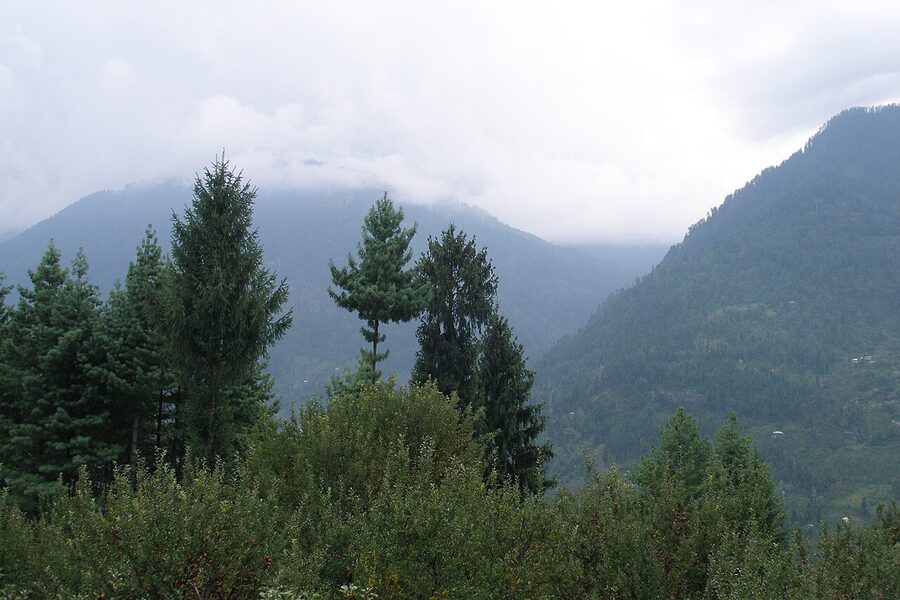
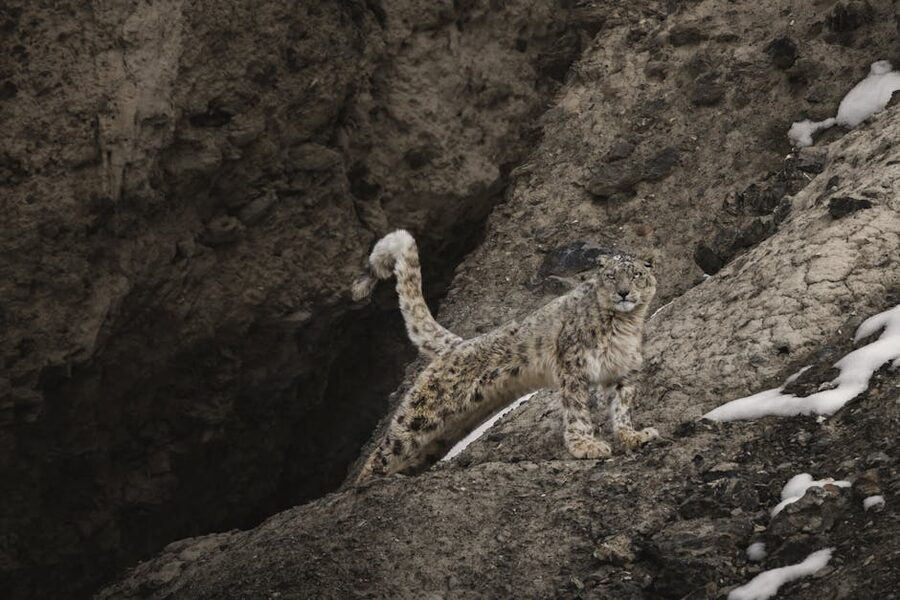
If you stand at the gate above the cricket ground at first light, the forest in front of you sounds like one bird and a rumour of others. The bird that carries is the kalij pheasant. Its dawn call is a sharp double whistle followed by a wing-clatter as the male drops off a low branch into the leaf litter, and once you have heard it you will hear it everywhere on the lower trails. The rumour is the cheer pheasant, much rarer, somewhere up in the open grass on the western slopes. That, more than the leopard or the ghoral or the small brown deer that bark in the mid-morning, is what the Chail Wildlife Sanctuary actually offers a visitor: a pheasant forest at the southern edge of the western Himalayas, dense enough to feel wild, small enough to walk, and close enough to the Chail Palace that you can be back at breakfast.
The Chail Wildlife Sanctuary covers roughly 110 square kilometres of oak, deodar, chir pine and grassland on the ridges around Chail town, in Solan district of Himachal Pradesh. It was notified as a protected area in 1976 under the Wild Life (Protection) Act of 1972. The elevation runs from about 1,800 metres on the southern access roads to a little above 2,200 metres on the high ridges that look across to Shimla. By the standards of Indian protected areas it is small. The Great Himalayan National Park, three valleys to the north, is more than seven times the size; the Khirganga National Park, in the Parvati valley, is twice the size. The reason a small sanctuary still earns a serious visit is the pheasant programme it has run since 1988, the unusually accessible position of the trails at the edge of a working hill town, and the historical accident that put an old shooting reserve, planted with European red deer by the Patiala court, in the same square kilometres as one of the cleanest mid-altitude oak forests left in this part of Himachal.
This guide is for the visitor who has Chail in their plan, knows the Chail Palace and the cricket ground are a short ride away, and wants to know what the sanctuary itself is, what they can realistically see on a day visit, when to come, and how it fits with the rest of a Chail trip. It is not a serious mountaineering or multi-day trekking handbook. The sanctuary’s high points are at modest Himalayan elevations and its trails are walkable in trail shoes. The reward is a quieter, smaller-scale wildlife experience than the high-altitude reserves up north.
In This Article
- Where the Sanctuary Sits
- What’s in the Forest
- What You Can Realistically See
- The Pheasants
- The Deer and Goat-Antelope
- The Carnivores and Bigger Mammals
- Birds Beyond the Pheasants
- Walking the Sanctuary
- The Khurin Watchtower Loop
- The Jhaja Cheer Pheasant Walk
- The Blossom Patrol Path
- Practical: Entry, Timings, Fees
- When to Go
- Late March to Early May: The Cheer Pheasant Window
- Mid October to Late November: The Post-Monsoon Window
- Mid December to Mid February: The Snow Window
- Mid July to Mid September: Avoid the Monsoon
- What to Bring
- The Wider Chail Picture
- The Sanctuary in the Wider Himachal Wildlife Picture
- The Pressures the Sanctuary Faces
- Putting a Chail Sanctuary Visit Together
Where the Sanctuary Sits
Chail town stands at 2,250 metres on Rajgarh hill, 44 kilometres from Shimla and about 45 from Solan. The wildlife sanctuary wraps the town on three sides. Its northern edge runs along the line of forest above the Kandaghat-Chail road; its eastern boundary descends towards Sadhupul on the Ashwani Khad; the south reaches down through Junga and the western slopes carry the patrol path that connects Khurin, Jhaja and Blossom, the three small forest stations the cheer pheasant programme works out of. The famous cricket ground at 2,444 metres, built by the Patiala state in 1893 and still claimed as the highest in the world, sits just outside the sanctuary fence on Patiala hill. So does the Chail Palace, the heritage HPTDC hotel that sits on a parallel ridge a short ride west.
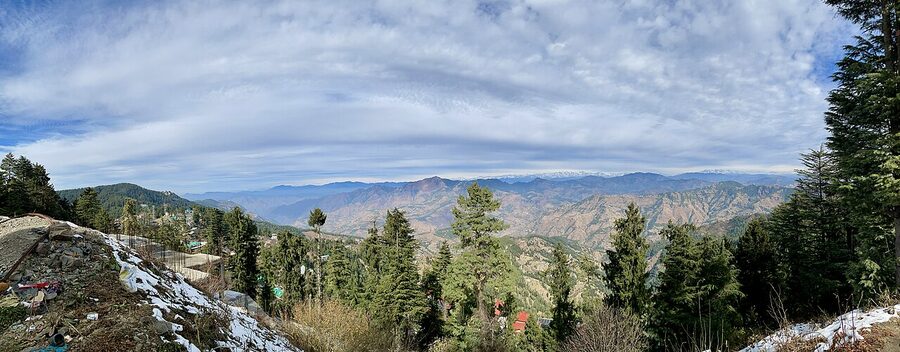
Most visitors come in from one of three directions. From Shimla, the standard route is the 44 kilometres down to Kandaghat and then up the climbing road through Sadhupul to Chail; the drive takes between an hour and a half and two hours depending on traffic on the Kalka-Shimla highway. From Chandigarh it is around 110 kilometres through Pinjore and Kandaghat, three to four hours by road. From Kalka it is 80 kilometres and the most pleasant approach for anyone who has come up on the Kalka-Shimla narrow-gauge train and wants a short taxi day onward. There is no rail or air access closer than Shimla. The local bus network connects Chail to Shimla and Solan multiple times a day, but the wildlife sanctuary itself has no public transport access; a private taxi or a hire car from the town stand is the practical option for the trail entries.
Within the sanctuary there is no single fenced gate the way you find at a national park further south. The boundary is defined by Forest Department signboards along the access roads, and entry happens informally at the points where the patrol paths leave the road network. The most useful access points for a casual visitor are the watchtower above Khurin (best for pheasants and birds), the Jhaja entry (closest to the cheer breeding centre), and the gate above Blossom on the Junga road (closest to the open grasslands). The Aleo office of the Wildlife Wing in Solan is the administrative head; the local range office at Chail handles permits and patrol enquiries on the ground. The state-level reference is the Himachal Pradesh Forest Department’s wildlife sanctuaries page.
What’s in the Forest
The first thing worth understanding is the structure of the forest itself. The sanctuary is a band of mid-elevation western Himalayan vegetation, in the transition zone between the lower chir pine belt of the Shivaliks and the higher deodar-oak country of the inner ranges. That makes it more interesting than a single-species plantation; you walk through three or four distinct forest types in a single afternoon.
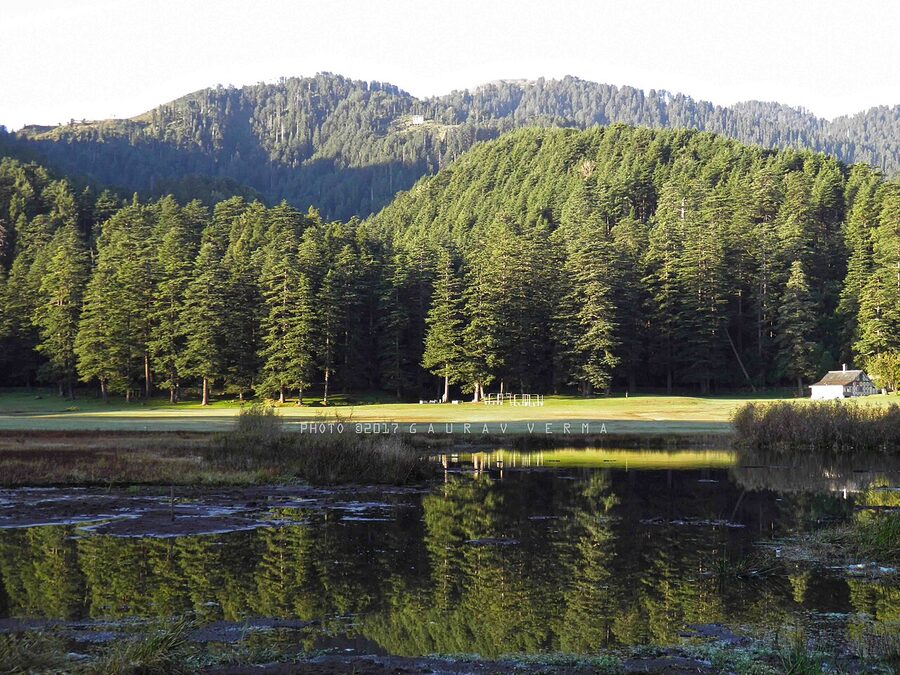
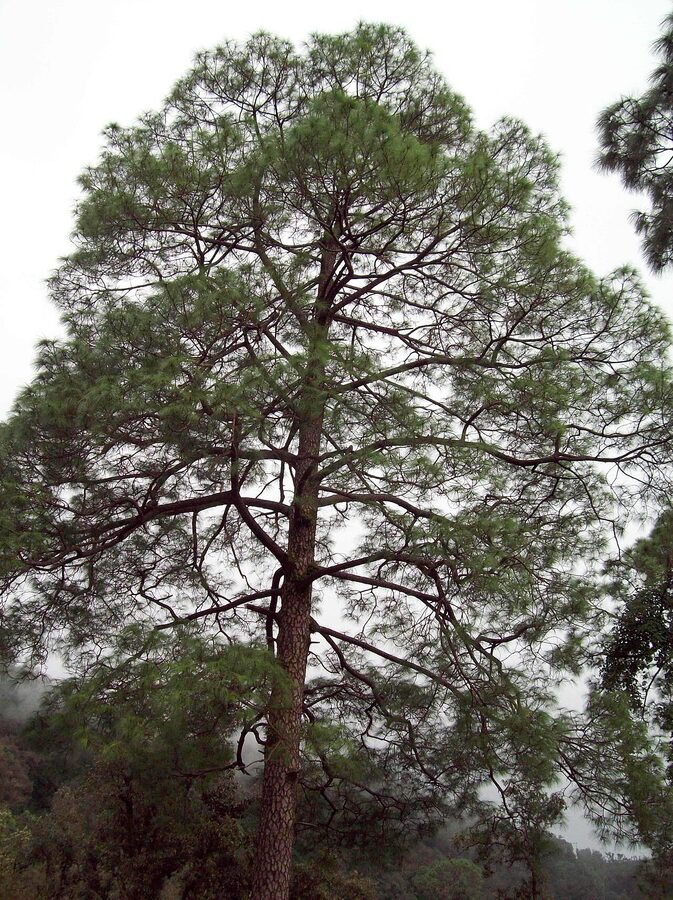
At the lower end, between roughly 1,800 and 2,000 metres on the southern access roads, you are in chir pine country. Pinus roxburghii is the dominant tree, with its long needles in bundles of three and the open, almost park-like canopy that the chir creates on dry south-facing slopes. The understorey is thin, the ground is dusty, and the light reaches the floor in summer. This is the forest type that is most familiar from anywhere in the Shivalik foothills above the plains. It is also the most fire-prone; the sanctuary has had several major chir-pine fires in the past decade, and the litter of resin-rich needles burns with frightening speed in May before the monsoon breaks.
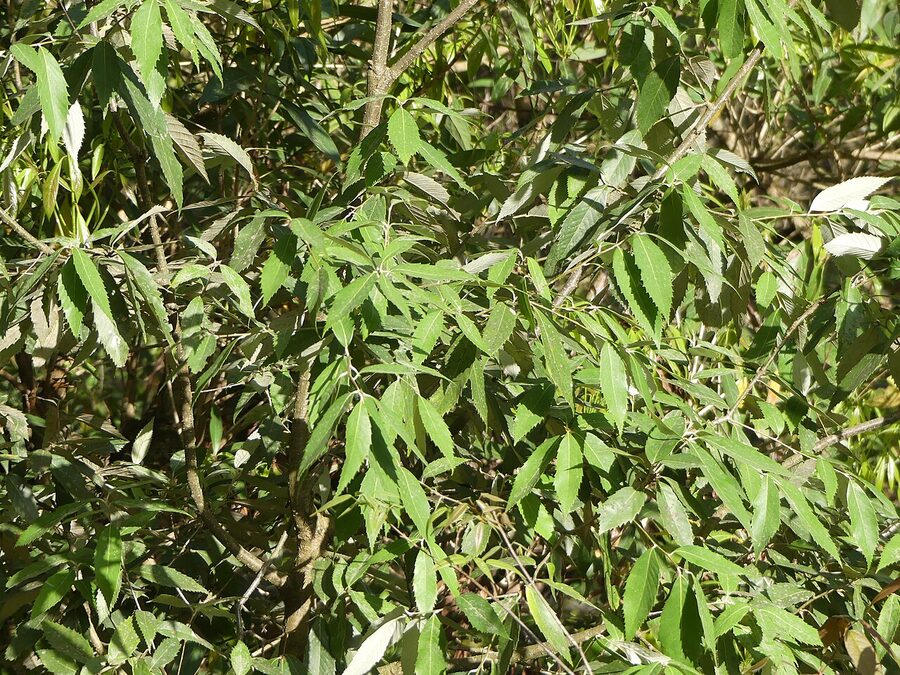
Above about 2,000 metres the chir thins out and you start to walk into the ban oak (Quercus leucotrichophora), the white oak that defines so much of the central western Himalayan forest. This is the workhorse tree of the sanctuary and the species most worth slowing down to look at. Ban oak grows to a moderate height with a broad spreading crown, dense evergreen leaves with a characteristic whitish underside, and an understorey that is thicker and richer than the chir below. This is the band where most of the small mammals shelter, where the kalij pheasants spend the day, and where the leaf litter is deep enough that you will hear walking long before you see anything walk. The oak forest in Chail is one of the better-conserved patches at this elevation in the western Himalayas; in much of Uttarakhand and the lower-altitude Himachal districts the ban oak has been heavily lopped for fodder and replaced by chir.
Higher up still, on the cooler northern aspects above roughly 2,100 metres, the oak gives way to deodar. Cedrus deodara dominates the highest band of the sanctuary on the slopes above Khurin and on the ridge that carries the road across to Sadhupul. The deodar here is mature, much of it over a hundred years old, with the straight trunks the species is famous for and the slightly drooping branch tips that are the easiest field mark for distinguishing it from the imported Atlas cedars planted in colonial gardens. Mixed in with the deodar at the upper elevations are smaller stands of kail (Pinus wallichiana, the blue pine), spruce, and the occasional fir on the coolest north-facing pockets. Where the canopy opens out above the patrol path you find grass clearings rather than true alpine meadows. The Chail sanctuary is too low for proper alpine country; the highest point is around 2,225 metres on the ridge, well below the local treeline.
The grassland zones are small and almost all anthropogenic in origin. They are old shoot platforms and grazing lawns that the Patiala state maintained and that the Forest Department now keeps open for the cheer pheasant. The cheer needs steep open grass on south or south-west facing slopes to display in spring; it is one of the only Himalayan pheasants whose habitat requirement actively benefits from a moderate level of human disturbance. The trade-off the sanctuary management has had to make for cheer recovery is to keep some of the historic clearings open rather than letting them grow back to oak.
What You Can Realistically See
The sanctuary’s species list is genuinely good. Leopard (Panthera pardus fusca), Himalayan black bear (Ursus thibetanus laniger), sambar (Rusa unicolor), barking deer (Muntiacus vaginalis, the northern red muntjac), Himalayan goral (Naemorhedus goral), wild boar (Sus scrofa), rhesus macaque, common langur, Indian crested porcupine, the red flying squirrel, and at least 140 bird species including five resident pheasants. The realistic summary is that you will probably see one or two of the small mammals, hear several of the birds, and catch the larger species mostly in tracks and droppings. That is normal for any small Indian sanctuary at mid elevation. What you will not see, despite what some packaged tours imply, is a wild leopard on a casual day-walk; the sanctuary’s leopard population is small, almost wholly nocturnal, and resident in the steeper rocky pockets above the grasslands.
The Pheasants
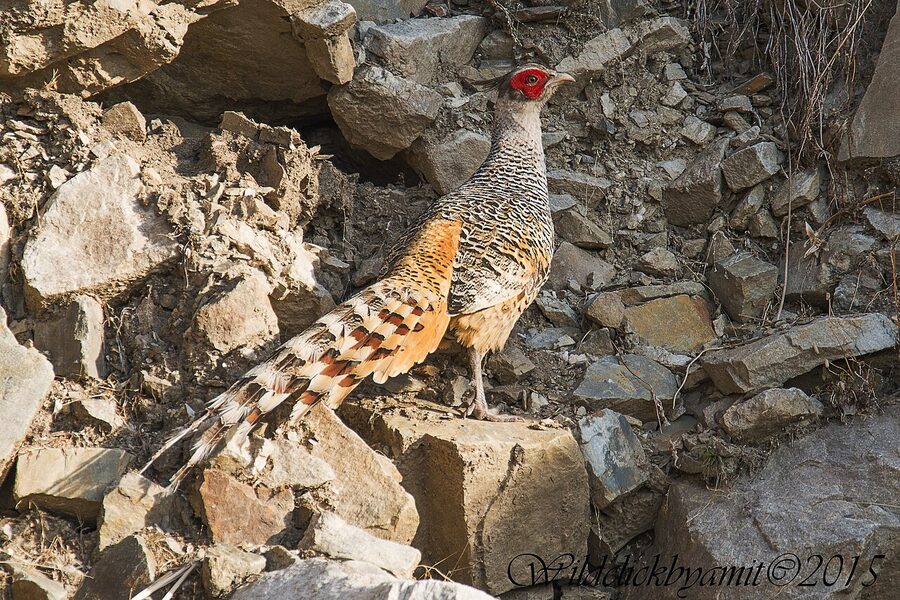
The cheer pheasant (Catreus wallichii) is the conservation flagship of the sanctuary. Listed as Vulnerable on the IUCN Red List, the cheer is a long-tailed mottled-brown pheasant adapted to steep open grassland between about 1,400 and 3,000 metres in the western Himalayas. It declined dramatically through the twentieth century from hunting and grassland conversion. The captive breeding centre at Chail was set up in 1988 with imported and locally captured stock, and has been releasing birds in small numbers into the surrounding habitat ever since, along with releases at Blossom and Jhaja within the sanctuary. The wild population in Chail today is small, perhaps a few dozen birds, and concentrated on the south-west facing grasslands the breeding programme has worked hardest to keep open. Seeing a wild cheer is not easy; the bird is shy, cryptically coloured, and the call is a far-carrying double whistle that will tell you one is in earshot but rarely lead you to it. The best chance is at first light from late March to early May during the breeding season, on the open grass above Jhaja or near Blossom. Even with that effort, plan on three or four mornings to have a realistic chance.
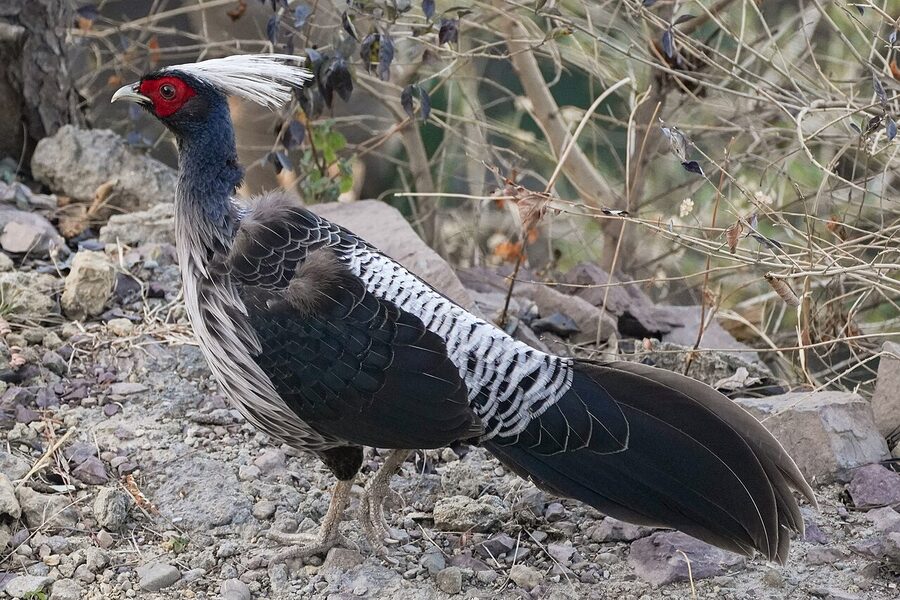
The kalij pheasant (Lophura leucomelanos) is the realist’s pheasant. Common throughout the western Himalayan oak belt between 1,500 and 2,500 metres, the kalij is the bird you are statistically most likely to see in the sanctuary. The male is striking: glossy blue-black with a backward-curving crest and a white-fringed tail. The female is a uniform mottled brown that disappears into the leaf litter the moment she stops moving. Both sexes feed on the forest floor on insects, fallen seeds, oak mast and young shoots, and both are most active at first light and last light. If you walk the Khurin patrol path quietly between 6 and 7 in the morning in the cooler months, you will probably hear at least one kalij and stand a fair chance of seeing one cross the path.
Other gallinaceous birds on the sanctuary list include the koklass pheasant (Pucrasia macrolopha), the chukar partridge (Alectoris chukar), the black francolin in the lower thorny scrub, and historically the Himalayan monal (Lophophorus impejanus). The monal, the state bird of Himachal Pradesh, is at the southern edge of its altitudinal range here; it is recorded from the high ridges in winter when birds move down from higher elevations, but it is much more reliably seen in the larger sanctuaries further north such as the Manali Wildlife Sanctuary. The koklass is a forest pheasant of dense oak and conifer; you will hear its loud crowing call at dawn but seeing it is luck. The chukar prefers the rockier open ground above Blossom.
The Deer and Goat-Antelope
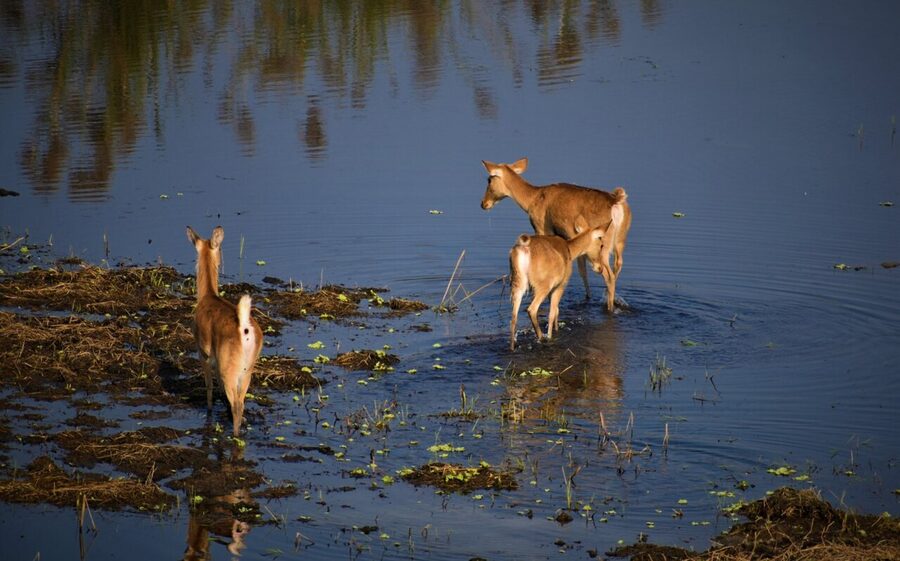
The barking deer or kakar (Muntiacus vaginalis, formerly grouped with M. muntjak) is the second-most-likely sighting after the kalij. A small reddish-brown deer about the size of a setter, with short antlers in the male and a sharp dog-like alarm call that gives the species its common name. The bark is the most characteristic sound of the oak forest after the kalij call; you will hear it most often in the mid morning when the deer is disturbed by langurs in the canopy or by approaching humans. The barking deer is solitary and resident in the oak band between roughly 1,900 and 2,400 metres. With patience and a slow walk on a quiet trail, you have a fair chance of seeing one cross the path or feeding at the edge of a clearing.
Sambar (Rusa unicolor) are the larger deer of the sanctuary, big animals with shaggy dark-brown coats and the heavily ridged antlers the species is famous for. They are more often nocturnal here and most reliably seen at dusk near water; the small reservoir below the Khurin patrol path and the springs above Jhaja both have sambar tracks at most times of year. Sambar populations across India have declined sharply over the past decade, primarily through poaching for meat and conflict with leopard prey-base shifts; the Chail population is estimated at a few dozen animals.
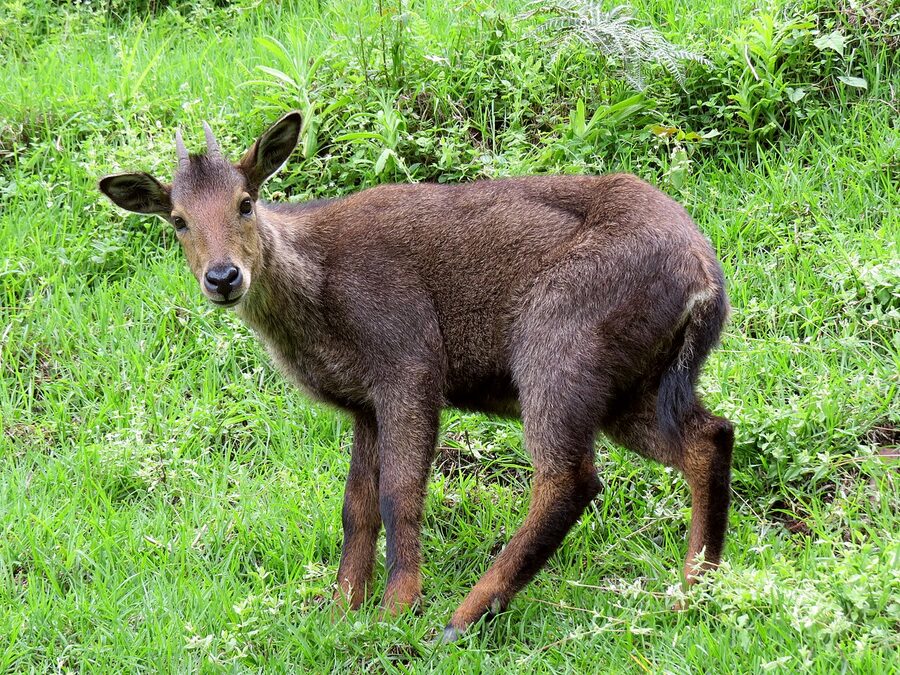
The Himalayan goral (Naemorhedus goral) is the surprise of the sanctuary’s mammal list for many first-time visitors. A small grey-brown goat-antelope rather than a true antelope or a true goat, with short backward-curving horns in both sexes and a dark stripe down the spine, the goral lives on steep grass and broken rock between about 1,600 and 3,000 metres. It is a cliff-edge feeder; you find it on the precipitous south-facing crags above the Ashwani Khad and on the slopes that drop towards Sadhupul. Early morning, before about 8 AM, is when goral come down from the highest pockets to graze the lower grass before retreating uphill for the day. They are wary but not skittish; if you spot one through binoculars and stay still, you will often have ten or fifteen minutes of viewing before the animal moves on. The Chail goral population is one of the better surviving groups at this elevation in central Himachal.
The Carnivores and Bigger Mammals
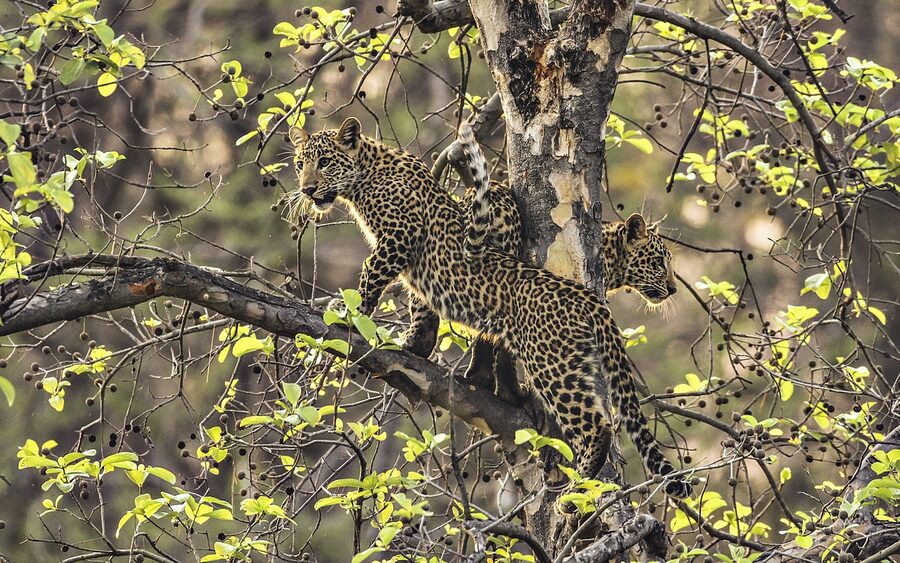
The leopard is the headline carnivore but it is realistically a tracks-and-traces species for the day visitor. The Chail leopard is Panthera pardus fusca, the Indian subspecies, the same animal that occupies the Shivalik foothills below and that occasionally makes the news for conflict incidents in towns from Solan down to Kalka. The sanctuary holds a small resident population, probably under ten adult animals, almost wholly nocturnal and concentrated on the rocky terrain above Junga and the broken country east of Jhaja. Forest staff occasionally see them on patrol at dawn; tourists almost never do. What you will see, if you walk the patrol paths attentively, are pugmarks in soft mud near water, scrapes at trail intersections, and scat with sambar or goral hair in the contents. That is the realistic leopard experience here.
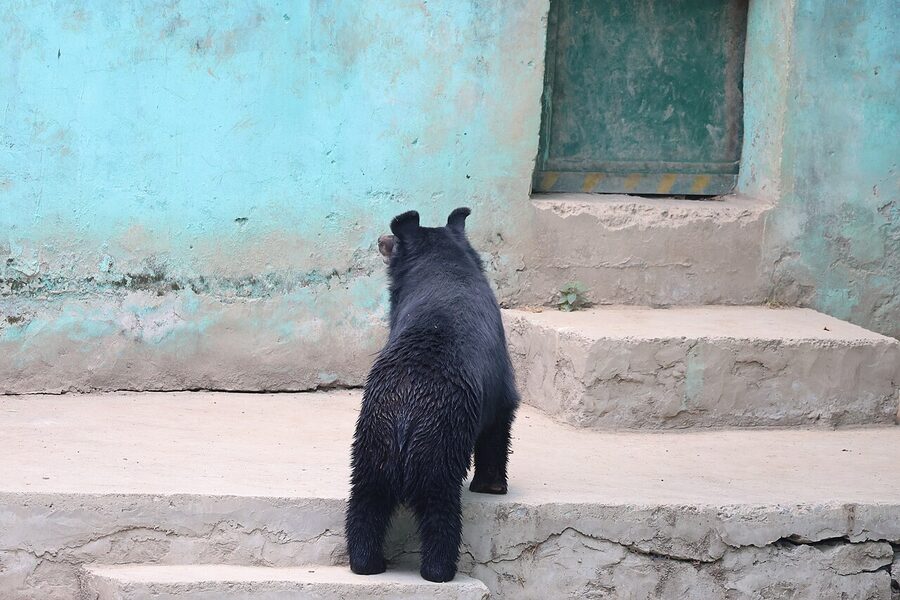
The Himalayan black bear (Ursus thibetanus laniger) is the second large carnivore. Smaller than its Asian and American cousins on average, with the distinctive cream V or crescent on the chest, the black bear here is mainly an oak-forest forager: acorns, fruit, insects, and the occasional small mammal. Numbers in the sanctuary are low. Where the bear becomes a concern is at the boundary, where settlements grow apples, maize and apricots on the edges of the protected land. Late summer and early autumn is when bears come down to feed in orchards and where occasional human-bear encounters happen; the Forest Department posts warnings at trailheads when there is recent activity. Take them seriously. A surprised bear at close quarters is genuinely dangerous, and the safe response is to back away slowly without turning, not to run.
The other large carnivore worth mentioning is one that should not be here at all: the European red deer (Cervus elaphus). The Maharaja of Patiala introduced a small herd of European red deer into the Chail forest in the early twentieth century as a trophy-hunting attraction. The herd survived for several decades, but by the 1988 census the Forest Department recorded no sightings, and subsequent surveys have not found any. The European red deer is officially regarded as locally extirpated from Chail, an interesting historical footnote rather than a living species in the sanctuary today.
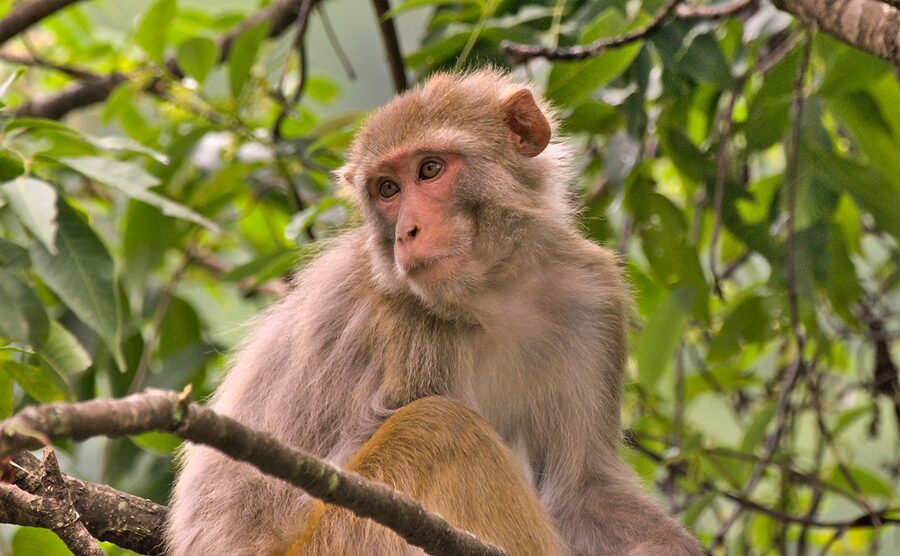
The rhesus macaque (Macaca mulatta) is the species you will see most often, and not always in good circumstances. Macaque troops use the road sections through the sanctuary as travel corridors and have learned to associate parked cars and walking tourists with food. The Forest Department’s standing request, which is worth following: do not feed the macaques, do not eat openly on the trails, and do not leave car windows down even briefly at parking pull-offs near the Chail Palace and the cricket ground. The common langur or grey langur (Semnopithecus entellus) is the more attractive of the two primates; you will see langur troops moving through the upper oak canopy, and their alarm call is one of the early indicators that a leopard is somewhere in the vicinity.
Smaller mammals on the sanctuary list, generally seen as tracks rather than animals, include the Indian crested porcupine (visible at dusk on the lower forest roads), the red flying squirrel (which glides between deodar tops at last light), the Himalayan palm civet, the yellow-throated marten, the black-naped hare on the grass clearings, and the Indian wild boar in the chir pine zones below.
Birds Beyond the Pheasants
The Chail sanctuary’s bird list runs to over 140 species, the result of its position at the meeting of the Shivalik and outer Himalayan avifaunas. eBird records the area as an active hotspot under the Chail Wildlife Sanctuary code; the Birds of the World account for the western Himalayan oak forests is the standard reference for what to expect at this elevation.
For a casual visitor with binoculars and a half-decent field guide, the birds worth watching for are the woodland species of the oak band: white-throated laughingthrushes in noisy parties moving through the understorey, the streaked laughingthrush at the forest edge, several nuthatches and treecreepers, the rufous-bellied woodpecker drumming on standing deodar, multiple species of warblers in spring and autumn, the blue whistling thrush along the streams, the verditer flycatcher in summer, and at higher elevations the red-billed blue magpie, the spotted forktail along the rivulets, and the chestnut-crowned laughingthrush in mixed parties.
Raptors are limited but present. The Himalayan vulture, occasionally the cinereous vulture in winter, the bearded vulture rarely on the upper ridges, the black eagle ranging the slopes for langur kills, the booted eagle in the lower country, and a steady population of mountain hawk-eagles. Owls of the night list include the collared owlet, the brown wood owl in the deeper deodar, and the Himalayan owl on the higher cliffs. Serious birders will want to be on the trail before sunrise; the dawn chorus runs hard from about 5:30 to 7:00 in summer, then drops sharply.
Walking the Sanctuary
The standard day-walks within the sanctuary are easy by Himalayan standards. The trails are old patrol paths and shepherd routes, mostly under canopy, with moderate gradient and short distances. Fitness requirements are low. The reward is more about the time you give the forest than the distance you cover.
The Khurin Watchtower Loop
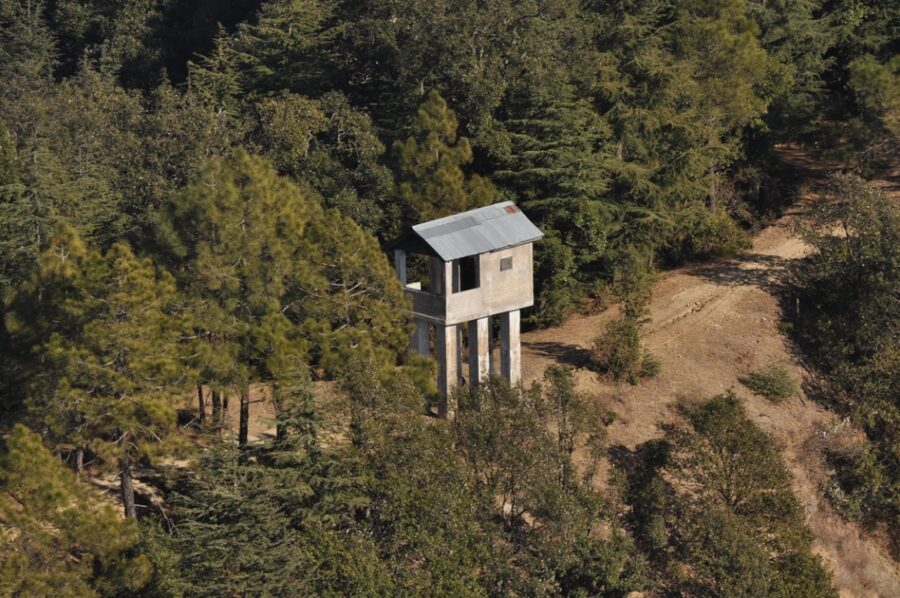
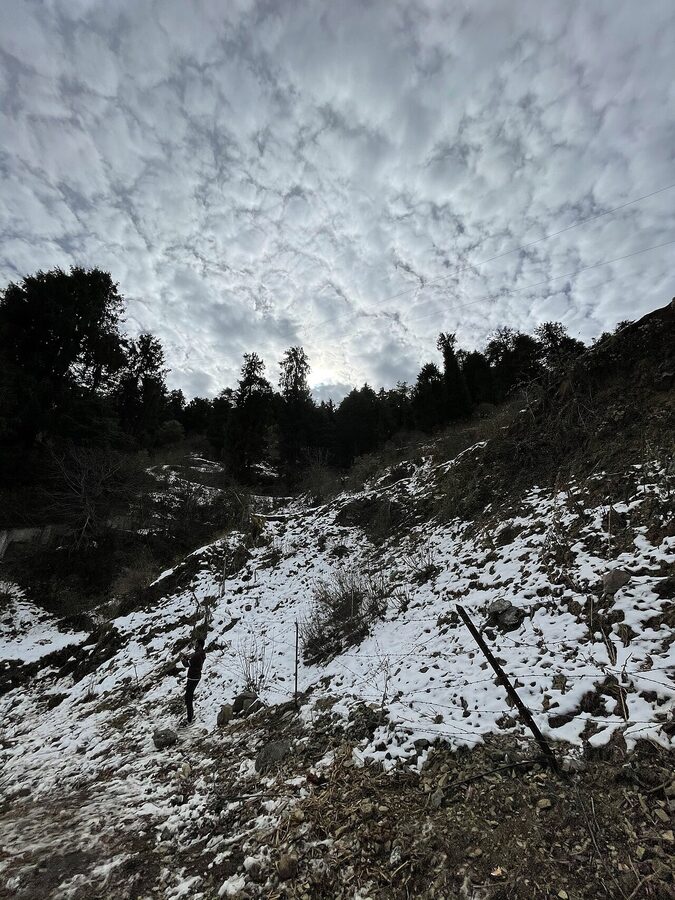
The most rewarding short walk for a first-time visitor is the loop from the Khurin entry point up to the Forest Department watchtower, around the upper ridge, and back down through the deodar to the road. The total distance is about 5 kilometres with around 250 metres of elevation gain. A moderate walker with a packed lunch will spend three hours on this comfortably; a serious birder with a tripod and a scope will spend the whole morning. The watchtower itself is a small wooden platform set on a stone base on a small clearing; the climb is a single ladder and the platform takes three or four people at a push. The view at first light is the best in the sanctuary: deodar canopy stretching to the north and east, the Chail palace silhouette on the parallel ridge, and on a clear winter morning the snow line of the Pir Panjal in the far distance.
The catchment around the watchtower is good for kalij pheasants, barking deer, and a steady stream of forest birds. Stand on the platform without speaking for half an hour at first light and you will pick up at least a dozen species without moving. Climb at the wrong time of day (mid-morning to mid-afternoon, when the forest is quiet) and you will get the view but very little wildlife.
The Jhaja Cheer Pheasant Walk
The route from the Jhaja Forest Department station out to the open grasslands where the cheer pheasant breeding programme has been releasing birds is the second walk worth knowing about. It is about 3 kilometres each way on a graded forest track, gaining around 150 metres before the trail breaks out onto the south-facing grass. The breeding centre itself is not formally open to the public on most days; you can see it from the track and Forest Department staff at Jhaja will sometimes show visitors round if you ask in advance, but it is not a guaranteed visit.
The walk is most rewarding in late March and April when cheer males are calling from the grass in the early morning. The bird is hard to see and the call is a far-carrying double whistle that can fool you into thinking the bird is closer than it is. Persistence is rewarded; sit quietly on the slope at the head of the grassland and let the morning develop. By eight or nine the calling tapers off and the birds drop into cover for the day. In autumn, when the breeding season is over, the chance of a cheer sighting drops considerably; the open grass remains a good general bird walk but the headline species recedes.
The Blossom Patrol Path
The third standard walk is the patrol path west from the Blossom range office towards the Junga road. This is a longer, lower-elevation route running through the chir-pine and oak transition; about 7 kilometres each way at a steady downhill on the way out and a moderate climb back. The wildlife here is slightly different: more chukar partridge, more black francolin, and on the south-facing rock the highest concentration of goral in the sanctuary. The Blossom path is also the warmest of the three walks because it sits lower; in summer it is hot work even in the morning, and in winter it is the warmest option for a walk on a cold day.
None of these three trails is signposted in any continuous way once you are past the entry gates. Take the wider, more obviously trodden line at junctions and keep the line of forest department stone cairns in sight where you have them. If you are walking solo, tell your accommodation where you are going and what time you expect to be back. Mobile signal is patchy on the Khurin loop, sporadic at Jhaja, and intermittent at Blossom.
Practical: Entry, Timings, Fees
Entry to the Chail sanctuary is informal at most points and there is no single ticket gate the way you find in larger national parks. Where fees are charged at the trailheads, they are nominal: typically 100 rupees per Indian visitor and 200 rupees per foreign visitor for day entry, with discounted rates for senior citizens, students with a valid identity card, and locally registered birders. Camera fees are usually waived for personal cameras and small phones; professional photography equipment, video gear, and tripods may attract a separate fee at the discretion of the range officer on duty. These rates are widely reported by visitors and are consistent with what other Himachal sanctuaries charge in 2026; check at the gate on the day for current published rates.
The sanctuary is officially open from 7 AM to 6 PM in the summer months (April to October) and 8 AM to 5 PM in winter (November to March), though the patrol paths in practice are walked by locals and forest staff outside these hours. The recommended hours for wildlife are first light to about 9 AM and the last hour and a half before sunset. Middle of the day in the sanctuary is reliably quiet in mammal terms; the birds drop into shade and the larger animals lie up. Do not bother walking the trails between 11 AM and 3 PM unless you are doing it specifically for the forest atmosphere.
For overnight camping inside the sanctuary, you need permission from the Wildlife Wing of the HP Forest Department in Solan. The rest huts in the sanctuary are basic Forest Department buildings used by patrol staff; they can occasionally be reserved by serious researchers and photographers but are not part of the regular tourist circuit. There is no commercial accommodation inside the sanctuary boundary. Visitors stay at the Chail Palace, in the cluster of mid-tier hotels along the Chail bus stand road, or at one of the resort properties between Chail and Sadhupul; our overview of Chail hotels covers the practical options. For a wider Himachal context, the broader hotels in Himachal page sets out the pattern of HPTDC and private properties across the state.
The nearest authorised guides are not the village touts at the bus stand but the staff at the Chail range office and the Solan-based Himachal Wildlife Department. A serious birding visit benefits from a half-day with a Forest Department guide who knows where the cheer is currently displaying and where the recent leopard sightings have been; expect to pay 1,500 to 2,500 rupees for a half-day guide with the ability to walk the patrol paths legally. The general district tourism note at hpsolan.nic.in is the official Solan administration’s reference for Chail; the wildlife wing’s page on the broader himachaltourism.gov.in portal lists the protected areas of the state.
When to Go
The sanctuary is open year-round but offers very different experiences in different months. The brief version: late March to early May for the cheer pheasant and the spring bird activity; mid October to late November for the cleanest air and the best wildlife visibility after the monsoon; mid December to mid February for the snow walks and a chance at the very rare snow-driven monal. Avoid mid July to mid September for the monsoon, when the trails are slippery and leeches are active in the lower oak forest.
Late March to Early May: The Cheer Pheasant Window
This is the single most rewarding window for serious wildlife visitors. The cheer pheasants are calling and displaying on the open grasslands at Jhaja and Blossom; the kalij pheasants are at the most visible point of their breeding cycle; the smaller passerines are in spring plumage and singing; the leopards become slightly more visible as they follow prey movements. The weather is good: daytime temperatures on the trails between 18 and 25 degrees, dropping into single digits at night. Hotel rates in Chail are low because the main domestic tourist season has not yet started. The downside is dust on the lower trails as the chir-pine litter builds up before the monsoon, and the genuine fire risk in the chir belt; major sanctuary fires have happened in late April more than once in the past decade.
Mid October to Late November: The Post-Monsoon Window
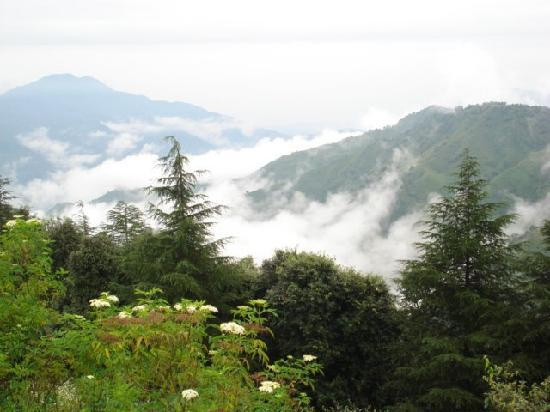
Post-monsoon air clears in the third week of September and stays clean through to the first heavy snow, usually in late November or early December. Daytime temperatures on the lower trails sit between 12 and 20 degrees, dropping into the low single digits at night. The chir pine has dropped its summer needles and the oak holds its leaves. The crowds in central Chail drop sharply once the school holidays end in early September. Hotel rates fall by half. October is often the cleanest air of the year and the best photographic light for the panoramic views from the Khurin watchtower. The trade-off is that the cheer pheasants are not displaying and are much harder to find.
Mid December to Mid February: The Snow Window
This is the quiet season for the sanctuary, with almost no tourist traffic on the trails. The lower forest is silent; mammal tracking in fresh snow is far easier than on the dry summer floor; and the chance of seeing prints of leopard, goral or sambar is much higher than at any other season. The Himalayan monal, much more reliably found further north, occasionally drops down to the upper Chail ridges in heavy-snow years. Daytime temperatures sit around freezing, dropping to minus three or minus five at night. You will need proper insulated boots with grip; trail shoes will not be enough on the higher path. The high routes are walkable on a clear day but treacherous after fresh snow. The Chail Palace and a handful of the better hotels stay open through winter; many of the cheaper guesthouses close for the season.
Mid July to Mid September: Avoid the Monsoon
The monsoon hits the lower Himachal hills hard. Daily afternoon rain through July and August makes the lower trails slippery and the patrol paths above Khurin genuinely dangerous in places where the soil is loose. Leeches are active in the lower oak forest from mid June through September. Landslides on the access roads are routine; the Kandaghat-Chail road in particular has had multiple closures. If your only available window is monsoon, accept that the day-walks will be wet and that the cheer pheasant grasslands will be unwalkable.
What to Bring
For a day-walk on any of the three standard trails, the kit list is short. Water, at least 1.5 litres per person; a packed lunch (the Chail Palace will pack you a sandwich and fruit in advance, as will the better hotels along the bus stand road); sunscreen even in winter; sunglasses; a fleece or windproof jacket regardless of season because the wind on the Khurin watchtower is sharper than the temperature suggests; a small first-aid kit; a torch for the late descents in winter when dusk arrives suddenly; trail shoes or low hiking boots, never plain trainers because the path is dusty in summer and slick in patches in monsoon and after fresh snow.
For wildlife specifically, two pieces of kit make the difference. Binoculars in the 8×32 to 10×42 range; without them the cheer pheasant calls become disembodied sounds and the sambar at the water’s edge becomes an indistinct grey shape. A field guide; the Birds of the Indian Subcontinent (Grimmett, Inskipp and Inskipp) is the standard, with the more compact Pocket Guide if you do not want to carry the full edition. Phone identification apps work for the common species but struggle with the laughingthrushes and warblers that dominate the western Himalayan oak.
What not to bring: no plastic packaging or single-use bottles inside the sanctuary boundary (the Forest Department enforces this and will turn you back at the gate if you have obvious plastic), no music players, no food intended for animals (especially not for the macaques on the road sections), no drones (an aerial photography permit is required, applied for through the state Wildlife Wing in advance, and not casually granted). Dogs are not permitted past the gates. Children under eight will find the standard loops too long; do the Khurin trail as far as the watchtower (about an hour and a half one way) and turn back.
The Wider Chail Picture
The wildlife sanctuary is one slice of a small but unusually rich Chail visit. The main built attractions sit just outside its boundaries and the sensible itinerary pairs them with the trail walks rather than treating either in isolation.
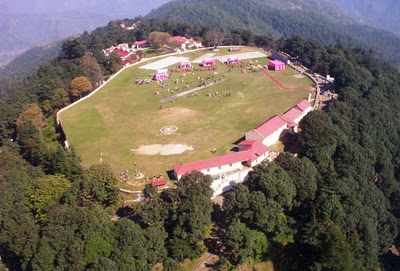
The Chail Palace, on Rajgarh hill a short ride from the sanctuary’s western entrances, is the obvious first pairing. The 1951 heritage hotel, run by the Himachal Pradesh Tourism Development Corporation, was built on the site of the Patiala royal family’s original 1891 summer retreat. Its 75-acre grounds are the largest forested block of the immediate Chail town, and they connect directly into the sanctuary’s western flank. Reading the Chail Palace guide is sensible context for understanding why the sanctuary is here in this particular shape; the breeding programme, the historical European red deer introduction, and the watchtower system all trace back to the Patiala court.
The cricket ground at 2,444 metres on Patiala hill is the second built site worth seeing. Built in 1893 by the same court as part of its summer infrastructure, the ground is still in use; school and military matches are played here during the season. It is also surrounded by sanctuary deodar on most sides, which means that if you walk the perimeter at first light you have effectively done a half-hour pre-breakfast bird walk. The polo ground that the Patiala court also used has been converted to other use and is no longer in its original form.
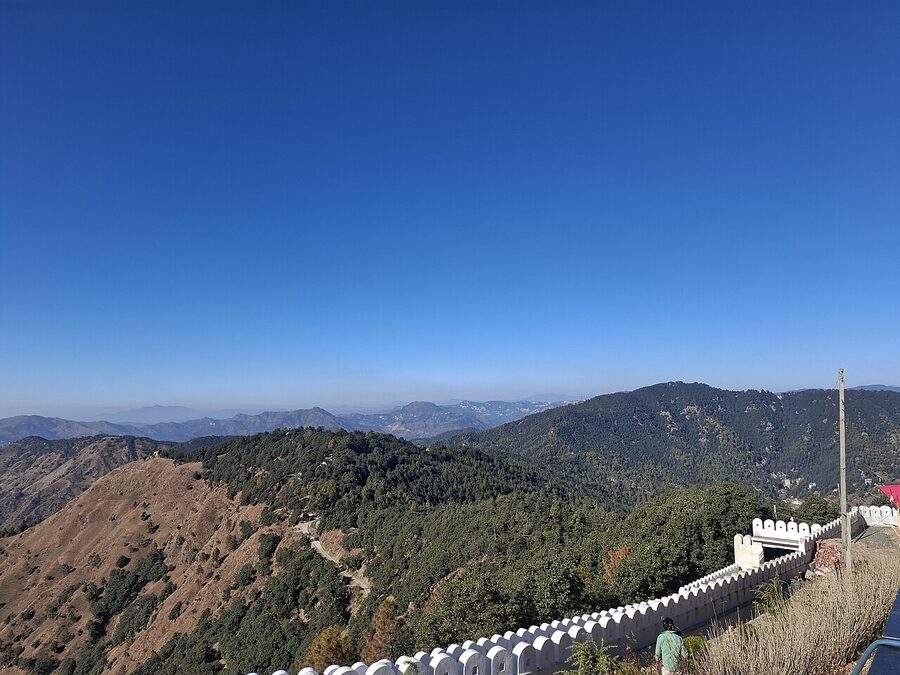
The Kali Ka Tibba temple sits on a high ridge a few kilometres west of Chail town. The shrine itself is a small Kali temple of the kind common across these mid-elevation Himachal ridges; the dome is white, the interior is simple, and the priest is usually on hand at first light and again in late afternoon. The walk up from the road is a short climb through oak forest, with the panoramic ridge view widening at every switchback. The lane passes through what is technically sanctuary land, so you are effectively walking the same forest type as the inner trails. Many visitors combine a Kali Ka Tibba sunrise with breakfast back at the Chail Palace and a longer sanctuary walk in the late morning.
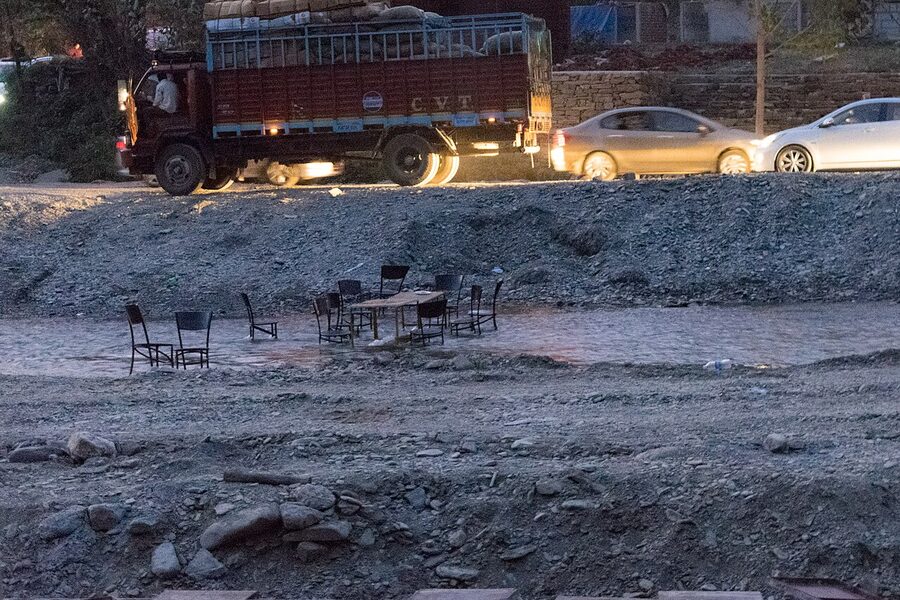
Sadhupul, on the Ashwani Khad below Chail, is the standard road stop on the way up from Kandaghat. A small bridge with the well-known in-river restaurant directly beneath it serves tea, pakoras and basic Indian-Chinese food to passing traffic. The river here is the eastern boundary of the sanctuary; the trout-stocking along the Ashwani Khad is run by the Fisheries Department in coordination with the Forest Wildlife Wing. Sadhupul is a five-minute stop in either direction and worth the pakoras whether or not you are walking the sanctuary that day.
For visitors with longer in their plan, the broader Chail-Shimla loop pairs naturally with day visits to Kufri (the small ski resort and the Himalayan Nature Park, which has captive specimens of several of the sanctuary’s mammals), the Kasauli ridge to the south for a quieter cantonment hill town, and onward to Shimla for the Mall and the colonial-era buildings. For trip planning at the package level, see our overview of Himachal tour packages and the Delhi to Manali transport options if you are coming up overland from the plains. Couples making a romantic Chail-Shimla swing should also look at the dedicated honeymoon in Himachal guide, which covers the quiet Chail Palace stay and the Naggar/Sethan alternatives further north.
The Sanctuary in the Wider Himachal Wildlife Picture
Chail is one of around thirty notified wildlife sanctuaries in Himachal Pradesh, alongside five national parks. By the standards of the system it is small, accessible, and primarily a pheasant and oak-forest reserve. To put it in context: the Manali Wildlife Sanctuary, three valleys north, covers a broadly similar area but with a much steeper elevation gradient running from deodar at 1,950 metres to glacier at over 5,000; the species mix there includes snow leopard, brown bear, ibex and tahr that Chail does not have. The Great Himalayan National Park, further south in the Banjar valley, is more than seven times the size of Chail and is the state’s flagship UNESCO World Heritage Site. The Pin Valley National Park in Spiti and the Kibber Wildlife Sanctuary on the Tibetan plateau cover the high cold-desert end of the system.
What Chail offers that those larger reserves do not is accessibility. You can be on a sanctuary patrol path within fifteen minutes of breakfast at the Chail Palace. You can do the cheer pheasant walk and be back for lunch. You can pair a serious birding morning with a heritage stay and a cricket-ground sunset. None of the bigger reserves offer that combination at this elevation. The trade-off is that you will not see snow leopards or brown bears or anything like the species spectacle of a serious wildlife trip to Spiti or the Trans-Himalaya. For the wider state context, the Forest Department maintains a sanctuaries register on the Himachal Pradesh Forest Department site, and our own broader overview of wildlife in Himachal sets out how the small reserves like Chail and Simbalbara fit alongside the larger national parks in the conservation system.
The Pressures the Sanctuary Faces
Chail’s small size and proximity to a working tourist town make it an interesting case study in the everyday pressures on a mid-elevation Indian sanctuary. The recurring issues, as the local Forest Department documents them, are five.
Fire is the most acute. The chir-pine litter on the southern slopes burns easily and the major dry-season fires of recent years have damaged several thousand hectares of forest cumulatively. The Forest Department has made significant investments in fire lines and patrol staffing; the system works in normal years and fails in heatwave years. Climate change is widely believed by the local staff to be lengthening the high-risk window.
Grazing pressure on the open grasslands and the mid-elevation oak. Cattle and goats from the surrounding villages still enter parts of the sanctuary; the Forest Department has a long-standing process of seasonal closure and partial enclosure but enforcement varies. The grasslands the cheer pheasant programme relies on are partly maintained by controlled grazing, so the relationship is not adversarial in all directions. It is a balance.
Roadside tourism pressure. The road that runs through the sanctuary between Chail and Sadhupul is a public road open to all traffic. Tourist vehicles, private cars, taxis and buses use it constantly; macaques work the road as a corridor; and litter accumulates at every pull-off. The Forest Department’s enforcement on packaging and food has helped at the formal trail entries but the road itself is hard to police.
Encroachment at the boundary. Apple orchards, hotels and resort properties have grown along the sanctuary’s eastern and western edges. Most are within their legal limits, but the cumulative effect is to reduce the buffer zone and to bring human activity right up to the protected area’s fence. Bear-conflict incidents in late summer are partly a function of how close the apple trees now grow to the sanctuary boundary.
Climate-driven habitat shift. The oak band is slowly losing ground to chir pine at its lower edge, a pattern observed across the western Himalayas as warming pushes the chir uphill into former oak country. This is a slow process, measured in decades, but it is one of the longest-term concerns for the sanctuary’s character. The cheer pheasant breeding programme, the watchtower system, and the deodar plantations are easier to maintain than the natural oak band that holds most of the wildlife.
The most useful thing a visitor can do is walk without trace. Carry your packaging out. Stay on the patrol paths. Do not feed the macaques. If you see something rare, photograph it but do not post the GPS coordinates publicly; the Forest Department staff at the trailheads will tell you what is being seen recently and they read the eBird hotspot reports closely. They are receptive to genuine interest and unimpressed by the bus-tour visitor who arrives expecting a leopard between the cricket ground and lunch.
Putting a Chail Sanctuary Visit Together
For most visitors the sanctuary is half a day to a full day on a longer Chail or Shimla trip. The morning works best for the wildlife and the late afternoon for the bird activity. The middle of the day is for the cricket ground, the Chail Palace lawns, the Kali Ka Tibba ridge, or a quiet pakora stop at Sadhupul. A two-day Chail visit comfortably gets a serious birder one full sanctuary morning, one of the cultural sites in the afternoon, a Chail Palace night, and a second sanctuary morning before driving on. A three-day stay extends to a longer Jhaja walk for a chance at cheer, a full day on the Khurin loop, and a day for the wider Chail-Sadhupul-Junga ride.
If your itinerary is wider and Chail is one stop on a multi-base Himachal trip, the natural continuation north is to Manali for the Kullu valley sites and the larger Manali Wildlife Sanctuary; the natural continuation east is towards Shimla and beyond to the Sutlej valley. For the cultural circuit south of Chail, the broader tourist attractions of Himachal page lists the temples, festivals and shrines that complete a full state visit, including the major Jwalamukhi Devi shrine in Kangra and the festivals around the larger valleys covered in our fairs and festivals of Himachal roundup. The big calendar set-piece is Kullu Dussehra in October.
Walk the sanctuary at first light. Take the time to listen rather than to look. A morning of patient sitting at the Khurin watchtower will give you more wildlife than a hurried four-hour drive around all three trail heads. The cheer is a difficult bird and the leopard is essentially not seen at all by visitors. What the sanctuary actually offers is a small piece of well-conserved western Himalayan oak forest at the edge of a heritage hill town, a few good walks, and the feeling that the silence of the early morning belongs to you for the length of one cup of tea.