
Most people coming up the Kullu valley drive straight past Naggar without registering it. The bus rattles on towards Manali, the lower turnoff at Patlikuhl flashes past, and another twenty kilometres later they’re queuing into Mall Road for the third time that week. Then they wonder why their hill-station holiday feels like a Delhi mall in cooler air.
Naggar is the answer for slow travellers who got the framing wrong. It sits 22 kilometres south of Manali on the left bank of the Beas, at 1,800 metres, on a steep apple-belt slope that was the seat of the Kullu Rajas for roughly 1,400 years before they shifted the capital downriver. It has a 500-year-old castle, three temples between the 10th and 16th centuries, the Roerich estate, a working village, two restaurants worth the drive on their own, and almost no day-tripper traffic after about 4 PM. If you can spend three nights in the Kullu valley and you don’t want to spend them in Manali, this is where you base.
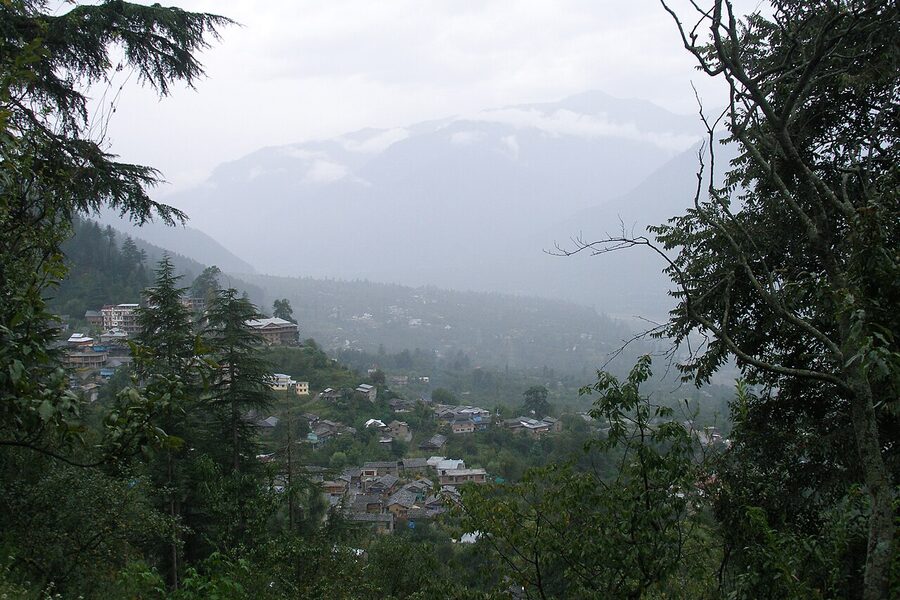
This guide is for travellers weighing Naggar against Manali as a base, and for the smaller group who already know they want to stay here and need the practical detail to do it well. I’m going to be direct about what’s worth your time and what isn’t.
The Castle is a 20-minute stop, not a half-day. The Roerich estate is genuinely good and earns 90 minutes if you read the labels, two hours if you don’t. The temples are where most visitors thin out and miss the best stone-carving in the central Kullu valley.
The angle that pulls everything together is slow travel. Naggar rewards three to five nights, not two. Day-trippers from Manali get 25 percent of what’s actually here, because half the appeal is the upper-village walk in the late afternoon when the bus crowds have left and the light goes that specific Kullu-valley gold that is the reason there’s a Russian painter buried up the hill.
Naggar vs Manali: How to Choose Your Base
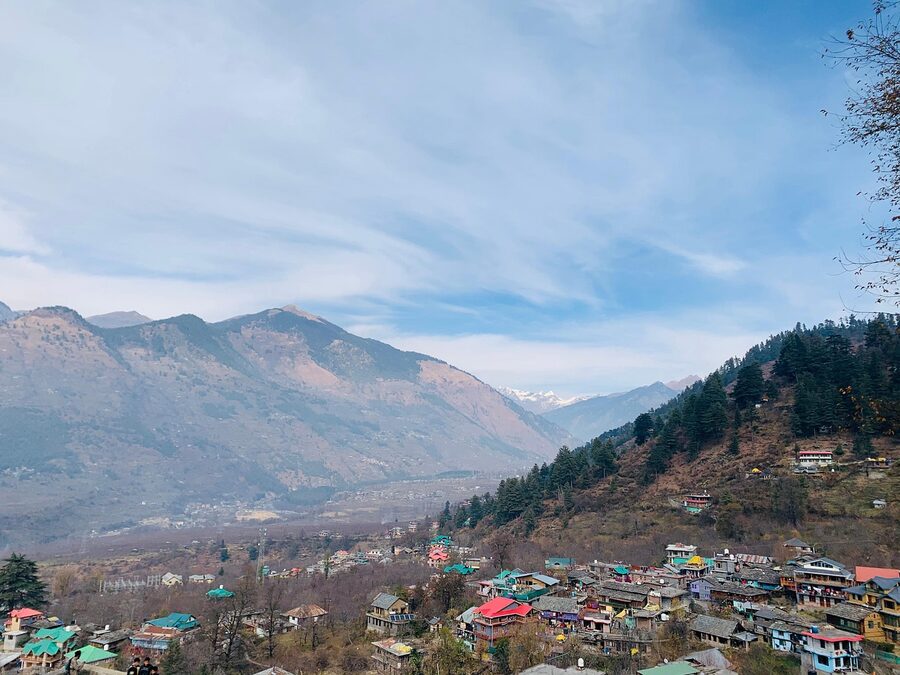
Here’s the comparison most people aren’t told before they book. Both towns sit in the same valley, twenty-odd kilometres apart, on opposite banks of the Beas. They share the airport, the railhead, and roughly the same weather. What they don’t share is what happens after you put your bag down.
| Dimension | Naggar | Manali |
|---|---|---|
| Population | About 1,000 in the upper village | Around 8,000 town, 70,000+ municipal area |
| Elevation | 1,800 m | 2,050 m |
| Daily visitor traffic in May–June | A few hundred | Tens of thousands |
| Heritage / cultural sites in walking distance | 5 (Castle + 4 temples) plus Roerich estate | Hadimba, Manu Temple, mall |
| Typical hotel rate, shoulder season | ₹2,000 to ₹6,000 (~$24 to 72) | ₹2,500 to ₹10,000 (~$30 to 120) |
| Cafes / restaurants in town | About a dozen | Hundreds |
| Atmosphere after 6 PM | Quiet, almost rural | Mall Road in full flow |
| Best for | 3–7 nights, walks, art, slow days | 1–2 nights as a logistics hub for Rohtang / Solang |
If you have one or two nights and you came mainly for snow and Solang and the Rohtang day, base in Manali and pick a hotel with parking. If you have three nights or more, and you came for the valley itself rather than the activities, Naggar is the better call by a wide margin.
The Castle, the Roerich house, and the temples easily fill a day. A second day goes to the upper villages of Rumsu and Chajogi or the Jana waterfall. A third day is a slow Manali run for Mall Road and Hadimba and back, and you sleep that night in your own quiet village rather than in the traffic.
I’d also push the contrarian case for May and June, when conventional advice is to flee. Manali in early June is genuinely hard. Naggar in early June is fine. The day-tripper buses that turn around at Naggar Castle by 4 PM leave the upper village empty for the evening, and you can have the Roerich gardens almost to yourself if you stay until closing.
The History That Makes Naggar What It Is
Naggar was the capital of the Kullu kingdom for roughly 1,400 years. The town was founded by Visudh Pal, an early ruler of the Pal dynasty whose reign is fixed only loosely in chronicles, and it remained the seat of the Kullu Rajas until Raja Jagat Singh shifted the capital downriver to Sultanpur (now Kullu town) in the mid-17th century. Jagat Singh’s move was political. Sultanpur sits on the floor of the wider valley with easier road access, while Naggar sits high and steep, a defensive site that had outlived its usefulness once the wider region was effectively pacified.
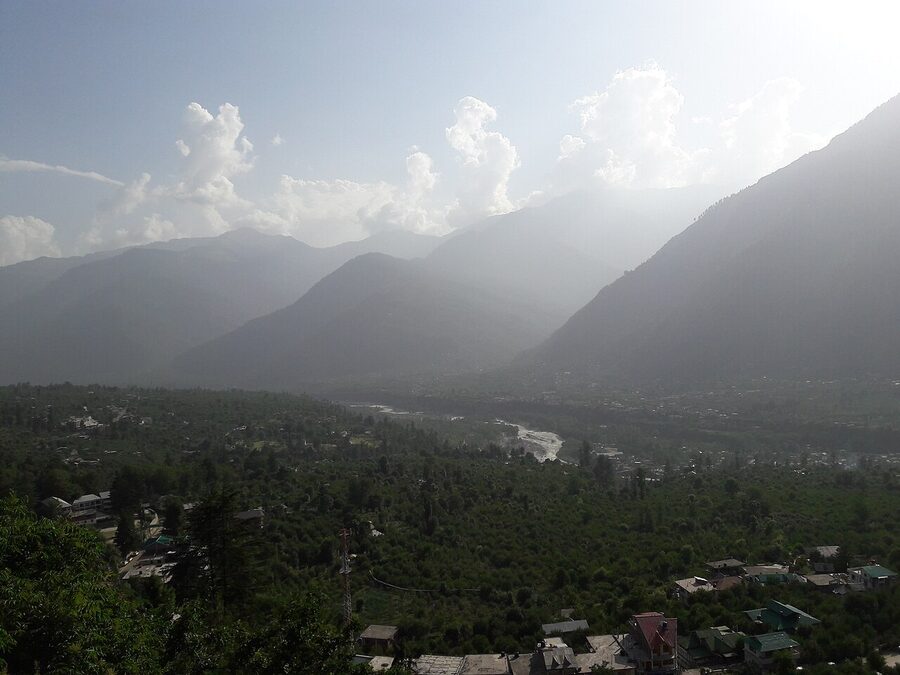
What stayed behind is the reason you come. The Castle, the four old temples, the Jagati Patt shrine inside the Castle compound, and the layered terraces of the apple-belt slope are all from the older, capital-town Naggar.
The Castle survived the 1905 Kangra earthquake that flattened most of the lower valley because of the Kath Kuni building technique used to construct it. We’ll come back to that. The 20th-century overlay, when the Roerich family bought a hilltop estate in 1928 and stayed for two decades, sits on top of that older town without disturbing it.
If you want the longer history of the wider region, the Kullu valley guide sets the context. The chal-murti procession that opens Kullu Dussehra each October starts at Sultanpur, twenty-six kilometres south of Naggar, with the Raghunath idol that Raja Jagat Singh installed when the capital moved. Stand at Naggar Castle in mid-October and you’re looking down the same valley the procession comes up from.
Naggar Castle
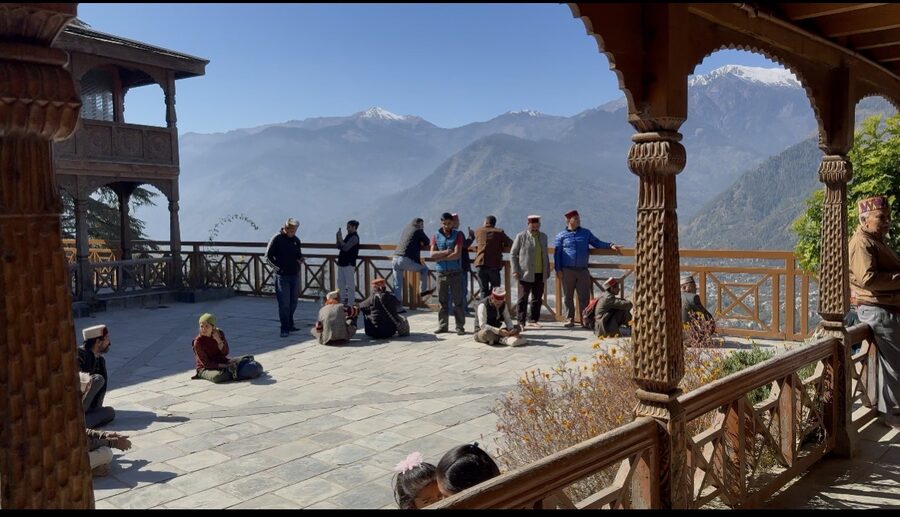
The Castle is the headline attraction and the one most likely to disappoint if you arrive expecting a fortress. It isn’t one. It’s a substantial Kath Kuni timber-and-stone manor, three storeys high, built around a central courtyard with a small stone shrine inside it. Raja Sidh Singh of Kullu built it about 500 years ago using stones, by local tradition, hauled up by a human chain across the Beas from the abandoned palace at Gardhak on the opposite bank.
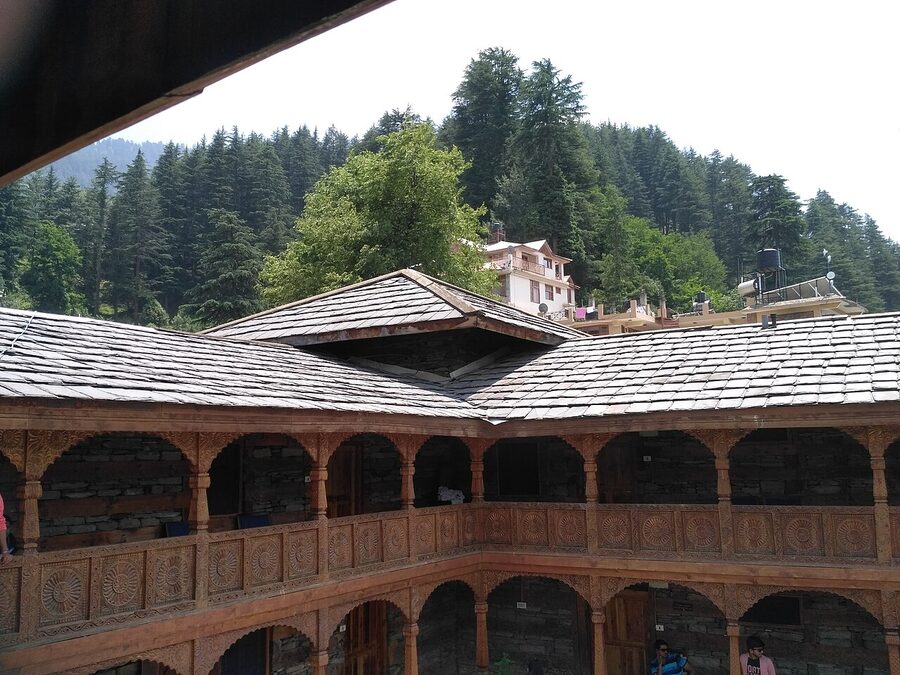
HPTDC took over the Castle in 1978 and has run it as a heritage hotel ever since. Day visitors can walk the courtyards and balconies for a small entry fee in the ₹30 to ₹50 (~$0.40 to 0.60) range. The visit is realistically about 20 minutes if you’re moving, 45 if you read everything and sit on the upper balcony for the view.
There isn’t a museum-grade interpretation effort here. The signs are sparse, the rooms aren’t furnished as period pieces, and the lower courtyard doubles as a tourist photo zone in May.
What’s actually worth seeing
Three things, in priority order. The Jagati Patt shrine in the courtyard is the most historically important object on the property and almost no day-tripper notices it. It’s a slab of stone that local tradition holds was brought from Deo Tibba (the 6,000-metre peak south of Manali) by bees, and it functioned as the Kullu kingdom’s capital-stone. The villagers still treat it as sacred and you should too.
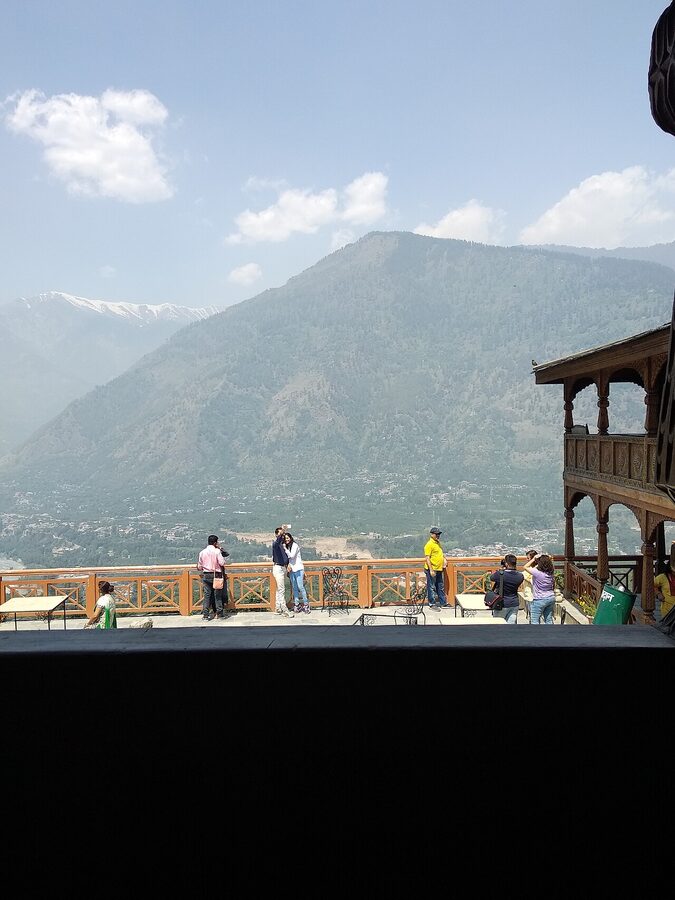
Second, the upper balcony for the view down the valley. Get there in the late afternoon, ideally after 4:30 PM when the day-tripper buses have left for Manali, and the long view runs clean from the Beas to the Pir Panjal.
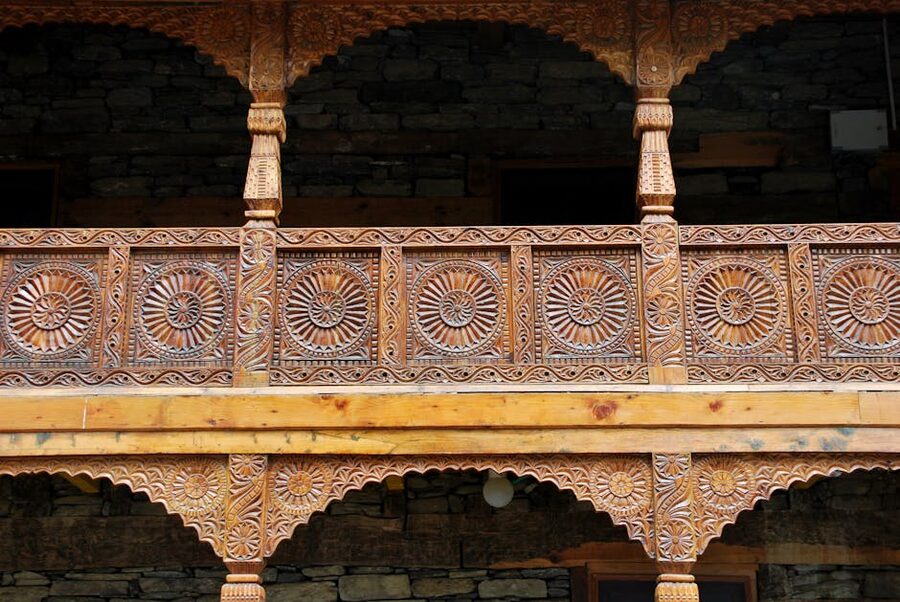
Third, the Kath Kuni woodwork itself. Look at how the deodar logs interlock at the corners with no nails or mortar. The corners are why the Castle stands.
The 1905 quake flattened Kangra, killed 20,000 people, and shook the lower Kullu valley hard. Naggar Castle absorbed it and stayed up.
Should you stay at the Castle?
The Castle has 13 rooms in a heritage-hotel format under HPTDC. Rates run roughly ₹3,500 to ₹7,000 (~$42 to 84) depending on season and room type. The plain verdict: the location is unbeatable, the building is genuinely historic, and the views from the river-facing rooms are excellent.
The service is HPTDC-standard, which is functional rather than refined, and the rooms are dated rather than restored. If you want the heritage experience and don’t mind dated furniture, book it. If you want polished service and modern bathrooms at the same price, book elsewhere in the village.
The Roerich Estate
The strongest reason to come to Naggar isn’t the Castle. It’s the Roerich estate, fifteen minutes uphill on foot, which is one of the most quietly impressive cultural sites in north India and gets a fraction of the visitors a place of its quality should.
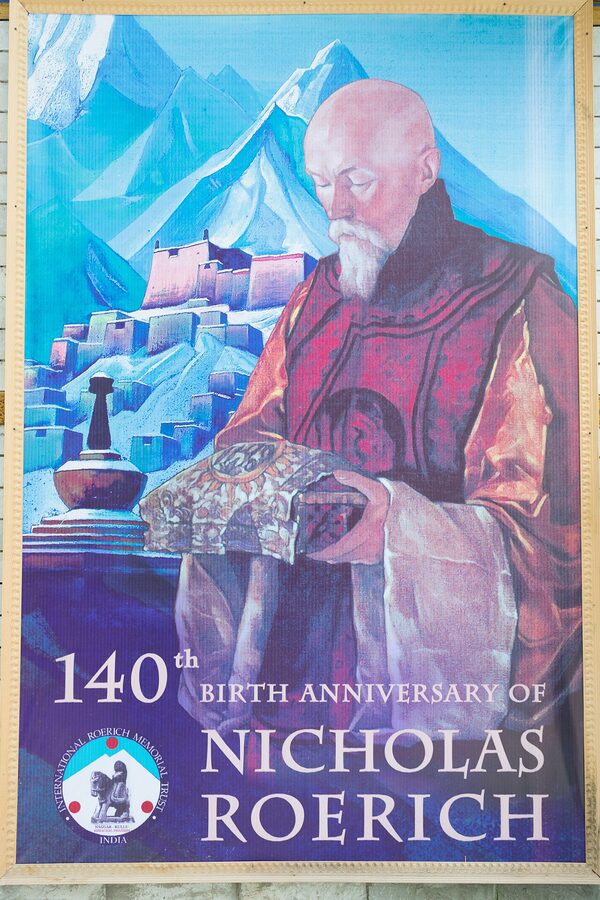
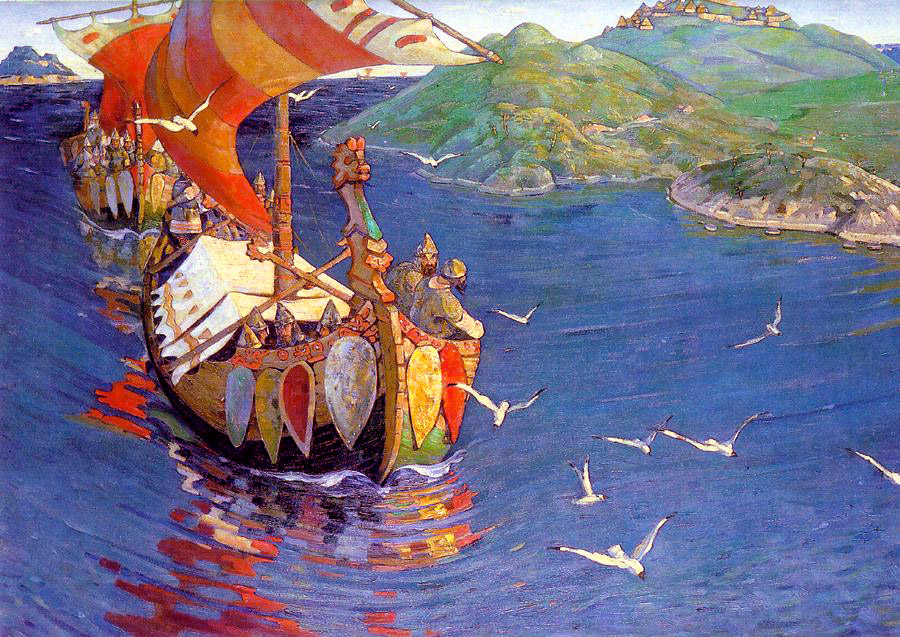
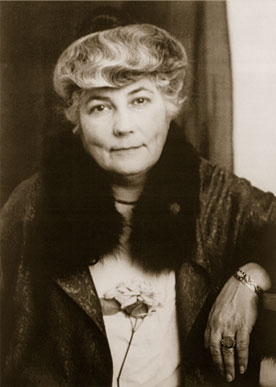
Nicholas Roerich was a Russian painter, archaeologist, philosopher, and Nobel-Peace-Prize-nominated cultural advocate who arrived in Kullu in 1928 with his wife Helena and their two sons after a five-year Central Asian expedition that crossed Mongolia, Tibet, the Gobi, and the Trans-Himalaya. The family liked the valley, bought the hilltop above Naggar from the Raja of Mandi, and stayed. Roerich produced about 2,000 paintings here over the next two decades. He died in Naggar in 1947 and is buried on the property.
What you actually see
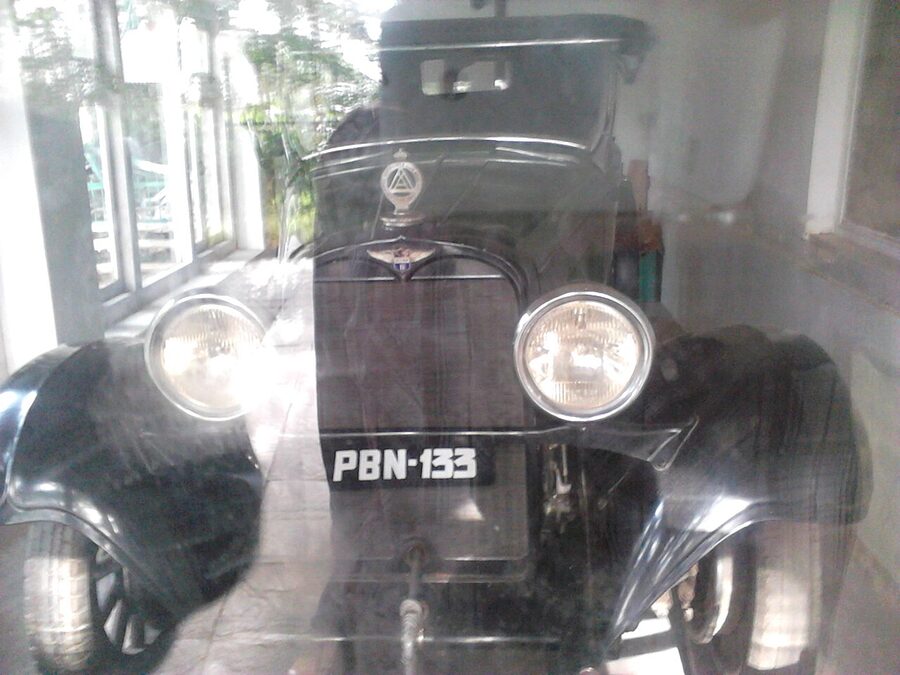
The estate has four parts. The Roerich Art Gallery and Museum, in the family’s two-storey wooden house, is the headline. The ground floor is the gallery, with about 30 to 40 of Nicholas Roerich’s mountain paintings and a smaller selection of his son Svetoslav’s later work. The upper floor preserves the family’s living quarters more or less as they left them, with original furniture, the family library, and Helena’s writing desk by the window facing the valley.
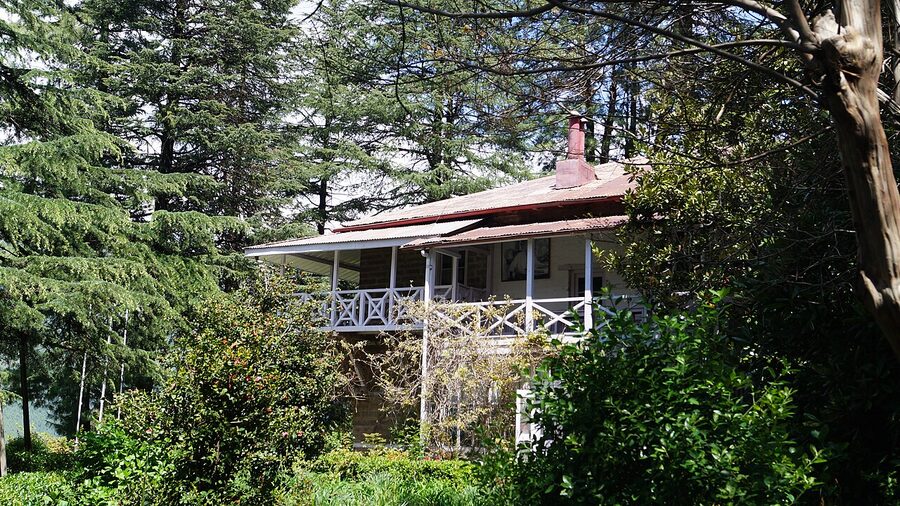
The Urusvati Himalayan Folk and Art Museum sits 200 metres above the gallery on the same hillside. Roerich and Helena founded the original Urusvati Himalayan Research Institute in 1928 to study local botany, ethnology, archaeology, and Tibetan medicine. The institute was active until the early 1940s and the building today houses regional masks, instruments, weaponry, and Roerich’s collection of Buddhist thangkas.
The third part is the gardens. They run between the gallery and the museum and they are easily worth half the visit on their own, particularly in April when the irises and rhododendrons are out, or in October when the deodar light is sharpest. The fourth is the open-air theatre cut into the upper slope, used occasionally for music and dance performances and otherwise quiet.
Practical detail for the visit
Open daily except Monday, 9 AM to 5 PM, last entry around 4:30. Entry is ₹50 (~$0.60) for Indian visitors and ₹200 (~$2.40) for foreigners, paid at the gate; cash and UPI both work. Photography is permitted in the gardens and at the gallery’s exterior, with a small extra charge for camera permission inside the gallery itself.
Plan 90 minutes if you want to read the labels in both buildings, two hours if you want to also walk the gardens slowly. Add a third hour if you want to sit on the slope and look down the valley, which I would.
The argument for going slow here
Most tour groups give the Roerich estate 30 minutes and treat it as a stop on the Manali day-trip loop. That’s enough to see paintings on walls and miss the point. The estate’s value is cumulative: a complete intellectual world, with the gallery, the institute, the gardens, the views, and the family’s own choice to live and die here, all on one hillside.
Sit on the bench above the gardens for half an hour. The hill quietens, the late-afternoon light goes the same gold Roerich painted again and again, and the place starts to make sense as something more than a museum.
The Temples Most Visitors Walk Past
Naggar has four pre-modern temples within a five-kilometre radius and they are the part of the visit that genuinely surprises people. If you’ve already seen the Hadimba in Manali and you came expecting more of the same, these are different. They’re older, more austere, less geared to tourism, and the stone-carving on two of them is among the best surviving in the central Kullu valley.
Gauri Shankar Temple
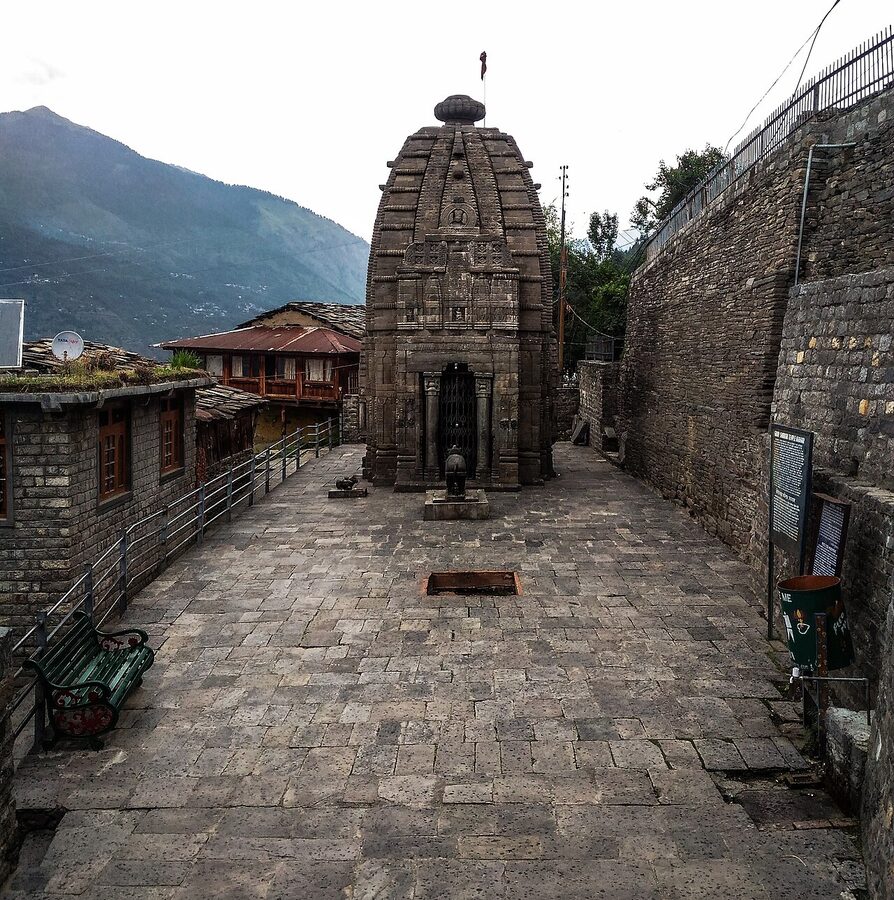
Two hundred metres below the Castle on the path down to the bazaar, the Gauri Shankar Temple is the easiest to find and the most architecturally important. It dates to the 11th or 12th century and is the late southern outpost of the Gurjara-Pratihara temple-building tradition that produced the Khajuraho group several hundred kilometres to the southeast. The Archaeological Survey of India holds it as a protected monument.
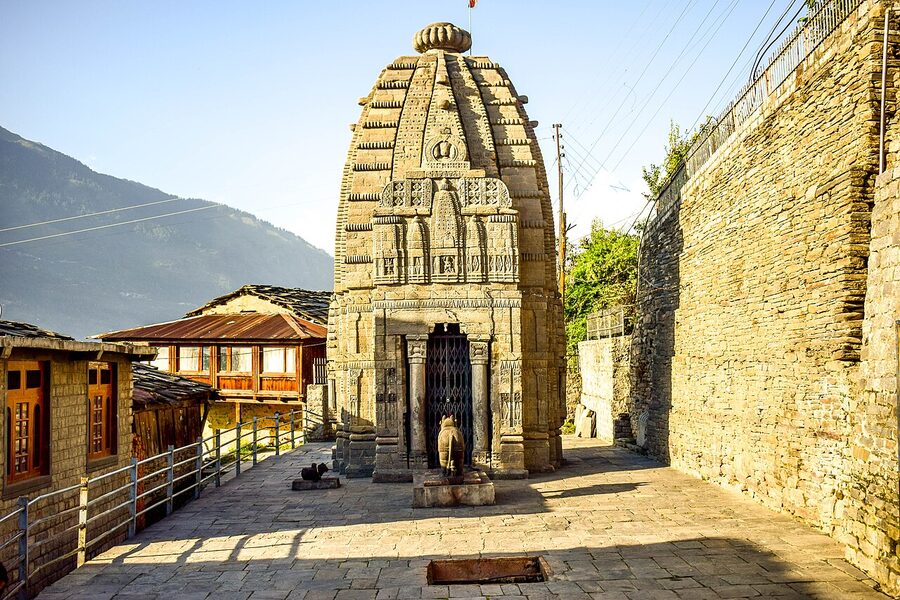
What to look for: the dancing-gana figures around the base of the shikhara, the carved jali patterns on the lower walls, and the small Ganesha relief at the entrance. The pavilion in front is a much later, much rougher addition and you can ignore it. The good carving is on the original shikhara behind. Free entry, open during daylight hours, you’ll usually have it to yourself outside Sundays.
Tripura Sundari Temple
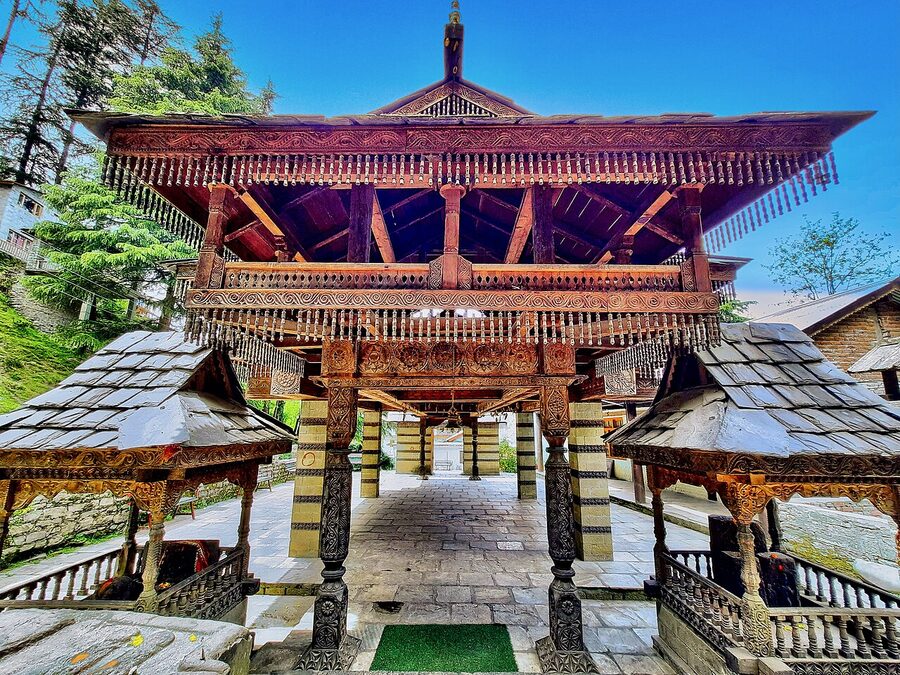
This is the deodar pagoda visible from anywhere in the upper village. It’s a 16th-century three-tier wooden temple to Tripura Sundari (Mahalakshmi in this region) and it is the best-preserved pagoda-style temple in the central Kullu valley. The square plan, the stacked pyramidal roofs in alternating slate and timber, and the carved beam-ends on the lower storey are all classic Kullu pahari work and worth slow looking.
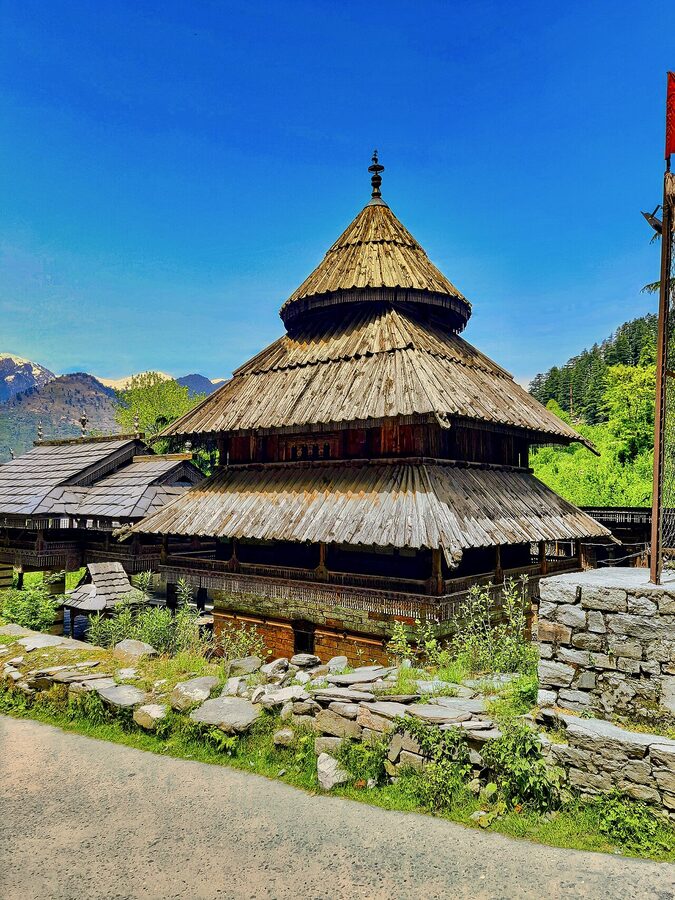
Every May the temple hosts a fair where the Tripura Devi is taken in palanquin from Naggar towards Malana, the famously isolated village across the Chanderkhani ridge. If you can time a visit for the fair, do. The procession music alone is worth the trip. For the broader Himachal festival picture, the fairs and festivals overview sets it in context with the valley’s larger calendar.
Murlidhar Krishna Temple at Thawa
Two kilometres uphill from the Castle on a steep, badly surfaced road, the Murlidhar Krishna Temple at Thawa is the oldest of the Naggar group, dating to the 10th or early 11th century. The shikhara is partially patched and weathered but the original stone-carving on the lower walls is intact, including a series of small erotic and musical reliefs that scholars associate with the wider north-Indian temple tradition of the period.
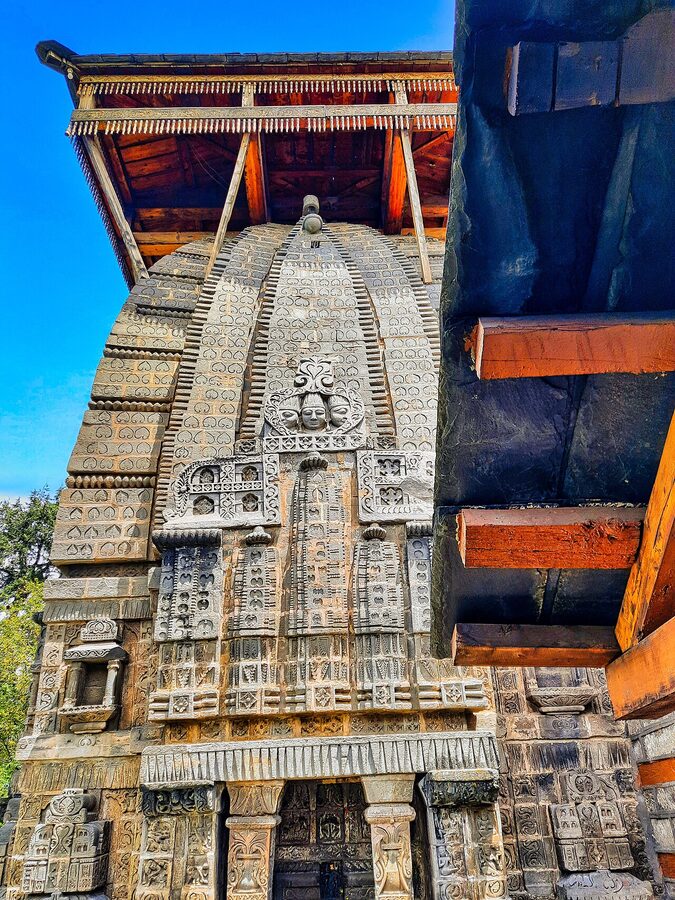
Most visitors skip Murlidhar because of the road. That’s the reason to go. Walk it from the Castle and you’ll have the temple to yourself for as long as you want, with a long view back across the valley.
The pujari here is a generationally local family who’ve held the keys for a hundred years and will open the sanctum if you arrive during a normal visiting hour. Free entry, no fixed timings, common courtesy applies.
Vasuki Nag and the smaller shrines
The Vasuki Nag Temple is the village serpent-deity shrine, smaller and more vernacular than the three above, and it’s where the upper village still goes for the local festival cycle. It sits about 300 metres east of the Castle off the path to Rumsu. There’s no formal entry, no signage, and you’ll usually find someone tending it. The Jagati Patt shrine inside the Castle compound is technically a fifth temple in the cluster, with arguably the deepest history of all of them.
Kath Kuni: The Building Style That Holds the Town Together
You’ll see the term Kath Kuni on every signboard in Naggar and on every architecture-blog post about the region. It’s worth a paragraph because it’s what holds the Castle up and what gives the upper village its specific look.
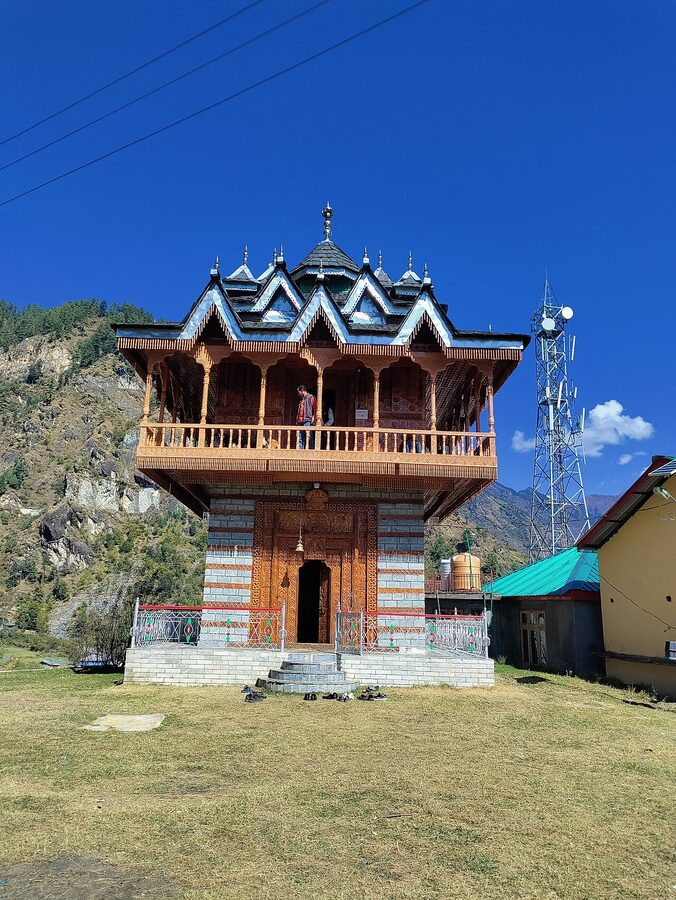
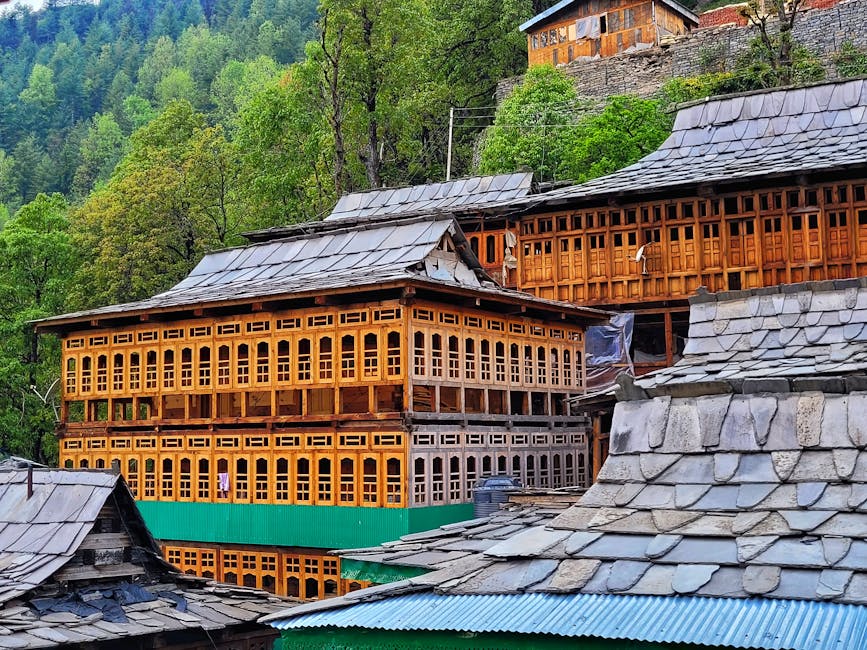
The technique is layered timber and stone. Long deodar logs run horizontally along the wall, the corners interlock with notched joints, and stones are dry-stacked between the timbers without mortar. The wall is essentially a basket. Under earthquake load it flexes rather than fracturing, which is why the Castle is still standing and the lower-valley masonry buildings of the same period mostly aren’t.
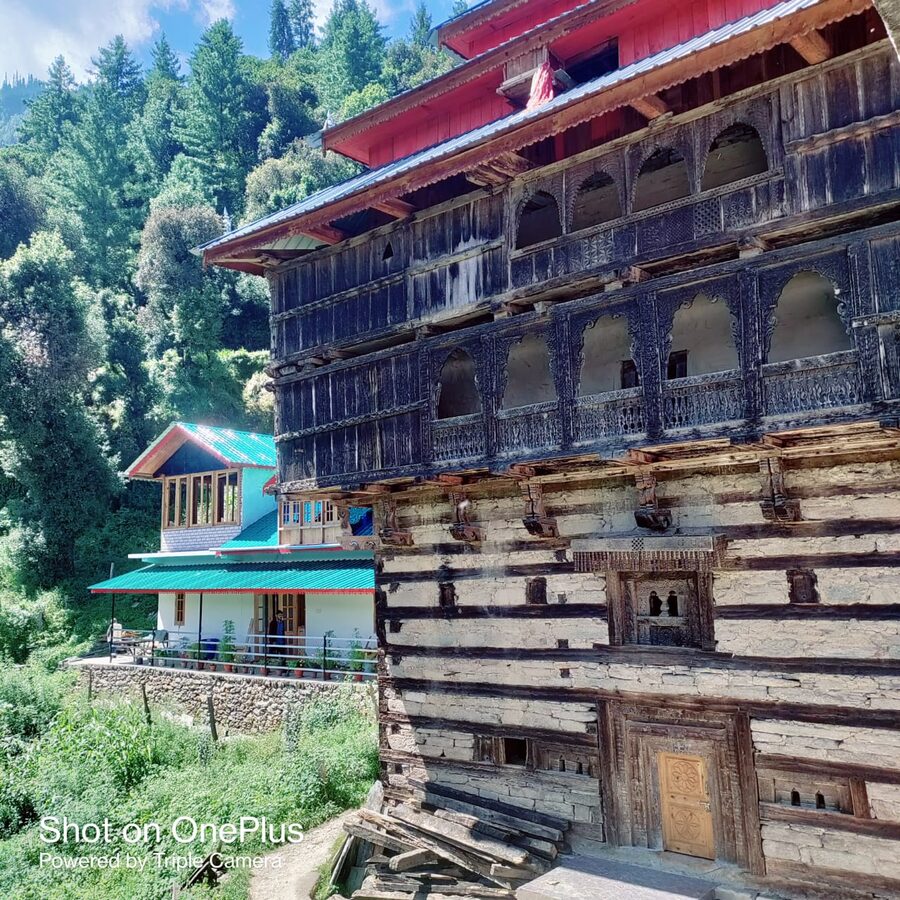
Modern Kath Kuni has effectively died out as a building method because of the cost of deodar and the slow build time. A small revival is underway in the upper village led by local architects working with restoration projects on village deity temples and a handful of newer homestays. It’s worth knowing what you’re looking at when you walk the lanes. The crooked-stack walls, the slate roofs, the carved doorframes, are the older Naggar still standing.
Where to Walk From Naggar
The walks are half the reason to base here. Naggar is a hub for short-to-medium walks of two to six hours, and one harder multi-day trek for travellers prepared for it. Day-trippers from Manali never see this side of the town because they don’t have the time.
Naggar to Rumsu (2 hours each way)
The classic short walk. Rumsu is the village 4 kilometres east of Naggar Castle on the trail towards the Chanderkhani ridge. The path climbs through deodar forest with the Beas valley opening behind you.
Rumsu is small, traditional, with another set of Kath Kuni village houses and a small village temple. Tea at one of the homestays, walk back, three to four hours total.
Chanderkhani Pass (2-3 day trek)
The serious trek from Naggar. Chanderkhani Pass sits at 3,660 metres, two hard days up from Rumsu through Stelang and Chaka meadows, with views over Solang on one side and the Parvati valley on the other. Most parties continue down to Malana on the far side and exit by road, making it a 3-day point-to-point.
Best done June through September. Independent fitness travellers can do it without a guide, but local guides cost roughly ₹2,500 to ₹4,000 per day (~$30 to 48) and are worth it for the route-finding through the upper meadows where the trail braids.
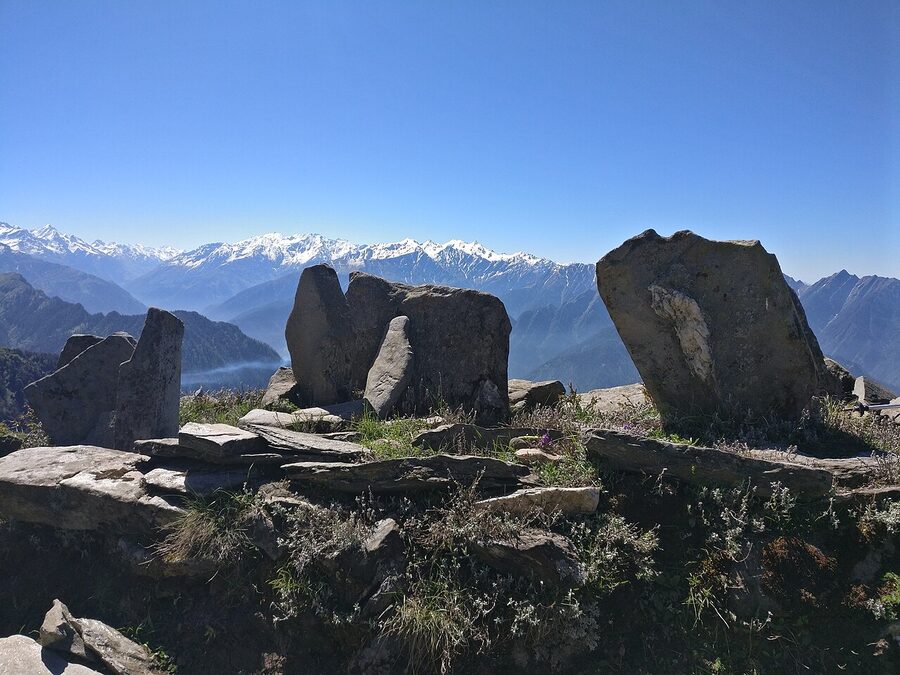
Jana Waterfall (12 km, drive plus walk)
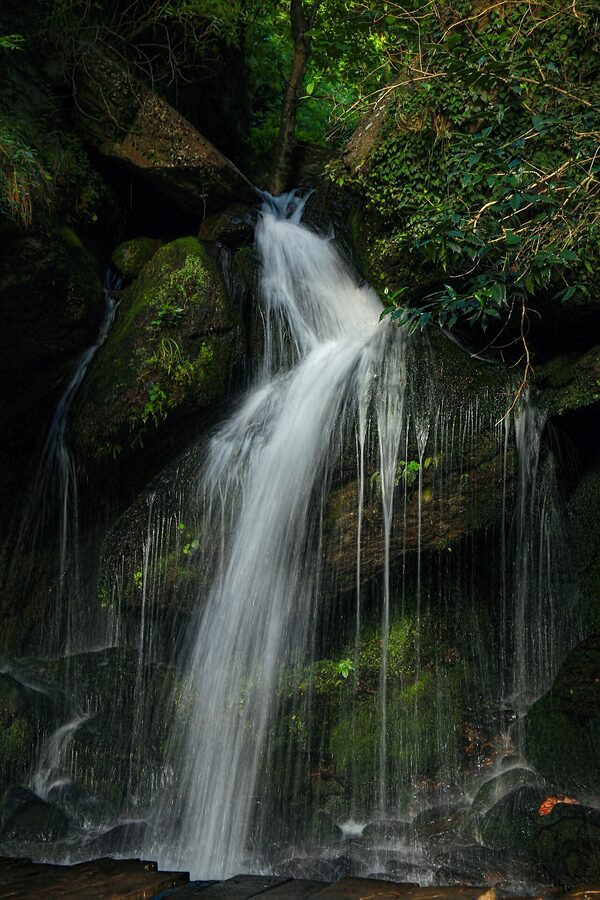
Jana is the easy half-day excursion, 12 km west of Naggar via the Jana road, a 30-foot waterfall in dense pine forest. Local taxis from Naggar Chowk run roughly ₹1,200 to ₹1,500 (~$14 to 18) for a return trip with a couple of hours waiting. The path from the parking area to the falls is twenty minutes, easy. The dhaba at the trailhead is the place to try Siddu, the Himachali stuffed steamed bread that’s become a regional signature dish, and locally caught trout when it’s on the menu.
Bijli Mahadev across the valley
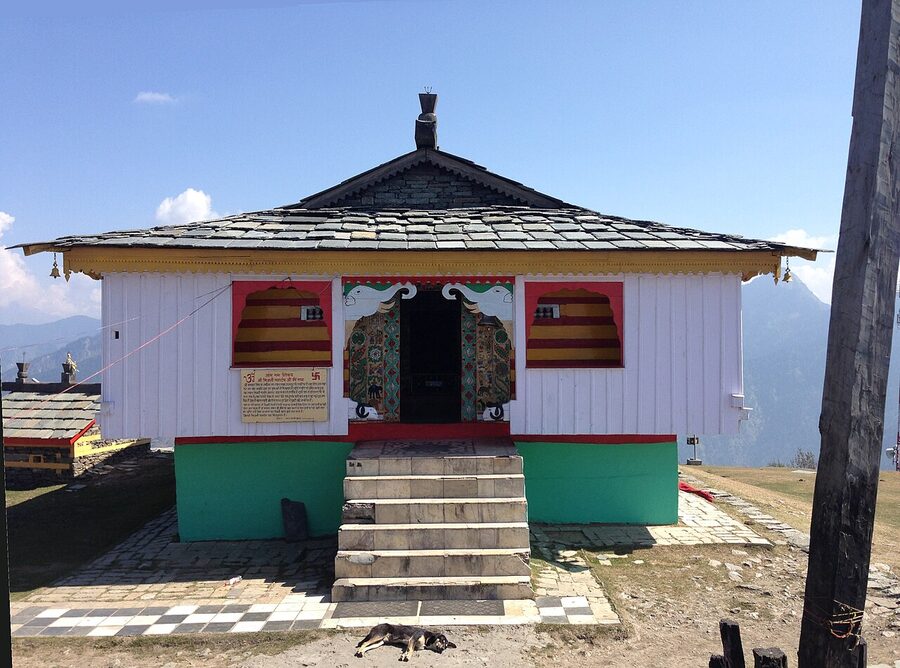
Visible from the Castle on a clear morning across the Beas, Bijli Mahadev is the lightning-trident Shiva shrine at 2,460 metres on the ridge opposite. It’s a road-then-walk excursion: about two hours by taxi via Kullu town and the new road to the Bijli Mahadev parking, then a moderate three-kilometre uphill walk to the shrine. Worth half a day if you have it, partly for the ridge view back to Naggar.
Day trips further afield
Naggar is also a workable base for day trips to the Manali Wildlife Sanctuary on the Beas’s right bank above Manali, or up the Parvati side to Kasol (about 90 minutes by taxi), or further out to the rice terraces of Tirthan Valley. The trans-Himalayan road to Lahaul and Spiti via the Atal Tunnel is also accessible from Naggar in roughly the same time as from Manali. None of these is a comfortable day trip, but all are doable if you’re set up for an early start.
Where to Stay in Naggar
Naggar’s accommodation is divided into three layers. Heritage and mid-range hotels around the Castle, smaller homestays in the upper village and the apple-orchard slopes above, and budget rooms and hostels nearer the bazaar at the bottom of the hill. The site’s Manali hotels guide goes deeper on the wider area; this is a Naggar-specific shortlist of properties I or my sources have actually verified as listable and reachable.
Heritage and mid-range
The Castle, Naggar (HPTDC) Official site. Heritage hotel inside the 500-year-old Castle, 13 rooms, ₹3,500 to ₹7,000 (~$42 to 84). Verdict above: location and history yes, polish no. Book direct via HPTDC.
Soham’s Chateau de Naggar (Booking | Agoda | Trip.com | Official site). Family-run, wood-panelled rooms with valley-facing balconies, and the rooftop cafe is genuinely good. Doubles run roughly ₹3,000 to ₹6,000 (~$36 to 72) shoulder season.
The closest thing in Naggar to a small Swiss-Alps pension, and the place I’d book first if the Castle is full or if you want better service at similar money.
La Paraiso Resort at Nashala (Booking search). Glamping pods with private jacuzzis on the Jana road about 2 km from the Castle, surrounded by apple orchards. Higher-end at ₹8,000 to ₹15,000 (~$96 to 180) per night. The setting is excellent; the service review is mixed and worth checking current ratings before booking.
Span Resort, Kullu (Booking | Official site). Slightly out of Naggar proper (15 km south at Kullu), but a long-running riverside resort if you want a four-star option in the wider valley.
Smaller homestays and orchard properties
Seeking Slow Farmstay. A small farm-and-orchard homestay just out of Naggar village, walks to Murlidhar Krishna and the Roerich estate, occasional retreat hosting. Booked via the property direct or Airbnb. Around ₹4,000 to ₹6,000 (~$48 to 72) doubles depending on season.
Note on the upper-village homestay scene generally. A handful of small Kath Kuni and Kath Kuni-style homestays operate in and around the upper village, often without a permanent OTA presence and almost always on monthly rates as their primary product (₹15,000 to ₹35,000 a month, roughly $180 to 420, fully self-catering).
For a traveller passing through for three nights they’re harder to book and often unlisted. Ask at any of the cafes around the Castle and you’ll be pointed to whoever’s open. NORTH, the architect-led restored Kath Kuni house long associated with Naggar, has reportedly relocated to Raison further down the valley as of late 2025. Check current location before you book if you’re after that specific property.
Budget
goSTOPS Naggar (Official site). The reliable hostel. Dorm beds around ₹500 to ₹800 (~$6 to 10), private rooms higher. On the apple-orchard side of the Castle ridge, friendly to backpackers, the easiest single-night booking in town.
For broader Himachal hotel options across the state, the main hotels guide is the wider reference. Naggar specifically rewards staying somewhere you can walk from to the Castle and the Roerich estate without driving, which means anywhere on the upper village above the bus chowk.
Where to Eat
Naggar’s food scene is small and genuinely good. There are about a dozen places worth knowing and three or four that are good enough to make their own argument for being in the town. Prices are modest by Manali standards and the cafes generally take UPI and cash; bring small notes for the dhabas.
The named restaurants
Nightingale, the Italian restaurant with the wood-fired oven. Wood-fired pizzas, homemade pasta, an outdoor balcony with the same valley view as the Castle but quieter. Mains ₹400 to ₹700 (~$5 to 8.50), run by an Italian-trained chef and frankly the best Italian I’ve had north of Delhi. Worth the walk up the Castle road for dinner; closed seasonally in deep winter.
Soof. Mughal-style cuisine on a top-floor room with floor cushions, embroidered fabrics, and a serious kitchen. Slow-cooked meat curries, well-handled biryanis, soft homemade breads. Mains ₹350 to ₹600 (~$4.20 to 7.20), and the other reason to walk up the hill at dinner.
The Reveries Cafe. The mid-morning spot, with good filter coffee, baked goods, and breakfasts. The tables outside have the upper-village view. Around ₹200 to ₹450 (~$2.40 to 5.50) for breakfast or a light lunch.
Naggar Delight Cafe. The all-rounder on the corner approaching the Castle entrance. Good banoffee pie, decent espresso, sit outside if you can. Roughly ₹150 to ₹400 (~$1.80 to 4.80) for a coffee and cake or a light meal.
Local eats
Bina’s Bhojanalaya is the working-village thali kitchen near the bazaar. Vegetable thali in the ₹120 to ₹180 range (~$1.50 to 2.20), seasonal dal, hot chapati. This is where the regular village trade eats lunch and it shows in the food.
The Naggar momo shop near Tripura Sundari has been running for sixty-odd years selling exactly one product, vegetable steamed momos, at ₹50 (~$0.60) a plate. No menu, no signboard, no chai. Open from late morning into the evening, line moves fast. Locally famous for very specific reasons that you’ll understand on the first plate.
For Siddu, the Himachali stuffed steamed bread that’s the regional signature, the dhabas around Naggar Chowk and the trailhead at Jana waterfall are where to find the proper version. ₹40 to ₹80 a piece, served with green chutney and ghee. Worth ordering at least once; it’s the local staple and the kind of thing that doesn’t travel out of the valley.
Getting to Naggar
Naggar has no airport and no railway station of its own. The realistic options are road from Manali or Kullu, road via Patlikuhl from any direction, or a combination of overnight train to Pathankot or Chandigarh plus road. Total transfer time from Delhi is roughly 12 to 14 hours by overnight bus or train-plus-road, comparable to Manali itself.
By air
Kullu-Manali Airport at Bhuntar (IATA: KUU) is 32 km south of Naggar, roughly an hour by taxi via Patlikuhl. Air India runs to Bhuntar from Delhi but flights are expensive, weather-cancellation-prone in monsoon and winter, and frequently overbooked. Not the way I’d plan a Naggar trip if you have alternatives. Chandigarh airport (IXC) is the more reliable option at six to seven hours by road, with the additional benefit of working through the year regardless of weather.
By train and road
The Joginder Nagar narrow-gauge railhead is the technical “nearest station” but it’s slow and limited; nobody actually uses it. The practical pattern is overnight train from Delhi to Pathankot (the Jammu Mail or Dhauladhar Express), then a 6-hour taxi-or-bus to Naggar via Mandi. From Chandigarh the road run is 8 to 9 hours via Bilaspur and Mandi.
From Delhi by direct bus, the Volvo HRTC or HPTDC overnight services from Kashmere Gate ISBT to Manali pass through Patlikuhl, where you get off and grab a local taxi up to Naggar (10 km, 25 minutes, ₹400 to ₹600 / ~$5 to 7). Direct fare Delhi-Manali Volvo is ₹1,200 to ₹2,000 (~$14 to 24).
For the through-route from the plains, the Delhi-Manali transit guide covers the full options. Naggar is a 25-minute taxi off the same Delhi-Manali corridor at Patlikuhl, which makes the planning trivially easy: book Delhi-Manali transport, get off two stops early.
Once you’re there
Naggar is small enough to walk in three hours from the chowk to the Roerich estate via the Castle. Most travellers without bags do exactly that and skip the local taxi entirely. With bags, a taxi from the bus stop to the Castle area runs ₹200 to ₹300 (~$2.40 to 3.60).
For day trips to Jana, Rumsu, or further afield, taxis line up at Naggar Chowk and at the Castle gate; rates are negotiable and usually settle around ₹2,500 to ₹4,000 per day (~$30 to 48). HRTC buses run Manali-Patlikuhl-Naggar a few times daily but only two or three reach the upper village; the rest stop at the chowk at the bottom.
When to Visit
Naggar has the same broad seasonal pattern as Manali but with smaller swings because it sits lower (1,800 m vs 2,050 m) and gets less snow in deep winter. Below is the working calendar.
Late September to mid-November (the best window)
The cleanest air of the year, daytime highs of 18 to 25 degrees, the apple harvest underway across the Kullu valley, and crowd levels dropping back to almost nothing once Indian school holidays end in early September. Hotel rates fall to half of summer-peak. October on the Castle balcony at sunset is the single best photographic window. Tripura Sundari’s local fair-cycle is over by then but the temple is at its quietest.
Mid-March to mid-April (rhododendron and apple-blossom)
Spring brings the apple blossom across the orchards below the upper village and the rhododendron above Rumsu. Daytime temperatures of 12 to 20 degrees, snow gone from the lower walks, the Chanderkhani trek not yet open but Jana and Bijli Mahadev both accessible. A genuinely pleasant window if you can avoid the school-holiday tail at the end of April. Rates climb steadily through the period.
Mid-April to end of June (peak season, plan around it)
The Indian summer-holiday window. Manali becomes hard work; Naggar stays bearable but day-tripper traffic from Manali peaks in May. Rates double or more.
The single useful counter-strategy: stay in Naggar, base yourself, and let Manali-day-trippers swirl through the Castle and Roerich during the day while you do the early walks and the late-afternoon estate visit when they’ve left. Mid-week is much better than weekends.
July to early September (monsoon)
Naggar’s monsoon is heavy but workable. Rainfall in July and August averages around 300 to 400 mm a month, less than the Dharamshala side of the Dhauladhar but not light. Roads close intermittently for landslides.
The deodars are at their greenest, hotel rates at their lowest of the year, and the Jana waterfall is at full flow. If you don’t mind walking in light rain and you came for atmosphere rather than views, August is fair value. The high passes are closed; Chanderkhani is not the time.
December to February (winter)
Cold but milder than Manali. Daytime highs of 5 to 12 degrees, night lows around freezing or just below. Snow falls in mid-December usually, a few times through January and February, and accumulates less than in Manali because of the lower elevation.
The upper village goes very quiet. Heating in mid-range hotels is patchy and the Castle’s older rooms are cold; book a property with serious heating or bring proper layers. Castle, Roerich and the temples are all open through winter.
A Three-Night Naggar Plan
If you want a working sketch, this is the one I’d send to a friend.
Day 1. Arrive from Manali or Patlikuhl in the early afternoon, drop bags, and walk down to Gauri Shankar Temple. Then up to the Castle for the late-afternoon balcony view, and dinner at Nightingale or Soof.
Day 2. Roerich estate in the morning, slow, with lunch at Reveries or Naggar Delight. Tripura Sundari Temple in the afternoon, and walk to Murlidhar Krishna at Thawa if you have the legs. Sunset back at the Castle.
Day 3. Day trip out: Jana waterfall via Jana road, or Bijli Mahadev across the valley, or Rumsu walk if the weather’s good. Late lunch back in town, quiet evening, Bina’s Bhojanalaya for thali.
Day 4 (departure). Last-morning walk up to the Castle for the empty-Castle view, breakfast at Reveries, taxi down to Patlikuhl for the onward bus or train.
That’s three nights, which is the right Naggar dose if you came for the town itself and not just to tick the Castle off. Add a fourth or fifth night and you start using Naggar the way it actually works best: as a base for the slow-travel rhythm of village walks, an afternoon at the Roerich gardens with no other agenda, and the long view across to Bijli Mahadev that earns its name when you have the time to sit with it.
Practical Notes
ATMs. The closest reliable ATMs are at Naggar Chowk at the bottom of the hill. There are no ATMs in the upper village near the Castle. Carry cash for the dhabas; cards and UPI work at the named restaurants and the Castle entry counter.
Mobile signal. Jio and Airtel both work in the upper village; BSNL is patchy. Wifi at the cafes is reliable, at hotels variable.
Power. Cuts of an hour or two are routine, particularly in monsoon. Most hotels above mid-range have backup generators; the smaller homestays usually don’t. Charge devices when you can.
Altitude. 1,800 metres is low enough that altitude effects are unlikely for most travellers. If you’re coming straight from sea level and going up to Chanderkhani Pass, give yourself a night in Naggar first.
Onward. If Naggar works for you, the slow-travel pattern continues well in the upper Beas-Sutlej corridor. The Kinnaur route eastward, the Tirthan Valley south, and the Lahaul and Spiti circuit north all reward the same kind of multi-night pace. The wider tourist attractions overview lays out the options.
The reason Naggar earns three nights and Manali earns one is the same reason you came to Himachal in the first place. Quiet hills, real history, food worth slowing down for, and a village that’s still a village rather than a hill-station resort. Get the framing right and you’ll wonder why anyone bases anywhere else.