
Most travel sites file Mandi under “convenient lunch stop on the way to Manali.” That’s the polite version. The blunter version is that buses sit at the Mandi bus stand for forty minutes, passengers eat a parantha at the stand canteen, and the town fades from memory before the bus reaches Pandoh Dam ten kilometres up the road.
This is unfair. Mandi is the only town in central Himachal that was a real city in the 16th century, and it still has the temple density to prove it: 81 ancient stone temples on the inventory, three of them protected by the Archaeological Survey of India, and a clock-tower-and-sunken-garden setup that nothing in Shimla, Dharamshala or Manali can match. The town earns two nights if you give it the chance.
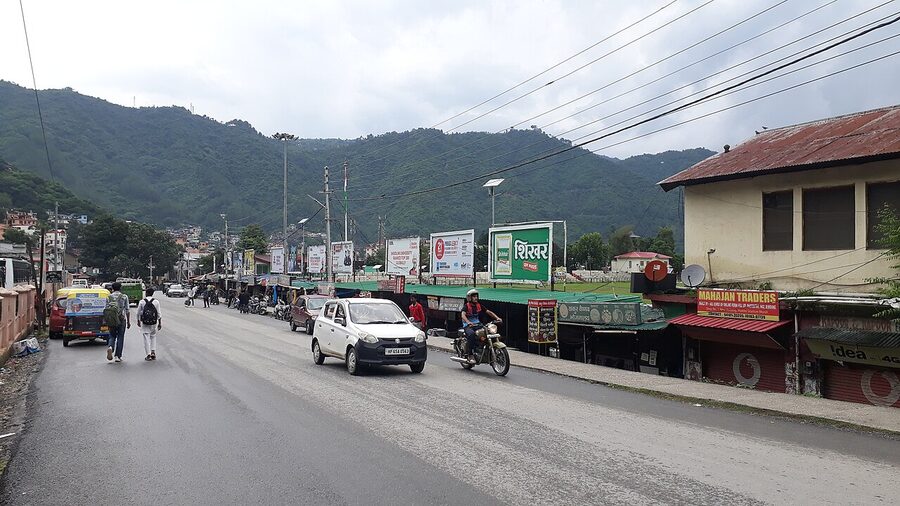
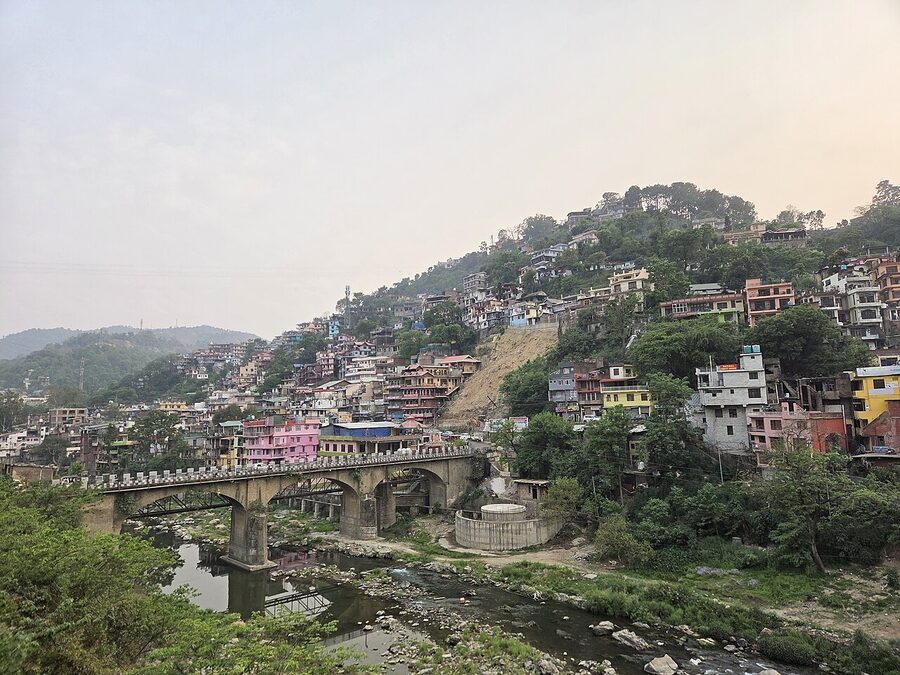
Mandi is a working district headquarters about 145 km north of Shimla and 108 km south of Manali, sitting in a low bowl on the Beas at 760 metres. The town was founded in 1527 by Raja Ajbar Sen, the nineteenth ruler in a Sen-dynasty line that traces back to a tenth-century split between two brothers who took Suket and Kullu as their kingdoms. By the time the British turned up, Mandi was already an old hill state with stone-temple architecture, a palace inside the bazaar, and a pilgrim route that brought deities from across the district to its central temple complex once a year.
The princely state lasted until 1948, when Mandi and the smaller Suket state next door merged to form the modern Mandi district as part of the new Himachal Pradesh. The royal family is still around. Raja Ashokpal Sen has been the titular head since 1986, and the Mandi House landmark in central Delhi, where Doordarshan’s headquarters sits today, started life as the Raja of Mandi’s residence.
This guide is for travellers weighing whether Mandi earns a stop on a longer Himachal trip, or whether to push straight through to Manali or Kullu Valley. The short answer is yes, two nights, and use it as a base for the day trips around it. The detail is below.
What Most Travellers Get Wrong About Mandi
Three misreadings ruin most short visits.
One: treating Mandi as a transit town. The bus stand model gives you forty minutes between connections and a snack at the canteen. That’s enough to confirm the town has a clock tower and not enough to find the Panchvaktra Temple, the Victoria Bridge, or the Triloknath group above the bazaar.
The whole walking circuit takes about three hours and rewards every minute. Cut it to forty and Mandi looks like a small messy town with too many auto-rickshaws. Walk it for half a day and the place comes apart into something else entirely.
Two: confusing Mandi with the rest of the hill stations. Most of Himachal sits between 1,500 and 2,500 metres. Mandi sits at 760. It’s a Beas-valley town, not an alpine resort.
Summer days hit 35°C, monsoon brings real heat, and the air in May is closer to Punjab than to Dalhousie. If you’ve come to Himachal for cool air and pine forest, Mandi will feel low and warm. If you’ve come for old India, stone temples, and a riverside bazaar that has been a market for five centuries, Mandi delivers harder than any of the higher towns.
Three: assuming the temples are all in one place. They are not. The 81 stone temples of Mandi are scattered across both banks of the Beas and across both banks of the Suketi tributary.
The Sunken Garden and the central market are inside one twenty-minute walk, the Panchvaktra is across the Victoria Bridge on the south bank, and the Tarna group is up a 305-step climb on a hill above the town. Plan the visit as a half-day walking loop, not as ten minutes at one temple.
When To Visit
Mandi works year-round but two windows are clearly best.
Late September to mid-November is the cleanest window. Monsoon is gone, the Beas has dropped to its clear post-rain levels, the temple stonework photographs in low afternoon light, and daytime highs sit in the low twenties. October specifically gives you the best skies of the year and Dussehra is fresh in nearby Kullu, which means the road is busy in the first week but the festival energy is good.
Late February to mid-March is the second window, and it’s the one to plan around if you want to see the town’s biggest event. The International Mandi Shivratri Fair runs for seven days starting on the night of Maha Shivratri (February or March on the Gregorian calendar; the Hindu lunar date moves around).
More than 200 deities from across the district are carried into Mandi on palanquins, the Paddal ground hosts the jaleb procession, and the town’s hotels fill weeks in advance. If you want to see the festival, book by January. If you don’t want crowds, avoid this fortnight.
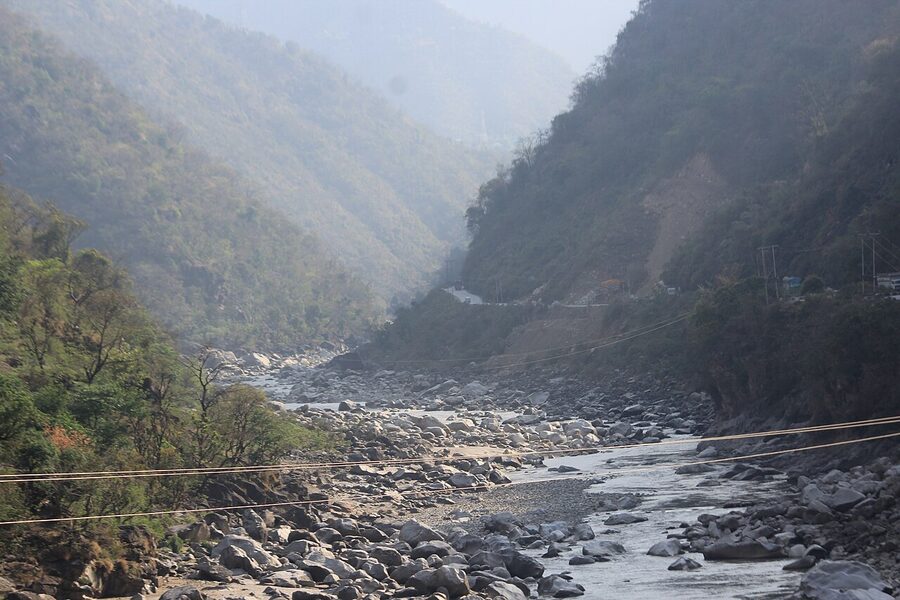
Avoid mid-June through mid-September if heat or rain bothers you. The bowl-shaped geography traps warm air, monsoon brings landslides on the Manali road above Pandoh, and the Beas turns brown. December and January are fine but cold at 760 metres, which is below most of the snow line.
| Window | Best for | Avoid if |
|---|---|---|
| Late Sep – mid Nov | Walking the temple circuit, day trips, photography | You want festival energy |
| Late Feb – early Mar | Mandi Shivratri Fair | Crowds bother you |
| Mid Mar – early Jun | Day trips up to Prashar and Kamrunag | You want clean air |
| Mid Jun – mid Sep | Not much | Heat or wet roads bother you |
| Late Nov – mid Feb | Cheap rates, clear winter sun | You need warm days |
The Old Town On Foot
The reason to come to Mandi is the half-day walk around the old town. Start at the bus stand and head south across the bridge into the bazaar quarter. The route I’m describing is a loop of about three and a half kilometres with several temple stops, so allow three to four hours including time to actually look at the carvings.
Sunken Garden and Indira Market
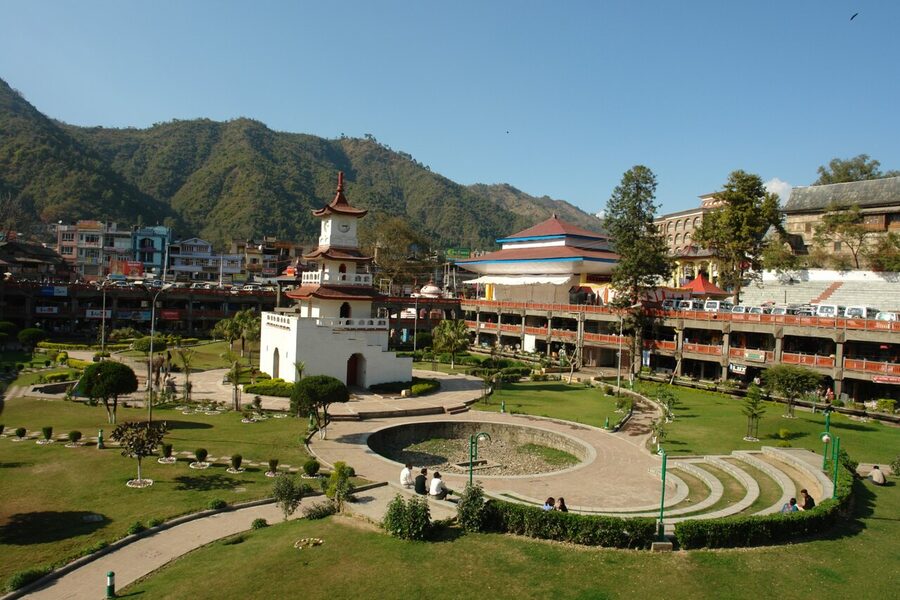
The Sunken Garden is the town’s defining oddity. Centuries ago it was a pond, supposedly the spot where Raja Sidh Sen had his son-in-law from Bhangal murdered and buried. Raja Joginder Sen, ruling in the early 20th century, drained it and turned it into a public garden with a clock tower at the centre. The result is a sunken green space about three storeys below the level of the surrounding bazaar, ringed by the Indira Market on multiple tiers.
You don’t go for the garden itself, which is small and ringed by autos. You go for the geometry. Standing on the upper market level looking down on a clock tower below your feet is one of the few small-town views in Himachal that actually qualifies as architecture rather than just a hill view. It’s also the busiest part of central Mandi, which means good chai and good people-watching.
Bhutnath Temple and the central cluster
Three minutes east of the Sunken Garden is the Bhutnath Temple, the town’s central Shiva shrine. Raja Ajbar Sen built it in 1527 as the first major temple of his new capital, which means it’s the same age as the town itself. The shikhara has been re-plastered and re-painted enough times that the stone is harder to read than at the older temples up the hill, but the temple is still the centre of the Shivratri festival and the procession deities make a stop here on day one.
The cluster around it includes the Madho Rai Temple (silver image of Krishna, made by goldsmith Bhima in 1705 and ordained by Raja Suraj Sen as the actual ruler of Mandi state, with subsequent rajas serving as servants of the deity), and the Ardhnareshwar Temple, one of the three ASI-protected sites in the town.
Triloknath Temple group
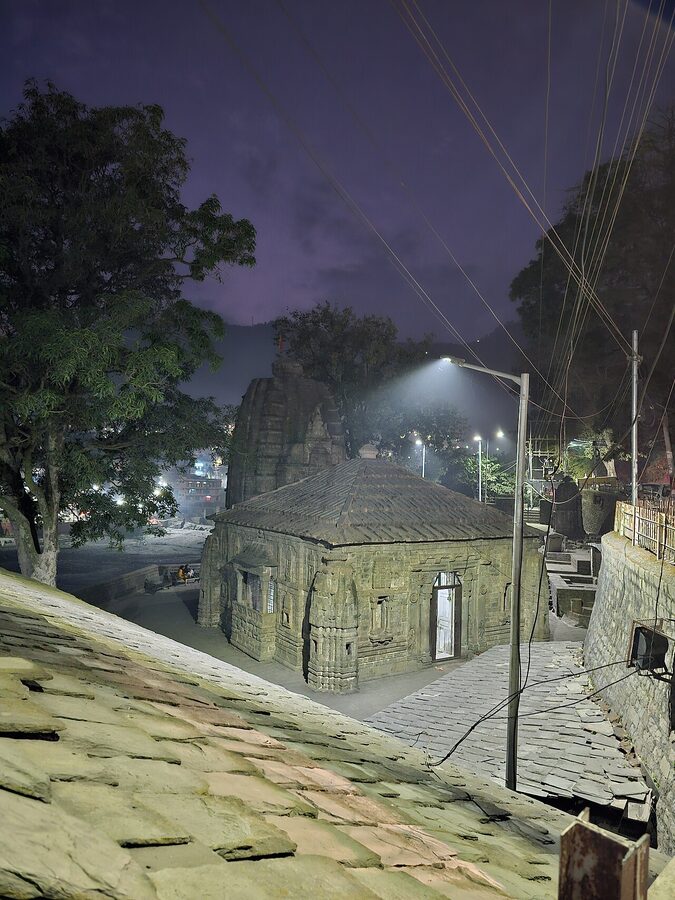
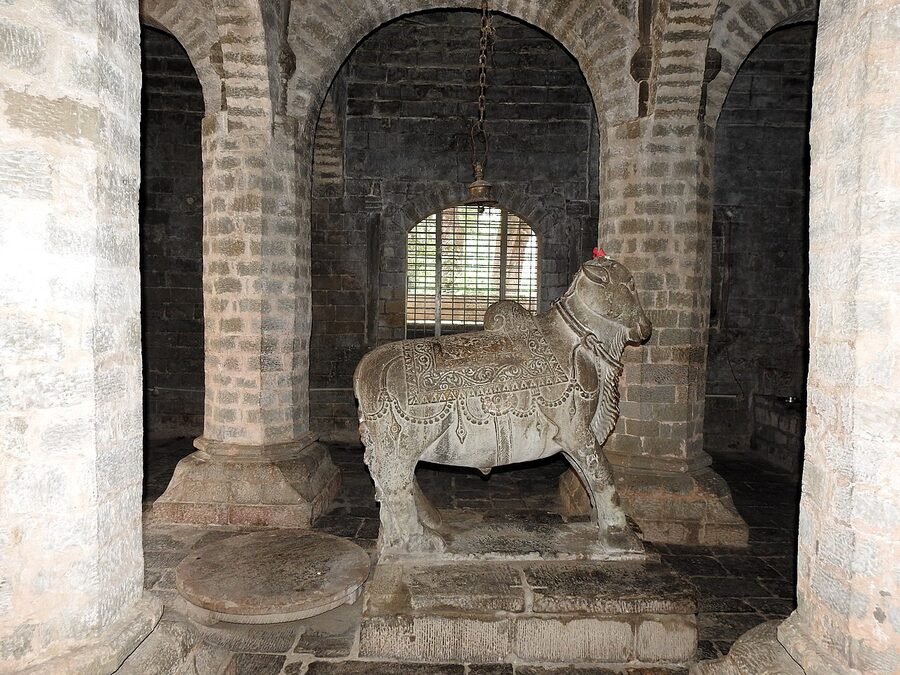
Walk up into the Purani Mandi (Old Mandi) quarter and you reach the Triloknath group. Triloknath itself is the older one, built in 1520 by Sultan Devi, queen of Raja Ajbar Sen, and predating the foundation of the present town by seven years. The presiding deity is a three-faced Shiva representing the trinity, with Parvati and Nandi alongside.
The exterior is what brings you here. The shikhara carries Shaivite carvings in genuinely good condition for a temple this old, and the porch supports are intact. The ASI protection has kept later restorations from rough-handing the stone the way Bhutnath has been. Stand back about ten metres and look at the corner panels rather than the central cella; the relief work is best read in oblique morning or late-afternoon light.
Victoria Bridge and Panchvaktra Temple
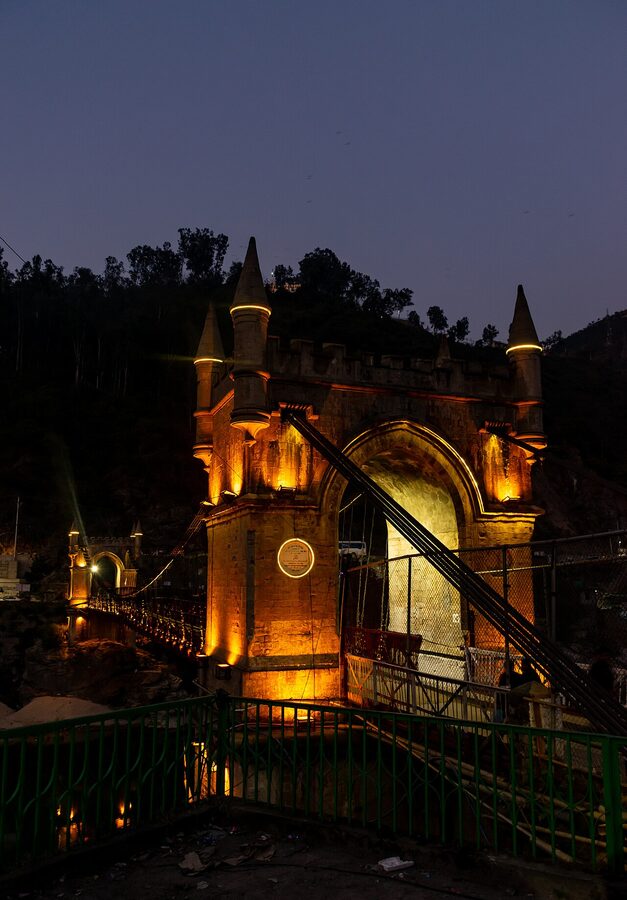
From Triloknath, drop down to the river. The Victoria Suspension Bridge was built in 1877 during the reign of Raja Vijay Sen, as part of a new mule road from Baijnath in Kangra to Sultanpur in the old Kullu kingdom. It’s the oldest bridge in Mandi and one of the oldest functional suspension bridges in the western Himalayas. Heavy commercial traffic uses the modern bridges further upstream; the Victoria takes pedestrians, two-wheelers, and the occasional small car.
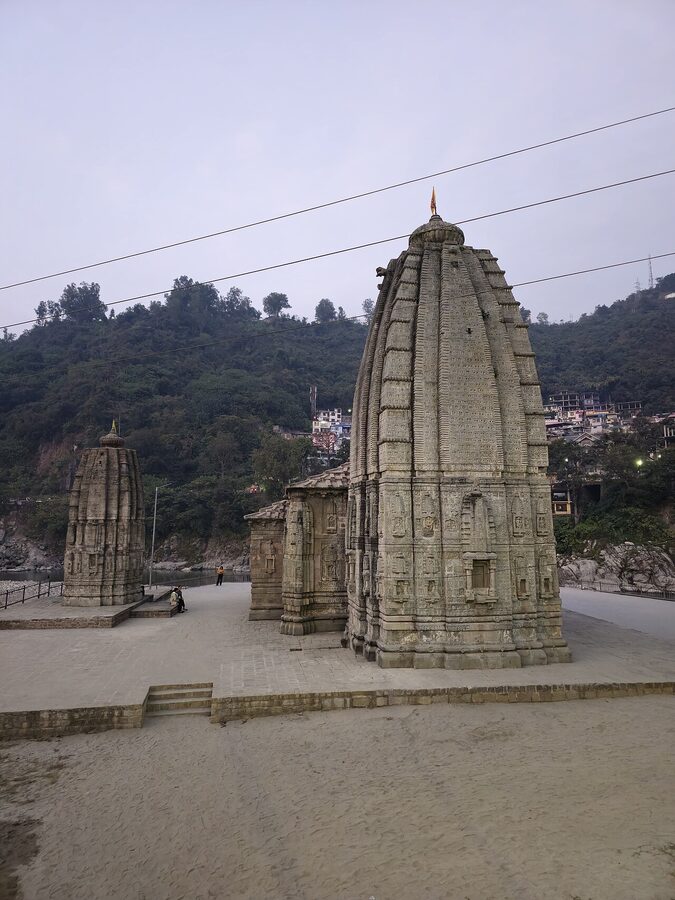
Cross it to reach the south bank. About 200 metres downstream of the bridge, where the Suketi Khad joins the Beas, sits the Panchvaktra Temple. This is the prettiest single temple in Mandi.
The five-faced Shiva inside is what gives the temple its name. The location, on a small platform at the river confluence with steps coming up from the water, is the reason most photographers come back to Mandi rather than treating it as a one-trip town.
Tarna Devi Temple
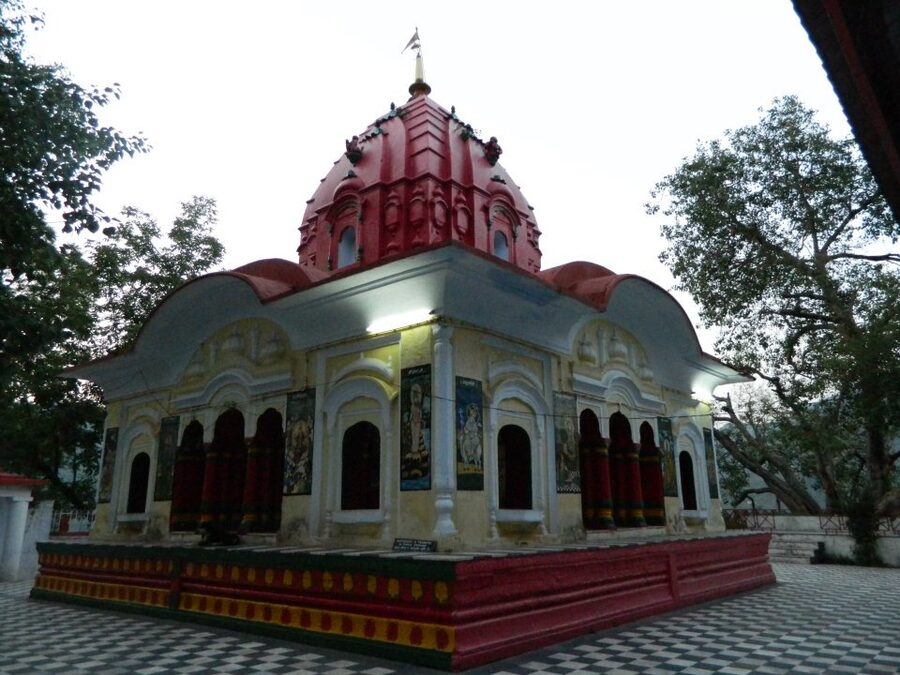
If you have the legs for it, finish at the Tarna Devi Temple. It’s a 305-step climb up a forested hill from the bazaar, and the deity inside is Shyama Kali, a form of Parvati. The temple itself is 17th century. The reason to climb is not the temple but the view: Tarna sits about 300 feet above the bazaar, and from the platform out front you can see the whole Mandi bowl, the Beas curving through it, and the surrounding hills on a clear day.
Skip Tarna in mid-summer when the climb in afternoon heat is brutal. October mornings are perfect for it.
The Mandi Shivratri Fair
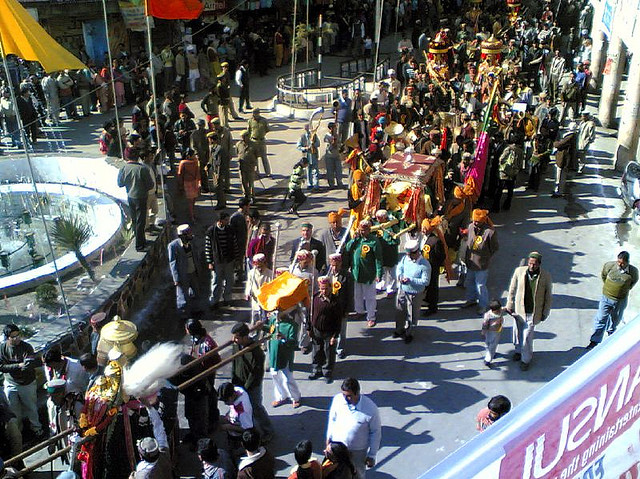
The International Mandi Shivratri Fair is the single biggest reason to plan a trip around a specific date. It runs for seven days starting on the night of Maha Shivratri, which is the 13th night of the waning moon in Phalguna (February or March on the Gregorian calendar; check the Hindu calendar for the year you’re going).
The festival has been observed at Mandi since the late 18th century. Raja Ishwari Sen had been imprisoned for twelve years after losing the kingdom to Sansar Chand of Kangra in 1792. The Gurkhas freed him from Kangra Fort and restored Mandi to him.
On the day of his return, which happened to fall on Maha Shivratri, he invited every village deity in the kingdom to come and celebrate. The practice stuck. The deities have been coming back every year since.
The mechanics are unusual even by Himachali festival standards. More than 200 deities are carried into Mandi from villages across the district, mostly on palanquins, mostly by Brahmin and Kshatriya bearers, and they assemble at the Paddal ground for a procession (the jaleb) on the second day. The presiding deity is Madho Rai, the silver Krishna installed by Raja Suraj Sen in 1705 and treated as the actual ruler of the state. Every visiting deity pays homage to Madho Rai before the festival proper begins.
If you can plan around it, do. The town is at maximum capacity, hotels are booked weeks ahead, and the energy in the bazaar is on a different scale to a normal day. Mandi Shivratri is in our state-wide festivals guide if you want the broader context.
Day Trips From Mandi
The case for two nights in Mandi rests on the day-trip ring around it. Each of these is a half-day or full-day from the town and worth the time.
Rewalsar Lake
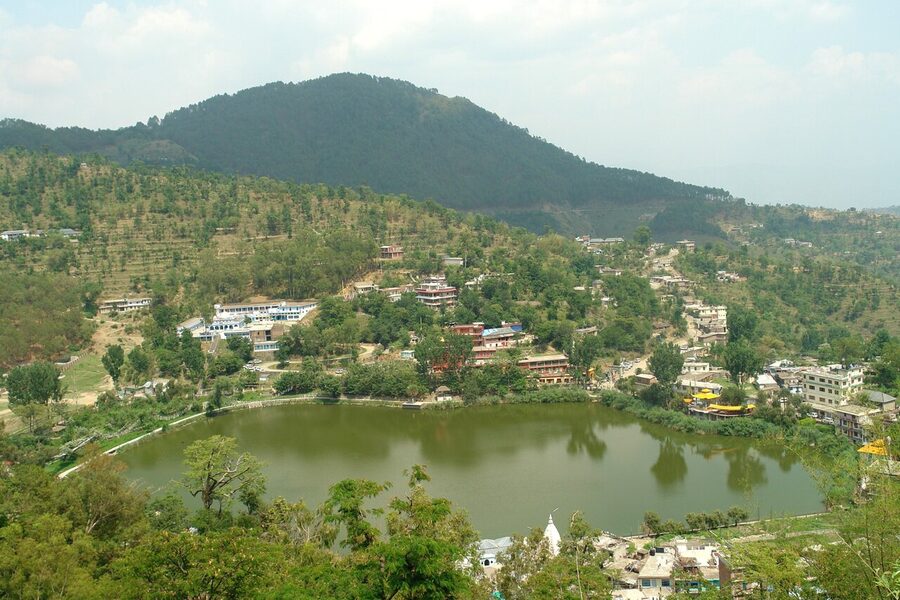
Rewalsar (or Tso Pema in Tibetan, “lotus lake”) is 24 km south of Mandi, sitting at 1,360 metres. The lake is small, around 730 metres in circumference, but the religious geography is enormous: it’s important to Hindus, Sikhs, and Tibetan Buddhists simultaneously, and that combination doesn’t exist anywhere else in Himachal.
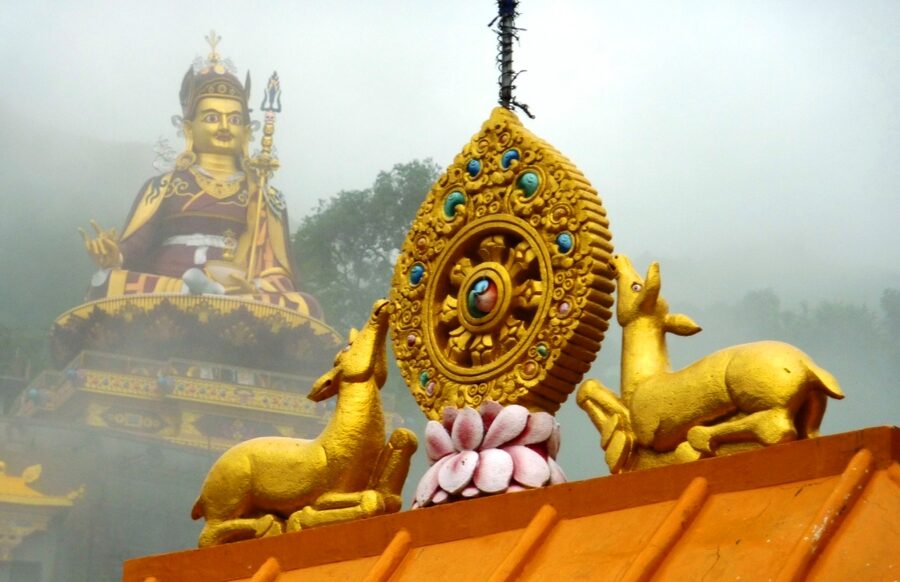
For Tibetan Buddhists, Rewalsar is where Guru Padmasambhava (Guru Rinpoche) departed for Tibet in the 8th century after King Vihardhara of Mandi tried to burn him alive for taking the king’s daughter Mandarava as his consort. The pyre is said to have turned into the lake. Three Nyingma monasteries ring the water and a 37.5-metre statue of Padmasambhava sits on the hill above, completed in 2012. You can stay in the monastery guesthouses for around ₹500 to ₹1,000 (about $6 to $12) a night and walk the kora around the lake at dawn before the day-trippers arrive.
For Sikhs, Rewalsar is where Guru Gobind Singh stayed for around a month in 1738. The Gurudwara on the lakeshore commemorates the visit. For Hindus, the lake is associated with Sage Lomas Rishi, said to have done penance here, and a Krishna temple sits between the gurudwara and the monastery row.
The fish in the lake are not fed crumbs because the lake is sacred and the carp are protected by all three communities, which means they grow large and lazy and come to the surface for biscuits anyway. Allow half a day. Buses run from Mandi every hour or two, ₹40 each way (about $0.50). Shared taxis from the bus stand do the trip in 45 minutes for ₹100 (about $1.20) a seat.
Prashar Lake
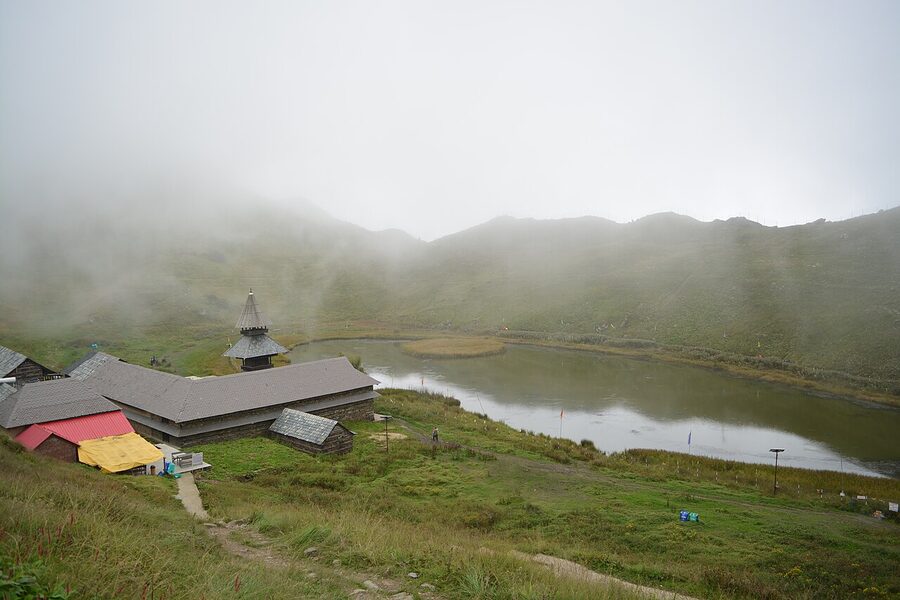
Prashar is the postcard. A round green lake at 2,730 metres with a three-storey pagoda temple on its bank, snow on the surrounding peaks for half the year, and a floating island whose actual depth has never been confirmed. The temple is dedicated to Sage Prashar (or Parashara), grandfather of the Mahabharata’s Vyasa, and the existing structure is from around the 14th century, restored several times.
Two ways up. Most travellers drive: about 50 km from Mandi, the last 12 km on a rough road that requires either a 4×4 or a Mahindra Bolero. A shared taxi from Mandi to the lake costs about ₹2,500 to ₹3,500 (~$30 to $42) for a return trip with a few hours at the top, and you can split between four. The other way is the trek from Bagi village, two to three hours up through pine and rhododendron, and that’s the way it’s worth doing if you have the legs.
Don’t trek in winter unless you have proper gear. Don’t try the drive in monsoon when the road becomes a mud track. October and April-May are the windows. Sunrise from the lake on a clear November morning is one of the best things you can do in central Himachal.
Kamrunag Lake
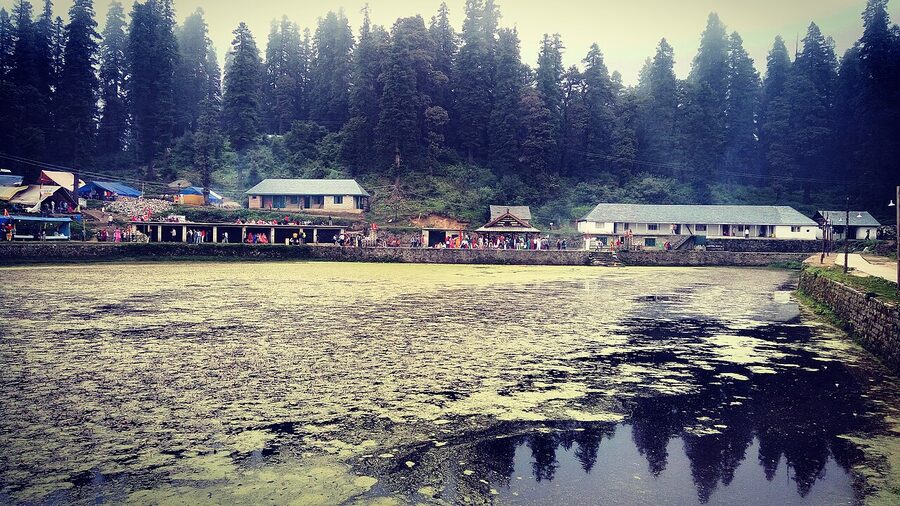
Higher and harder than Prashar, less visited, and worth it if you’ve got a full day. Kamrunag sits at 3,334 metres on the Mandi-Karsog road. The trek starts from Rohanda village (about 60 km from Mandi by road, two hours), then it’s three hours up through deodar and oak.
The shrine on the lake is dedicated to Kamrunag, the rain god of the region, and the lake’s claim to fame is that pilgrims have been throwing coins, gold, and silver into it for centuries. Whatever’s at the bottom is presumably substantial.
Go in May-June or September-October. Snow closes the upper trail November through April. Carry water; there’s a small dhaba at the shrine but it’s basic.
Pandoh Dam and the road to Aut
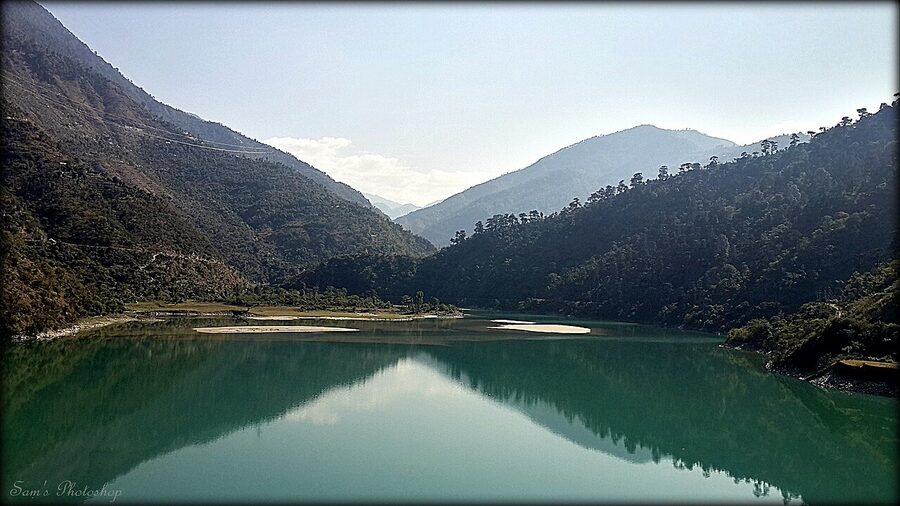
You will see Pandoh whether or not you mean to, since the Manali highway runs across the top of the reservoir 13 km north of Mandi. The dam was completed in 1977 as part of the Beas-Sutlej hydroelectric project, which diverts the Beas through 38 km of tunnels to the 990 MW Dehar Power House on the Sutlej side. The reservoir behind it is a deep blue-green lake hemmed in by steep brown hills, and it photographs surprisingly well from the spillway viewpoint, which most travellers blow past.
Half an hour at Pandoh is enough. The road from Pandoh to Aut, 25 km further north, is the most spectacular stretch of the Manali highway: it runs along the cliff above the Beas with the river boxed into a narrow gorge. At Aut you can detour east into Tirthan Valley, which is the obvious onward move if you want to add a couple of nights in a quiet riverside village to the trip.
Karsog Valley and Shikari Devi
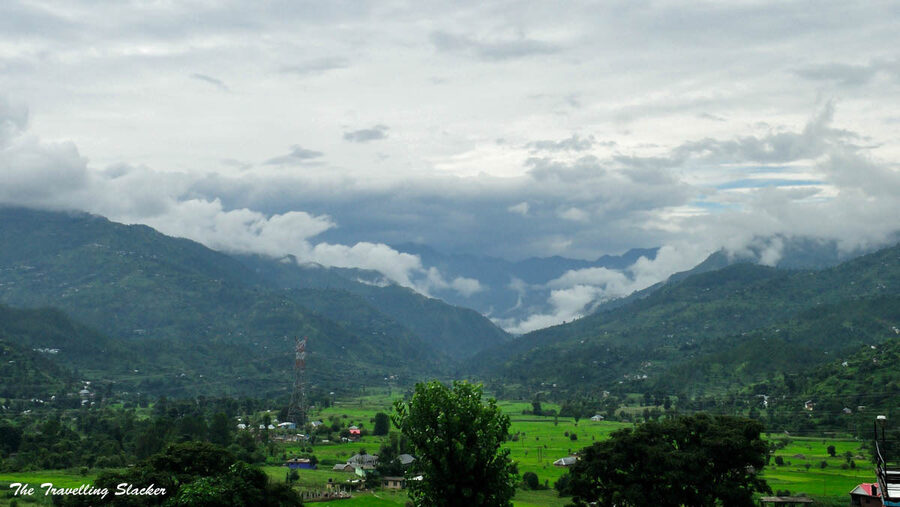
Karsog Valley is the day-trip almost no one does, which is exactly why it’s the one to do. The valley sits at 1,800 metres about 90 km southeast of Mandi on a slow road, and the headline is that it’s full of apple orchards, ancient temples, and basically no tourists. The Mamleshwar Mahadev shrine and the Kamaksha Devi temple are both worth time.
This is a long day from Mandi by bus and works better as an overnight, with Chindi at 1,860 metres a few kilometres on as the obvious base. From Karsog you can also push on to the Shikari Devi temple, a roofless shrine on a 2,850-metre alpine meadow.
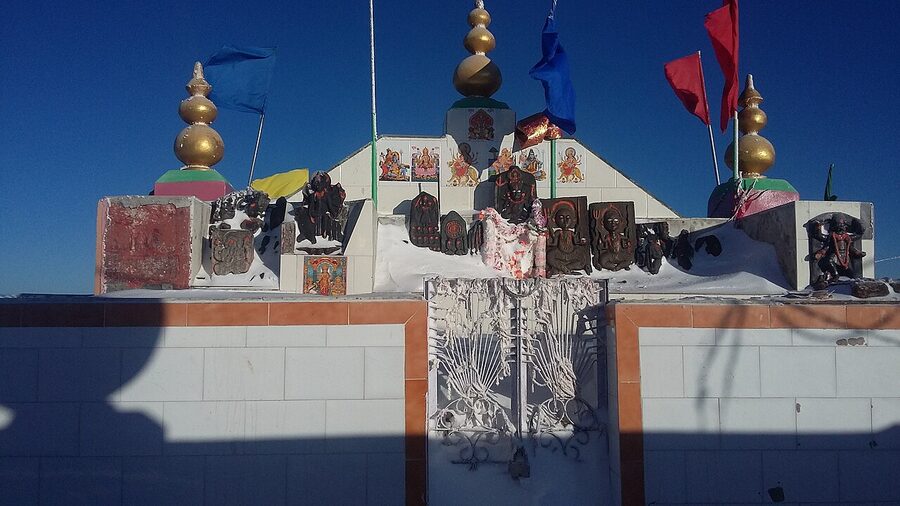
The local story is that every attempt to put a roof on the shrine has failed, which is why the goddess sits open to the sky. The Pandavas are said to have prayed here. From Janjehli village 18 km below the shrine, the climb to the top takes around an hour by either of the two trails.
Barot Valley
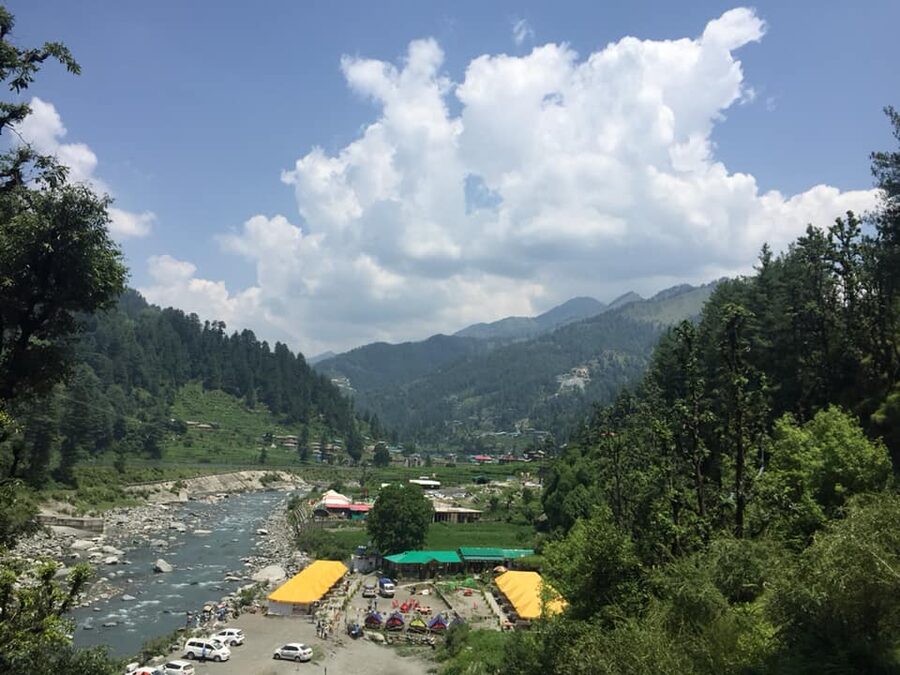
Barot is too far from Mandi for a sensible day trip (67 km, three hours each way on a slow road) but if you have an extra night to spare, the upper Mandi valley is worth it. The village sits at 1,835 metres on the Uhl, a Beas tributary. The fisheries department here issues trout-fishing permits, the Nargu Wildlife Sanctuary covers the surrounding ridges, and the trolley line that workers used to take supplies up to the Shanan Hydel project still operates as a tourist curiosity. Bir-Billing is just over the ridge to the west, and if you’ve got the time, walking out from Barot to Bir on the old shepherd path is one of the better quiet treks in central Himachal.
Tattapani hot springs
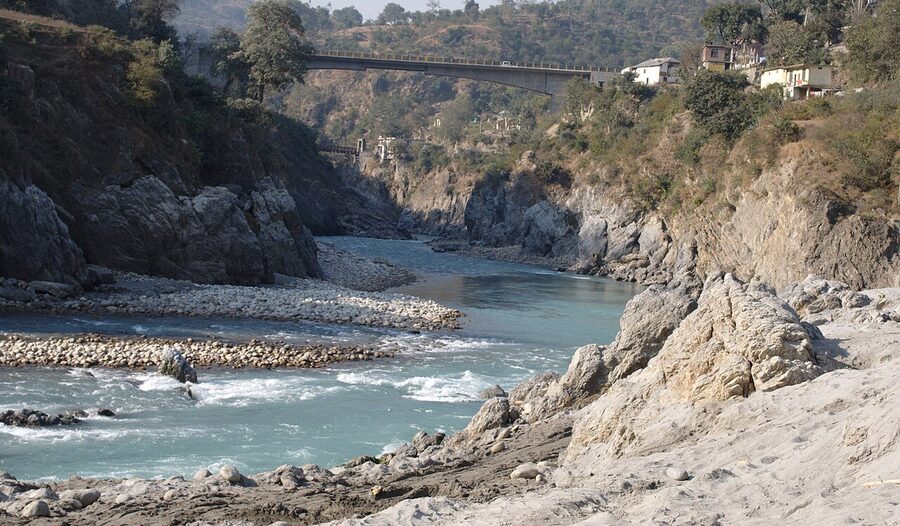
Tattapani is on the Sutlej about 50 km southeast of Mandi via the Karsog-Sunni road. The name means “hot water” in Hindi, and the sulphur springs that come out of the rocks beside the river are reckoned to be good for skin and joints. The Sutlej here was widened by the Kol dam and a bunch of small bathing pools have been built at the riverside.
Plain verdict: Tattapani is a stop, not a day on its own. Combine it with the Karsog trip, give it ninety minutes for a soak and a picnic, and move on.
Mandyali Food
Mandi has its own kitchen tradition, distinct from the Kullu-Manali food up the road and from Punjabi-influenced food down on the plains. Three things to actually try.
Dham is the local festival meal: a fixed sequence of dishes served on a leaf plate at weddings, temple feasts, and seasonal festivals. The standard run is rice, dal (yellow chana), rajma madra (kidney beans in yoghurt gravy), khatta (sweet-and-sour tamarind curry), and meetha bhaat (sweet rice with raisins and saffron). It’s served at communal sittings on the floor and you don’t pay for it directly; it’s offered as part of the religious occasion. Catching one as a traveller is hit-or-miss, but during Shivratri several temples serve it openly to anyone in the courtyard.
Sepu vadi is a Mandyali specific: black-lentil dumplings simmered in a spinach gravy, eaten with rice or roti. You’ll find it on the menu at the older dhabas around the Indira Market.
Babru is a stuffed bread of urad dal paste in a wheat-flour shell, deep-fried, eaten with tamarind chutney. Mandi’s version is sweeter than the Shimla version. Khatkhate, a sour wheat porridge cooked with mustard greens, is the everyday breakfast at home in the surrounding villages but you’ll only see it at homestays, not in town restaurants.
The town doesn’t have a restaurant scene to speak of. Hotel restaurants do North Indian standards, the Sunken Garden ring has chai shops and street-snack stalls (samosas, pakoras, jalebi at the older sweet shops), and the highway dhabas at Pandoh and Aut do the best parantha-and-tea you’ll get in the area.
Where To Stay
Mandi’s hotel stock is mostly mid-range business stuff catering to government travellers, IIT visitors, and Manali-bound buses on overnight halts. There are two genuinely interesting choices and a handful of clean-and-fine options.
Hotel Raj Mahal Palace (Official site | Agoda) is the obvious heritage choice, in the central palace complex of the former rulers of Mandi. Rooms are in the working palace itself, furniture is original or near-original, and the central courtyard is straight out of a Sen-dynasty manuscript. Rates from around ₹3,500 (~$42) for a standard room.
Not luxurious by modern five-star standards, but the only place in town where you sleep inside actual royal architecture rather than next to it.
Hotel Mandi Heights (Official site | Booking.com | Hotels.com) sits at Gutkar, about 8 km out of town on the Manali side. Modern build, restaurant and bar, used by IIT visitors and corporate travellers. Quieter than the central hotels and a better choice if you’ve got a car and don’t need to walk to the Sunken Garden every morning. Rates from around ₹4,000 (~$48).
Beyond those two, the central Mandi hotel stock is functional rather than memorable. Government tourism’s HPTDC Hotel Mandav and a string of small hotels around the bus stand cover the budget end at ₹1,000 to ₹2,500 (~$12 to $30). For a longer Himachal trip, see our state-wide hotels guide for orientation across the regions.
If you want to stay outside Mandi town, the Rewalsar monastery guesthouses are the unconventional pick (₹500 to ₹1,000 / ~$6 to $12, basic but atmospheric and on the lake), and the Parashar guesthouse run by the Forest department at the lake itself is the trekker’s choice if you can get a booking.
Getting In and Around
Mandi is one of the easier hill towns to reach because the Manali highway runs through the middle of it.
From Delhi: 395 km, around 10 hours by overnight bus or car. Volvo and HRTC services run multiple times a night from ISBT Kashmiri Gate; fares range ₹900 to ₹1,500 (~$11 to $18) for sleeper Volvos. Driving by car costs around ₹7,500 (~$90) one way for a hire from Delhi. The full Delhi-Manali route guide on this site covers the road in detail; Mandi is the natural overnight halt.
From Chandigarh: 163 km, around 5 to 6 hours. HRTC ordinary buses ₹350 (~$4), AC services ₹600 to ₹800 (~$7 to $10).
From Shimla: 145 km, around 5 hours via the Bilaspur route. Direct HRTC bus daily morning around 9 AM, ₹300 (~$4).
From Manali: 108 km, around 3 hours. All Manali-Delhi buses stop at the Mandi bus stand. Local share taxis available too at ₹400 to ₹500 (~$5 to $6) a seat.
By air: Bhuntar (Kullu) airport is 60 km north, served by limited flights from Delhi via Alliance Air; Gaggal in Kangra is 110 km west and slightly better connected. Both are weather-dependent and cancellations in monsoon and winter are common; budget for a road backup. From Bhuntar, taxi to Mandi runs ₹2,500 (~$30) for a four-seater.
By train: No broad-gauge track reaches Mandi. The closest broad-gauge station is Pathankot (210 km), with the Kangra Valley narrow-gauge running from there to Joginder Nagar (50 km from Mandi) and a road transfer the rest of the way. The narrow-gauge journey is slow but scenic; not recommended unless you specifically want the train experience.
Around town: Mandi is small enough to walk most of the central area. Auto-rickshaws are everywhere and a hop within town is ₹50 to ₹100 (~$0.60 to $1.20). For day trips, hire a taxi for the day at the bus stand stand; a Bolero with driver runs ₹3,500 to ₹4,500 (~$42 to $54) for a Rewalsar-Prashar combination.
The IIT and the Modern Town
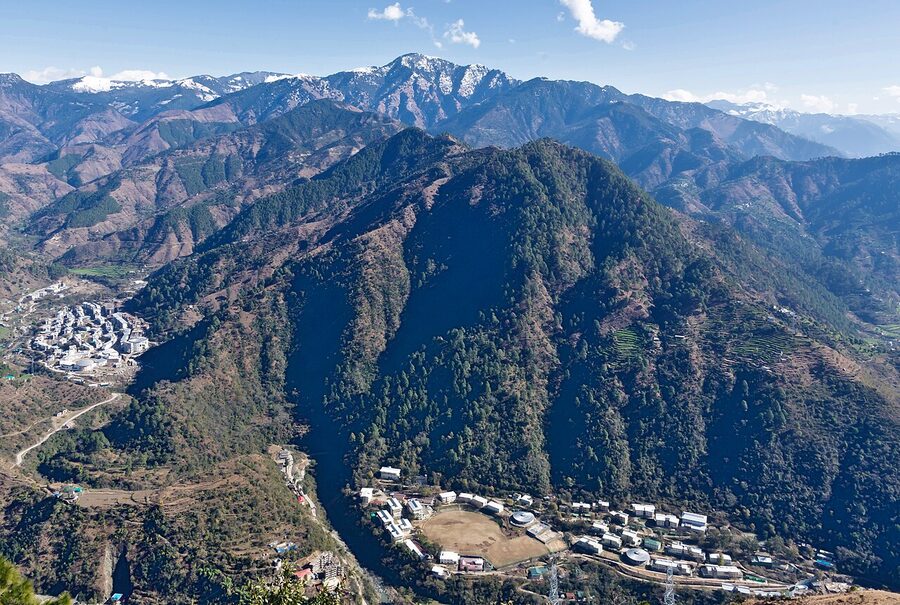
Mandi’s other modern feature is the Indian Institute of Technology, which opened a campus at Kamand 14 km from the town in 2009. The campus sits on the Uhl side and you can walk up onto the Kamand ridge from it. It’s not really a tourist sight, but it’s the reason the town has more decent cafes and bookshops than it had a decade ago, and the reason Mandi Heights and a couple of other modern hotels exist at all. If you’ve got an academic contact, the campus is worth a visit; otherwise it’s incidental context for the town.
Onward From Mandi
Mandi is at the road junction where most central Himachal trips pivot. Three obvious onward moves.
North to Manali and Lahaul-Spiti: three hours up the highway through Pandoh and Aut, then into the upper Beas valley. The most travelled route. Add three to four nights in Manali, more if you’re going over the Rohtang into Lahaul.
East into Tirthan Valley and the Great Himalayan National Park: turn off at Aut, 45 minutes by road, and you’re in one of the quietest valleys in Himachal. Two to three nights here is the sleeper pick of central Himachal.
West to Kangra (Dharamshala and Bir-Billing): the National Highway 154 runs out west to Pathankot and you can branch north into the Kangra valley. Allow a day on the road; the route takes you past Jwalamukhi Temple if you fancy the detour.
South out of the hills, you can drop down to Shimla via the Bilaspur road in about five hours, or keep going to Kasol and Parvati Valley if Manali isn’t your thing. For broader trip-planning, the Himachal tourist attractions hub on this site has the bigger picture, and our tour packages guide covers the multi-stop options.
The Verdict
Mandi is the best small city in central Himachal that nobody talks about. Two nights, an early start, the temple walking circuit on the first day, Rewalsar or Prashar on the second, and Mandyali food in the evening. It works as a base for the day-trip ring around it, it works as the natural overnight on the Delhi-Manali drive, and it works as a quieter alternative to a third night in Manali if your trip can spare the room.
What it doesn’t work as is a quick toilet-and-snack stop on the way to somewhere else. Forty minutes won’t do it. If you’re going to come, come properly, and let the place be what it actually is: an old hill-state capital with stone temples that have been there longer than almost anything else in Himachal still standing.