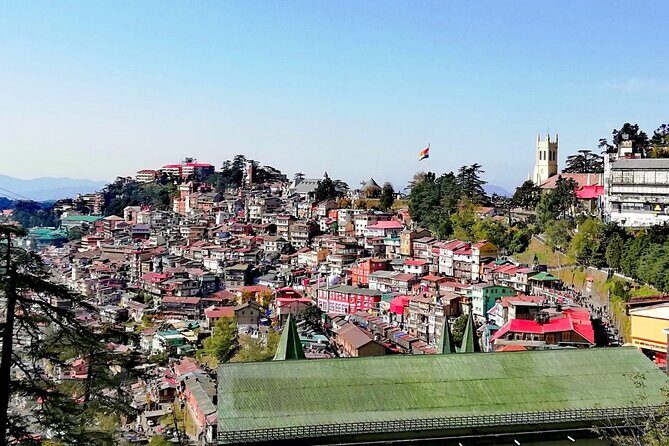
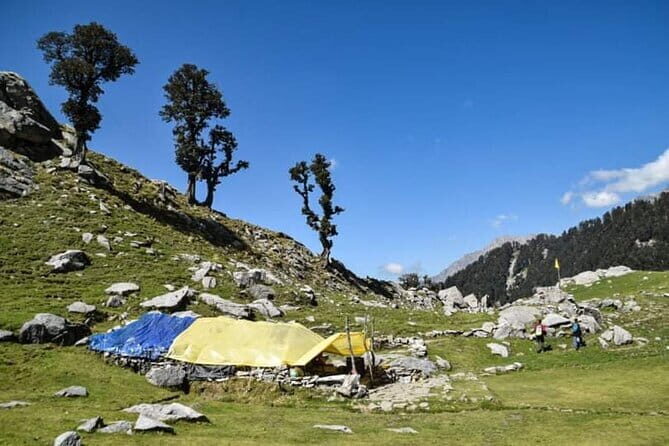
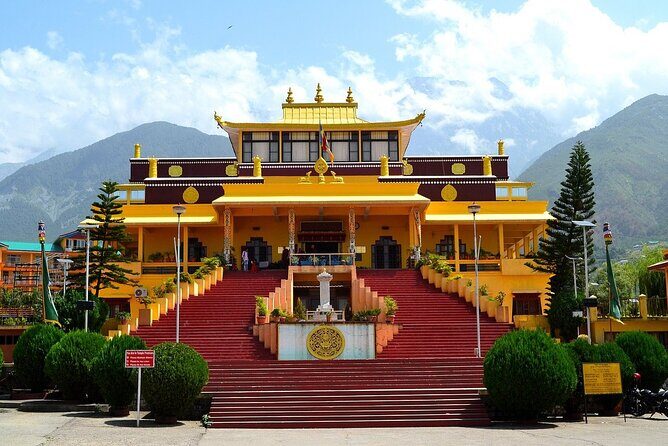
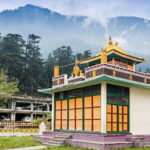
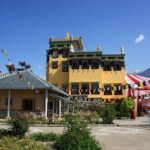
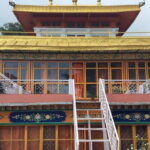
McLeod Ganj packs meaning into a short walk. This guided walk, led by an English-speaking local host, takes you through the Buddhist and Tibetan institutions that shape daily life here in Himachal Pradesh. I like that it does not feel like a checklist; you get context for what you’re seeing, from spiritual tradition to cultural survival. Tsuglagkhang and the surrounding temple complex are the emotional center of the route, and the English guide helps you read the small details most people miss.
What I especially like: you’ll get a clearer sense of how religion, culture, and even political history connect in exile. The walk also points you toward places you might otherwise pass by, including major institutions like the Library of Tibetan Works and Archives (LTWA) and the Tibet Museum.
One consideration: it’s a 3-hour walking tour, so wear comfortable shoes and be ready for a steady pace. Also, keep the rules simple and respectful—no alcohol or drugs.
In This Review
- Key highlights you’ll actually care about
- Getting your bearings fast: Main Square to a 3-hour rhythm
- Kalachakra Temple and the Thekchen Choumlling complex: where names carry weight
- Tsuglagkhang: the Dalai Lama’s temple complex and the pilgrim atmosphere
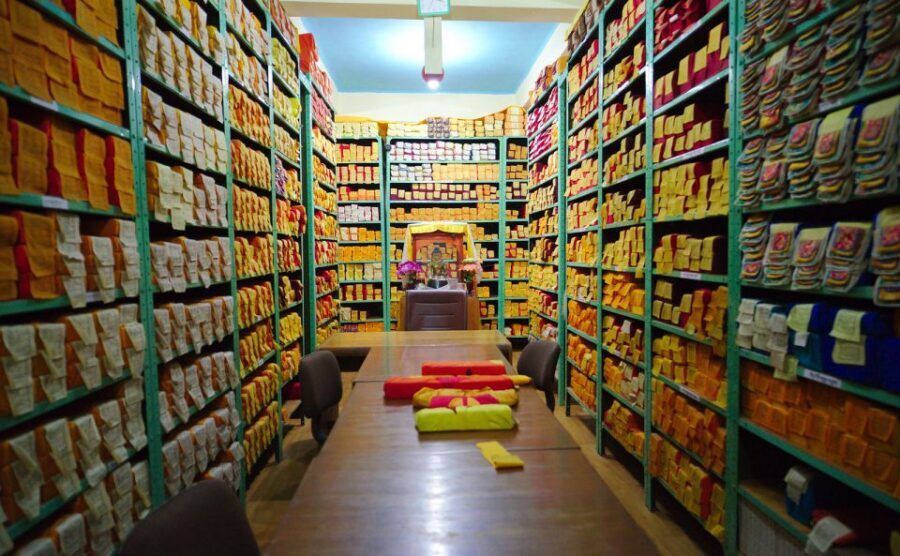
- LTWA and the Tibet Museum: why archives and records matter
- Nechung Monastery and the State Oracle tradition
- Men-Tsee-Khang: Tibetan medical and astro institute as welfare in action
- Time, footwear, and group size: making the 3 hours work
- Why this walk feels worth $38 (when it’s priced fairly)
- Who should book this guided walk
- Should you book this Guided Walk in McLeod Ganj?
- FAQ
- Where does the tour start?
- How long is the guided walk?
- What’s the price?
- Is there an English-speaking guide?
- What should I bring?
- Is it suitable for very elderly travelers?
Key highlights you’ll actually care about
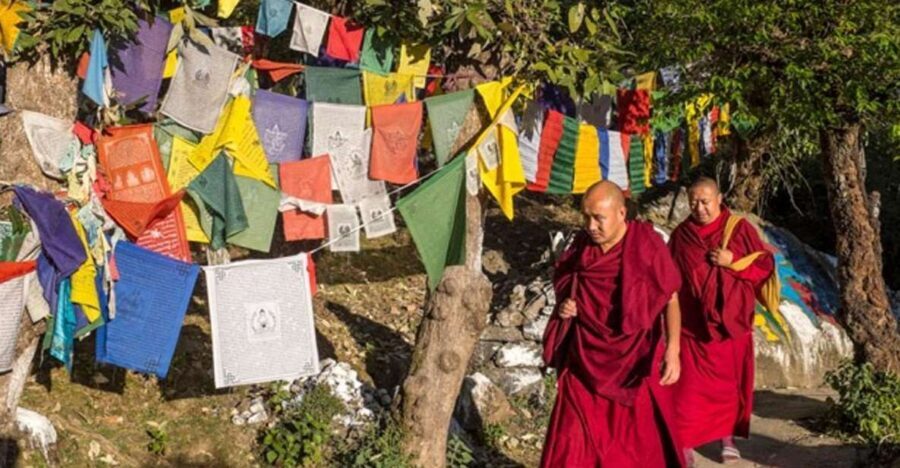
- A 3-hour guided route that stays focused on McLeod Ganj’s most meaningful Buddhist sites
- Tsuglagkhang Temple complex as the home base for His Holiness the Dalai Lama and visiting pilgrims
- LTWA Library founded by Tenzin Gyatso on 11 June 1970, and why that date matters
- Tibet Museum near Tsuglagkhang, tied to the Central Tibetan Administration’s information work
- Nechung Monastery, home of the State Oracle tradition and the Nechung Kuten medium
- Men-Tsee-Khang, the Tibetan Medical and Astro Institute founded in 1916 and re-established in India in 1961
Getting your bearings fast: Main Square to a 3-hour rhythm
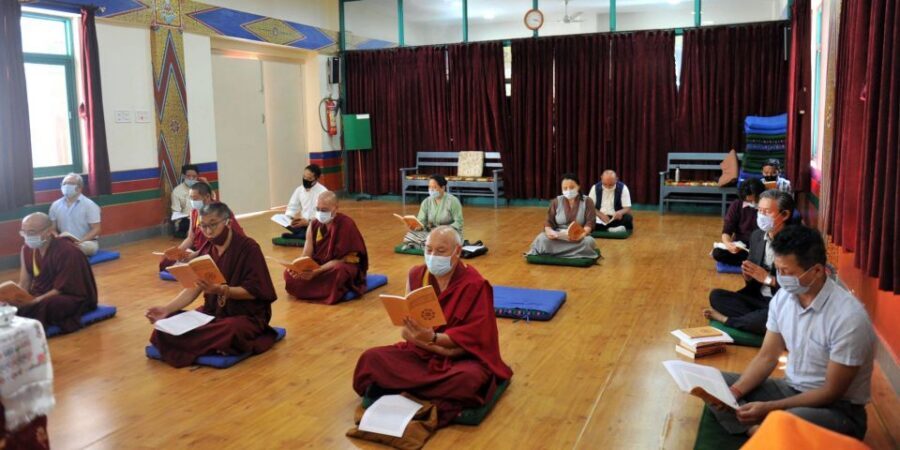
Your tour starts at Main Square, McLeod Ganj market. That matters more than it sounds. This is the point where the town’s energy shows up first—shops, foot traffic, and the general mix of locals and visitors. Meeting here helps you get oriented before you step into the quieter spaces of monasteries and temples.
From there, the plan stays simple: you’ll walk through key sites in and around McLeod Ganj over about three hours. The route is designed for meaning, not speed. You’re not sprinting from one doorway to the next; the guide uses the walk to connect dots you might not notice on your own.
I also appreciate the practical touches: you get a water bottle, and you’ll have an English-speaking local guide to answer questions as you go. In my experience, that’s what turns religious sights into a real learning moment. When a guide can respond in detail—like the way Onkar does—the visit stops being just photos and starts being understanding.
Quick note for your planning: the tour is not allowed to include alcohol or drugs, so keep your day clean and simple.
A few more Dharamsala tours and experiences worth a look
Kalachakra Temple and the Thekchen Choumlling complex: where names carry weight
One of the first stops is the Kalachakra temple, located inside the Thekchen Choumlling temple complex. This is one of those places where the architecture and the labels on buildings give you a clue: these are not separate attractions. They’re part of one spiritual neighborhood.
Here’s what makes the complex especially interesting. The Thekchen Choumlling temple complex also houses the Namgyal monastery, the private chambers of His Holiness the Dalai Lama, and the famous Tsuglakhang temple (spelled Tsuglagkhang in many places). Even without going deep into any one tradition, you can feel the layering: monastic life, sacred spaces, and the daily reality of religious leadership all living close together.
If you’re the kind of person who likes to read meaning in small cues, this stop rewards you. You’ll likely notice how the guide explains why certain places are grouped, and why names matter. That’s the value of a guided walk in a place like this: context makes the buildings stop looking like just another temple facade.
A drawback to be aware of: since the complex includes multiple areas and important buildings, you should plan to move respectfully and at a slower tempo when you’re near more sensitive spaces. Bring comfortable clothes and keep your body language calm.
Tsuglagkhang: the Dalai Lama’s temple complex and the pilgrim atmosphere
If there’s one site that defines McLeod Ganj for many visitors, it’s Tsuglagkhang, also known as the Dalai Lama’s Temple complex. According to what you’ll see and what your guide explains, Tsuglagkhang is the home for His Holiness Dalai Lama, and it’s one of the world-renowned religious centers that draws Buddhist pilgrims throughout the year.
What I like about focusing on Tsuglagkhang is that it gives you the emotional logic of the whole trip. The other stops—libraries, museums, monasteries, medical institutes—make more sense when you start here. You see the spiritual center first, then learn how that spirit connects to preservation of Tibetan culture and services for the community.
Also, Tsuglagkhang is described as a place that’s both temple and residential complex for His Holiness and his followers. That dual role changes how you experience the site. You’re not only looking at a ceremonial structure; you’re seeing how religious leadership and community life are physically intertwined.
Your guide will point out details you might otherwise overlook—things like how different parts of the complex function and how visitors interact with the space. This is where a strong guide really shows. On my mental checklist, Onkar’s style stands out: answering questions with great detail and pointing out fascinating features you’d walk past on your own. That kind of attention makes Tsuglagkhang feel more like a living place than a static postcard.
LTWA and the Tibet Museum: why archives and records matter
After temple spaces, you shift to preservation. That’s where the Library of Tibetan Works and Archives (LTWA) comes in. This Tibetan library in Dharamshala was founded by Tenzin Gyatso, the 14th Dalai Lama, on 11 June 1970. And the reason that date matters is simple: it shows how cultural survival became a structured project, not just a hope.
When you visit LTWA, I recommend thinking about it as a counterweight to forgetting. Temples matter, yes. But libraries and archives are what keep language, teachings, and history accessible over time. A guided walk helps because you can ask questions while you’re there—how these institutions function and why they’re considered among the most important in the world for Tibetan works.
Right nearby, you’ll also visit the Tibet Museum. It’s the official museum connected to the Central Tibetan Administration’s Department of Information and International Relations, and it’s located near the main temple of Tsuglagkhang. This is a smart pairing in the route: library to document culture, museum to present it.
What you’ll take from this segment depends on what you notice first, but I’d bet you’ll leave with a clearer idea of how Tibetan identity is maintained in exile. Even if you only read a few panels, the guide’s framing helps you connect information to lived reality.
A small practical tip: libraries and museums tend to reward slower attention. Don’t rush just to check boxes. If you let your guide explain a few key themes, you’ll get more out of the time you spend inside.
Nechung Monastery and the State Oracle tradition
Next comes a different kind of significance. Nechung Monastery is considered the seat of the State Oracle and protector-deity of His Holiness Dalai Lama and Tibet. That role is not a casual title. The tradition is described as having great importance in Tibetan history and Buddhist religion, and Nechung has acted as spiritual guide to the Tibetan Government since the 18th century.
What makes Nechung especially fascinating is the human mechanism behind the spiritual role. The physical medium is called Nechung Kuten. When the medium enters a trance-like state, the protector-deity takes possession of the body and gives advice and predictions to the Dalai Lama and Tibetan leaders in exile.
I like including this stop in a walk like this because it changes how you interpret everything you’ve already seen. Earlier you focused on temples and institutions of preservation. Nechung adds a layer of governance and spiritual guidance. It’s not just art and architecture—it’s a tradition that has influenced decisions.
One consideration: spiritual practices and trance traditions can feel unusual if you’re coming from a background without similar rituals. That’s exactly why a guide matters. You can ask questions in real time rather than trying to guess from signs alone.
And remember: this is a monastery context. Even when you’re just walking through, keep your behavior respectful. This is not the place for loud phone calls or casual wandering.
A few more Dharamsala tours and experiences worth a look
Men-Tsee-Khang: Tibetan medical and astro institute as welfare in action
The final stop on the route is Men-Tsee-Khang, also called the Tibetan Medical and Astro Institute. This institution is described as a charitable institution, which I think is important because it reframes the visit. You’re not only learning about spiritual life; you’re seeing how Tibetan traditions also support community wellbeing.
The institute was founded by the 13th Dalai Lama in Lhasa in 1916. After the Chinese occupation of Tibet, the 14th Dalai Lama came to India and re-established Men-Tsee-Khang in 1961. That timeline is a powerful takeaway on its own. It shows continuity—how a tradition doesn’t just survive through memory, but through real-world institutions and services.
Why include this in a walking tour titled India’s Own Mini Tibet? Because it broadens what Tibet means here. Temples bring meaning. Libraries hold knowledge. Museums preserve narratives. And medical/astro institutes bring practical support.
You might not leave with a new medical practice in your pocket, but you will leave with a bigger picture. You’ll likely understand the institute’s role as charity and as a system that combines wellbeing with traditional astrological thought (as indicated by the institute’s name).
Practical note: this part of the day can be a good time to sit briefly if you need a break. You’ll have already walked past several sites, so check your energy and keep your day comfortable.
Time, footwear, and group size: making the 3 hours work
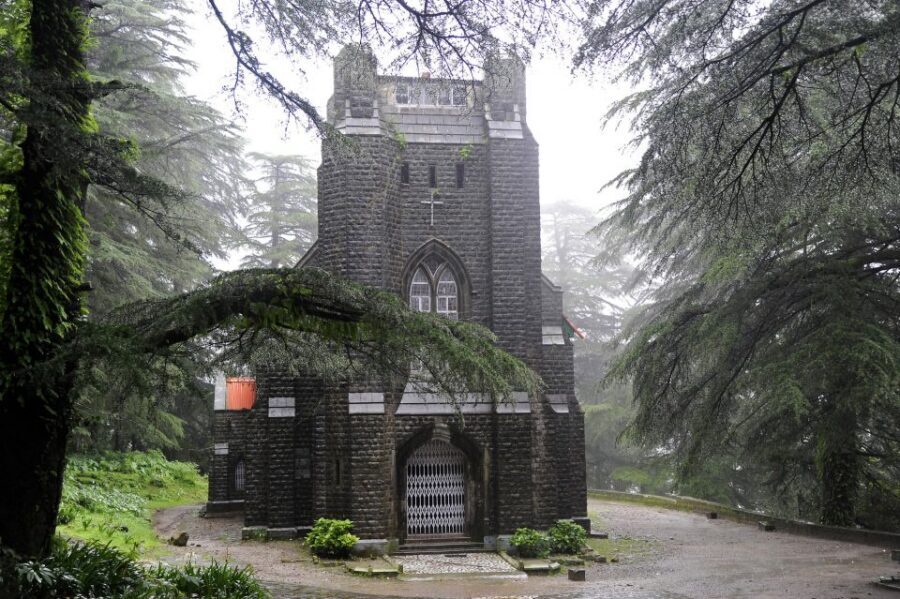
The tour runs about three hours. That’s long enough to feel satisfying, short enough to fit into a normal McLeod Ganj day without draining you. With a maximum of 15 people per booking, it’s also small enough that the guide can actually manage questions and attention.
One more thing I’d plan for: religious sights often mean moving slowly and stopping often. Even if the distance isn’t huge, the pace can feel a little “marathon-ish” because you pause for explanations. That’s why the simple advice matters—wear comfortable shoes and comfortable clothes.
Also, keep your expectations aligned with what’s included. You’ll get an English-speaking local guide, a walking tour, and a water bottle. If you’re looking for extra add-ons like special transport stops or meals, you’ll need to plan those separately.
If you’re traveling with limited mobility, it may not be the right match. The activity is stated as not suitable for people over 95 years, and it’s a walking format even if the guide keeps it respectful and paced.
Why this walk feels worth $38 (when it’s priced fairly)
Let’s talk value. The tour is listed at $38 per group (with a small group size up to 15). For a guided walk that includes multiple major sites—temple complex, library, museum, monastery, and a medical institute—that can be good value if you prefer learning over wandering.
I judge value by a simple question: do you leave with understanding, or just photos? This tour is built for understanding. The guide role is central, and the route includes institutions that are hard to interpret without context. That’s why the guide’s performance matters so much. In the experience details you’ll get, Onkar stands out for answering questions with great detail and pointing out fascinating details in temples and the city that you would likely skip on your own.
Another value factor: you get a water bottle and a guide who can steer you through complex cultural material without making it heavy. Price is not just dollars—it’s time saved, confusion avoided, and questions answered.
Who should book this guided walk
Book this walk if you want:
- a focused 3-hour introduction to Buddhist and Tibetan culture in McLeod Ganj
- context for why Tsuglagkhang and related institutions matter
- a guide who can connect spiritual sites to cultural and political nuances, not just religious facts
- an easy way to see several places that are connected by meaning, not just location
Don’t book it if:
- you want zero walking and no stopping
- you’re looking for alcohol-centered nightlife vibes (this tour explicitly has a no alcohol/drugs rule)
- you need an experience designed for very limited mobility (it’s not suitable for people over 95)
If your ideal day includes temples, archives, and real-world institutions tied to Tibetan life, you’ll probably feel happy you booked.
Should you book this Guided Walk in McLeod Ganj?
Yes—if you want a short, guided route that makes McLeod Ganj’s Tibetan identity easier to understand. This is a good fit for first-timers who don’t want to research for hours, and it’s a strong choice for repeat visitors who want sharper context around the same famous sites.
My advice: come with one simple mindset—ask questions. When you do, the guide’s role turns from nice-to-have into the main event. And bring comfortable shoes, because the learning is paced by walking.
FAQ
Where does the tour start?
The meeting point is Main Square, McLeod Ganj, Himachal Pradesh 176219.
How long is the guided walk?
The duration is 3 hours.
What’s the price?
The tour price is listed as $38 per group.
Is there an English-speaking guide?
Yes. The tour includes an English-speaking live guide.
What should I bring?
Bring comfortable shoes and comfortable clothes.
Is it suitable for very elderly travelers?
It is stated as not suitable for people over 95 years.