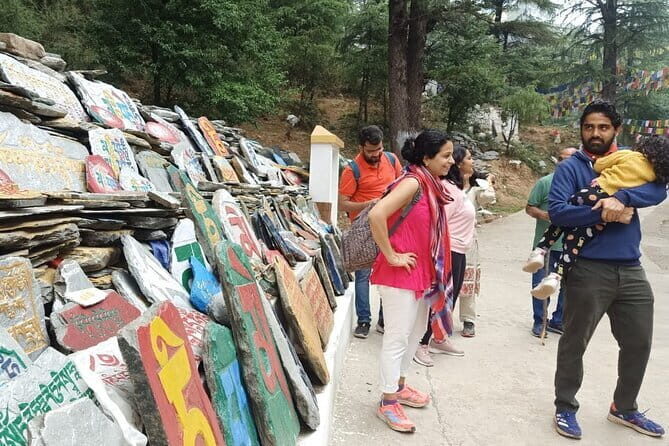
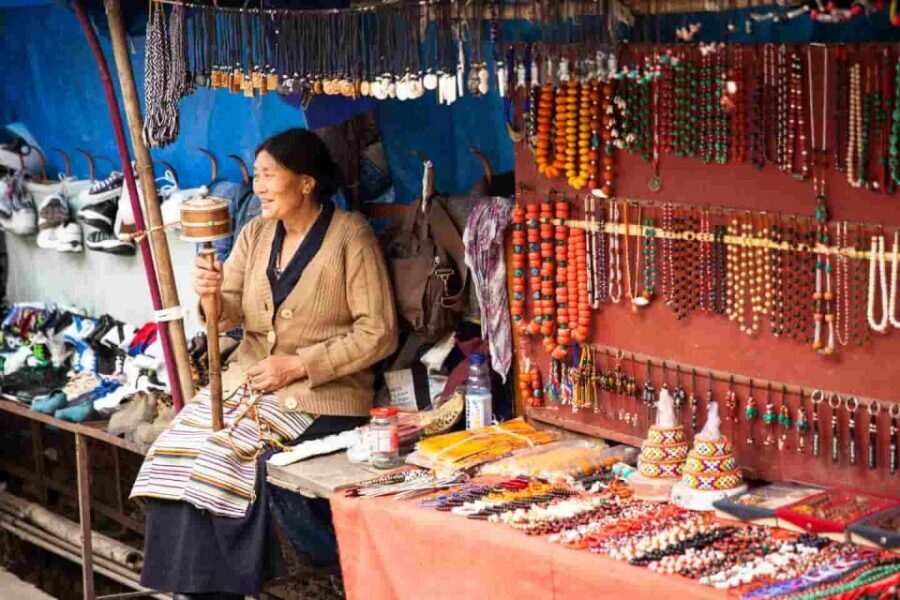
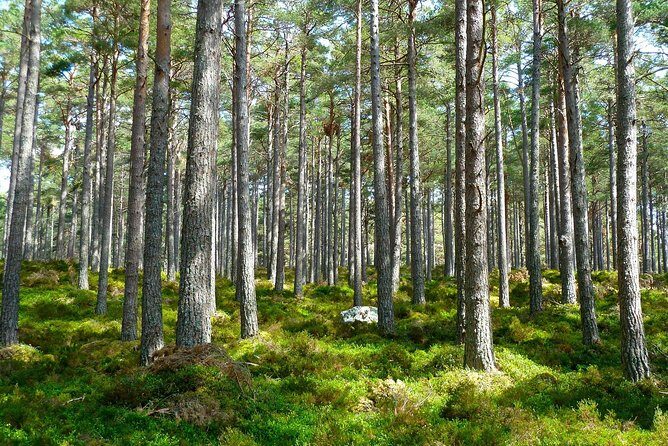
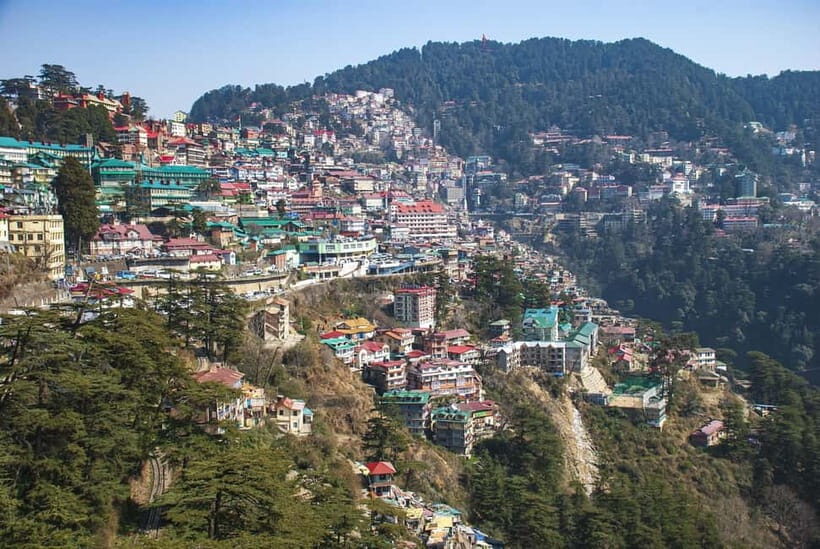
Jakhu Hill is a short climb with big payback. This private 3-hour hike from Christ Church to the highest point in Shimla mixes local folklore with real temple time—and you end with the view and the famous Jakhu Temple on top.
I especially like the way the guide handles the pace and the stories. On past trips, guides such as Preeti, Sunny, Raghav, and Pawan have shared myth and meaning on the way up, and they build in rest stops when you need them.
One thing to plan around: there are lots of monkeys on the trail. They can get aggressive, so you’ll want to keep your belongings secure and not engage.
In This Review
- Key points I’d plan around
- From Christ Church to the Ridge Road start point
- Jakhu Hill climb: pacing, stops, and how the 1-hour hike feels
- The monkey situation: how to hike smart near Jakhu Hill
- Jakhu Temple: your 1-hour visit on sacred ground
- The 108-foot Hanuman statue: why it feels huge from every angle
- Views and time for a café stop before heading down
- The local guide makes or breaks it (and these guides do a lot)
- What to bring, what not to wear, and what to skip
- Price and value: why $10 can feel unusually fair
- Should you book this Jakhu Hill hiking tour?
- FAQ
- How long is the Jakhu Hill hiking tour?
- Where does the hike start?
- Do I get to visit Jakhu Temple, or is it only photos from the trail?
- What language will the live guide speak?
- What should I bring for the hike?
- Are shorts or short skirts allowed?
Key points I’d plan around
- 2 km from the Ridge: the hike is short, but it feels steeper than it looks.
- Jakhu Temple visit included: you don’t just rush to the top; you get inside time.
- 108-foot Hanuman statue: the world’s tallest Hanuman statue dominates the summit.
- Local guide with folklores: you’ll understand what you’re seeing while you climb.
- Monkey-smart hiking: you’ll get practical tips to stay safe and keep your stuff.
- No shorts rule: temple etiquette matters—pack long pants or suitable coverage.
From Christ Church to the Ridge Road start point
Your hike begins at Christ Church, Shimla, near the entrance to Jakhu Hill on Ridge Road. This matters because it gives you a clean, easy-to-find start—no guesswork about where the trail actually begins or how to follow it. The tour is private, so you’re not stuck in a slow or mismatched group.
From there, the climb starts in a way that feels very “Shimla”: moving along the Ridge area before you begin working your way up. One handy detail is the age/time-limit chart you can reference near the start. It’s a quick reality check for how much effort the climb typically takes, and it helps you choose your pace without turning the hike into a stress test.
I like that the tour sets you up to think like a local hiker rather than a tourist. You’ll notice locals moving along the route too—proof that this is a regular practice here, not a one-off spectacle. That context makes the climb feel less intimidating. It’s not just about getting to a temple; it’s also about doing something healthy in the mountains of Himachal.
A few more Shimla tours and experiences worth a look


Jakhu Hill climb: pacing, stops, and how the 1-hour hike feels
The schedule is built around about one hour of hiking to Jakhu Temple. In real life, that usually means a steady uphill with breaks. And those breaks matter, because the route is short but not flat.
You’ll also spot an interesting rhythm to the day: there can be many fitness trekkers going up and down, especially if you start early. The tour advice to begin early is smart. You’ll have fewer people on the path, and it’s easier to manage your footing when the trail isn’t crowded.
Your local guide helps with pacing in a very practical way. In the experiences shared by different guides, the common theme is that they won’t force you forward if you need to pause. Some hikers mention benches and stops along the way, and guides who match your tempo. That turns a “climb” into a manageable walk-up.
What about the difficulty? You should think of it as moderate in effort, not a dramatic mountain trek. Still, the tour requires physical fitness. If you’re someone who gets winded quickly on stairs or steep grades, take the slower pace seriously—Jakhu is short, but your legs will notice the incline.
The monkey situation: how to hike smart near Jakhu Hill
Let’s talk about the thing that can change your mood fast on this hike: monkeys. The route has numerous monkeys, and they can be aggressive. They may try to snatch items, and the best approach is simple—don’t interact.
Here’s how I’d handle it so you can keep enjoying the climb:
- Keep bags closed and belongings close to your body.
- Avoid carrying tempting items in easily grabbed pockets.
- Don’t pose for close pictures with monkeys nearby.
- Don’t try to outsmart them. Just give them space.
You might hear different monkey stories from different guides, but the goal is always the same: keep yourself calm and keep your stuff out of reach. Some guide tips focus on safety and feeling secure, and that’s not just worry—it’s what lets you concentrate on the temple and the views instead of watching the treeline every few seconds.
If monkeys make you nervous, I’d treat this hike like an active wildlife walk. That means being alert and respectful, not panicked.
Jakhu Temple: your 1-hour visit on sacred ground
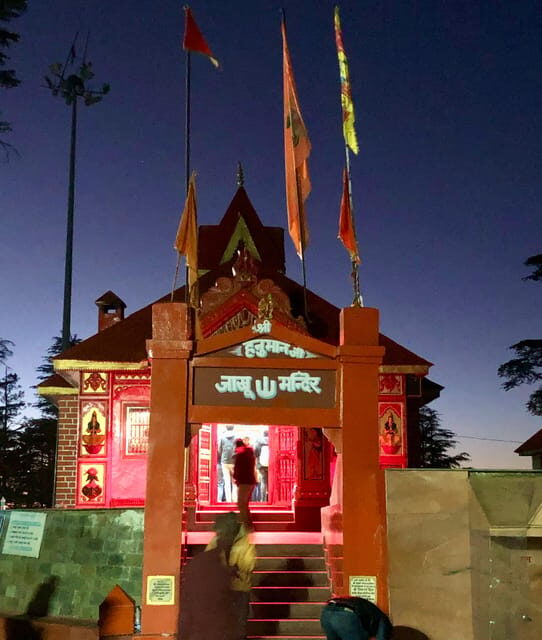
Once you reach the top, the tour gives you about one hour at Jakhu Temple. This is a key difference between a “quick summit photo” and an actual experience. You get time to enter the temple area and slow down.
The temple visit also connects the hike to meaning. Many guides share stories that help you understand why Jakhu Hill is special and why the area matters religiously. In the climbing conversation, you’ll often hear myth linked to figures connected with the temple and the surrounding symbolism.
Dress matters here. The tour info specifically says shorts and short skirts are not allowed. That’s not picky bureaucracy—it’s standard temple etiquette in many parts of India. If you show up in the wrong outfit, you might have to adjust on the spot, which can cut into your temple time.
If you like quiet moments, the temple visit can be the calm pause after the climb. You get to sit, look, and absorb the setting rather than just push upward to the next view.
The 108-foot Hanuman statue: why it feels huge from every angle
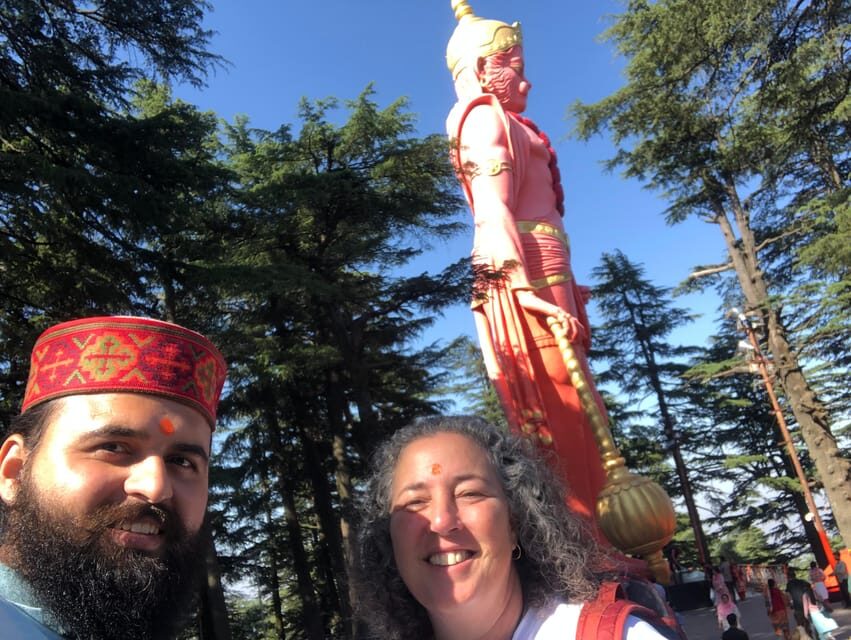
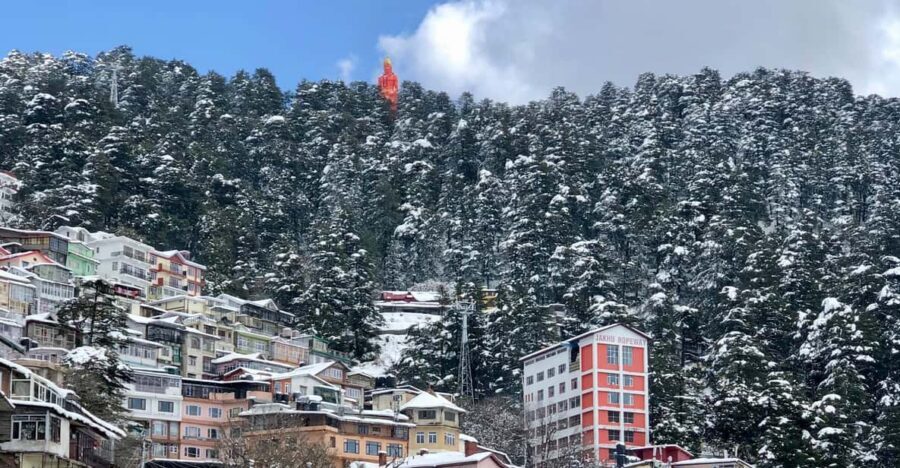
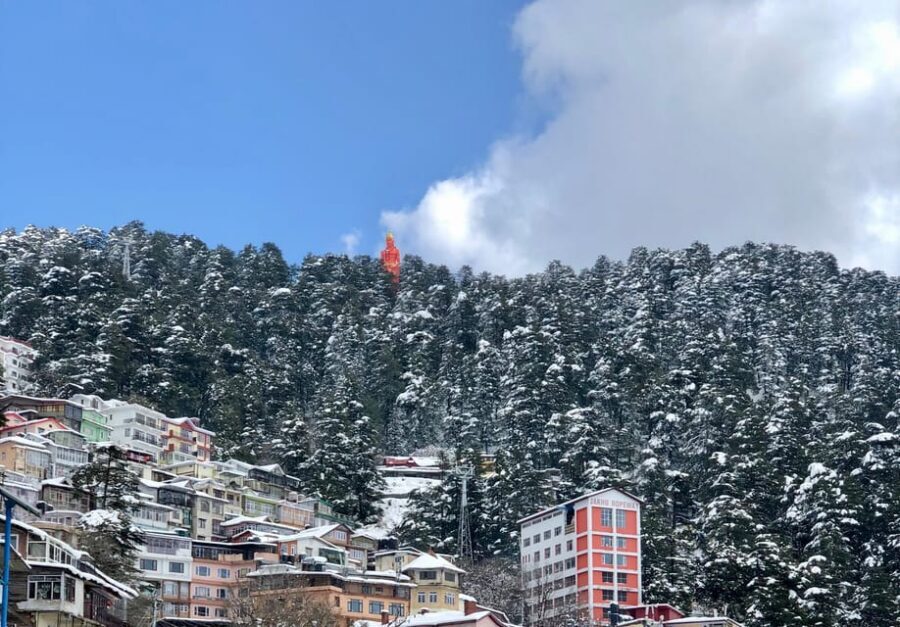
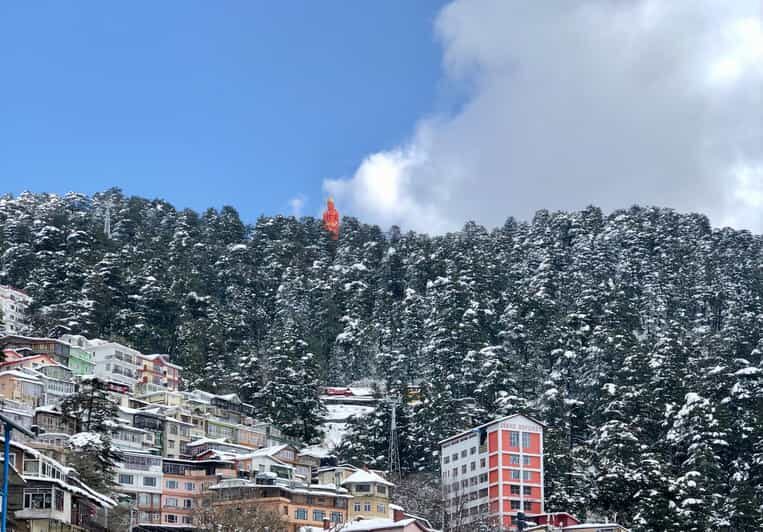
After you’ve made the climb, the main visual event is the towering Lord Hanuman statue outside the main temple premises. It’s reported as a 108-foot-tall statue, and it’s described as the tallest Hanuman statue in the world.
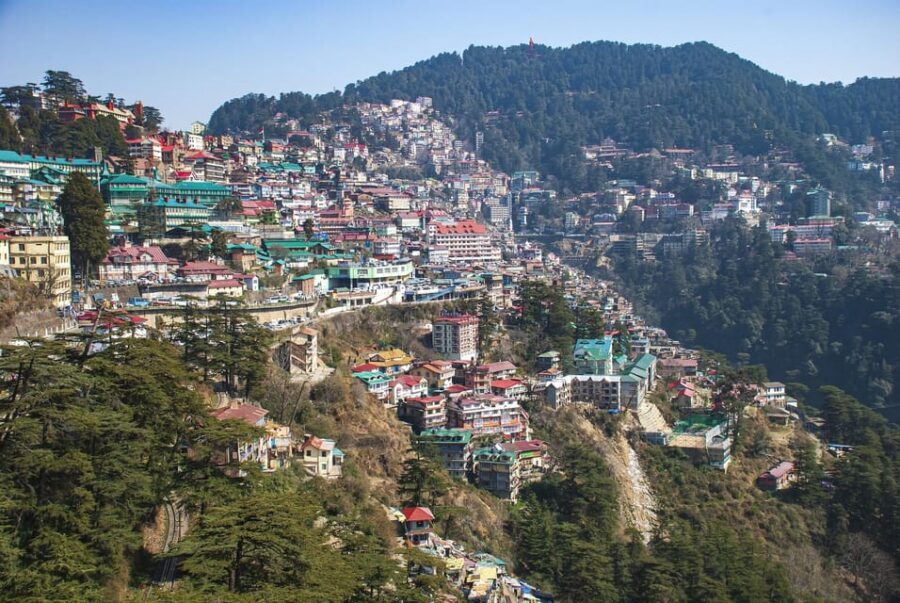
What makes it special isn’t only the size. It also shows up from multiple viewpoints around Shimla. The statue looks imposing from the Ridge and the Mall area, both during the day and at night when illuminated. That means you’re not just seeing a monument—you’re seeing a landmark that ties the whole city to this hill.
From the summit, the statue becomes a centerpiece. I like how it changes the experience from “I climbed a hill” to “I reached a specific landmark.” It gives you a reason to stand still and take your time, because there’s no hiding the scale.
If you brought binoculars, you’ll have a tool for looking at details and taking in the wider panorama without craning your neck the entire time.




Views and time for a café stop before heading down
Even though the tour includes the climb and the temple visit, your overall morning can still feel flexible. One guide-style approach that shows up in real experiences is taking time for a break after the temple—like a coffee at a nearby café—before you head back down.
The standard return walk is about one hour back to Shimla, aiming to get you safely off the hillside without rushing. But if you want a less leg-burning finish, you might have the option of using a cable car for descent depending on how you plan your day. Keep in mind: that choice isn’t part of the included tour steps, so only consider it if it fits your timing.
The main win here is that you leave Jakhu Hill feeling like you did more than a checkbox. You climb, you learn, you visit, you see the statue—then you come back with energy left for the rest of Shimla.
The local guide makes or breaks it (and these guides do a lot)
This tour is built around a local guide who shares folklores as you hike. That’s not just entertainment. It changes how you interpret what you see. You don’t just watch your legs work; you understand why the destination matters.
Several guide names come up in feedback: Preeti, Sunny, Raghav, and Pawan. While you won’t necessarily get the same person, you can expect the same core idea—storytelling paired with practical guidance. Guides also tend to adjust to your pace, which is especially helpful if your group includes mid-50s hikers who want a considerate speed.
In other words, the “guide” role isn’t only pointing directions. It’s managing energy, explaining temple significance, and giving you monkey-safety tips so the wildlife doesn’t steal the show.
Also, the tour runs with English and Hindi live interpretation. That’s a real comfort factor when you want the meaning, not just the facts.
What to bring, what not to wear, and what to skip
Packing for Jakhu Hill is straightforward, but a few items matter.
Bring:
- Comfortable shoes (you’re climbing and walking on uneven ground)
- Water (the uphill can add up)
- Binoculars (useful for long looks and details)
Don’t wear:
- Shorts
- Short skirts
Also, start early. This isn’t just about avoiding crowds; it helps with overall trail calm and makes the experience smoother, especially when monkeys are around.
If you’re wondering whether this is for you physically, use the following filter. The tour isn’t suitable for pregnant women, people with mobility impairments, people with heart problems, or people over 65. If any of those apply, you’ll want a different plan with less steep terrain and fewer physical demands.
Price and value: why $10 can feel unusually fair
At $10 per person for a private 3-hour experience, this hike looks like a bargain on paper. But the real question is what you’re getting for that price.
You’re paying for:
- A private hiking tour up to Shimla’s highest point
- A local guide who explains the area through folklores
- A temple visit experience at Shri Hanuman Mandir Jakhoo
- Access to the iconic viewpoint of the world’s tallest Hanuman statue
Transportation to the starting point isn’t included, and meals and drinks aren’t included either. Personal expenses are also on you. That said, the core experience is bundled in: guide time, hiking guidance, and temple time.
The value gets even better if you prefer a guide over self-navigation. On Jakhu Hill, self-guided is doable for some people, but monkey safety and trail pacing are the parts that can turn into stress. The private guide reduces that friction. For many visitors, that’s worth more than the hike’s ticket price.
Should you book this Jakhu Hill hiking tour?
Book it if you want a straightforward, short hike with meaningful context. This works especially well if you like mixing exercise with stories, and you want a real temple stop instead of a quick lookout.
I’d skip or rethink it if:
- Monkeys make you uncomfortable and you can’t handle the alertness required
- You’re not comfortable with a steep-but-short climb
- You need accessibility options not suited to your mobility or health
If you’re on the fence, aim for the early start, wear proper temple-friendly clothing, and plan to bring water and shoes that handle uneven ground. Do that, and Jakhu Hill turns into a morning you’ll remember for the statue, the temple time, and the guide’s stories—not just the climb.
FAQ
How long is the Jakhu Hill hiking tour?
The tour lasts about 3 hours total.
Where does the hike start?
It starts at Christ Church, Shimla.
Do I get to visit Jakhu Temple, or is it only photos from the trail?
You get time to visit Jakhu Temple, including entering the temple area.
What language will the live guide speak?
The live tour guide offers English and Hindi.
What should I bring for the hike?
Bring comfortable shoes, water, and binoculars.
Are shorts or short skirts allowed?
No. Shorts and short skirts are not allowed.